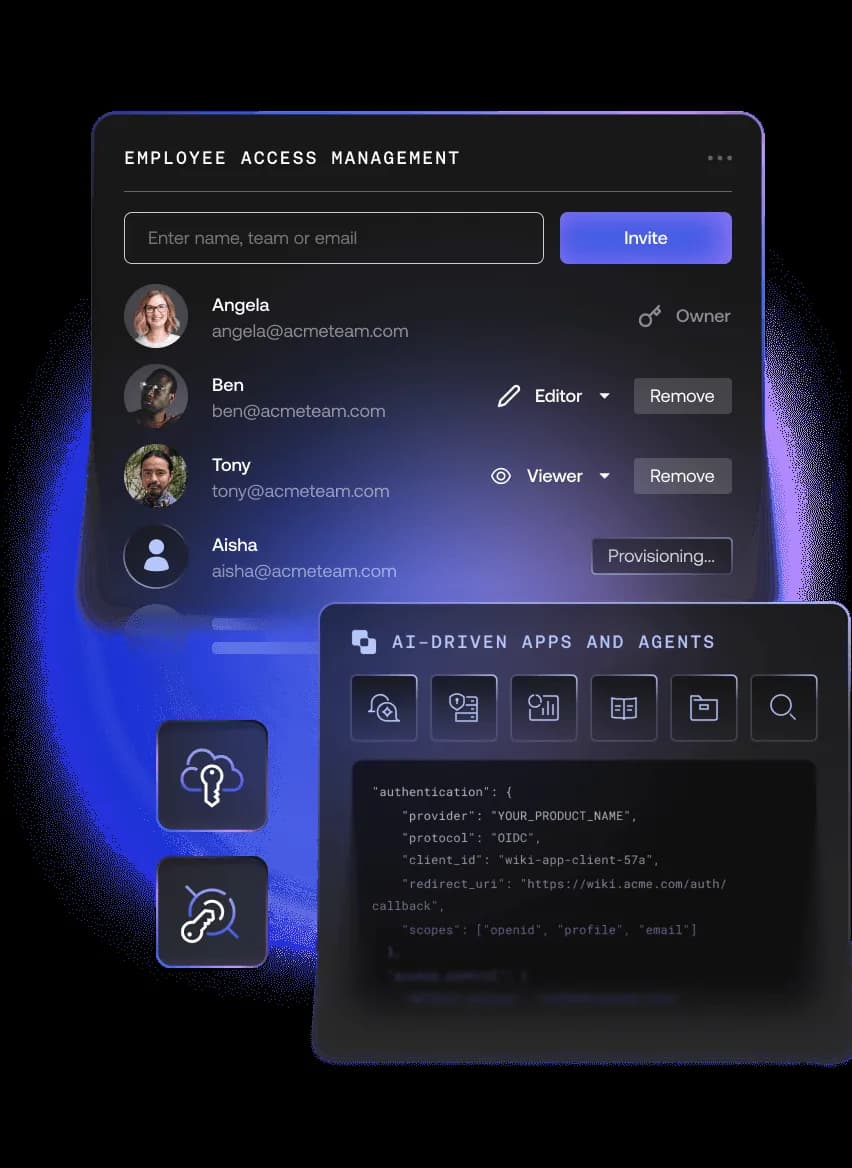
Auth0: product and architecture
This Auth0 review covers one of the most established customer identity and access management (CIAM) platforms available today. Now part of Okta, Auth0 provides developers with a comprehensive toolkit for adding authentication, authorization, and user management to applications of any scale. The platform blocks over 3 billion attacks per month and processes more than 10 billion authentications monthly, backed by a 99.99% uptime SLA. Whether you are building a consumer-facing app, a B2B SaaS product, or securing AI agents, Auth0 aims to let engineering teams implement identity in minutes rather than months. The free tier supports up to 25,000 monthly active users, making it accessible for startups and side projects alike.
Overview
Auth0 is a cloud-based identity platform that handles authentication and authorization for web, mobile, and API applications. Founded in 2013 and acquired by Okta in 2021, it operates as a standalone product within the Okta ecosystem while maintaining its developer-first DNA. The platform provides over 30 SDKs and quickstarts covering every major programming language and framework, letting teams integrate authentication with just a few lines of code.
At its core, Auth0 offers Universal Login, a centralized authentication page that supports social connections, enterprise federation via SAML and OIDC, passwordless login, and traditional username/password flows. Beyond basic authentication, the platform includes fine-grained authorization (FGA), machine-to-machine authentication, SCIM provisioning, single sign-on, and bot detection. The recent addition of Auth0 for AI Agents extends these capabilities to secure AI-driven workflows, including token vaults for managing API access and fine-grained authorization for RAG pipelines. Auth0 positions itself as a neutral, independent CIAM solution with public and private cloud deployment options.
Key Features and Architecture
Auth0's feature set spans six core areas: access management, authentication, user management, security, extensibility, and cloud deployment.
Universal Login and Authentication is the centerpiece. It provides a hosted login page that handles social connections (Google, GitHub, Apple, and dozens more), enterprise connections (SAML, OIDC, LDAP, Active Directory), passwordless authentication via email or SMS magic links, and embedded login for native mobile experiences. Multi-factor authentication supports TOTP, SMS, push notifications, and WebAuthn/FIDO2 keys.
Fine-Grained Authorization (FGA) delivers granular access control using a relationship-based model similar to Google Zanzibar. This allows developers to define complex permission structures (e.g., "user X can edit document Y") without building custom authorization logic. FGA is particularly powerful for collaborative applications and enterprise multi-tenancy scenarios.
Actions and Extensibility replaced the older Rules and Hooks system with a Node.js-based extensibility framework. Actions let you inject custom logic at specific points in the authentication pipeline: post-login, pre-registration, post-password-change, and more. This enables identity validation, consent management, log streaming, and integration with data platforms without modifying core application code.
Machine-to-Machine (M2M) Authentication handles service-to-service communication using the OAuth 2.0 client credentials grant. This is critical for microservices architectures and API-to-API integration.
Token Vault and AI Agent Security is Auth0's newest addition, designed to manage which APIs an AI agent can call on a user's behalf. Combined with async authorization and FGA for RAG pipelines, it provides a security layer for the emerging agentic AI workflow pattern.
Organizations and Multi-Tenancy support B2B applications with per-tenant branding, connection policies, member management, and delegated administration. Express Configuration simplifies enterprise onboarding with automated setup and session control.
Ideal Use Cases
SaaS Applications Selling to Enterprises. Auth0 excels when your product needs to support SSO, SCIM provisioning, and enterprise connections. The Express Configuration feature and built-in organization support let you enable enterprise-grade identity features with minimal engineering effort, directly accelerating sales cycles with IT buyers.
B2B Multi-Tenant Platforms. If you are building a platform where each customer organization needs isolated authentication policies, custom branding, and delegated administration, Auth0's Organizations feature handles this natively. Fine-grained authorization adds the permission granularity that multi-tenant products demand.
Consumer Applications Prioritizing Conversion. Auth0's passwordless login, social connections, and customizable sign-up flows reduce friction at the registration stage. Adaptive MFA and bot detection protect accounts without degrading the user experience, which matters for high-volume consumer products.
AI-Powered Applications and Agent Workflows. Teams building applications with AI agents that need to call external APIs on behalf of users can leverage the Token Vault and async authorization capabilities to maintain security boundaries.
Don't use Auth0 if you need a fully on-premises identity solution with zero cloud dependency, or if your budget cannot accommodate MAU-based pricing as you scale past the free tier thresholds.
Pros and Cons
Pros
- Generous free tier. 25,000 MAU at no cost is a substantial offering compared to what competitors provide, letting teams validate their product without identity costs.
- Developer experience. Over 30 SDKs, comprehensive documentation, quickstart guides, and a five-minute integration promise that largely holds up in practice.
- Extensibility through Actions. The pipeline-based extensibility model lets teams customize authentication flows without forking or maintaining custom identity code.
- Enterprise-ready features. SSO, SCIM, Organizations, fine-grained authorization, and enterprise connections are built in, not bolted on.
- Security track record. Blocking 3 billion-plus attacks per month across the Okta/Auth0 platform, with adaptive MFA, bot detection, and breached password detection included.
- AI agent security capabilities. The Token Vault and async authorization features position Auth0 ahead of competitors for securing agentic AI workflows.
Cons
- MAU-based pricing scales steeply. Once past the free tier, costs ramp up quickly for consumer applications with large user bases. The jump from free to $35/month for just 500 MAU is a significant per-user cost increase.
- Okta acquisition creates uncertainty. Product overlap between Auth0 and Okta's own identity products raises questions about long-term roadmap consolidation and feature parity.
- Vendor lock-in risk. Deep integration with Auth0's proprietary APIs, Actions, and Universal Login makes migration to another provider a substantial engineering effort.
- Complexity for simple use cases. Teams that only need basic email/password authentication may find Auth0's feature surface area and configuration options overwhelming.