Choosing the best data quality tools has become a critical decision for organizations that depend on trustworthy data to drive analytics, reporting, and AI initiatives. Modern data quality platforms go far beyond simple validation checks, offering AI-powered anomaly detection, automated lineage tracking, and proactive alerting that catches issues before they reach downstream consumers. With 22 tools now competing in this space, the market spans everything from open-source dbt-native monitors to enterprise governance suites with six-figure annual contracts. This guide breaks down the top contenders so your team can invest in the right platform for your data stack and budget.
How to Choose
Selecting a data quality tool requires matching your team's technical maturity, stack composition, and governance requirements to the right platform. Here are the criteria that matter most.
Anomaly detection approach. The gap between rule-based and ML-driven detection is significant. Anomalo builds unsupervised ML models per dataset automatically, detecting statistically significant deviations without manual threshold tuning. Elementary takes a different path with automated monitors for freshness, volume, and schema changes configured as code. If your team lacks the bandwidth to write and maintain hundreds of custom rules, ML-driven detection saves considerable engineering time.
Integration depth with your existing stack. A tool that does not connect to your warehouse, orchestrator, and BI layer creates blind spots. Alation offers 120+ connectors for unified discovery across definitions, lineage, policies, and trust signals. Acceldata's xLake Reasoning Engine is compatible with hyperscalers, data clouds, and on-prem environments. Check whether the tool supports native integrations with your specific warehouse before committing.
Lineage and root cause analysis. When data breaks, you need to trace the issue upstream fast. Bigeye combines end-to-end data lineage with root cause analysis so you can pinpoint failures across pipeline stages. Elementary provides column-level lineage from code to BI tools, which is particularly valuable for dbt-centric teams. Evaluate whether the tool traces lineage at the table level or the column level, as this determines how quickly your engineers can diagnose problems.
Pricing model and scalability. Costs vary enormously. Elementary starts at $10/month for its Pro tier, Atlan begins at $15/month, and Acceldata offers a free tier covering 1 TB of data with Pro at $100/month. At the enterprise end, Alation publishes no rate at all and quotes every deal. Map your data volume growth projections against each vendor's pricing tiers to avoid surprise costs at scale.
Governance and compliance capabilities. Regulated industries need more than monitoring. Collibra provides automated governance processes, data contracts, and a unified AI registry for provable compliance. Bigeye includes hidden PII, PHI, and PCI detection along with regulatory risk reduction features. If you operate under strict regulatory requirements, prioritize tools with built-in compliance workflows and sensitive data detection.
Self-service accessibility for non-technical users. Data quality is not solely an engineering concern. Secoda makes data discovery as easy as a Google search with AI-powered search across the entire data landscape. Anomalo offers a no-code interface for defining business rules and KPIs via UI or API. If business analysts and product managers need to investigate data issues independently, a tool with a strong self-service layer will reduce the load on your data team.
Top Tools
Alation
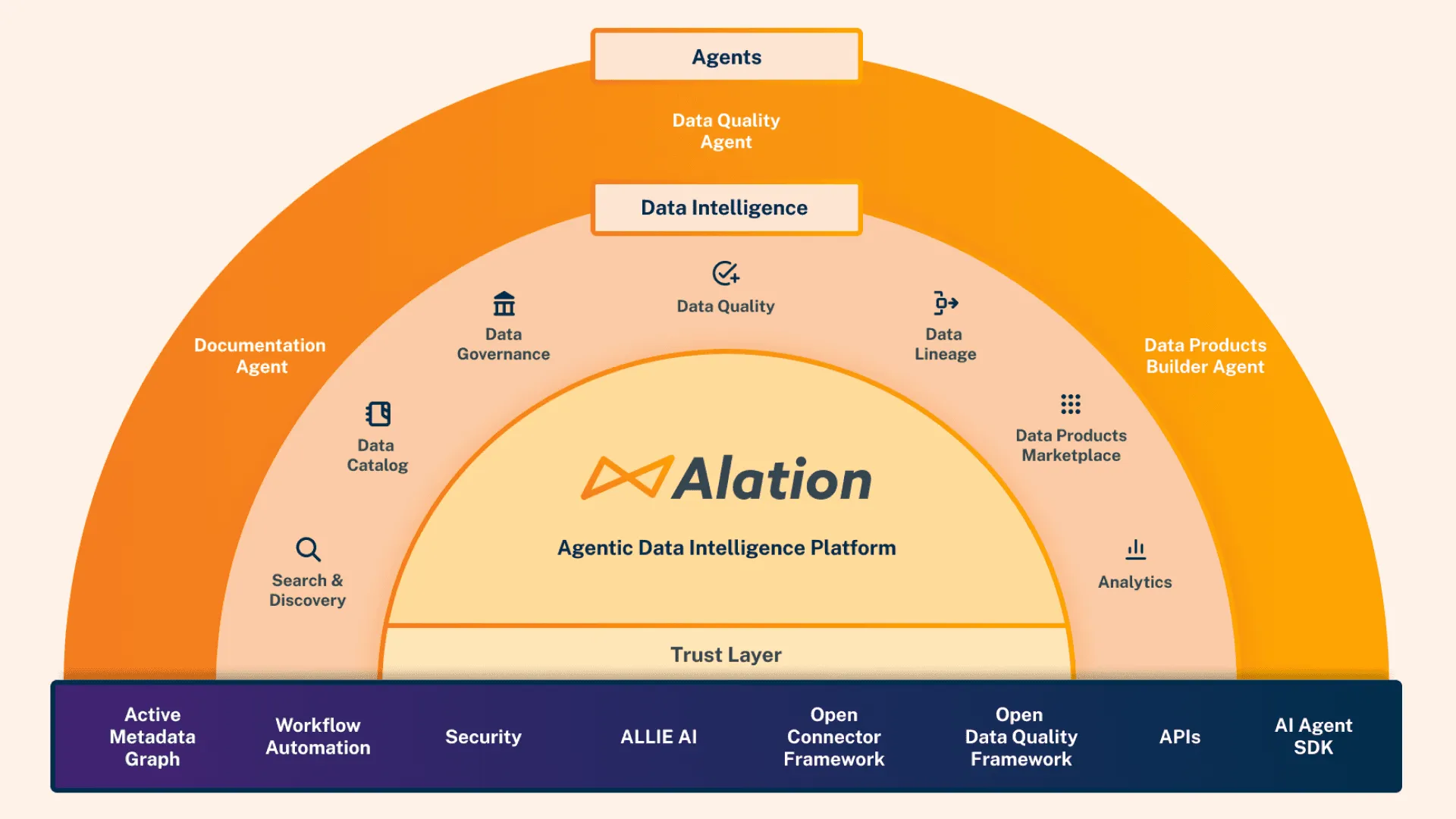
Alation is an agentic data intelligence platform that has been recognized as a 5x Leader in Gartner's 2025 Magic Quadrant for Metadata Management Solutions. Its Behavioral Analysis Engine combines machine learning with human insight, and the platform supports 120+ connectors for natural-language search across data definitions, lineage, policies, and trust signals. Agentic workflows automate documentation, enforce policies, and streamline data product delivery.
Best suited for: Large enterprises that need a comprehensive data catalog with embedded governance, especially organizations with complex compliance requirements and multiple data consumers across business and technical teams.
Pricing: Enterprise model with no published rate. Every deal is quoted, including user licences, connectors and add-ons.
Limitation: The enterprise-only pricing puts Alation out of reach for small and mid-sized teams. There is no free tier or self-serve plan to evaluate the platform incrementally.
Secoda
Secoda positions itself as a Data Enablement Platform that combines data cataloging, lineage, observability, and quality into a single searchable workspace. Its AI-powered search lets users find data assets as easily as a Google search, and automated metadata enrichment keeps documentation current without manual effort. Real-time monitoring and anomaly detection span the entire data stack.
Best suited for: Data teams that want a unified platform for discovery, documentation, and quality monitoring without managing multiple point solutions, particularly mid-market organizations looking for catalog and observability in one tool.
Pricing: Freemium model. Free tier includes 1 editor, 500 resources, and 2 integrations. Premium starts at $99/month. Enterprise pricing available on request.
Limitation: The free tier's 500-resource and 2-integration cap is restrictive for any organization with more than a handful of data sources, making it effectively a trial rather than a production-ready tier.
Anomalo
Anomalo takes an AI-first approach to data quality, automatically building ML models per dataset to detect anomalies without requiring manual threshold configuration. The platform handles structured, semi-structured, and unstructured data, and its automated root cause analysis paired with data lineage tools enables rapid issue resolution. The no-code interface lets business users define rules and KPIs via UI or API.
Best suited for: Organizations with large, diverse datasets that need proactive anomaly detection without the engineering overhead of writing and maintaining custom validation rules.
Pricing: Enterprise model with custom quotes. No public pricing or self-serve tier is available.
Limitation: The absence of published pricing and a self-serve tier means teams cannot evaluate cost-effectiveness upfront and must commit to a sales cycle before gaining access.
Bigeye
Bigeye is a data and AI trust platform that combines comprehensive data observability with end-to-end lineage and agentic AI governance. The platform goes beyond standard monitoring by offering hidden PII, PHI, and PCI detection alongside automated data quality checks, making it particularly strong for organizations in regulated industries. Proactive alerts and root cause analysis close the loop on issue resolution.
Best suited for: Large enterprises in regulated industries (healthcare, finance, insurance) that need data observability combined with sensitive data detection and compliance-oriented governance.
Pricing: Enterprise model with custom quotes only. No published pricing tiers are available.
Limitation: Like several enterprise-only tools in this space, Bigeye does not offer a free or self-serve tier, which limits the ability to test-drive the platform before committing to a contract.
Atlan
Atlan is a modern data workspace that combines a data catalog, active metadata management, and governance into a collaborative platform built for change. Its Enterprise Data Graph connects lineage, business glossary, and certified context flows into a unified layer. The platform emphasizes being open by default with rapid feature delivery cycles, and its AI-native architecture supports personalization and human-in-the-loop annotation workflows.
Best suited for: Data teams that want an affordable, collaborative catalog with end-to-end lineage and business glossary capabilities, particularly organizations scaling from startup to mid-market that need governance without enterprise complexity.
Pricing: Freemium model. Free tier for 1 user. Pro at $15/month per user. Team at $30/month per user. Enterprise pricing is custom.
Limitation: The free tier is restricted to a single user, which means even a small data team of two or three people must immediately move to a paid plan to collaborate effectively.
Acceldata
Acceldata's Agentic Data Management platform unifies data quality, governance, and observability through AI agents that continuously ensure enterprise data is reliable and AI-ready. The xLake Reasoning Engine handles exabyte-scale data processing across hyperscalers, data clouds, and on-prem environments. A natural language interface called The Business Notebook provides contextual memory for explainable AI reasoning.
Best suited for: Enterprises with hybrid or multi-cloud data infrastructure that need observability across massive data volumes, particularly organizations running both cloud and on-premises workloads.
Pricing: Freemium model. Free tier covers 1 TB of data. Pro plan at $100/month supports 10 TB. Enterprise tier uses custom quotes.
Limitation: The 1 TB free tier and 10 TB Pro tier may be quickly outgrown by organizations with large data estates, potentially forcing an early jump to custom enterprise pricing.
Comparison Table
| Tool | Best For | Pricing | Key Strength |
|---|---|---|---|
| Alation | Enterprise data intelligence with governance | Quoted; no public rate | 120+ connectors, 5x Gartner MQ Leader |
| Secoda | Unified catalog, lineage, and quality | From $99/month (free tier available) | AI-powered search across entire data landscape |
| Anomalo | ML-driven anomaly detection at scale | Enterprise (custom quotes) | Unsupervised ML models built per dataset |
| Bigeye | Regulated industries needing compliance | Enterprise (custom quotes) | Hidden PII/PHI/PCI detection |
| Atlan | Collaborative catalog and governance | From $15/month (free tier available) | Enterprise Data Graph with certified context flows |
| Acceldata | Hybrid/multi-cloud observability | From $100/month (free tier: 1 TB) | Exabyte-scale xLake Reasoning Engine |
Our Methodology
Our evaluation of data quality tools is grounded in hands-on analysis of each platform's capabilities, pricing transparency, and real-world suitability for data engineering teams. We assessed 22 tools in the data quality category, examining them across multiple dimensions that matter to practitioners who build and maintain data pipelines daily.
For each tool, we analyzed the detection approach (rule-based versus ML-driven), integration ecosystem breadth, lineage granularity (table-level versus column-level), governance and compliance features, and pricing accessibility. We weighted integration depth and anomaly detection capabilities most heavily because these are the two factors that most directly determine whether a data quality tool delivers value or creates additional operational burden.
Pricing evaluation considered not just the sticker price but the practical scalability curve. A tool that starts free but jumps to enterprise-only pricing at modest data volumes scores differently than one with predictable per-user tiers. We documented specific pricing figures, integration counts, and feature capabilities directly from vendor documentation and product pages, avoiding vague claims in favor of verifiable facts.
We also factored in ecosystem fit. Tools like Elementary that are purpose-built for dbt workflows serve a different audience than broad governance platforms like Collibra. Our top selections reflect this diversity, ensuring teams can find a recommendation that matches their technical stack and organizational maturity rather than a one-size-fits-all ranking.
Frequently Asked Questions
What is the difference between data quality and data observability?
Data quality focuses on the accuracy, completeness, and consistency of data values themselves, answering whether the data meets defined business rules and expectations. Data observability is a broader discipline that monitors the health of the entire data system, including pipeline freshness, volume trends, schema changes, and distribution anomalies. Tools like Elementary automate monitors for freshness, volume, and schema changes, while Anomalo layers ML-driven anomaly detection on top. In practice, most modern platforms combine both capabilities, but understanding the distinction helps when evaluating whether you need a focused validation tool or a full-stack monitoring platform.
How much do data quality tools cost for a mid-sized team?
Costs range dramatically depending on the platform tier and your data volume. At the accessible end, Elementary's Pro plan starts at $10/month, Atlan begins at $15/month, and Secoda's Premium tier is $99/month. Acceldata offers a free tier for up to 1 TB of data with its Pro plan at $100/month for 10 TB. Enterprise platforms like Alation publish no rate and quote every deal, so budget from a proposal rather than a list price. Datafold quotes each annual contract and publishes no rate card. Budget-conscious teams should start with freemium tiers and upgrade as data volume and team size justify the cost.
Can open-source tools replace enterprise data quality platforms?
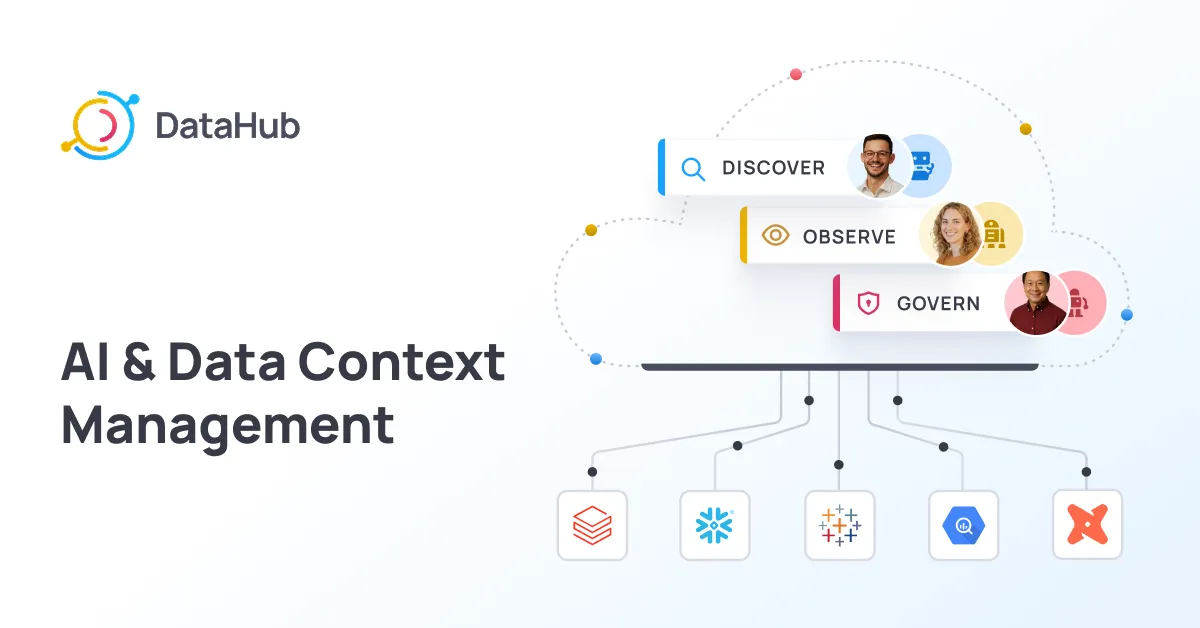
Open-source options like DataHub (Apache 2.0 license) and Elementary's self-hosted edition provide solid foundations for data discovery, observability, and governance without licensing costs. DataHub offers a unified metadata platform with federated governance and can connect AI agents via Model Context Protocol. Elementary's open-source version includes dbt-native anomaly detection and lineage. However, open-source tools require your team to handle hosting, upgrades, and scaling, and they typically lack the polished UI, enterprise SSO, and dedicated support that platforms like Collibra and Alation provide. For teams with strong infrastructure skills and limited budgets, open source is a viable starting point; for regulated enterprises needing audit-ready governance, enterprise platforms still justify their premium.
How long does it take to implement a data quality tool?
Implementation timelines depend on the tool's architecture and your existing stack. dbt-native tools like Elementary can be operational in minutes since they plug directly into your existing dbt project with configuration-as-code setup. SaaS platforms like Secoda and Anomalo typically require a few days to connect data sources and configure initial monitors through their no-code interfaces. Enterprise deployments of Alation or Collibra, which involve catalog setup, governance policy configuration, connector deployment, and user training, commonly take 4 to 12 weeks depending on the number of data sources and organizational complexity. Plan for a phased rollout that starts with your most critical data assets rather than attempting full coverage on day one.