Decision comparison
Apache Airflow vs Nativeline AI + Cloud
Apache Airflow and Nativeline AI + Cloud solve entirely different problems. Airflow is the industry-standard workflow orchestration platform for data engineers managing complex pipelines, while Nativeline is an AI-powered native app builder for shipping to the Apple App Store. Your choice depends entirely on whether you need backend data pipeline management or front-end mobile app development.
Developer Tools
Last Updated:
Quick Comparison
| Decision factor | Apache Airflow | Nativeline AI + Cloud |
|---|---|---|
| Primary Purpose | Open-source workflow orchestration platform for scheduling and monitoring complex data pipelines using Python DAGs | AI-powered native Swift app builder for creating and shipping iPhone, iPad, and Mac apps to the App Store |
| Pricing Model | Free and open-source under the Apache License 2.0 | Free tier available, paid plans start at $9/mo per user |
| Target User | Data engineers and DevOps teams who need to orchestrate complex ETL and ML pipelines | App creators and entrepreneurs who want to build native Apple platform apps without Xcode |
| Technical Approach | Python-based DAG definitions with modular architecture and message queue worker orchestration | AI conversation-driven development generating real SwiftUI code with built-in cloud database backend |
| Integration Ecosystem | Extensive plug-and-play operators for AWS, GCP, Azure, and hundreds of third-party services | Deep Apple ecosystem integration including AR, Siri, Apple Maps, and all native Apple frameworks |
| Community & Maturity | Mature project with 46,000+ GitHub stars, 58 reviews, 8.7/10 rating, and active Slack community | Newer platform with 4.1M+ lines of Swift generated and growing user base of app creators |
Apache Airflow
- Primary Purpose:
- Open-source workflow orchestration platform for scheduling and monitoring complex data pipelines using Python DAGs
- Pricing Model:
- Free and open-source under the Apache License 2.0
- Target User:
- Data engineers and DevOps teams who need to orchestrate complex ETL and ML pipelines
- Technical Approach:
- Python-based DAG definitions with modular architecture and message queue worker orchestration
- Integration Ecosystem:
- Extensive plug-and-play operators for AWS, GCP, Azure, and hundreds of third-party services
- Community & Maturity:
- Mature project with 46,000+ GitHub stars, 58 reviews, 8.7/10 rating, and active Slack community
Nativeline AI + Cloud
- Primary Purpose:
- AI-powered native Swift app builder for creating and shipping iPhone, iPad, and Mac apps to the App Store
- Pricing Model:
- Free tier available, paid plans start at $9/mo per user
- Target User:
- App creators and entrepreneurs who want to build native Apple platform apps without Xcode
- Technical Approach:
- AI conversation-driven development generating real SwiftUI code with built-in cloud database backend
- Integration Ecosystem:
- Deep Apple ecosystem integration including AR, Siri, Apple Maps, and all native Apple frameworks
- Community & Maturity:
- Newer platform with 4.1M+ lines of Swift generated and growing user base of app creators
Interface Preview
Nativeline AI + Cloud
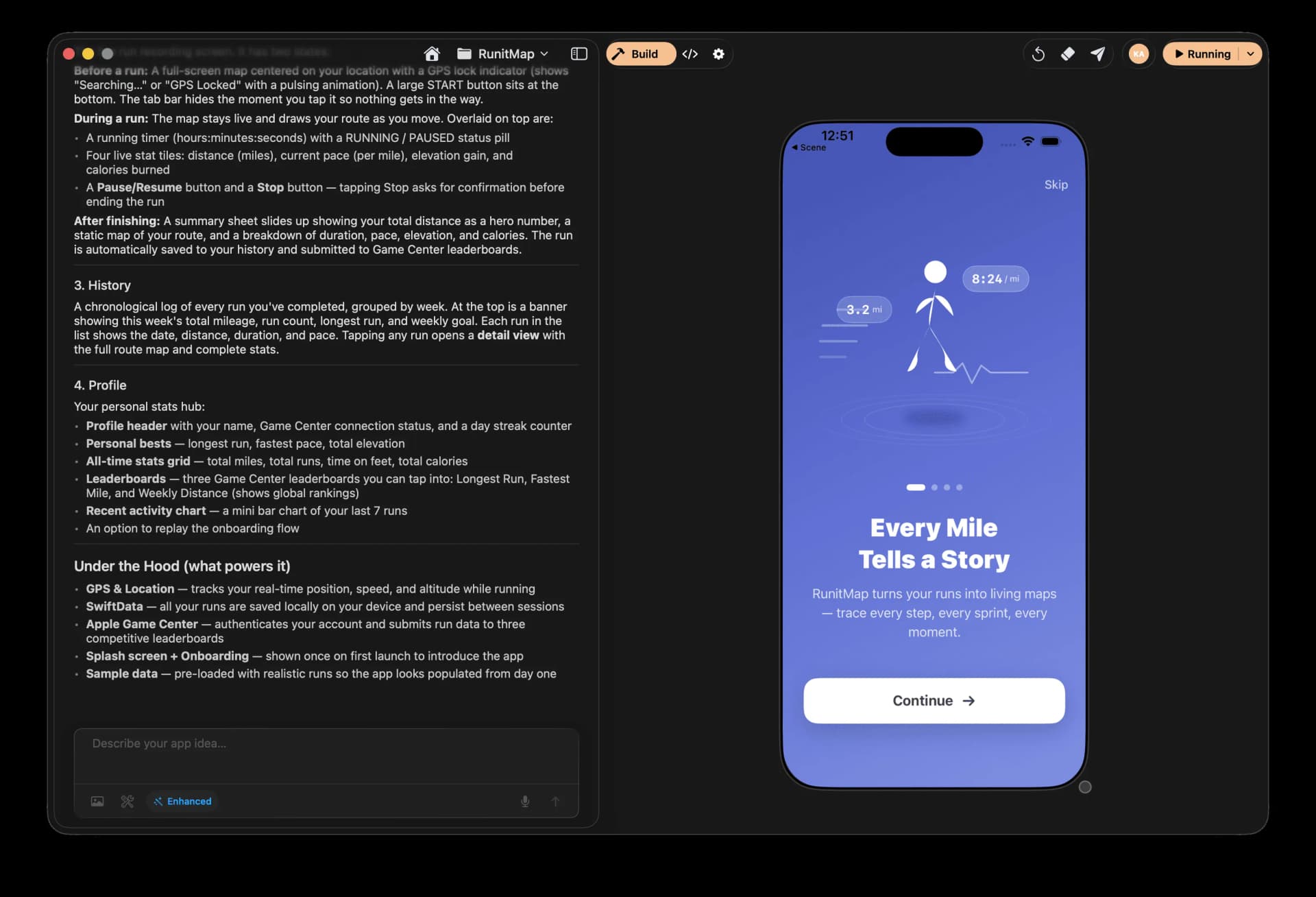
Feature Comparison
| Feature | Apache Airflow | Nativeline AI + Cloud |
|---|---|---|
| Core Functionality | ||
| Workflow Orchestration | Full DAG-based pipeline orchestration with scheduling, monitoring, and dependency management | Not applicable; focused on app building rather than workflow orchestration |
| App Development | Not a native app builder; focused on backend data pipeline management | Full native SwiftUI app creation for iPhone, iPad, and Mac via AI conversation |
| Code Generation | Dynamic Python pipeline generation using Jinja templating and programmatic DAG creation | AI-driven real Swift code generation with full code access and editing capabilities |
| Development Experience | ||
| User Interface | Modern web UI for monitoring, scheduling, and managing workflows with task status and logs | Single-window conversational interface where you describe your app and watch it build |
| Learning Curve | Steep learning curve requiring Python expertise and understanding of DAG architecture | Low barrier to entry; describe your app idea in plain language and iterate conversationally |
| Debugging Tools | Built-in task logs, execution history, and visual DAG dependency graphs for troubleshooting | Console logs, real-time debugging, and on-device preview for testing native app behavior |
| Infrastructure & Deployment | ||
| Deployment Model | Self-hosted with modular architecture supporting Kubernetes, Docker, and managed cloud options | Mac desktop application with one-click deploy to TestFlight and App Store submission |
| Scalability | Horizontally scalable with message queue workers; designed for enterprise-scale pipeline workloads | Scales via usage-based bit system; custom Scale tier for higher-volume app development needs |
| Backend Services | Connects to external databases and services through operators; no built-in backend database | Built-in cloud database with auth, storage, functions, and analytics in one platform |
| Ecosystem & Integration | ||
| Third-Party Integrations | Hundreds of operators for GCP, AWS, Azure, databases, messaging systems, and SaaS platforms | Native Apple framework support including AR, Siri, Liquid Glass, Apple Maps, and menu bar apps |
| Open Source Community | Apache-licensed with 46,000+ GitHub stars and active contributor community sharing improvements | Proprietary platform; not open-source but users own their generated Swift code forever |
| Extensibility | Custom operators, hooks, and plugins to extend functionality at any abstraction level | Full code access lets developers customize generated SwiftUI beyond AI-generated output |
| Collaboration & Support | ||
| Team Collaboration | Role-based access control with team DAG management through shared repository workflows | Real-time collaboration across multiple projects within the desktop application |
| Support Channels | Community support via active Slack, GitHub issues, mailing lists, and extensive documentation | Standard support on Builder tier; priority support on Pro tier; dedicated support on Scale |
| Documentation & Resources | Comprehensive official docs, blog with regular updates, and community-contributed tutorials | In-app onboarding with conversational interface that guides users through app creation |
Core Functionality
Workflow Orchestration
Apache AirflowFull DAG-based pipeline orchestration with scheduling, monitoring, and dependency management
Nativeline AI + CloudNot applicable; focused on app building rather than workflow orchestration
App Development
Apache AirflowNot a native app builder; focused on backend data pipeline management
Nativeline AI + CloudFull native SwiftUI app creation for iPhone, iPad, and Mac via AI conversation
Code Generation
Apache AirflowDynamic Python pipeline generation using Jinja templating and programmatic DAG creation
Nativeline AI + CloudAI-driven real Swift code generation with full code access and editing capabilities
Development Experience
User Interface
Apache AirflowModern web UI for monitoring, scheduling, and managing workflows with task status and logs
Nativeline AI + CloudSingle-window conversational interface where you describe your app and watch it build
Learning Curve
Apache AirflowSteep learning curve requiring Python expertise and understanding of DAG architecture
Nativeline AI + CloudLow barrier to entry; describe your app idea in plain language and iterate conversationally
Debugging Tools
Apache AirflowBuilt-in task logs, execution history, and visual DAG dependency graphs for troubleshooting
Nativeline AI + CloudConsole logs, real-time debugging, and on-device preview for testing native app behavior
Infrastructure & Deployment
Deployment Model
Apache AirflowSelf-hosted with modular architecture supporting Kubernetes, Docker, and managed cloud options
Nativeline AI + CloudMac desktop application with one-click deploy to TestFlight and App Store submission
Scalability
Apache AirflowHorizontally scalable with message queue workers; designed for enterprise-scale pipeline workloads
Nativeline AI + CloudScales via usage-based bit system; custom Scale tier for higher-volume app development needs
Backend Services
Apache AirflowConnects to external databases and services through operators; no built-in backend database
Nativeline AI + CloudBuilt-in cloud database with auth, storage, functions, and analytics in one platform
Ecosystem & Integration
Third-Party Integrations
Apache AirflowHundreds of operators for GCP, AWS, Azure, databases, messaging systems, and SaaS platforms
Nativeline AI + CloudNative Apple framework support including AR, Siri, Liquid Glass, Apple Maps, and menu bar apps
Open Source Community
Apache AirflowApache-licensed with 46,000+ GitHub stars and active contributor community sharing improvements
Nativeline AI + CloudProprietary platform; not open-source but users own their generated Swift code forever
Extensibility
Apache AirflowCustom operators, hooks, and plugins to extend functionality at any abstraction level
Nativeline AI + CloudFull code access lets developers customize generated SwiftUI beyond AI-generated output
Collaboration & Support
Team Collaboration
Apache AirflowRole-based access control with team DAG management through shared repository workflows
Nativeline AI + CloudReal-time collaboration across multiple projects within the desktop application
Support Channels
Apache AirflowCommunity support via active Slack, GitHub issues, mailing lists, and extensive documentation
Nativeline AI + CloudStandard support on Builder tier; priority support on Pro tier; dedicated support on Scale
Documentation & Resources
Apache AirflowComprehensive official docs, blog with regular updates, and community-contributed tutorials
Nativeline AI + CloudIn-app onboarding with conversational interface that guides users through app creation
Decision Summary
Apache Airflow and Nativeline AI + Cloud solve entirely different problems. Airflow is the industry-standard workflow orchestration platform for data engineers managing complex pipelines, while Nativeline is an AI-powered native app builder for shipping to the Apple App Store. Your choice depends entirely on whether you need backend data pipeline management or front-end mobile app development.
Best-fit scenarios
Choose Apache Airflow if:
Data Engineers & Pipeline Teams
Choose Nativeline AI + Cloud if:
App Creators & Apple Platform Developers
These scenarios reflect the available product evidence. Your requirements, existing stack, and team expertise should guide the final decision.
Frequently Asked Questions
Can Apache Airflow and Nativeline AI + Cloud be used together?
While these tools serve very different purposes, they could complement each other in certain scenarios. For example, if you build a native iOS app with Nativeline that collects user data, you could use Apache Airflow on the backend to orchestrate data pipelines that process and analyze that data. Airflow would handle the ETL workflows, data transformations, and scheduled jobs, while Nativeline would power the user-facing mobile experience. However, this is an advanced architecture that most teams would not need, as each tool targets a fundamentally different layer of the technology stack.
Which tool is better for someone with no coding experience?
Nativeline AI + Cloud is significantly more accessible for non-coders. Its conversational AI interface lets you describe your app idea in plain language and generates real Swift code automatically, with an average time to first build of just 2.6 minutes. Apache Airflow, by contrast, has a steep learning curve and requires Python programming knowledge to define DAGs and configure workflows. Users consistently note that Airflow demands solid Python expertise and an understanding of data engineering concepts before you can be productive with it.
What are the true costs of running each platform?
Apache Airflow is free and open-source under the Apache License 2.0, but you need to account for infrastructure costs to host it, whether on your own servers, Kubernetes clusters, or through managed services like Astronomer or AWS MWAA. Nativeline AI + Cloud offers a free tier to get started, with the Builder plan at $25/mo providing 1,000 bits of usage, the Pro plan at $50/mo with 2,250 bits and additional features like a full code editor and priority support, and a custom Scale tier with adjustable bit limits and dedicated support for high-volume needs.
How do these tools handle scaling as projects grow?
Apache Airflow scales horizontally through its modular architecture, using a message queue to orchestrate an arbitrary number of workers. It is designed for enterprise-grade workloads and can handle thousands of concurrent DAG runs across distributed infrastructure. Nativeline AI + Cloud scales through its usage-based pricing model, where you can move from the Builder tier to Pro or the custom Scale tier as your app development needs increase. The built-in cloud database handles backend scaling, so you do not need to manage separate infrastructure for authentication, storage, or analytics as your app's user base grows.