Decision comparison
Neo4j vs MongoDB
Neo4j excels at deep relationship traversal and graph analytics, while MongoDB provides a versatile general-purpose document database with extensive ecosystem support and simple horizontal scaling. The right choice depends entirely on whether your core workload centers on connected data patterns or flexible document storage.
Architecture choice. These take different approaches to the same problem. Read the table as a fit question rather than a feature race.
These are different kinds of product — Graph Database and Document Database.
Quick Comparison
| Decision factor | Neo4j | MongoDB |
|---|---|---|
| Best For | Traversing deep relationships in fraud detection, knowledge graphs, and recommendation engines used by 80+ Fortune 100 companies | General-purpose document storage for applications needing flexible schemas, real-time analytics, and horizontal scalability across 125+ regions |
| Architecture | Native graph database storing data as nodes and relationships with index-free adjacency for fast deep traversals | Document-oriented NoSQL database storing structured data as BSON documents with dynamic schemas and flexible data modeling |
| Pricing Model | AuraDB Free is $0. AuraDB Professional starts at $0.09 per GB per hour (minimum 1GB instance) and AuraDB Business Critical at $0.20 per GB per hour (minimum 2GB instance); storage, IO, backup and data transfer are included. AuraDB Virtual Dedicated Cloud is priced by sales. Aura Graph Analytics is $0.40 per GB per hour. Self-managed Community Edition is free under GPL3; Enterprise Edition and Infinigraph Edition are priced by sales. Verified 2026-10-05 against https://neo4j.com/pricing/. | MongoDB Atlas Free $0/hour, Flex $0.011/hour, Dedicated $0.08/hour |
| Ease of Use | Rated 8.8/10 by 37 reviewers; users praise the intuitive Cypher query language and visual exploration via Neo4j Bloom | Rated 8.9/10 by 453 reviewers; users highlight it is easy to learn, easy to scale, and easy to run in production |
| Scalability | Unlimited horizontal read scaling with replication; Infinigraph edition adds automatic sharding across multiple databases | Native sharding for horizontal scalability, replica sets for high availability, and Atlas Stream Processing for real-time data pipelines |
| Community/Support | 17,000+ GitHub stars, 300k+ developers, GraphAcademy free courses, 24x7 support on Business Critical tier | 28.5k GitHub stars, open-source C++ codebase, MongoDB University free training, integrates with 100+ technologies |
Neo4j
- Best For:
- Traversing deep relationships in fraud detection, knowledge graphs, and recommendation engines used by 80+ Fortune 100 companies
- Architecture:
- Native graph database storing data as nodes and relationships with index-free adjacency for fast deep traversals
- Pricing Model:
- AuraDB Free is $0. AuraDB Professional starts at $0.09 per GB per hour (minimum 1GB instance) and AuraDB Business Critical at $0.20 per GB per hour (minimum 2GB instance); storage, IO, backup and data transfer are included. AuraDB Virtual Dedicated Cloud is priced by sales. Aura Graph Analytics is $0.40 per GB per hour. Self-managed Community Edition is free under GPL3; Enterprise Edition and Infinigraph Edition are priced by sales. Verified 2026-10-05 against https://neo4j.com/pricing/.
- Ease of Use:
- Rated 8.8/10 by 37 reviewers; users praise the intuitive Cypher query language and visual exploration via Neo4j Bloom
- Scalability:
- Unlimited horizontal read scaling with replication; Infinigraph edition adds automatic sharding across multiple databases
- Community/Support:
- 17,000+ GitHub stars, 300k+ developers, GraphAcademy free courses, 24x7 support on Business Critical tier
MongoDB
- Best For:
- General-purpose document storage for applications needing flexible schemas, real-time analytics, and horizontal scalability across 125+ regions
- Architecture:
- Document-oriented NoSQL database storing structured data as BSON documents with dynamic schemas and flexible data modeling
- Pricing Model:
- MongoDB Atlas Free $0/hour, Flex $0.011/hour, Dedicated $0.08/hour
- Ease of Use:
- Rated 8.9/10 by 453 reviewers; users highlight it is easy to learn, easy to scale, and easy to run in production
- Scalability:
- Native sharding for horizontal scalability, replica sets for high availability, and Atlas Stream Processing for real-time data pipelines
- Community/Support:
- 28.5k GitHub stars, open-source C++ codebase, MongoDB University free training, integrates with 100+ technologies
Public signals
Verified factual signals only. Bars appear only for like-for-like metrics with five weekly assessments for every tool; missing evidence stays explicit. These signals do not establish enterprise adoption, product quality, or total cost.
| Metric | Neo4j | MongoDB |
|---|---|---|
| Docker Hub pulls(Product adoption) | 326.3M | 4.9B |
| GitHub commits, 90d(Product adoption) | 427 | 2.2k |
| GitHub stars(Product adoption) | 17,000+ | 28,000+ |
| Search interest(Market interest) | 4 | 28 |
| Hacker News mentions, 90d(Community interest) | 5 | 35 |
| npm weekly downloads(Developer adoption) | 868.2k | 15.6M |
| Product Hunt comments(Community interest) | 0 | 0 |
| Product Hunt rating(Community interest) | 5.0/5 | Unavailable |
| Product Hunt reviews(Community interest) | 12 | 0 |
| Product Hunt votes(Community interest) | 3 | 3 |
| PyPI weekly downloads(Developer adoption) | 3.1M | 16.0M |
| Stack Overflow questions(Community interest) | 23.0k | 175.2k |
As of October 12, 2026 — updated weekly.
Health & risk evidence
Observed public-source checks for mapped package versions and repositories.
Neo4j
October 12, 2026Package vulnerabilities
PyPI · neo4j@6.4.0 · npm · neo4j-driver@6.2.0
0 vulnerabilities
across 2 packages
Repository security score
Not available
MongoDB
October 12, 2026Package vulnerabilities
npm · mongodb@7.7.0 · PyPI · pymongo@4.18.3
0 vulnerabilities
across 2 packages
Repository security score
Not available
Interface Preview
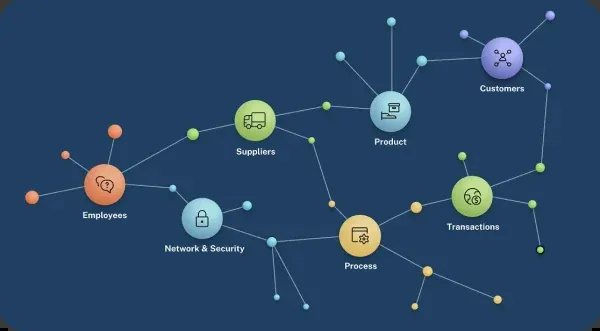
Neo4j
MongoDB
Feature Comparison
| Feature | Neo4j | MongoDB |
|---|---|---|
| Data Model & Storage | ||
| Primary Data Model | Native graph with nodes, relationships, and properties using index-free adjacency | Document-oriented BSON format with dynamic schemas and nested subdocuments |
| Schema Flexibility | Flexible network structure of nodes and relationships with optional constraints | Dynamic schemas with no predefined structure required for collections |
| Query Language | GQL-compliant Cypher declarative graph query language with pattern matching | MongoDB Query Language (MQL) with aggregation pipeline stages |
| Scalability & Performance | ||
| Horizontal Scaling | Unlimited read scaling via replication; automatic sharding in Infinigraph edition | Built-in sharding distributes data across clusters for write and read scaling |
| High Availability | 3-zone cluster with 99.95% uptime SLA on Business Critical tier | Replica sets with automatic failover and 99.99% availability on Atlas |
| Cloud Deployment | Available on AWS, Azure, and Google Cloud via AuraDB managed service | Atlas available across 125+ regions on AWS, Azure, and Google Cloud |
| Data Processing & Analytics | ||
| Graph Analytics | 65+ pre-tuned graph algorithms with in-graph ML via Graph Data Science library | Native graph data support via $graphLookup for relationship traversal |
| Search Capabilities | Pattern-based graph traversal queries optimized for relationship exploration | Atlas Search with full-text indexing plus vector search for semantic queries |
| Real-Time Processing | Change Data Capture available in Enterprise edition for event streaming | Atlas Stream Processing with Apache Kafka integration for event-driven apps |
| Security & Compliance | ||
| Access Control | Role-based access control with fine-grained security on Business Critical tier | Always-on authentication with end-to-end encryption on all Atlas tiers |
| ACID Transactions | Fully ACID-compliant transactions across all editions including Community | Multi-document ACID transactions with snapshot isolation across shards |
| Backup & Recovery | Daily backups with 7-day retention on Professional, 30-day with hourly point-in-time on Business Critical | Continuous backups with point-in-time restore on Dedicated tier |
| Developer Experience | ||
| Visualization Tools | Neo4j Bloom provides codeless graph visualization and interactive exploration | MongoDB Charts for built-in data visualization and dashboarding |
| Ecosystem Integration | Connectors for Snowflake, Microsoft Fabric, plus multiple driver languages | Integrates with 100+ technologies including major frameworks and platforms |
| Learning Resources | GraphAcademy with free online courses, 100K+ certified Neo4j experts | MongoDB University with free courses, Developer YouTube channel, and extensive docs |
Data Model & Storage
Primary Data Model
Schema Flexibility
Query Language
Scalability & Performance
Horizontal Scaling
High Availability
Cloud Deployment
Data Processing & Analytics
Graph Analytics
Search Capabilities
Real-Time Processing
Security & Compliance
Access Control
ACID Transactions
Backup & Recovery
Developer Experience
Visualization Tools
Ecosystem Integration
Learning Resources
Which approach fits
Neo4j excels at deep relationship traversal and graph analytics, while MongoDB provides a versatile general-purpose document database with extensive ecosystem support and simple horizontal scaling. The right choice depends entirely on whether your core workload centers on connected data patterns or flexible document storage.
When each approach fits
Choose Neo4j if:
Choose Neo4j when your application fundamentally depends on traversing relationships between data points. It is the strongest option for fraud detection, recommendation engines, knowledge graphs, and network analysis where understanding connections matters more than storing flat documents. The Cypher query language makes expressing complex graph patterns straightforward, and the Graph Data Science library with 65+ algorithms enables advanced analytics directly on your connected data. Neo4j's AuraDB Professional at $65/GB/month provides a managed cloud option, while the free Community Edition supports self-hosted deployments.
Choose MongoDB if:
Choose MongoDB when you need a general-purpose database with a flexible document model that adapts to changing application requirements. It is the better fit for content management, e-commerce, IoT, mobile backends, and any workload where schema flexibility and horizontal write scaling are priorities. With 453 user reviews averaging 8.9/10, MongoDB has proven itself across industries from automotive to healthcare. Atlas deployment across 125+ regions, native sharding, and the integrated stream processing engine make it a comprehensive data platform that goes well beyond simple document storage.
These scenarios reflect the available product evidence. Your requirements, existing stack, and team expertise should guide the final decision.
Frequently Asked Questions
Can Neo4j replace MongoDB as a general-purpose database?
Neo4j is purpose-built for graph workloads and excels at relationship-heavy queries, but it is not designed to replace a general-purpose document database. MongoDB handles a wider range of use cases including content management, user profiles, catalogs, and transactional workloads. If your application primarily stores and retrieves documents without deep relationship traversal, MongoDB remains the more practical choice. However, many organizations run both databases side by side, using Neo4j for graph-specific features like recommendation engines and fraud detection while MongoDB handles the bulk of their operational data storage.
How do Neo4j and MongoDB compare on pricing for small to mid-size projects?
Both databases offer free tiers for getting started. Neo4j provides AuraDB Free with no credit card required, and MongoDB Atlas Free includes 512 MB of storage. For paid tiers, Neo4j AuraDB Professional starts at $65 per GB/month, with a minimum 1GB cluster; the listed 1GB configuration costs $65.70/month, while MongoDB Atlas Flex is billed at $0.011/hour and can cost up to $30/month, and Dedicated instances begin at $0.08/hour and start at $56.94/month. MongoDB's pricing page states that Atlas clusters are billed hourly with monthly invoices; actual pricing can vary based on deployment requirements, configurations, and location. Neo4j's self-hosted Community Edition is entirely free and fully featured, which can reduce costs significantly for teams comfortable managing their own infrastructure.
Which database performs better for complex queries involving relationships?
Neo4j significantly outperforms MongoDB for queries that traverse multiple levels of relationships. As a native graph database, Neo4j uses index-free adjacency to follow connections without expensive join operations, making multi-hop traversals orders of magnitude faster than equivalent operations in document databases. MongoDB offers $graphLookup for basic recursive graph queries, but this is limited compared to Neo4j's Cypher language which can express complex path-finding, shortest-path algorithms, and pattern matching natively. For workloads centered on relationship analysis such as social networks, supply chain mapping, or identity resolution, Neo4j provides a clear performance advantage.
How do the two databases handle AI and machine learning workloads?
Both databases have invested heavily in AI capabilities. Neo4j focuses on graph-based AI through its Graph Data Science library, which includes 65+ pre-tuned algorithms for tasks like community detection, link prediction, and node classification. This makes Neo4j particularly strong for building knowledge graphs that provide context to large language models. MongoDB Atlas takes a broader approach with integrated vector search for semantic similarity queries, enabling retrieval-augmented generation and recommendation systems directly within the database. MongoDB also offers stream processing for real-time AI pipelines. The choice depends on whether your AI workload relies more on understanding data relationships or on storing and searching vector embeddings alongside operational data.