Decision comparison
Neo4j vs Elasticsearch
Neo4j and Elasticsearch serve fundamentally different data challenges. Neo4j excels at traversing deep, connected relationships in graph structures, while Elasticsearch dominates full-text search, log analytics, and real-time observability workloads at massive scale.
Use-case verdict
Choose Neo4j for graph traversal; choose Elasticsearch for search and logs
Neo4j is a graph database built for querying relationships and multi-hop paths. Elasticsearch is a distributed search and analytics engine commonly used for full-text search and as part of the Elastic Stack (ELK) for logs and observability. Some architectures use both rather than replacing one with the other.
Pick Neo4j when
relationships, paths, fraud rings, recommendations, or knowledge-graph traversal are central to the query.
Pick Elasticsearch when
the workload centers on full-text retrieval, log analytics, filtering, aggregations, or observability search.
Use both when
graph relationships drive discovery but users still need fast text search and log-style analytics.
Used together. These are normally used together rather than chosen between. The comparison explains what each one does in the stack.
Applies to: Whether connected data needs a graph store, or whether search over documents is enough.
These are different kinds of product — Graph Database and Search Engine.
Quick Comparison
| Decision factor | Neo4j | Elasticsearch |
|---|---|---|
| Primary Use Case | Graph traversal, relationship-heavy queries, knowledge graphs, and fraud detection workloads | Full-text search, log analytics, security analytics, and observability use cases |
| Data Model | Native graph store using nodes and relationships with properties attached to both | Distributed document store with inverted indices, columnar storage, and vector support |
| Query Language | Cypher, a declarative GQL-compliant graph query language built for pattern matching | Query DSL via REST API plus ES|QL for analytics and EQL for event-based queries |
| Pricing Entry Point | AuraDB Free is $0. AuraDB Professional is $65/GB/month and AuraDB Business Critical is $146/GB/month; AuraDB Virtual Dedicated Cloud is quote-based. Aura Graph Analytics is $0.40/GB/hour. Self-managed Community Edition is free under GPL3, and Enterprise Edition and Infinigraph Edition are quote-based. | $95 / mo, $109 / mo, $125 / mo, $175 / mo |
| Community Size | 17,000+ GitHub stars with 37 verified user reviews and an 8.8/10 rating | 77,000+ GitHub stars with 217 verified user reviews and an 8.7/10 rating |
| Deployment Options | AuraDB cloud managed service, self-hosted Community Edition, or Enterprise on-premise | Elastic Cloud serverless, Elastic Cloud hosted on AWS/Azure/GCP, or self-managed on-prem |
Neo4j
- Primary Use Case:
- Graph traversal, relationship-heavy queries, knowledge graphs, and fraud detection workloads
- Data Model:
- Native graph store using nodes and relationships with properties attached to both
- Query Language:
- Cypher, a declarative GQL-compliant graph query language built for pattern matching
- Pricing Entry Point:
- AuraDB Free is $0. AuraDB Professional is $65/GB/month and AuraDB Business Critical is $146/GB/month; AuraDB Virtual Dedicated Cloud is quote-based. Aura Graph Analytics is $0.40/GB/hour. Self-managed Community Edition is free under GPL3, and Enterprise Edition and Infinigraph Edition are quote-based.
- Community Size:
- 17,000+ GitHub stars with 37 verified user reviews and an 8.8/10 rating
- Deployment Options:
- AuraDB cloud managed service, self-hosted Community Edition, or Enterprise on-premise
Elasticsearch
- Primary Use Case:
- Full-text search, log analytics, security analytics, and observability use cases
- Data Model:
- Distributed document store with inverted indices, columnar storage, and vector support
- Query Language:
- Query DSL via REST API plus ES|QL for analytics and EQL for event-based queries
- Pricing Entry Point:
- $95 / mo, $109 / mo, $125 / mo, $175 / mo
- Community Size:
- 77,000+ GitHub stars with 217 verified user reviews and an 8.7/10 rating
- Deployment Options:
- Elastic Cloud serverless, Elastic Cloud hosted on AWS/Azure/GCP, or self-managed on-prem
Public signals
Verified factual signals only. Bars appear only for like-for-like metrics with five weekly assessments for every tool; missing evidence stays explicit. These signals do not establish enterprise adoption, product quality, or total cost.
| Metric | Neo4j | Elasticsearch |
|---|---|---|
| Docker Hub pulls(Product adoption) | 323.3M | 977.9M |
| GitHub commits, 90d(Product adoption) | 208 | 4.3k |
| GitHub stars(Product adoption) | 17,000+ | 77,000+ |
| Search interest(Market interest) | 5 | 10 |
| Hacker News mentions, 90d(Community interest) | 7 | 12 |
| npm weekly downloads(Developer adoption) | 602.2k | 1.9M |
| Product Hunt comments(Community interest) | 0 | 1 |
| Product Hunt rating(Community interest) | 5.0/5 | 5.0/5 |
| Product Hunt reviews(Community interest) | 10 | 26 |
| Product Hunt votes(Community interest) | 3 | 3 |
| PyPI weekly downloads(Developer adoption) | 2.9M | 8.2M |
| Stack Overflow questions(Community interest) | 23.0k | 58.2k |
As of September 14, 2026 — updated weekly.
Health & risk evidence
Observed public-source checks for mapped package versions and repositories.
Neo4j
September 14, 2026Package vulnerabilities
PyPI · neo4j@6.3.0 · npm · neo4j-driver@6.2.0
0 vulnerabilities
across 2 packages
Repository security score
Not available
Elasticsearch
September 14, 2026Package vulnerabilities
npm · @elastic/elasticsearch@9.5.1 · PyPI · elasticsearch@9.5.1
0 vulnerabilities
across 2 packages
Repository security score
github.com/elastic/elasticsearch
6.1/10
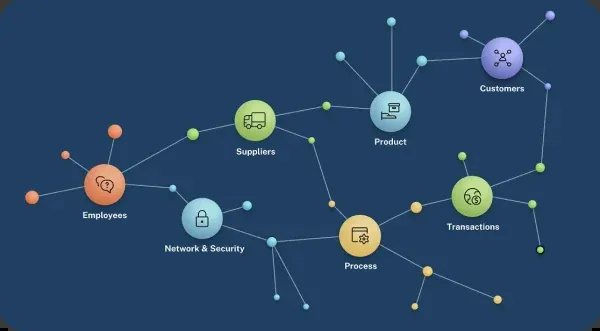
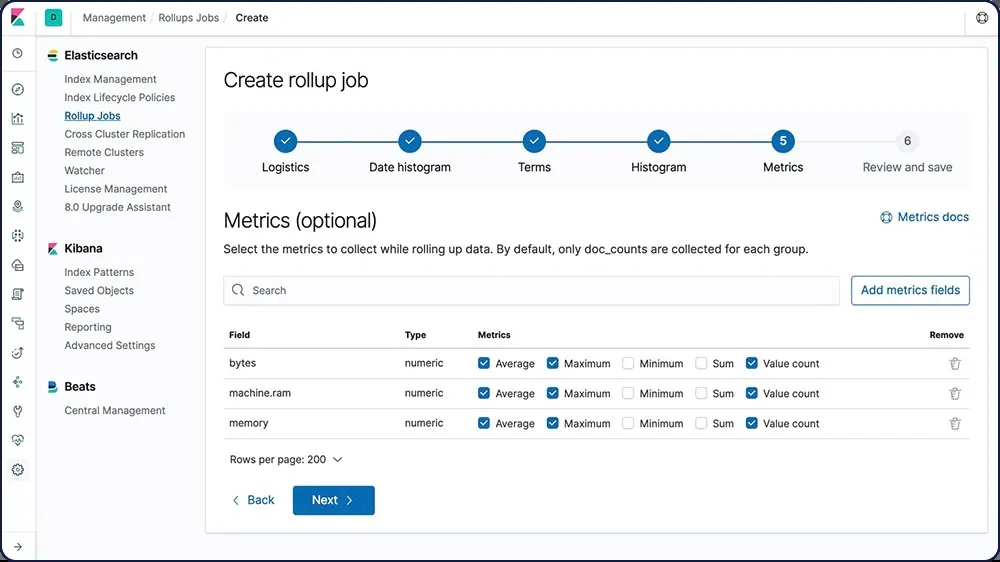
Interface Preview
Neo4j
Elasticsearch
Feature Comparison
| Feature | Neo4j | Elasticsearch |
|---|---|---|
| Core Capabilities | ||
| Primary Data Model | Native graph database storing nodes and relationships | Distributed document store with inverted indices |
| Full-Text Search | Basic full-text indexing via integrated Lucene | Advanced full-text search with fuzzy, semantic, and hybrid ranking |
| Graph Traversal | Native graph traversal with deep relationship queries at high speed | Limited parent-child and nested document relationships |
| Scalability and Performance | ||
| Horizontal Scaling | Read replicas for scaling; Infinigraph Edition adds automatic sharding | Built-in horizontal scaling with automatic data rebalancing across nodes |
| High Availability | 3-zone clusters with 99.95% uptime SLA on Business Critical tier | Primary and replica shards with automatic node recovery and failover |
| Cross-Cluster Replication | Available in Enterprise Edition for disaster recovery | Native cross-cluster and cross-datacenter replication included |
| Security and Access Control | ||
| Role-Based Access Control | Fine-grained access controls in Business Critical and Enterprise tiers | RBAC with field- and document-level security across all paid tiers |
| Encryption | Encrypted communications in managed AuraDB deployments | Encrypted communications and encryption at rest support |
| Audit Logging | Available in Enterprise Edition | Audit logging with IP filtering and security realms |
| Analytics and AI | ||
| Machine Learning | Graph Data Science library with 65+ algorithms and in-graph ML models | ML for anomaly detection, forecasting, and inference with Jina AI models |
| Vector Search | Vector index support for AI-powered knowledge graph applications | Native vector database with dense/sparse vectors and hybrid retrieval |
| Data Visualization | Neo4j Bloom for codeless graph exploration and visualization | Kibana for dashboards, Lens visualizations, and Elastic Maps |
| Integration and Ecosystem | ||
| Language Clients | Official drivers for Java, Python, JavaScript, .NET, and Go | Clients for Java, Python, Go, and more plus raw REST API access |
| Cloud Provider Support | AuraDB available on AWS, Azure, and Google Cloud | Elastic Cloud on AWS, Azure, and Google Cloud plus serverless option |
| Third-Party Integrations | Connectors for Spark, Kafka, and Microsoft Fabric; Snowflake analytics | 350+ integrations with APIs, language clients, and ingest pipelines |
Core Capabilities
Primary Data Model
Full-Text Search
Graph Traversal
Scalability and Performance
Horizontal Scaling
High Availability
Cross-Cluster Replication
Security and Access Control
Role-Based Access Control
Encryption
Audit Logging
Analytics and AI
Machine Learning
Vector Search
Data Visualization
Integration and Ecosystem
Language Clients
Cloud Provider Support
Third-Party Integrations
How they fit together
Neo4j and Elasticsearch serve fundamentally different data challenges. Neo4j excels at traversing deep, connected relationships in graph structures, while Elasticsearch dominates full-text search, log analytics, and real-time observability workloads at massive scale.
What each one handles
Use Neo4j for:
Choose Neo4j when your workload revolves around relationship-heavy data such as fraud detection networks, knowledge graphs, recommendation engines, or supply chain analysis. Its native graph storage and Cypher query language make multi-hop traversals orders of magnitude faster than relational or document-based alternatives. The Graph Data Science library with 65+ pre-tuned algorithms is particularly valuable for teams building AI-powered applications that need contextual understanding of connected data.
Use Elasticsearch for:
Choose Elasticsearch when your primary needs center on full-text search, log analytics, security monitoring, or observability across distributed systems. With 76,550 GitHub stars and 350+ integrations, Elasticsearch offers a mature ecosystem for search-driven applications. Its native vector database capabilities, semantic search with Jina AI models, and hybrid ranking make it a strong foundation for RAG and AI-powered search. The tiered pricing from $95/mo Standard to $175/mo Enterprise scales predictably as your requirements grow.
These roles reflect the available product evidence. Most teams run both; which one owns a given job depends on your stack and team.
Frequently Asked Questions
Can Neo4j replace Elasticsearch for search functionality?
Neo4j is not designed to replace Elasticsearch for full-text search workloads. While Neo4j supports basic full-text indexing through its integrated Lucene layer, Elasticsearch provides far more advanced search capabilities including fuzzy matching, semantic search with vector embeddings, hybrid ranking algorithms, and real-time search across petabytes of data. If your primary use case is searching text content, product catalogs, or log data, Elasticsearch is the better choice. However, if you need to search across connected entities and traverse relationships, Neo4j can complement Elasticsearch effectively in a polyglot architecture.
How do Neo4j and Elasticsearch compare on pricing for small teams?
Both tools offer free entry points that work well for small teams. Neo4j provides AuraDB Free with no credit card required, plus a fully featured Community Edition under the GPL-3.0 license. Elasticsearch offers a free 14-day trial on Elastic Cloud and an open-source self-managed option. Neo4j AuraDB Professional pricing starts at $65 per GB/month, with a minimum 1GB cluster ($65.70/month for the listed 1GB configuration). The actual cost comparison depends heavily on your workload: Neo4j pricing scales with database memory and storage consumed, while Elasticsearch pricing is driven by compute resources, storage tiers, and data transfer volumes.
Is it common to use Neo4j and Elasticsearch together in the same stack?
Yes, using Neo4j and Elasticsearch together is a well-established architectural pattern. Many organizations use Elasticsearch as the primary search and analytics layer for full-text queries, log aggregation, and observability, while Neo4j handles relationship-heavy workloads like recommendation engines, fraud detection graphs, and knowledge graph traversals. Data synchronization between the two systems can be managed through change data capture in Neo4j Enterprise Edition or application-level event pipelines. This polyglot persistence approach lets each database handle the workload it was optimized for rather than forcing one tool to do everything.
Which tool has better community support and learning resources?
Both tools have strong communities, with Elasticsearch having a sizable open-source footprint of 76,550 GitHub stars compared to Neo4j's 16,341 stars. Elasticsearch also has more verified user reviews at 217 versus Neo4j's 37. For learning resources, Neo4j offers GraphAcademy with free online courses and certifications, claiming over 100,000 trained experts. Elasticsearch provides extensive documentation, Elasticsearch Labs for hands-on tutorials, and a 14-day free trial for experimentation. User sentiment is similarly positive for both, with Neo4j rated 8.8/10 and Elasticsearch rated 8.7/10, suggesting comparable satisfaction levels among practitioners.