Buying snapshot
Scroll sideways to see all columns. With a keyboard, focus this table and use the arrow keys.
| Decision point | What Google states |
|---|---|
Plans | Free, Paid and Enterprise. Free includes free input and output tokens on certain models; Paid adds higher rate limits, context caching and the Batch API; Enterprise runs through Gemini Enterprise Agent Platform. |
Use of your content | Used to improve Google's products on the Free tier; not used on the Paid tier. |
Billing unit | Per model, per 1M tokens in USD, with input, output (including thinking tokens) and context caching priced separately. |
API interface | The Interactions API is the default since June 2026; generateContent is still supported but legacy. |
Google AI Studio | Free of charge in all available regions, for testing prompts, managing API keys and monitoring usage. |
Enterprise-only features | In Google's Python SDK, model tuning and batch prediction from BigQuery or Cloud Storage need Gemini Enterprise Agent Platform. |
Our take
Choose the Gemini API when you want Google's models through a developer API, with a free tier to prototype on and per-token billing in production. If you need model tuning, batch jobs that read from BigQuery or Cloud Storage, provisioned throughput or volume discounts, evaluate Google Cloud's Gemini Enterprise Agent Platform instead, and price it separately: Google says its prices may differ from the Developer API's.
Evaluate Gemini API
Comparisons
Where it stands out
Free prototyping on a current model. Gemini 3.8 Flash is free of charge on the Free tier, and Google AI Studio usage is free in all available regions.
Processing modes with their own rates. Standard, Batch, Flex and Priority are priced separately, and the Batch API is listed at a 50% cost reduction.
Built-in tools and agents. Models can use Google Search, URL Context, Google Maps, Code Execution and Computer Use, and Managed Agents write and run code, search the web and create files in a hosted sandbox from one request.
Long inputs. Gemini 4 Argon has a shared 1M-token context window, and document understanding handles up to 1,000 pages of PDF.
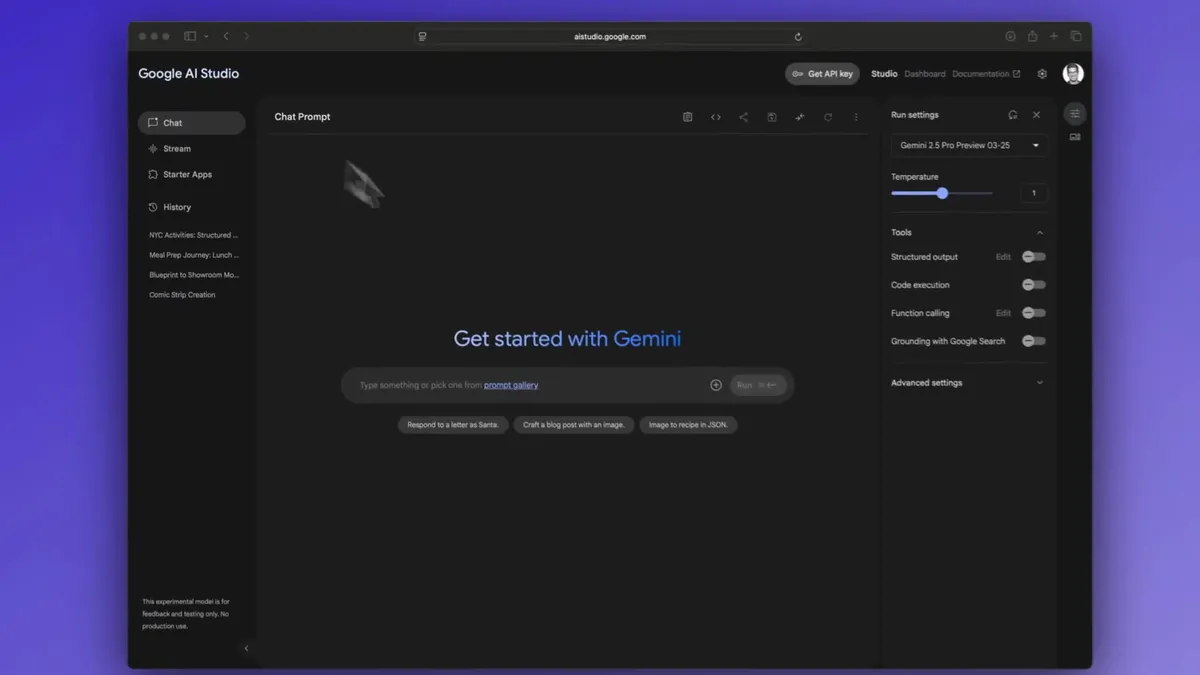
Product screenshot

Trade-offs to weigh
Announced price increases. Gemini 4 Argon's Standard input price goes from $2.00 to $4.00 per 1M tokens on December 1, 2026, and Gemini 3.8 Flash's from $0.75 to $1.50 on January 1, 2027. Budget on the later rates.
Prompt length changes the rate. Gemini 3.1 Pro Preview charges $2.00 per 1M input tokens for prompts up to 200k tokens and $4.00 above that.
Tools add their own charges. After 5,000 free Google Search grounding requests a month, each 1,000 requests cost $14, and one prompt can trigger several searches.
The free tier has conditions. Free-tier content is used to improve Google's products, model access is limited, and Gemini 4 Argon is not offered on it. Google also states that rate limits are subject to change.
Pricing and plan conditions
Which model you call, how many tokens you send and receive, the processing mode and tool calls such as Search grounding together set the bill. Managed agents are billed at the same token rates, and their sandbox compute is not billed during the preview.
Scroll sideways to see all columns. With a keyboard, focus this table and use the arrow keys.
| Model | Input | Output | Conditions |
|---|---|---|---|
Gemini 4 Argon | $2.00 | $10.00 | Through November 30, 2026; $4.00 input and $20.00 output from December 1, 2026. Not on the Free tier. |
Gemini 3.8 Flash | $0.75 | $3.75 | Through December 31, 2026; $1.50 and $7.50 from January 1, 2027. Free of charge on the Free tier. |
Gemini 3.1 Pro Preview | $2.00 | $12.00 | Prompts up to 200k tokens; $4.00 and $18.00 for prompts over 200k. |
Scroll sideways to see all columns. With a keyboard, focus this table and use the arrow keys.
| Mode | Input | Output |
|---|---|---|
Standard | $0.75 | $3.75 |
Batch | $0.375 | $1.875 |
Flex | $0.375 | $1.875 |
Priority | $1.35 | $6.75 |
Enterprise also offers optional dedicated support channels.
Public signals
About these signals
Verified factual signals from public sources. They indicate observable activity or interest, not total adoption, product quality, or cost.
225 GitHub commits 90d4.0k GitHub stars0 vulnerabilities across 2 packages
See all signals from 6 sources
npm · @google/genai@2.31.0 · PyPI · google-genai@2.33.0
Alternatives to Gemini API
The reviewed substitutes for Gemini API among the foundation model providers, and what would make each one the better answer.
Direct alternatives
Reviewed substitutes: products bought for the same job, where a team picks one.
- Cohere
- Two foundation-model APIs an application calls for text generation and related model tasks, each sold as per-token API access to the vendor's models (Google's Gemini Developer API pricing page lists paid rates per 1M input and output tokens). A team routes its traffic to one provider or splits it deliberately.Applies to: Choosing which foundation-model API an application will call.
- Anthropic
- Two foundation-model APIs an application calls for text, multimodal and agent workloads. Both sell model access per 1M input and output tokens with a discounted batch mode (Google's Gemini Developer API pricing page lists the Batch API at a 50% cost reduction); a team routes its traffic to one provider or splits it deliberately.Applies to: Choosing which foundation-model API an application will call.
- Mistral AI
- Two foundation-model APIs an application calls for text and multimodal generation, each sold as per-token API access to the vendor's models (Google's Gemini Developer API pricing page lists paid rates per 1M input and output tokens). A team routes its traffic to one provider or splits it deliberately.Applies to: Choosing which foundation-model API an application will call.
- OpenAI
- Two foundation-model APIs an application calls for text, multimodal and agent workloads, both priced per 1M input and output tokens. Google documents that Gemini models are accessible using the OpenAI libraries and REST API (ai.google.dev/gemini-api/docs/openai), so a team can switch one for the other in the same code; it routes its traffic to one or splits it deliberately.Applies to: Choosing which foundation-model API an application will call.