Phidata review details
This Phidata review evaluates the open-source AI agent framework now known as Agno, examining its architecture for building multi-agent systems with memory, knowledge, and tool integration. Originally launched as Phidata, the project rebranded to Agno in 2025 while retaining the same core mission: giving engineering teams a Python-native way to build, deploy, and manage production-ready AI agents. We assessed the framework based on its documentation, GitHub activity, pricing transparency, and integration ecosystem to determine where it fits in the rapidly expanding AI agents landscape.
Overview
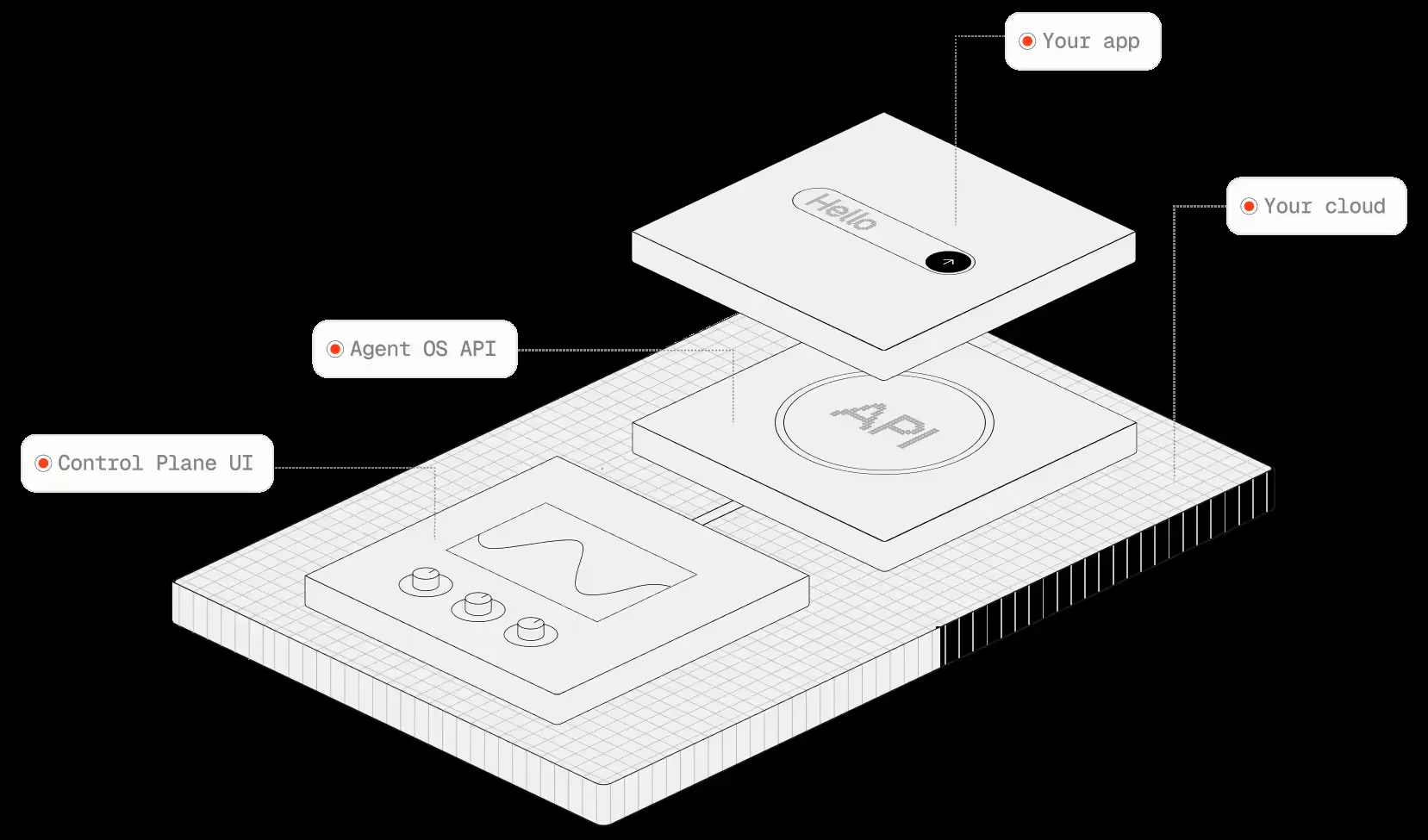
Phidata (Agno) is an open-source Python framework and production runtime for building multi-agent AI systems. Licensed under Apache 2.0, the project has accumulated over 39,000 GitHub stars and 5,300 forks, making it one of the more actively adopted agent frameworks available. The platform follows a three-layer architecture: an SDK for defining agents, a FastAPI-based runtime for production deployment, and AgentOS, a browser-based control plane for monitoring and management.
The framework targets engineering teams building agent-powered applications that need to run in their own cloud infrastructure. Unlike hosted agent platforms that route data through external servers, Agno emphasizes a privacy-first design where all data stays within the user's environment. The project supports multiple LLM providers including OpenAI and Anthropic Claude, wraps additional frameworks like LangGraph and DSPy, and integrates with PostgreSQL and SQLite for persistence. With over 5,400 commits and 187 releases as of early 2026, the project maintains an active development cadence alongside many competing frameworks in the AI agents category.
Key Features and Architecture
Agno's architecture centers on three distinct layers that separate agent definition from deployment and monitoring.
SDK Layer: The Python SDK lets developers define agents with memory, knowledge bases, guardrails, and over 100 tool integrations. Agents can use any LLM provider, and the SDK supports composing agents into teams and workflows. A key design choice is model-agnostic construction, meaning you can swap between OpenAI GPT models, Anthropic Claude, or other providers without rewriting agent logic. The SDK also supports the Claude Agent SDK, LangGraph, and DSPy as alternative agent construction frameworks, letting teams adopt Agno's runtime without abandoning their existing agent code.
Runtime Layer: The production runtime wraps agents as FastAPI-based stateless services with session scoping. It exposes approximately 50 API endpoints supporting Server-Sent Events (SSE) and WebSocket streaming. Built-in capabilities include OpenTelemetry tracing, run history, audit logs, human approval workflows, cron-based scheduling, and JWT-based RBAC with multi-tenant isolation. This layer handles the operational complexity that most teams encounter when moving from prototype to production, eliminating the need to build custom session management or authentication middleware.
Control Plane (AgentOS): The browser-based UI provides session tracing, performance monitoring, memory management, and agent evaluation tools. Teams can chat with agents, inspect traces, and manage knowledge bases directly from the dashboard. AgentOS connects to the runtime via live connections and supports multi-user access with per-seat licensing.
The framework supports deployment to Docker containers, AWS, GCP, and Railway. Messaging integrations include Slack, WhatsApp, Telegram, and Discord, allowing agents to operate across multiple channels from a single deployment. The Model Context Protocol (MCP) is also supported for standardized tool integration.
Ideal Use Cases
Enterprise internal assistants: Teams of 5-20 engineers building customer support, knowledge management, or workflow automation agents benefit from Agno's multi-tenant isolation and RBAC. The self-hosted model is ideal for organizations with strict data residency requirements in regulated industries like healthcare and finance.
Multi-agent orchestration: Projects that require multiple specialized agents working together (for example, a research agent paired with a writing agent and a review agent) can leverage the team and workflow composition features in the SDK. The runtime's session scoping ensures clean state isolation between concurrent agent conversations.
Rapid prototyping to production: Startups and product teams that need to move from a proof-of-concept agent to a production API within weeks benefit from the integrated runtime and monitoring. The framework handles session management, scheduling, and tracing out of the box, reducing time to deployment significantly.
Don't use Phidata if you need a fully managed, zero-infrastructure solution. The framework requires self-hosting the runtime and managing your own cloud resources, which adds operational overhead compared to hosted alternatives like managed LLM APIs. Teams without dedicated DevOps capacity should consider managed platforms instead.
Pricing and Licensing
Phidata (Agno) uses an open-source core with a commercial control plane model. The core agent framework is completely free under the Apache 2.0 license, with no restrictions on commercial use.
| Tier | Price | Key Inclusions |
|---|---|---|
| Free | $0/month | Open-source SDK, local AgentOS control plane, agent chat, session monitoring, knowledge and memory management, community support |
| Pro | $150/month | Live AgentOS control plane, 1 live connection, 4 included seats, unlimited usage and monitoring, unlimited data retention, no per-event fees |
| Enterprise | Custom pricing | Dedicated Slack support, assigned technical lead, support SLA, custom SSO and RBAC, self-hosted control plane option |
The Pro plan includes add-on pricing at $30/month per additional seat and $95/month per extra live connection beyond the one included. A notable cost advantage is the absence of per-event fees or data egress charges, which can accumulate quickly with high-throughput agent systems. The free tier is sufficient for local development, testing, and small-scale experimentation. Teams running production workloads that require centralized monitoring, live tracing, and team collaboration will need the Pro tier. For organizations requiring dedicated support, custom security configurations, and self-hosted deployments of the control plane itself, the Enterprise tier provides tailored solutions at negotiated rates.
Pros and Cons
Pros:
- Model-agnostic design supports OpenAI, Anthropic Claude, LangGraph, and DSPy without vendor lock-in
- Strong performance benchmarks: the project reports a 529x agent instantiation speedup and a 24x memory footprint reduction compared to LangGraph
- Privacy-first architecture keeps all data within your cloud infrastructure with no external data egress
- Production-ready runtime with built-in JWT authentication, RBAC, OpenTelemetry tracing, and session management
- Active open-source community with 39,000+ GitHub stars, 5,300+ forks, and consistent release cadence across 187 releases
- No per-event pricing model eliminates cost surprises when scaling agent throughput
Cons:
- Requires self-hosting and cloud infrastructure management, which increases operational burden for small teams without DevOps resources
- The AgentOS control plane is limited to local-only mode in the free tier, pushing production teams toward the paid Pro plan
- Documentation is heavily oriented toward the Agno rebrand, making it harder to find legacy Phidata-specific guides and migration paths
- Vector store and advanced RAG pipeline documentation remains sparse compared to more established competitors like LangChain
Alternatives and How It Compares
AutoGen (Microsoft): Choose AutoGen when you need conversational multi-agent patterns with built-in turn-taking and group chat orchestration. AutoGen focuses on agent conversation flows, while Agno provides a broader production runtime with deployment, monitoring, and scheduling capabilities built in. AutoGen is the better pick for research-oriented projects where conversation dynamics matter more than production operations.
Semantic Kernel (Microsoft): Semantic Kernel is the better choice when you are already invested in the Microsoft ecosystem with Azure, .
NET, or C# applications. It integrates tightly with Azure AI services and Azure OpenAI. Agno is more suitable for Python-first teams that want cloud-agnostic deployment across AWS, GCP, or other providers.
LangChain/LangGraph: LangGraph offers well-developed RAG pipeline tooling and an extensive ecosystem of pre-built chains and retrievers. Choose LangGraph for document-heavy applications where retrieval quality is the primary concern. Agno wins on production runtime features, agent instantiation speed, and operational tooling. Notably, Agno can wrap LangGraph agents in its runtime, so the two are not mutually exclusive.
CrewAI: CrewAI simplifies multi-agent role assignment with a higher-level abstraction. It is easier to get started with for teams that want role-based agent orchestration without managing infrastructure. Agno offers more granular control and better production deployment features but requires a steeper learning curve and more infrastructure investment.
Choose Phidata (Agno) when you need a self-hosted, privacy-first agent framework with an integrated production runtime and monitoring dashboard, and your team has the engineering capacity to manage cloud infrastructure and deployment pipelines.