Decision comparison
Azure Machine Learning vs Feast
For enterprise MLOps standardized on Azure, Azure Machine Learning fits when feature reuse must sit beside managed training, deployment, governance, and CI/CD. Feast fits when the primary requirement is a portable, dedicated feature layer serving consistent offline and online features across an existing stack. Azure ML stops being the focused answer when cross-platform feature-serving independence is paramount; Feast stops being the complete answer when managed model training, AutoML, and Azure-native governance are required.
Architecture choice. These take different approaches to the same problem. Read the table as a fit question rather than a feature race.
All 2 are ML platforms.
Quick Comparison
| Decision factor | Azure Machine Learning | Feast |
|---|---|---|
| Best For | Azure-centric enterprises needing governed end-to-end model development, Spark preparation, AutoML, deployment, and reusable features across workspaces. | Teams needing an infrastructure-agnostic feature store for consistent offline training data and low-latency online production feature serving. |
| Architecture | Managed Azure MLOps service combining Studio, compute clusters, Spark preparation, feature store, pipelines, endpoints, and hybrid compute execution. | Open-source feature-store layer connecting offline and online stores, feature server, streaming ingestion, transformations, and Web UI. |
| Pricing Model | Azure Machine Learning has no separate licence fee: the Studio workspace is free and you pay for the compute and services consumed. Compute is billed at the underlying virtual-machine rate, which varies by VM size and region, with savings plans and reserved terms available. Managed online endpoints bill per instance-hour on the same basis. Microsoft renders the per-VM rates client-side rather than publishing a single figure, so use the Azure pricing calculator for your region and VM choice. | Open source under the Apache-2.0 license; source code at https://github.com/feast-dev/feast. |
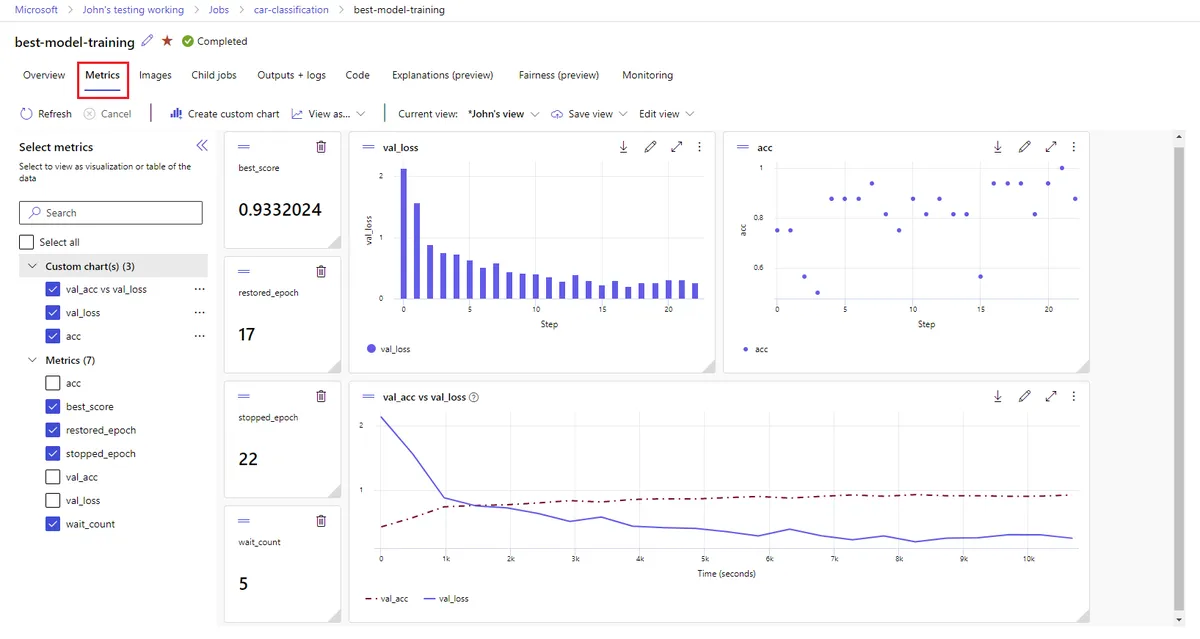
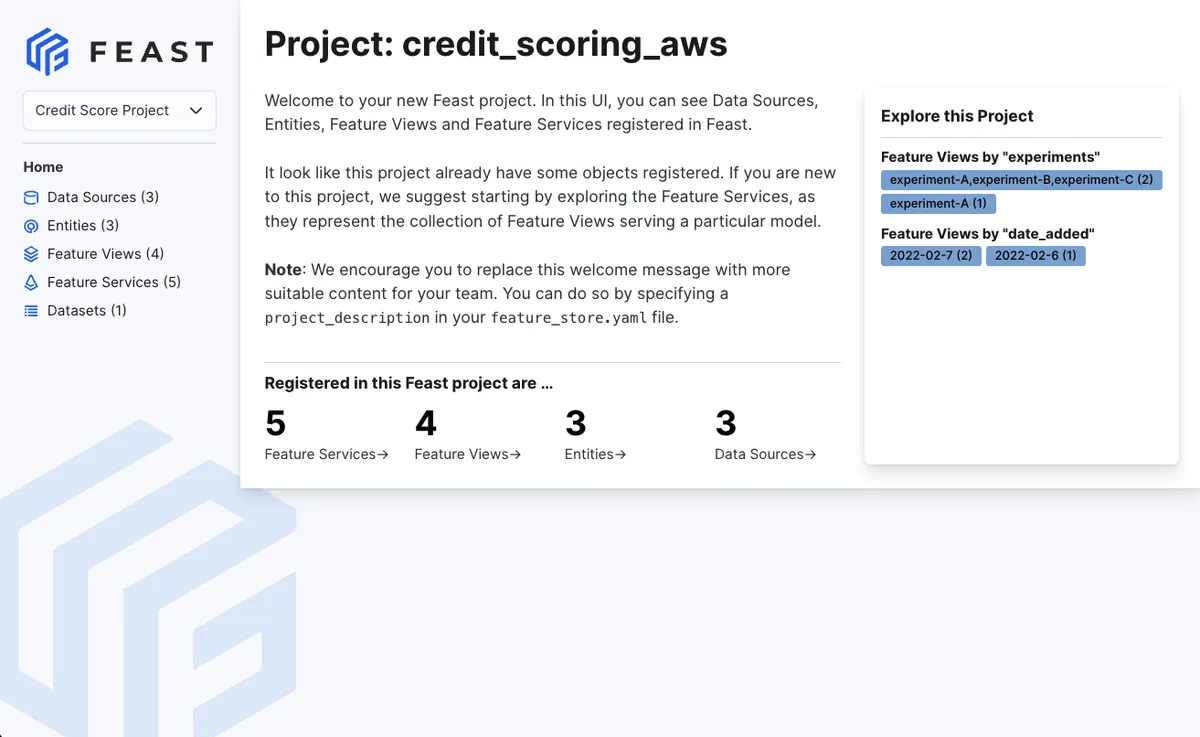
| Ease of Use | Studio provides managed workflows for automated ML, experiment tracking, model management, reproducible pipelines, and integrated Azure governance. | Requires teams to define feature repositories and operate selected infrastructure, while providing discovery, transformations, and a Web UI. |
| Scalability | Uses purpose-built GPU and InfiniBand infrastructure, selectable CPU or GPU machines, managed endpoints, and compute anywhere hybrid execution. | Serves structured training and inference data at high scale through pluggable offline stores, online stores, and streaming ingestion. |
| Community/Support | Microsoft Azure ecosystem and enterprise platform support; cited Azure ML R SDK repository has 106 GitHub stars. | Open-source Python project with 7,357 GitHub stars, 293 contributors, 12M+ downloads, and 5.5K Slack members. |
Azure Machine Learning
- Best For:
- Azure-centric enterprises needing governed end-to-end model development, Spark preparation, AutoML, deployment, and reusable features across workspaces.
- Architecture:
- Managed Azure MLOps service combining Studio, compute clusters, Spark preparation, feature store, pipelines, endpoints, and hybrid compute execution.
- Pricing Model:
- Azure Machine Learning has no separate licence fee: the Studio workspace is free and you pay for the compute and services consumed. Compute is billed at the underlying virtual-machine rate, which varies by VM size and region, with savings plans and reserved terms available. Managed online endpoints bill per instance-hour on the same basis. Microsoft renders the per-VM rates client-side rather than publishing a single figure, so use the Azure pricing calculator for your region and VM choice.
- Ease of Use:
- Studio provides managed workflows for automated ML, experiment tracking, model management, reproducible pipelines, and integrated Azure governance.
- Scalability:
- Uses purpose-built GPU and InfiniBand infrastructure, selectable CPU or GPU machines, managed endpoints, and compute anywhere hybrid execution.
- Community/Support:
- Microsoft Azure ecosystem and enterprise platform support; cited Azure ML R SDK repository has 106 GitHub stars.
Feast
- Best For:
- Teams needing an infrastructure-agnostic feature store for consistent offline training data and low-latency online production feature serving.
- Architecture:
- Open-source feature-store layer connecting offline and online stores, feature server, streaming ingestion, transformations, and Web UI.
- Pricing Model:
- Open source under the Apache-2.0 license; source code at https://github.com/feast-dev/feast.
- Ease of Use:
- Requires teams to define feature repositories and operate selected infrastructure, while providing discovery, transformations, and a Web UI.
- Scalability:
- Serves structured training and inference data at high scale through pluggable offline stores, online stores, and streaming ingestion.
- Community/Support:
- Open-source Python project with 7,357 GitHub stars, 293 contributors, 12M+ downloads, and 5.5K Slack members.
Public signals
Verified factual signals only. Bars appear only for like-for-like metrics with five weekly assessments for every tool; missing evidence stays explicit. These signals do not establish enterprise adoption, product quality, or total cost.
| Metric | Azure Machine Learning | Feast |
|---|---|---|
| GitHub commits, 90d(Developer adoption) | 0 | Not available |
| GitHub stars(Developer adoption) | 106 | Not available |
| Search interest(Market interest) | 1 | Not available |
| Hacker News mentions, 90d(Community interest) | 0 | Not available |
| npm weekly downloads(Developer adoption) | 12.8k | Not available |
| PyPI weekly downloads(Developer adoption) | 745.6k | 76.5k |
| Stack Overflow questions(Community interest) | 2.0k | Not available |
| GitHub commits, 90d(Product adoption) | Not available | 235 |
| GitHub stars(Product adoption) | Not available | 7,000+ |
As of November 16, 2026 — updated weekly.
Health & risk evidence
Observed public-source checks for mapped package versions and repositories.
Azure Machine Learning
November 16, 2026Package vulnerabilities
npm · @azure/arm-machinelearning@3.0.0 · PyPI · azure-ai-ml@1.35.2
0 vulnerabilities
across 2 packages
Repository security score
Not available
Feast
November 16, 2026Package vulnerabilities
PyPI · feast@0.68.0
0 vulnerabilities
across 1 package
Repository security score
Not available
Interface Preview
Azure Machine Learning
Feast
Feature Comparison
| Feature | Azure Machine Learning | Feast |
|---|---|---|
| Feature engineering and consistency | ||
| Data preparation | Iterates data preparation on Apache Spark clusters interoperable with Microsoft Fabric | Builds training datasets from configured offline feature-store data sources |
| Point-in-time feature retrieval | Not available in supplied product feature details | Generates point-in-time correct feature sets for historical training data |
| Feature transformations | Uses Spark-based preparation before model development workflows | Applies on-demand and streaming transformations to defined features |
| Feature store and serving | ||
| Feature discovery | Makes reusable features discoverable across Azure Machine Learning workspaces | Defines, manages, and discovers features through an open-source feature store |
| Online feature access | Deploys managed online endpoints billed per instance-hour | Retrieves online features with low latency from configured online stores |
| Feature service interface | Uses Azure managed endpoints for deployed model inference | Exposes feature retrieval through a dedicated feature server |
| Real-time data operations | ||
| Streaming ingestion | Not available in supplied product feature details | Ingests streaming data through push-based feature updates |
| Feature quality monitoring | Not available in supplied product feature details | Monitors feature quality for production feature-store operations |
| Production recommendation features | Deploys trained recommendation models through managed online endpoints | Serves real-time user interaction features for personalized recommendations |
| ML lifecycle and governance | ||
| Automated model development | Automated ML builds classification, regression, vision, and NLP models | Does not train models; supplies features to external ML workflows |
| Pipeline automation | Reproduces end-to-end pipelines and automates CI/CD workflows | Manages feature definitions rather than end-to-end model CI/CD pipelines |
| Responsible AI assessment | Provides interpretability, fairness disparity metrics, and mitigation capabilities | Maintains feature consistency; responsible-AI assessment is outside supplied scope |
| Infrastructure and deployment model | ||
| Compute infrastructure | Uses Azure CPU or GPU machines with GPU and InfiniBand options | Runs across selected infrastructure through an infrastructure-agnostic access layer |
| Hybrid operation | Runs compute anywhere for hybrid machine-learning workloads | Connects chosen offline and online stores without prescribing one platform |
| User interface | Provides Azure Machine Learning Studio for managed ML workflows | Provides Feast Web UI for feature-store visibility and management |
Feature engineering and consistency
Data preparation
Point-in-time feature retrieval
Feature transformations
Feature store and serving
Feature discovery
Online feature access
Feature service interface
Real-time data operations
Streaming ingestion
Feature quality monitoring
Production recommendation features
ML lifecycle and governance
Automated model development
Pipeline automation
Responsible AI assessment
Infrastructure and deployment model
Compute infrastructure
Hybrid operation
User interface
Which approach fits
For enterprise MLOps standardized on Azure, Azure Machine Learning fits when feature reuse must sit beside managed training, deployment, governance, and CI/CD. Feast fits when the primary requirement is a portable, dedicated feature layer serving consistent offline and online features across an existing stack. Azure ML stops being the focused answer when cross-platform feature-serving independence is paramount; Feast stops being the complete answer when managed model training, AutoML, and Azure-native governance are required.
When each approach fits
Choose Azure Machine Learning if:
Choose Azure Machine Learning when your organization already operates on Azure and needs Spark-based preparation, reusable features, managed endpoints, model lifecycle tooling, responsible-AI capabilities, and Azure governance in one service.
Choose Feast if:
Choose Feast when you need point-in-time correct training features, low-latency online retrieval, streaming feature ingestion, and the freedom to connect infrastructure across cloud or self-managed environments.
These scenarios reflect the available product evidence. Your requirements, existing stack, and team expertise should guide the final decision.
Frequently Asked Questions
What is the main difference between Azure Machine Learning and Feast?
Azure Machine Learning is an enterprise MLOps platform spanning data preparation, automated ML, experiment tracking, model management, pipelines, model deployment, governance, and a feature store. Feast is a specialized open-source feature store: it defines, manages, discovers, and serves structured features for training and inference. Both can support feature reuse, but Feast concentrates on offline and online feature consistency, while Azure ML covers the broader model lifecycle.
Which is better for small teams?
For a small team that already uses Azure and wants minimal platform assembly, Azure Machine Learning can be the more direct operational choice because Studio, managed compute, automated ML, pipelines, and endpoints are integrated. Its costs still depend on consumed Azure resources. For a small engineering team that already has training and serving infrastructure and specifically needs a feature store, Feast can be attractive because it is Apache-2.0 open source and free to self-host, but the team must operate its chosen stores and integrations.
Can I migrate from Azure Machine Learning to Feast?
Yes, but it is a selective migration rather than a like-for-like platform replacement. A team can recreate feature definitions in Feast, connect Feast to appropriate offline and online stores, and validate point-in-time training datasets plus online retrieval behavior. Azure ML capabilities such as automated ML, experiment tracking, managed model endpoints, responsible-AI tools, and CI/CD pipelines need to remain in Azure ML or be replaced with separate tools. Run both feature paths in parallel and compare training-versus-serving consistency before cutover.
What are the pricing differences?
Azure Machine Learning has no separate licence charge: the workspace is free, while underlying compute and services used for training or inference are billed. The supplied Azure D-series example lists $2,242.56 per month pay-as-you-go, $1,547.37 per month with a one-year savings plan, and $1,054.01 per month with a three-year savings plan; actual VM pricing varies by region and selection. Feast is Apache-2.0 open source and free to self-host. The supplied information provides no Feast managed-service rate, so infrastructure and operating costs depend on the stores and platform you choose.