Decision comparison
Feast vs Gemini Enterprise Agent Platform
For feature management on a BigQuery-centred ML stack, choose Feast when point-in-time correctness, reusable feature definitions, and low-latency feature retrieval are the core requirement. Choose Gemini Enterprise Agent Platform when the workload extends into managed model training, deployment, generative AI applications, or governed enterprise agents; it is not a direct replacement for Feast's dedicated feature-store workflow.
Architecture choice. These take different approaches to the same problem. Read the table as a fit question rather than a feature race.
All 2 are ML platforms.
Quick Comparison
| Decision factor | Feast | Gemini Enterprise Agent Platform |
|---|---|---|
| Best For | Feature management for BigQuery-centred ML teams requiring consistent training and real-time inference features. | Google Cloud teams building, training, deploying, governing, and optimizing enterprise AI agents and ML models. |
| Architecture | Open-source feature store separating offline stores, online stores, feature server, transformations, and ingestion. | Managed Google Cloud platform combining generative AI apps, AutoML, custom training, pipelines, model serving, and agents. |
| Pricing Model | Open source under the Apache-2.0 license; source code at https://github.com/feast-dev/feast. | Usage-based; USD prices for Iowa (us-central1). Custom training: n1-standard-4 $0.2185 per hour, accelerators extra. Inference per node hour: e2-standard-2 $0.0771, n1-standard-2 $0.1095. AutoML image training: $3.465 per hour. Pipelines: $0.03 per pipeline run plus the Google Cloud resources used. No cost to keep models in the Model Registry. Feature Store online operations bill per node hour. Workbench bills compute plus a management fee. Generative AI is priced on a separate page. Verified 2026-10-05 against https://cloud.google.com/products/gemini-enterprise-agent-platform/pricing. Google's Agent Platform pricing page points new users to the Google Cloud Free Program, which gives $300 in free credits and 20+ free products. Verified 2026-10-05 against https://cloud.google.com/products/gemini-enterprise-agent-platform/pricing. |
| Ease of Use | Requires feature definitions, infrastructure configuration, and operating integrations; Feast Web UI aids discovery and management. | Unified managed platform consolidates model training, testing, tuning, deployment, and agent development within Google Cloud. |
| Scalability | Serves low-latency online features while using infrastructure-agnostic access to connect scalable offline and online stores. | Managed compute supports custom training, accelerator-backed workloads, model serving nodes, and enterprise-grade agent operations. |
| Community/Support | Apache-2.0 Python project with 7,357 GitHub stars, 293 contributors, Slack community, and 12M+ downloads. | Google Cloud commercial platform; its Python SDK repository has 912 GitHub stars and Apache-2.0 licensing. |
Feast
- Best For:
- Feature management for BigQuery-centred ML teams requiring consistent training and real-time inference features.
- Architecture:
- Open-source feature store separating offline stores, online stores, feature server, transformations, and ingestion.
- Pricing Model:
- Open source under the Apache-2.0 license; source code at https://github.com/feast-dev/feast.
- Ease of Use:
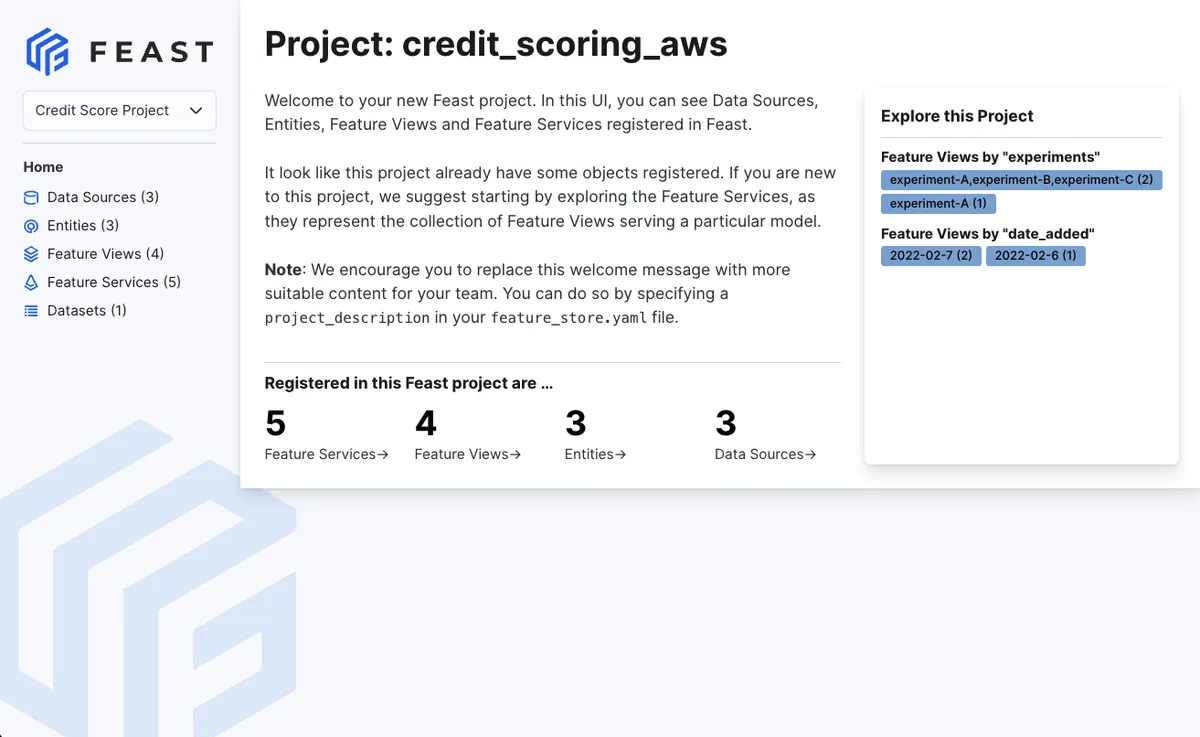
- Requires feature definitions, infrastructure configuration, and operating integrations; Feast Web UI aids discovery and management.
- Scalability:
- Serves low-latency online features while using infrastructure-agnostic access to connect scalable offline and online stores.
- Community/Support:
- Apache-2.0 Python project with 7,357 GitHub stars, 293 contributors, Slack community, and 12M+ downloads.
Gemini Enterprise Agent Platform
- Best For:
- Google Cloud teams building, training, deploying, governing, and optimizing enterprise AI agents and ML models.
- Architecture:
- Managed Google Cloud platform combining generative AI apps, AutoML, custom training, pipelines, model serving, and agents.
- Pricing Model:
- Usage-based; USD prices for Iowa (us-central1). Custom training: n1-standard-4 $0.2185 per hour, accelerators extra. Inference per node hour: e2-standard-2 $0.0771, n1-standard-2 $0.1095. AutoML image training: $3.465 per hour. Pipelines: $0.03 per pipeline run plus the Google Cloud resources used. No cost to keep models in the Model Registry. Feature Store online operations bill per node hour. Workbench bills compute plus a management fee. Generative AI is priced on a separate page. Verified 2026-10-05 against https://cloud.google.com/products/gemini-enterprise-agent-platform/pricing. Google's Agent Platform pricing page points new users to the Google Cloud Free Program, which gives $300 in free credits and 20+ free products. Verified 2026-10-05 against https://cloud.google.com/products/gemini-enterprise-agent-platform/pricing.
- Ease of Use:
- Unified managed platform consolidates model training, testing, tuning, deployment, and agent development within Google Cloud.
- Scalability:
- Managed compute supports custom training, accelerator-backed workloads, model serving nodes, and enterprise-grade agent operations.
- Community/Support:
- Google Cloud commercial platform; its Python SDK repository has 912 GitHub stars and Apache-2.0 licensing.
Public signals
Verified factual signals only. Bars appear only for like-for-like metrics with five weekly assessments for every tool; missing evidence stays explicit. These signals do not establish enterprise adoption, product quality, or total cost.
| Metric | Feast | Gemini Enterprise Agent Platform |
|---|---|---|
| GitHub commits, 90d(Product adoption) | 235 | Not available |
| GitHub stars(Product adoption) | 7,000+ | Not available |
| PyPI weekly downloads(Developer adoption) | 76.5k | 20.1M |
| GitHub commits, 90d(Developer adoption) | Not available | 146 |
| GitHub stars(Developer adoption) | Not available | 914 |
| Search interest(Market interest) | Not available | 5 |
| Hacker News mentions, 90d(Community interest) | Not available | 0 |
| npm weekly downloads(Developer adoption) | Not available | 466.1k |
| Stack Overflow questions(Community interest) | Not available | 985 |
As of November 16, 2026 — updated weekly.
Health & risk evidence
Observed public-source checks for mapped package versions and repositories.
Feast
November 16, 2026Package vulnerabilities
PyPI · feast@0.68.0
0 vulnerabilities
across 1 package
Repository security score
Not available
Gemini Enterprise Agent Platform
November 16, 2026Package vulnerabilities
npm · @google-cloud/aiplatform@7.8.0 · PyPI · google-cloud-aiplatform@2.9.0
0 vulnerabilities
across 2 packages
Repository security score
Not available
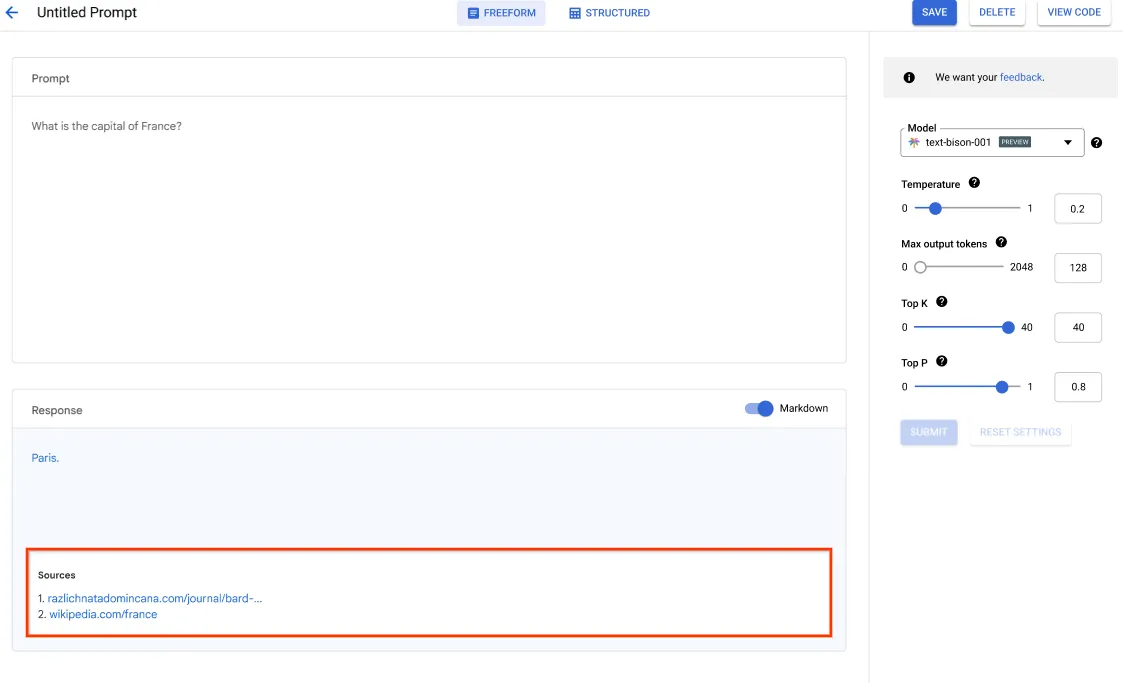
Interface Preview
Feast
Gemini Enterprise Agent Platform
Feature Comparison
| Feature | Feast | Gemini Enterprise Agent Platform |
|---|---|---|
| Feature data management | ||
| Offline feature storage | Defines offline feature stores for training-data retrieval and point-in-time joins | Feature Store capabilities bill online operations per node hour |
| Online feature serving | Retrieves low-latency online features through configured online feature stores | Serves deployed models using managed inference nodes billed hourly |
| Training-serving consistency | Uses shared feature definitions across historical training and online inference | Trains, tests, tunes, and serves models on one managed platform |
| Data freshness and transformations | ||
| Point-in-time correctness | Builds point-in-time correct feature sets from historical source data | Not verified |
| Streaming transformations | Applies streaming transformations and push-based streaming data ingestion | Not verified |
| On-demand transformations | Computes on-demand transformations when features are requested | Not verified |
| Model and agent lifecycle | ||
| Custom model training | Supplies structured features to external ML training systems | Runs custom training on billed Google Cloud compute and accelerators |
| AutoML | Not verified | Provides AutoML image training billed at $3.465 per hour |
| Enterprise AI agents | Delivers structured data to AI and LLM applications | Builds, scales, governs, and optimizes enterprise-grade AI agents |
| Operations and governance | ||
| Feature serving endpoint | Exposes feature retrieval through a dedicated feature server | Deploys models to managed serving infrastructure and inference nodes |
| Feature quality monitoring | Monitors feature quality across configured feature-store workflows | Not verified |
| Model registry | Not verified | Keeps models in Model Registry without separate storage cost |
| Commercial and ecosystem model | ||
| Deployment ownership | Self-hosts Apache-2.0 software on chosen infrastructure and data stores | Consumes Google Cloud managed services with region-specific pricing |
| Pipeline execution pricing | No Feast license fee; underlying orchestration and infrastructure costs vary | Charges $0.03 per pipeline run plus Google Cloud resources |
| Generative model token pricing | Does not publish a generative-model token rate | Gemini 4 Argon input costs $4.00 per million tokens globally |
Feature data management
Offline feature storage
Online feature serving
Training-serving consistency
Data freshness and transformations
Point-in-time correctness
Streaming transformations
On-demand transformations
Model and agent lifecycle
Custom model training
AutoML
Enterprise AI agents
Operations and governance
Feature serving endpoint
Feature quality monitoring
Model registry
Commercial and ecosystem model
Deployment ownership
Pipeline execution pricing
Generative model token pricing
Which approach fits
For feature management on a BigQuery-centred ML stack, choose Feast when point-in-time correctness, reusable feature definitions, and low-latency feature retrieval are the core requirement. Choose Gemini Enterprise Agent Platform when the workload extends into managed model training, deployment, generative AI applications, or governed enterprise agents; it is not a direct replacement for Feast's dedicated feature-store workflow.
When each approach fits
Choose Feast if:
Choose Feast when BigQuery is part of your offline data layer and you need a dedicated feature store for historical joins, streaming or push ingestion, online retrieval, feature quality monitoring, and consistent feature definitions across training and inference.
Choose Gemini Enterprise Agent Platform if:
Choose Gemini Enterprise Agent Platform when your team is committed to Google Cloud and needs managed AutoML or custom training, model serving, pipelines, Model Registry, generative AI applications, and enterprise agent lifecycle capabilities.
These scenarios reflect the available product evidence. Your requirements, existing stack, and team expertise should guide the final decision.
Frequently Asked Questions
What is the main difference between Feast and Gemini Enterprise Agent Platform?
Feast is a dedicated open-source feature store. It defines, discovers, manages, and serves structured features through offline and online stores, including point-in-time correct historical feature sets and low-latency online retrieval. Gemini Enterprise Agent Platform is Google Cloud's broader managed AI platform: it covers AutoML, custom training, model deployment, pipelines, model management, generative AI applications, and enterprise agents. Feast can provide feature data to models hosted on other systems, while Gemini Enterprise Agent Platform operates much more of the model and agent lifecycle.
Which is better for small teams?
For a small team whose immediate problem is reliable ML features on a BigQuery-centred stack, Feast is often the more focused choice because its Apache-2.0 software has no license fee and directly addresses offline and online feature consistency. The team must still operate its selected infrastructure and integrations. For a small team that prefers managed Google Cloud services and needs to train, deploy, or build agentic applications, Gemini Enterprise Agent Platform reduces platform assembly work, but its compute, pipeline, serving, and generative-model usage create ongoing consumption costs.
Can I migrate from Feast to Gemini Enterprise Agent Platform?
You can move the surrounding model workflow to Gemini Enterprise Agent Platform, such as custom training, pipelines, model deployment, and model registration, but it is not a like-for-like migration of Feast feature-store functionality. Feast-specific assets include feature definitions, offline and online store configuration, point-in-time retrieval logic, on-demand transformations, and streaming ingestion workflows. A practical approach is often integration rather than replacement: retain Feast for reusable feature management while using Gemini Enterprise Agent Platform for managed Google Cloud training, serving, or AI-agent workloads.
What are the pricing differences?
Feast is open source under Apache-2.0, so there is no Feast license charge to self-host it; your cost comes from the cloud infrastructure, offline and online stores, networking, and operational support you choose. Gemini Enterprise Agent Platform uses Google Cloud consumption pricing. Published examples include $0.03 per pipeline run plus cloud resources, $0.0771 per node hour for e2-standard-2 inference, $0.2185 per hour for n1-standard-4 custom training before accelerators, and $4.00 per million Gemini 4 Argon input tokens. New customers can receive up to $300 in Google Cloud credits.