Decision comparison
FullStory vs Mixpanel
Choose FullStory when the primary question is why users or employees encounter friction: it combines detailed behavioral capture, journey analysis, guides, surveys, and workforce workflows. Choose Mixpanel when the primary question is what product metrics are changing in real time: its strengths are event-based reporting, funnels, A/B testing, engagement measurement, and published event-volume Growth pricing.
Architecture choice. These take different approaches to the same problem. Read the table as a fit question rather than a feature race.
These are different kinds of product — Session Replay and Product Analytics.
Quick Comparison
| Decision factor | FullStory | Mixpanel |
|---|---|---|
| Best For | Digital-experience teams investigating web or mobile friction, session behavior, internal-tool workflows, and contextual feedback. | Product, engineering, and growth teams measuring real-time product engagement, funnels, experiments, conversion, and retention. |
| Architecture | Behavioral-data platform capturing privacy-first interaction records across web and mobile, then activating insights across existing systems. | AI-first digital analytics platform organizing product behavior into real-time reports, funnels, experiments, and engagement analysis. |
| Pricing Model | Plans for every team and role | Purpose-built behavioral data solutions | Contact for pricing |
| Ease of Use | Users report easy use, searching, session review, and quick snapshots; some report slow responses and difficult searches. | Users value real-time analysis and reports, but report a learning curve, duplicate-data concerns, and limited support material. |
| Scalability | Fullcapture is positioned as privacy-first behavioral capture built for scale, supporting always-on analysis across digital experiences. | Growth pricing is event-volume based, with a published selector spanning 1M through 20M+ events per year. |
| Community/Support | User rating is 9.1/10 from 158 reviews; official JavaScript SDK repository has 62 stars and an MIT license. | User rating is 8.3/10 from 253 reviews; official Python SDK repository has 108 stars and license listed as NOASSERTION. |
FullStory
- Best For:
- Digital-experience teams investigating web or mobile friction, session behavior, internal-tool workflows, and contextual feedback.
- Architecture:
- Behavioral-data platform capturing privacy-first interaction records across web and mobile, then activating insights across existing systems.
- Pricing Model:
- Plans for every team and role | Purpose-built behavioral data solutions
- Ease of Use:
- Users report easy use, searching, session review, and quick snapshots; some report slow responses and difficult searches.
- Scalability:
- Fullcapture is positioned as privacy-first behavioral capture built for scale, supporting always-on analysis across digital experiences.
- Community/Support:
- User rating is 9.1/10 from 158 reviews; official JavaScript SDK repository has 62 stars and an MIT license.
Mixpanel
- Best For:
- Product, engineering, and growth teams measuring real-time product engagement, funnels, experiments, conversion, and retention.
- Architecture:
- AI-first digital analytics platform organizing product behavior into real-time reports, funnels, experiments, and engagement analysis.
- Pricing Model:
- Contact for pricing
- Ease of Use:
- Users value real-time analysis and reports, but report a learning curve, duplicate-data concerns, and limited support material.
- Scalability:
- Growth pricing is event-volume based, with a published selector spanning 1M through 20M+ events per year.
- Community/Support:
- User rating is 8.3/10 from 253 reviews; official Python SDK repository has 108 stars and license listed as NOASSERTION.
Public signals
Verified factual signals only. Bars appear only for like-for-like metrics with five weekly assessments for every tool; missing evidence stays explicit. These signals do not establish enterprise adoption, product quality, or total cost.
| Metric | FullStory | Mixpanel |
|---|---|---|
| GitHub commits, 90d(Developer adoption) | 3 | 12 |
| GitHub stars(Developer adoption) | 63 | 108 |
| Search interest(Market interest) | Unavailable | 3 |
| Hacker News mentions, 90d(Community interest) | 0 | 1 |
| npm weekly downloads(Developer adoption) | 655.6k | 947.2k |
| Product Hunt comments(Community interest) | 1 | 2 |
| Product Hunt rating(Community interest) | Unavailable | 4.9/5 |
| Product Hunt reviews(Community interest) | 0 | 92 |
| Product Hunt votes(Community interest) | 4 | 28 |
| Stack Overflow questions(Community interest) | 11 | 540 |
| PyPI weekly downloads(Developer adoption) | Not available | 1.5M |
As of September 21, 2026 — updated weekly.
Health & risk evidence
Observed public-source checks for mapped package versions and repositories.
FullStory
September 21, 2026Package vulnerabilities
npm · @fullstory/browser@2.1.0
0 vulnerabilities
across 1 package
Repository security score
Not available
Mixpanel
September 21, 2026Package vulnerabilities
npm · mixpanel@0.24.0 · PyPI · mixpanel@5.4.0
0 vulnerabilities
across 2 packages
Repository security score
github.com/mixpanel/mixpanel-python
6.6/10
Interface Preview
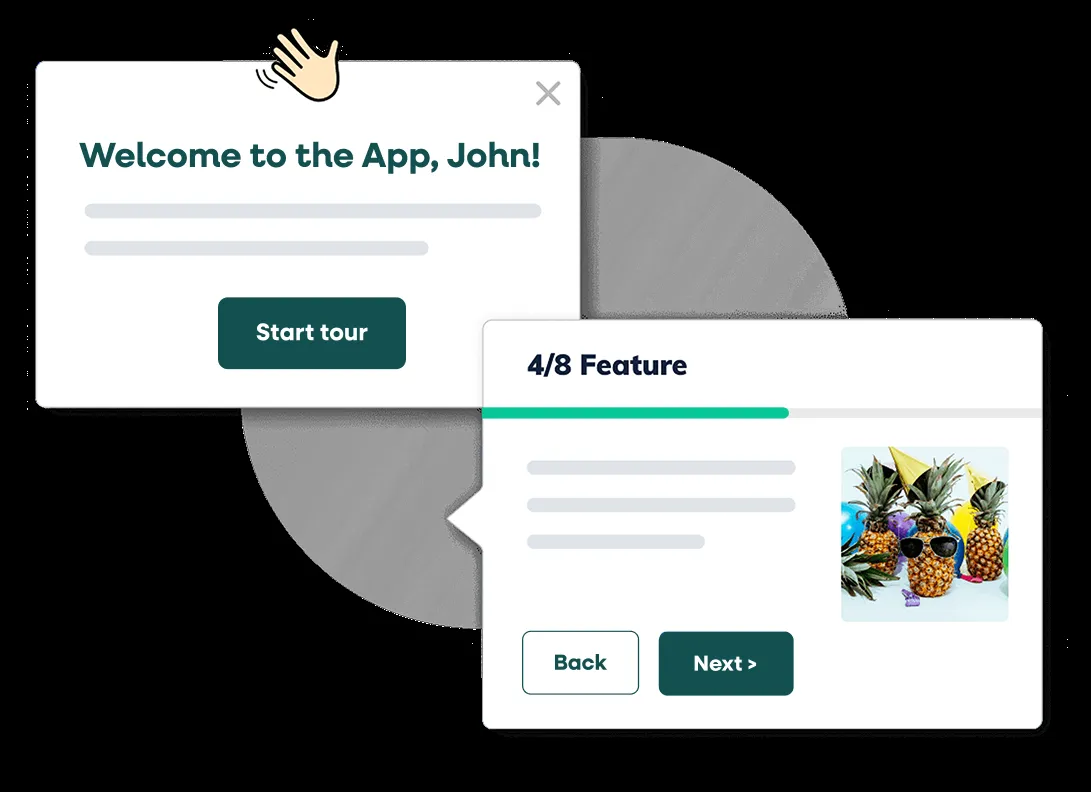
FullStory
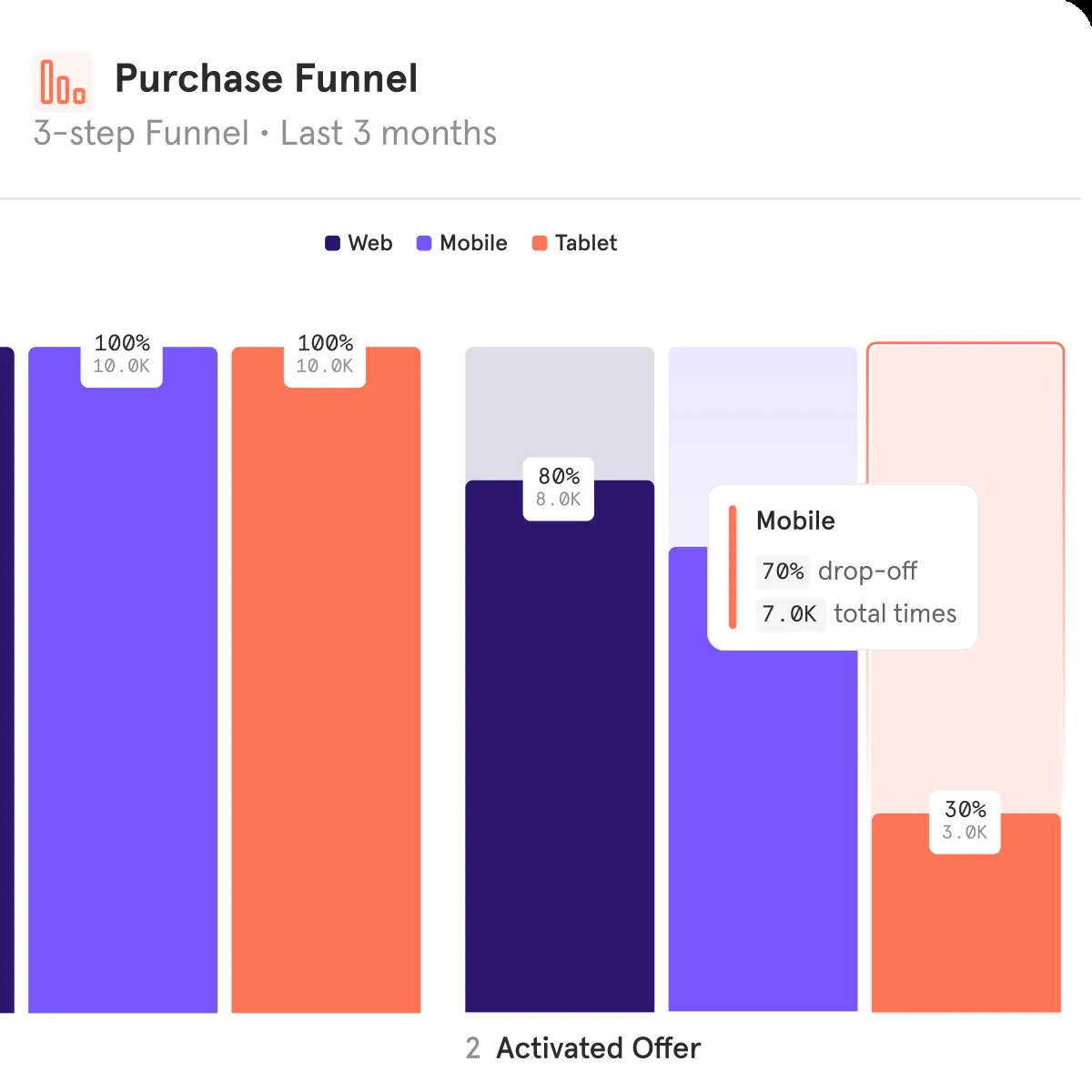
Mixpanel
Feature Comparison
| Feature | FullStory | Mixpanel |
|---|---|---|
| Behavioral Data Capture | ||
| Interaction capture | Fullcapture records every interaction in a privacy-first behavioral dataset. | Tracks product behavior for real-time digital analytics and reporting. |
| Web and mobile insight | Surfaces behavior across mobile and web experiences to reduce friction. | Analyzes user behavior through product analytics reports and live views. |
| Privacy and scale | Positions Fullcapture as trusted behavioral data built for privacy and scale. | Published pricing meters Growth usage by annual event volume. |
| Analysis and Reporting | ||
| Friction analysis | Customer Journey identifies digital behaviors that create experience friction. | Funnel analysis measures progression through defined product conversion steps. |
| AI-assisted answers | StoryAI converts behavioral data into answers based on observed behavior. | AI-driven insights provide product-performance answers for product and growth teams. |
| Reporting workflow | Analytics turns behavioral insights into real-time decisions and optimization actions. | Provides quick reports, different reports, and data visualizations. |
| Optimization and Experimentation | ||
| In-product guidance | Guides delivers product tours to direct users during experiences. | Not available in the provided feature data. |
| Contextual feedback | Surveys collect contextual feedback, including NPS, to validate improvements. | Not available in the provided feature data. |
| Experiment analysis | Behavioral insights help validate whether experience changes create impact. | A/B testing evaluates product behavior and performance changes. |
| Operational and Data Activation | ||
| Data activation | Anywhere activates behavioral data across existing systems for personalization. | Google Analytics integration connects product analytics with another analytics source. |
| Employee workflows | Workforce optimizes internal tools and reduces employee workflow friction. | Not available in the provided feature data. |
| Support operations | Workforce helps streamline IT support through employee-experience behavioral insights. | Not available in the provided feature data. |
| Product Engagement Measurement | ||
| Live behavior view | Session review provides a searchable view of recorded user interactions. | Live view surfaces user behavior as product data arrives. |
| Conversion measurement | Customer Journey reveals behaviors behind friction affecting digital experiences. | Funnels analyze conversion across defined product engagement steps. |
| Engagement lifecycle | Behavioral analytics identifies experience issues that affect returning customers. | Provides a unified view of engagement, conversion, and return. |
Behavioral Data Capture
Interaction capture
Web and mobile insight
Privacy and scale
Analysis and Reporting
Friction analysis
AI-assisted answers
Reporting workflow
Optimization and Experimentation
In-product guidance
Contextual feedback
Experiment analysis
Operational and Data Activation
Data activation
Employee workflows
Support operations
Product Engagement Measurement
Live behavior view
Conversion measurement
Engagement lifecycle
Which approach fits
Choose FullStory when the primary question is why users or employees encounter friction: it combines detailed behavioral capture, journey analysis, guides, surveys, and workforce workflows. Choose Mixpanel when the primary question is what product metrics are changing in real time: its strengths are event-based reporting, funnels, A/B testing, engagement measurement, and published event-volume Growth pricing.
When each approach fits
Choose FullStory if:
Choose FullStory for UX, product, support, or IT teams that need to inspect interaction behavior, diagnose web or mobile friction, improve internal tools, and collect feedback within the product.
Choose Mixpanel if:
Choose Mixpanel for product-led teams that need real-time event analytics, funnel and conversion reporting, A/B-test analysis, and an event-volume-based Growth plan starting at $120/month annually.
These scenarios reflect the available product evidence. Your requirements, existing stack, and team expertise should guide the final decision.
Frequently Asked Questions
What is the main difference between FullStory and Mixpanel?
FullStory is centered on behavioral experience intelligence: Fullcapture creates a privacy-first record of interactions, Customer Journey identifies friction, and Guides and Surveys combine in-product direction with contextual feedback. It also has a Workforce offering for employee workflows. Mixpanel is centered on product analytics: product, engineering, and growth teams use real-time analysis, reports, funnels, A/B testing, live behavior views, and engagement, conversion, and return measurement. In short, FullStory is especially suited to investigating behavioral context behind experience problems, while Mixpanel is especially suited to measuring product events and business outcomes.
Which is better for small teams?
For a small product team primarily tracking activation, conversion, feature usage, and experiments, Mixpanel has the clearer public commercial starting point: a free tier with limits and Growth pricing starting at $120 per month with annual billing, or $140 monthly, at the stated 18M-events-per-year example. Its user feedback highlights real-time analysis, funnels, A/B testing, and reporting, although teams should budget time for its reported learning curve. FullStory may be the better small-team choice when the urgent need is diagnosing UX friction through interaction behavior, but its provided pricing data does not publish a dollar amount or usage limit.
Can I migrate from FullStory to Mixpanel?
A migration is possible, but it is not a one-to-one replacement because the products emphasize different data. FullStory data is oriented around behavioral interaction capture, journey friction, session-oriented investigation, guides, surveys, and employee workflows. Mixpanel is oriented around product events, real-time reporting, funnels, A/B tests, and engagement outcomes. A practical migration would begin by defining a Mixpanel event taxonomy for the product actions and conversion steps currently measured in FullStory. Keep FullStory if teams still require its behavioral replay-style context, privacy-first capture, workflow analysis, or in-product feedback capabilities.
What are the pricing differences?
Mixpanel provides concrete Growth-plan pricing in the supplied data: $120 per month on annual billing or $140 per month on monthly billing for the illustrated 18M-events-per-year configuration, with event-volume choices from 1M to 20M+ events annually. It also identifies a free tier with limits and sales-quoted enterprise pricing. FullStory is described as freemium and publishes plans for different teams and roles, but the provided official pricing text contains no dollar amount, named paid tier, event/session allowance, or other numeric limit. Therefore, a buyer can model Mixpanel costs from event volume, while FullStory requires obtaining plan details directly from the vendor.