Decision comparison
Kleene.ai vs Informatica Cloud
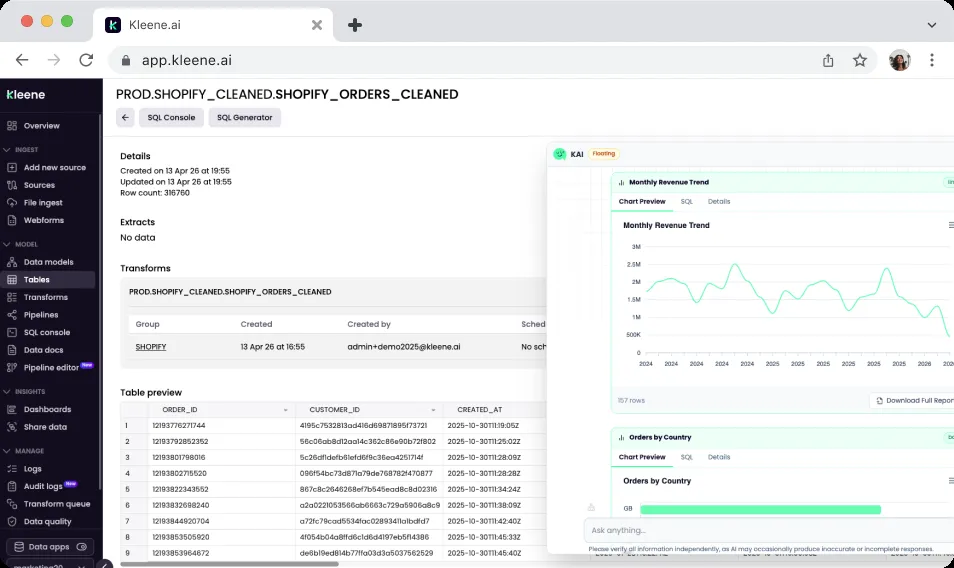
Kleene.ai is the focused choice for a managed warehouse-led analytics foundation where implementation help, SQL modeling, BI delivery, and AI-assisted analysis are immediate priorities. Its Scale, Accelerate, and Enterprise packages align commercial scope to connector counts, while the illustrative five-connector estimate provides planning context. Informatica Cloud suits enterprise integration estates requiring data quality, governance, catalog, MDM, and hybrid or multicloud operation. Its IPU-based consumption model, low-code tooling, pipeline auto-tuning, and FinOps-oriented workload visibility support broad governed integration programs.
Direct comparison. These are reviewed substitutes bought for the same job, so the differences below are the ones that decide between them.
These are different kinds of product — ELT Platform and ETL Platform.
Quick Comparison
| Decision factor | Kleene.ai | Informatica Cloud |
|---|---|---|
| Operating model | Managed platform and delivery partner combining implementation, advisory services, 24/7 support, and customer-controlled or managed Snowflake, BigQuery, or Redshift warehouse deployments. | Enterprise platform with customer-led governance, using one cloud data-engineering solution for ingestion, integration, cleansing, ELT, and FinOps-oriented workload optimization and auto-tuning. |
| Primary scope | Warehouse-led analytics foundation connecting operational data, modeling it with SQL, and delivering BI, dashboards, role-aware AI analytics, attribution, forecasting, and marketing-mix modeling. | Integration plus enterprise data management, supporting virtually all integration patterns with AI-powered low-code and no-code design, development, data cleansing, and operational cost control. |
| Data-management breadth | Focused on agreed analytics scope, with ingestion, SQL transformations, testing, logs, version control, dashboards, attribution, forecasting, and marketing-mix modeling rather than broad enterprise MDM. | Integration, quality, governance, catalog, and MDM requirements are supported within Informatica’s enterprise cloud data-management platform across hybrid or multicloud operating contexts. |
| Commercial model | Published sales-led packages map connector scope to Scale for up to three connectors, Accelerate for up to eight, and Enterprise for unlimited connectors. | Consumption-based Intelligent Data Management Cloud IPUs, with Starter, Professional, and Enterprise tiers; larger contracts receive volume discounts and are sales-quoted. |
| Pricing | Three contact-sales packages: Scale (up to 3 connectors), Accelerate (up to 8 connectors), and Enterprise (unlimited connectors). Public pricing is not posted. Kleene's June 2026 illustrative comparison modeled a standard five-connector deployment at £4,833/month (£58,000/year) on a 24-month term; this is an estimate rather than a quote. | Informatica's Intelligent Data Management Cloud is consumption-priced in Informatica Processing Units (IPUs) rather than per user or per connector. Informatica publishes no IPU rate and no contract minimum; its product page states only that pricing is consumption-based, so the rate, any volume discounts and any commitment come from a quote. |
| Key capabilities | Offers 600+ listed connectors and bespoke integrations, SQL testing and Git workflows, KAI Assistant, Sigma, Power BI, Tableau, Looker integrations, and authorized MCP access. | Provides data ingestion, integration, cleansing, low-code and no-code tooling, CLAIRE GPT, workload visibility, pipeline auto-tuning, and AI-powered FinOps cost controls. |
Kleene.ai
- Operating model:
- Managed platform and delivery partner combining implementation, advisory services, 24/7 support, and customer-controlled or managed Snowflake, BigQuery, or Redshift warehouse deployments.
- Primary scope:
- Warehouse-led analytics foundation connecting operational data, modeling it with SQL, and delivering BI, dashboards, role-aware AI analytics, attribution, forecasting, and marketing-mix modeling.
- Data-management breadth:
- Focused on agreed analytics scope, with ingestion, SQL transformations, testing, logs, version control, dashboards, attribution, forecasting, and marketing-mix modeling rather than broad enterprise MDM.
- Commercial model:
- Published sales-led packages map connector scope to Scale for up to three connectors, Accelerate for up to eight, and Enterprise for unlimited connectors.
- Pricing:
- Three contact-sales packages: Scale (up to 3 connectors), Accelerate (up to 8 connectors), and Enterprise (unlimited connectors). Public pricing is not posted. Kleene's June 2026 illustrative comparison modeled a standard five-connector deployment at £4,833/month (£58,000/year) on a 24-month term; this is an estimate rather than a quote.
- Key capabilities:
- Offers 600+ listed connectors and bespoke integrations, SQL testing and Git workflows, KAI Assistant, Sigma, Power BI, Tableau, Looker integrations, and authorized MCP access.
Informatica Cloud
- Operating model:
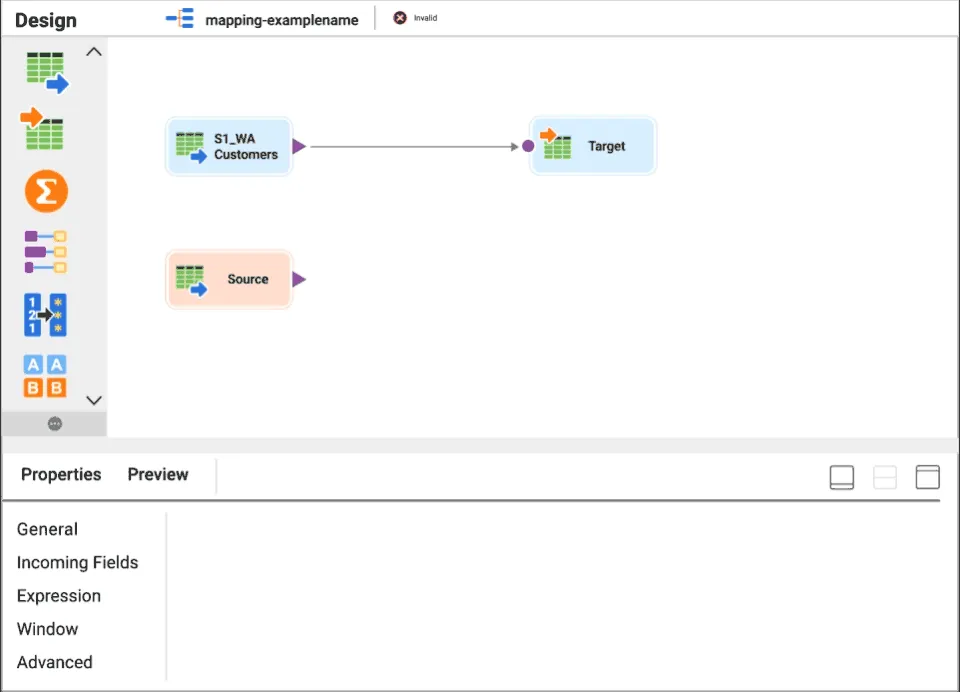
- Enterprise platform with customer-led governance, using one cloud data-engineering solution for ingestion, integration, cleansing, ELT, and FinOps-oriented workload optimization and auto-tuning.
- Primary scope:
- Integration plus enterprise data management, supporting virtually all integration patterns with AI-powered low-code and no-code design, development, data cleansing, and operational cost control.
- Data-management breadth:
- Integration, quality, governance, catalog, and MDM requirements are supported within Informatica’s enterprise cloud data-management platform across hybrid or multicloud operating contexts.
- Commercial model:
- Consumption-based Intelligent Data Management Cloud IPUs, with Starter, Professional, and Enterprise tiers; larger contracts receive volume discounts and are sales-quoted.
- Pricing:
- Informatica's Intelligent Data Management Cloud is consumption-priced in Informatica Processing Units (IPUs) rather than per user or per connector. Informatica publishes no IPU rate and no contract minimum; its product page states only that pricing is consumption-based, so the rate, any volume discounts and any commitment come from a quote.
- Key capabilities:
- Provides data ingestion, integration, cleansing, low-code and no-code tooling, CLAIRE GPT, workload visibility, pipeline auto-tuning, and AI-powered FinOps cost controls.
Public signals
Verified factual signals only. Bars appear only for like-for-like metrics with five weekly assessments for every tool; missing evidence stays explicit. These signals do not establish enterprise adoption, product quality, or total cost.
| Metric | Kleene.ai | Informatica Cloud |
|---|---|---|
| Search interest(Market interest) | Unavailable | 0 |
| Hacker News mentions, 90d(Community interest) | 0 | Not available |
| Stack Overflow questions(Community interest) | Not available | 220 |
As of September 21, 2026 — updated weekly.
Interface Preview
Kleene.ai
Informatica Cloud
Feature Comparison
| Feature | Kleene.ai | Informatica Cloud |
|---|---|---|
| Delivery | ||
| Product and delivery model | Managed platform and delivery support | Enterprise platform and implementation ecosystem |
| Integration | ||
| Integration patterns | Connectors in agreed service scope | ETL, ELT, replication and CDC |
| Transformation | ||
| Data transformation | Delivered in analytics foundation | Platform integration and transformation capabilities |
| Analytics | ||
| Warehouse and BI foundations | Snowflake and Sigma foundations | Integrates across cloud and hybrid environments |
| AI | ||
| AI assistance | KAI with metadata, transformations, logs and documentation context | CLAIRE across IDMC |
| Data quality | ||
| Dedicated quality capability | Confirm contracted scope | IDMC Data Quality capability |
| Governance | ||
| Governance and catalog | Confirm contracted scope | IDMC governance and catalog capabilities |
| Master data | ||
| Master data management | Confirm contracted scope | IDMC Master Data Management capability |
| Architecture | ||
| Deployment posture | Managed cloud analytics foundation | Hybrid and multicloud platform |
| Commercials | ||
| Pricing basis | Packages and sales quote | Consumption-based IPUs and quote |
Delivery
Product and delivery model
Integration
Integration patterns
Transformation
Data transformation
Analytics
Warehouse and BI foundations
AI
AI assistance
Data quality
Dedicated quality capability
Governance
Governance and catalog
Master data
Master data management
Architecture
Deployment posture
Commercials
Pricing basis
Which to choose
Kleene.ai is the focused choice for a managed warehouse-led analytics foundation where implementation help, SQL modeling, BI delivery, and AI-assisted analysis are immediate priorities. Its Scale, Accelerate, and Enterprise packages align commercial scope to connector counts, while the illustrative five-connector estimate provides planning context. Informatica Cloud suits enterprise integration estates requiring data quality, governance, catalog, MDM, and hybrid or multicloud operation. Its IPU-based consumption model, low-code tooling, pipeline auto-tuning, and FinOps-oriented workload visibility support broad governed integration programs.
Best-fit scenarios
Choose Kleene.ai if:
Choose Kleene.ai when a managed delivery model and warehouse-to-BI analytics foundation are immediate priorities. It suits teams needing operational-source connectors, SQL transformations, dashboards, KAI analytics applications, and authorized AI-assistant access through MCP.
Choose Informatica Cloud if:
Choose Informatica Cloud when enterprise integration must operate alongside data quality, governance, catalog, MDM, and hybrid or multicloud requirements. It fits organizations needing IPU-based consumption, low-code development, pipeline auto-tuning, and FinOps cost visibility.
These scenarios reflect the available product evidence. Your requirements, existing stack, and team expertise should guide the final decision.
Frequently Asked Questions
Is Kleene.ai an ETL tool?
It includes connection and transformation work within a managed analytics platform, rather than presenting itself only as a standalone ETL licence.
Does Informatica Cloud include governance and quality?
IDMC includes dedicated data quality, governance and catalog capabilities; confirm the services included in a specific proposal.
Which fits a small data team?
Kleene.ai is generally the more natural fit when a small team wants a managed analytics foundation, while Informatica Cloud fits when enterprise controls are active requirements.
How many data sources does Kleene.ai connect to?
Kleene.ai's platform page lists over 200 pre-built integrations, and the company offers bespoke connector development for sources that are not covered. Ingestion is managed rather than self-operated, and transformations are written in SQL with testing, logs, version control and Git workflows around them. The destination warehouse can be Snowflake, BigQuery or Redshift, deployed either as a managed environment or in an account the customer controls — which matters if your data has to stay inside your own cloud tenancy.
What does Informatica Cloud optimise for?
Informatica positions its data integration and engineering service around FinOps: automated cost control through an optimisation engine that tunes how integration workloads consume resources. Informatica states this lowers total cost of ownership by up to 65%, a vendor figure rather than an independent benchmark. That framing matters when comparing the two, because Informatica's commercial model meters consumption in IPUs across every service, so the cost of a deployment moves with how efficiently those workloads run.