Best Open Lakehouse Stack (2026)
An open lakehouse keeps the data in a published table format on object storage you own, and treats the engines as replaceable. That is the whole argument for it: a warehouse that owns its storage format owns your migration cost too. What you give up is the single vendor who makes all of it work together, which is why the format and engine decisions here matter more than they do in a warehouse-first stack.
Who is this for?
- Teams that want more than one engine reading the same tables
- Organizations whose warehouse bill is growing faster than their data
- Platform teams with a data-residency or exit requirement in writing
- Anyone choosing between Apache Iceberg, Delta Lake, and Apache Hudi
How it works
Data lands as files in object storage and is registered in an open table format (Apache Iceberg, Delta Lake, Apache Hudi), which is what adds transactions, schema evolution and time travel to a directory of Parquet. A query engine (Trino, Dremio, Starburst, Athena) reads those tables without moving them. A transformation framework (dbt, SQLMesh) compiles the models the engine runs. A catalog records what exists and who may read it.
Scroll horizontally to inspect every architecture layer.
Evidence-backed reference architecture based on selected constraints, public adoption signals, product evidence, and available integration data. See how recommendations are scored.
Estimated cost: Pricing unavailable
Why this recommendation
- Optimized for a default open lakehouse architecture across the required stack layers.
- Balances role fit, your stated requirements, and available integration evidence.
- Public activity is not part of Fit. It only separates candidates that fit equally well and are equally well evidenced.
Recommended tools
Table Format
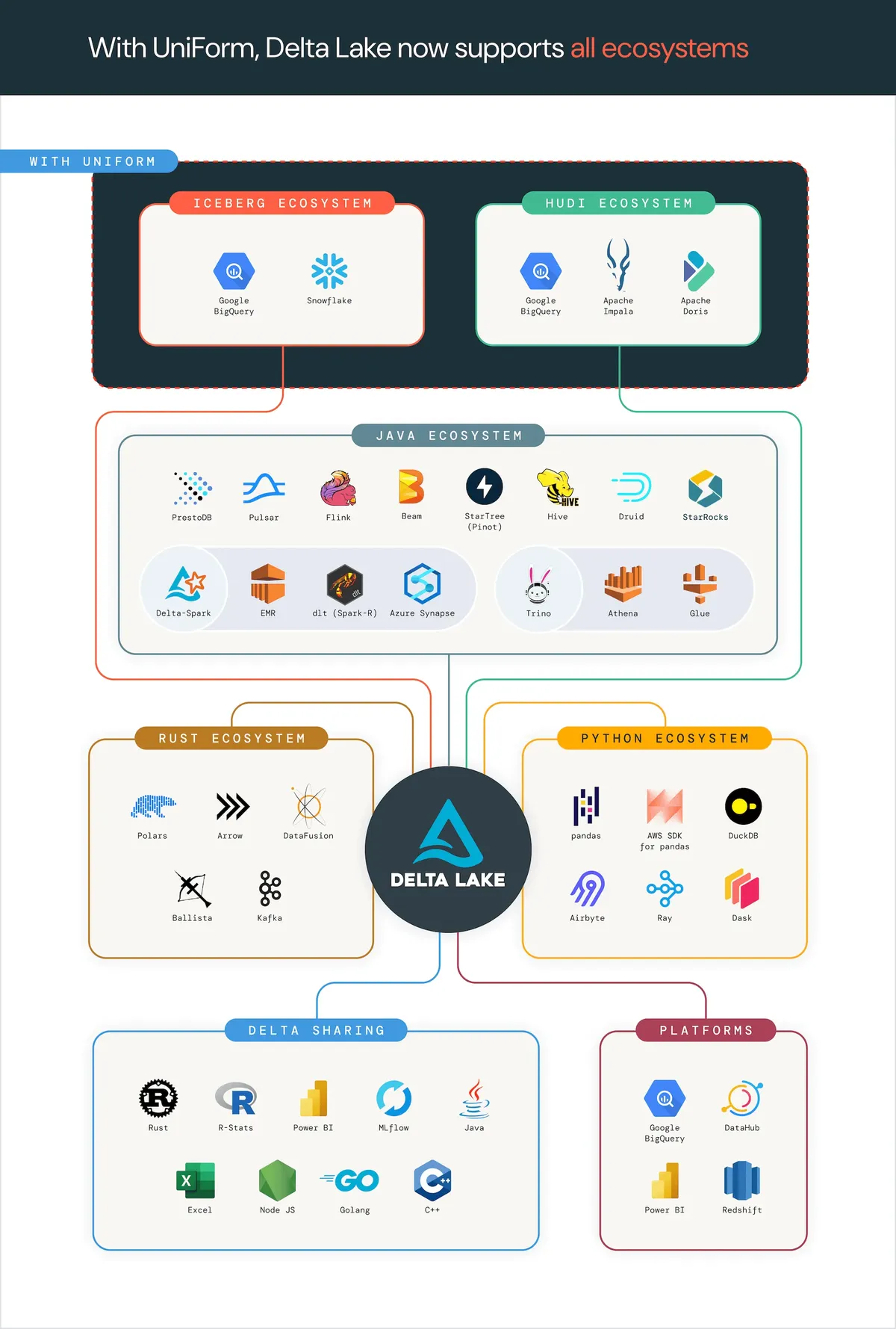
Open-source storage framework bringing ACID transactions, schema enforcement, and time travel to data lakes — originated at Databricks, widely adopted.
Delta Lake and Apache Iceberg both meet every requirement you set for this layer. Nothing you stated separates them and neither fits better, so the wider public use of Delta Lake decided it — a last resort between products we know equally well, and not evidence that it suits you better.
1 of 1 required relationships have no recorded answer either way.
Runner-up: Apache Iceberg
Query Engine
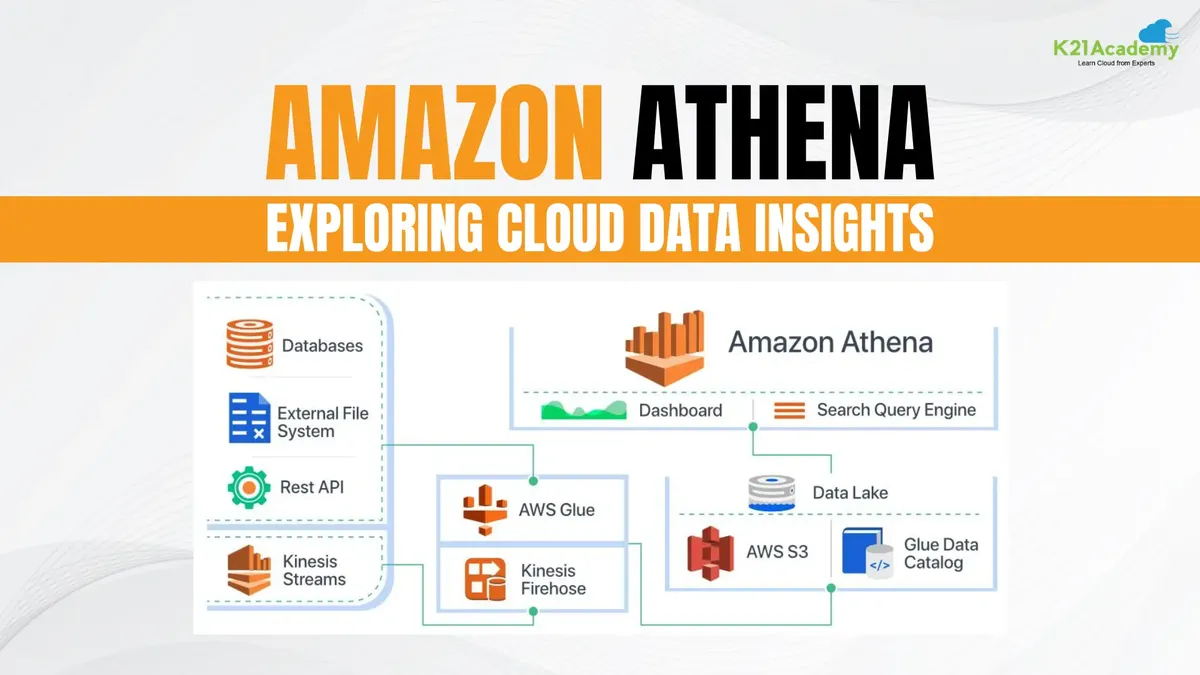
Amazon Athena is a serverless, interactive analytics service that provides a simplified and flexible way to analyze petabytes of data where it lives.
Amazon Athena and Databricks both meet every requirement you set for this layer. Nothing we can assess separates them, so Amazon Athena comes first by a fixed ordering rather than by any advantage over Databricks.
2 of 2 required relationships have no recorded answer either way.
Runner-up: Databricks
Transformation
Snowflake-native transformation platform with visual modeling
Coalesce and dbt Cloud both meet every requirement you set for this layer. Nothing we can assess separates them, so Coalesce comes first by a fixed ordering rather than by any advantage over dbt Cloud.
1 of 1 required relationships have no recorded answer either way.
Runner-up: dbt Cloud
How recommendations change with your constraints
The same architecture adapts to your cloud, budget, and deployment preferences. Here's what our algorithm recommends for common scenarios:
Open Source
Open table format, open query engine, open transformation framework — no vendor owns the data or the compute.
Customize this scenario →Managed / Enterprise
Open formats with a vendor operating the engine, for enterprises that want the portability without the operations.
Customize this scenario →No Table Format in our catalog meets your deployment model requirement. Filling this layer means relaxing one of them.
Frequently asked questions
Iceberg, Delta Lake, or Hudi?▾
Iceberg has the broadest engine support and is the safest choice when you genuinely intend to run more than one engine. Delta Lake is the most direct path if Databricks is already the centre of your stack. Hudi is strongest on frequent upserts and incremental ingestion. All three are open source and all three do transactions; the difference is the ecosystem around them.
Is a lakehouse cheaper than a warehouse?▾
The storage is, by a lot. The compute is not automatically, and the operational cost is real: somebody has to run the engine, the catalog and the file maintenance that a warehouse does for you. Teams that save money usually do so because they stopped duplicating the same data into three systems.
Why is object storage an optional layer?▾
Honesty about our own coverage. This catalogue holds one object-storage product, so making it required would report a gap on every stack — which would say more about what we track than about your architecture.
What about the catalog?▾
The catalog layer here is filled from data catalogues — DataHub, OpenMetadata, Atlan and the rest — which answer discovery and governance. An Iceberg REST catalogue such as Polaris, Nessie or Unity is a different product type and is not yet a category in this catalogue, so the layer is labelled for what it can actually offer.
Build your open lakehouse
These recommendations use public adoption signals, product evidence, and verified integrations. Customize them for your specific requirements and review the methodology behind the available evidence.