Timescale tool details
Timescale review: A time-series database built on PostgreSQL designed for IoT, DevOps, and financial data, offering robust features such as automatic partitioning, compression, and continuous aggregates.
Overview
Timescale is a specialized time-series database that leverages the robustness of PostgreSQL to handle real-time analytics and event processing. It is tailored for industries dealing with high-frequency data such as IoT, DevOps monitoring, and financial tick data. TimescaleDB introduces features like automatic partitioning and compression to optimize performance and storage efficiency. The platform scales seamlessly from small startups to large enterprises, supporting up to quadrillions of data points and petabytes of data volume.
Key Features and Architecture
Automatic Partitioning
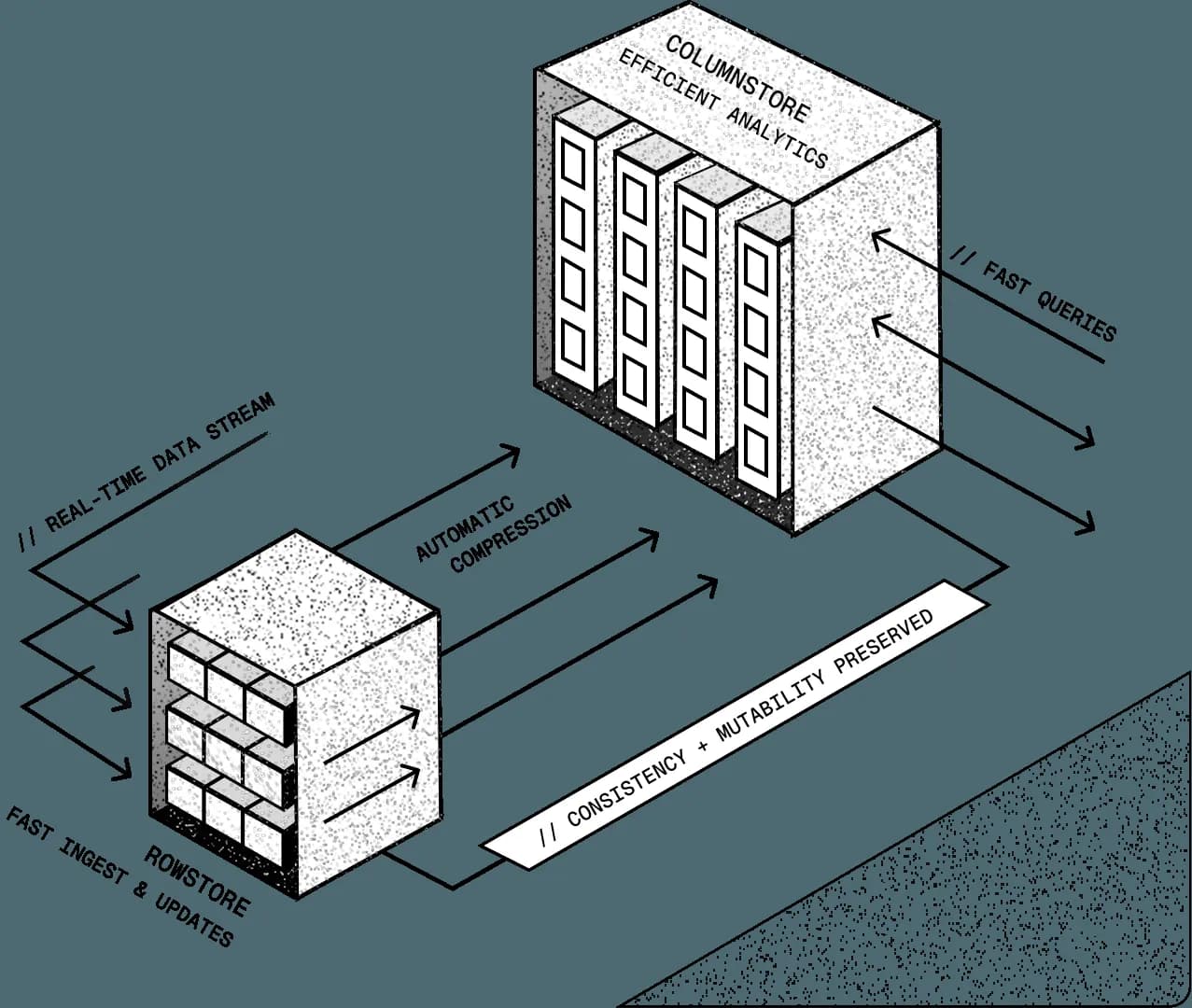
TimescaleDB automatically partitions time-series data into focused, manageable chunks called "hypertables." This partitioning technique enhances query performance by reducing the amount of data that needs to be scanned during read operations. Each hypertable is designed to store a specific range of timestamps, which allows for efficient indexing and faster access to historical data.
Continuous Aggregates
Continuous aggregates are materialized views optimized specifically for time-series data in TimescaleDB. These aggregates automatically refresh as new data arrives, ensuring that analytical queries can be executed quickly without the need for manual aggregation processes. This feature is particularly beneficial for generating real-time insights from large datasets with minimal latency.
Compression and Data Archiving
TimescaleDB includes built-in compression capabilities to reduce storage costs while maintaining query performance. Historical data can be compressed at regular intervals, allowing users to archive older data efficiently without impacting the speed of recent queries. This feature is crucial for managing vast amounts of time-series data over extended periods.
Vector Search and Keyword Search Integration
TimescaleDB supports both vector search and keyword search functionalities on PostgreSQL. These features enable advanced querying capabilities that are essential for complex analytics tasks, such as similarity searches in machine learning applications or full-text search queries in large text datasets.
Scalability and Performance
Designed to handle massive data volumes, TimescaleDB can manage up to quadrillions of data points and petabytes of data volume. The platform supports high throughput with metrics processing rates exceeding trillions per day, making it suitable for real-time analytics workloads that require near-instantaneous query responses.
Ideal Use Cases
Io
T Data Processing TimescaleDB is ideal for managing large volumes of sensor data from connected devices in the Internet of Things (IoT) ecosystem. With its automatic partitioning and continuous aggregation features, it can efficiently process billions of events daily while maintaining low latency for real-time monitoring applications.
Dev
Ops Monitoring Solutions For organizations implementing advanced monitoring solutions, TimescaleDB provides a scalable database solution capable of handling high-frequency metrics streams generated by modern cloud environments. Its performance optimizations ensure that IT teams receive timely alerts and actionable insights to maintain system stability.
Financial Market Analysis
In the financial industry, where real-time analysis is critical for trading strategies, TimescaleDB offers powerful analytical capabilities for processing tick data in near-real time. This enables traders and analysts to make informed decisions based on up-to-the-minute market conditions.
Timescale is particularly well-suited for IoT (Internet of Things) and sensor data management, where continuous streams of timestamped information need to be captured and analyzed in near-real time. It excels in scenarios requiring high write throughput and the ability to query large datasets quickly, such as in financial market analysis or industrial automation systems.
Pricing and Licensing
Timescale offers a free tier with 10GB of storage, suitable for small-scale projects or proof-of-concept workloads. Paid plans begin at $29/month, though the official pricing page does not specify additional tiers or features included in the paid offering beyond this base rate. The pricing model includes free-trial, usage-based, and contact-sales options, but concrete details on scalability, performance enhancements, or enterprise features are not publicly disclosed in the provided data.
For data engineers and analytics leaders, the lack of transparency around paid-tier inclusions—such as advanced analytics capabilities, support levels, or storage scalability—presents a challenge in evaluating long-term value. The free tier’s 10GB limit is restrictive for production environments, particularly for time-series or event-driven workloads that require larger datasets. While the open-source nature of TimescaleDB enables self-hosted deployments, the paid plans appear to target cloud-managed solutions, though specifics remain unclear.
To assess total cost of ownership, organizations must engage directly with Timescale for detailed pricing, as the current data does not provide a comprehensive breakdown of features, usage thresholds, or enterprise licensing terms. This opacity may hinder decision-making for teams requiring predictable scaling and support.
Pros and Cons
Pros
- Automatic Partitioning: Enhances query performance by reducing the amount of data scanned during read operations.
- Continuous Aggregates: Provides real-time analytical insights with minimal latency through automatic materialized view refreshing.
- Data Compression: Reduces storage costs while maintaining query efficiency, allowing for efficient archival of historical data.
- Scalability and Performance: Handles massive datasets and high throughput requirements, suitable for large-scale production environments.
Cons
- Limited Free Tier Storage: The free tier's 10GB limit may restrict usage for organizations with higher initial storage needs.
- Pricing Complexity: Multiple tiers can be confusing to navigate, requiring careful evaluation of feature sets and cost implications.
- PostgreSQL Dependency: Reliance on PostgreSQL might pose challenges for users unfamiliar with this relational database system.
Alternatives and How It Compares
Databricks
Databricks is a cloud-based platform that offers scalable data processing capabilities using Apache Spark. While it excels in batch processing, machine learning, and stream processing, its architecture differs significantly from TimescaleDB's focus on time-series analytics. Databricks provides extensive data engineering features but may not match the specialized performance of Timescale for real-time time-series workloads.
Snowflake
Snowflake is a cloud-based data warehousing solution known for its separation of storage and compute resources, offering high scalability and concurrency. Unlike TimescaleDB, which integrates closely with PostgreSQL to optimize specific use cases like IoT and DevOps monitoring, Snowflake caters more broadly to BI reporting and analytics across various industries. While both solutions handle large volumes of data efficiently, their primary strengths lie in different areas.
Postgre
SQL PostgreSQL is an open-source relational database management system renowned for its robustness and extensibility. TimescaleDB builds upon PostgreSQL by adding time-series-specific optimizations but requires a deeper understanding of the underlying PostgreSQL architecture to leverage fully. For users already familiar with PostgreSQL, integrating TimescaleDB can offer significant advantages in handling time-series data without requiring extensive retooling.
Vertica
Vertica is another high-performance columnar database designed for analytics workloads. It excels in supporting complex queries and large datasets but may lack the specialized performance optimizations found in TimescaleDB for real-time time-series analysis. Both solutions are strong contenders in the field of big data analytics, with Vertica offering broader support for enterprise-level BI applications while TimescaleDB focuses on optimizing time-series processing.
Starburst
Starburst provides a distributed SQL engine that enables querying across multiple data sources, including cloud storage services and traditional databases. While it offers extensive connectivity options and supports complex analytical queries, its primary strength lies in unified access to diverse data repositories rather than specialized performance for real-time time-series workloads. TimescaleDB's focus on PostgreSQL integration makes it a more streamlined choice for users needing optimized time-series database solutions.
Each of these alternatives has unique strengths, but when considering specific needs related to time-series data management and real-time analytics, TimescaleDB emerges as a highly competitive option due to its specialized features and performance optimizations.
Frequently Asked Questions
What is Timescale?
Timescale is an open-source time-series database built on top of PostgreSQL, designed for handling large amounts of temporal data.
Is Timescale free to use?
Yes, Timescale is completely free and open-source, making it a cost-effective solution for businesses and organizations.
How does Timescale compare to InfluxDB?
Timescale offers improved performance and scalability compared to InfluxDB, particularly when handling large amounts of data. Additionally, its integration with PostgreSQL provides advanced SQL capabilities.
Can I use Timescale for IoT data analysis?
Yes, Timescale is well-suited for IoT data analysis due to its ability to handle high-volume and high-velocity time-series data from various sources.
Does Timescale support real-time analytics?
Yes, Timescale is designed to provide low-latency queries and real-time analytics capabilities, making it suitable for applications that require up-to-the-minute insights.
Can I integrate Timescale with my existing PostgreSQL database?
Yes, Timescale is built on top of PostgreSQL, allowing seamless integration with your existing database infrastructure.