Decision comparison
Airbyte vs Estuary Flow
Airbyte and Estuary Flow differ on whether pipelines run on a clock. Airbyte is open-source ELT with several hundred connectors, run on your own infrastructure or as a managed service, syncing on a schedule. Estuary Flow runs continuously: change data capture applies changes as they happen, so the warehouse trails the source by seconds.
Direct comparison. These are reviewed substitutes bought for the same job, so the differences below are the ones that decide between them.
All 2 are ELT platforms.
Quick Comparison
| Decision factor | Airbyte | Estuary Flow |
|---|---|---|
| What it is | An open-source elt platform with several hundred connectors, run on your own docker or kubernetes or as airbyte cloud | A streaming data platform where pipelines run continuously rather than on a schedule, with change data capture at their front |
| Pipeline model | Scheduled syncs, with incremental loads between runs | Continuous streaming, with change data capture applying changes as they happen |
| Latency | As fresh as the schedule allows, typically minutes to hours | Seconds behind the source, because there is no schedule to wait for |
| Licensing | Open source, self-hostable at no licence cost, with paid Cloud tiers | Commercial, with a free tier |
| Deployment | Your own Docker or Kubernetes, or Airbyte Cloud | Managed, with private deployment options |
| Backfill and live | Separate concerns: a historical sync, then incremental runs | One path — backfill and live changes share the same stream |
| Best fit | Teams wanting control, custom connectors and no per-row charge | Pipelines where the warehouse must trail the source by seconds |
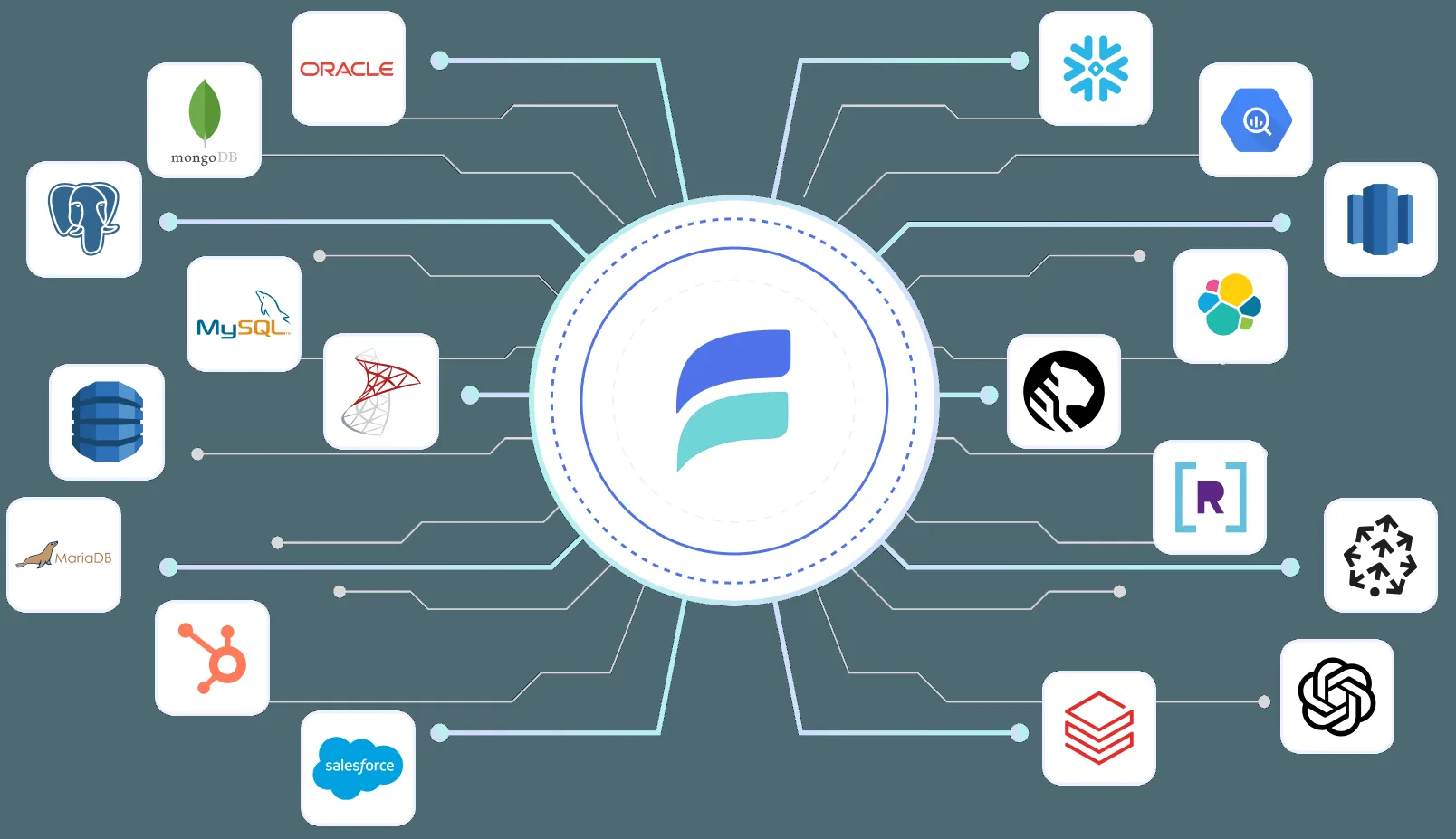
| Destination support | Loads into Snowflake, BigQuery, Redshift and Databricks, with dbt for transformation afterwards | Loads into Snowflake, BigQuery, Redshift and Databricks, with dbt for transformation afterwards |
Airbyte
- What it is:
- An open-source elt platform with several hundred connectors, run on your own docker or kubernetes or as airbyte cloud
- Pipeline model:
- Scheduled syncs, with incremental loads between runs
- Latency:
- As fresh as the schedule allows, typically minutes to hours
- Licensing:
- Open source, self-hostable at no licence cost, with paid Cloud tiers
- Deployment:
- Your own Docker or Kubernetes, or Airbyte Cloud
- Backfill and live:
- Separate concerns: a historical sync, then incremental runs
- Best fit:
- Teams wanting control, custom connectors and no per-row charge
- Destination support:
- Loads into Snowflake, BigQuery, Redshift and Databricks, with dbt for transformation afterwards
Estuary Flow
- What it is:
- A streaming data platform where pipelines run continuously rather than on a schedule, with change data capture at their front
- Pipeline model:
- Continuous streaming, with change data capture applying changes as they happen
- Latency:
- Seconds behind the source, because there is no schedule to wait for
- Licensing:
- Commercial, with a free tier
- Deployment:
- Managed, with private deployment options
- Backfill and live:
- One path — backfill and live changes share the same stream
- Best fit:
- Pipelines where the warehouse must trail the source by seconds
- Destination support:
- Loads into Snowflake, BigQuery, Redshift and Databricks, with dbt for transformation afterwards
Public signals
Verified factual signals only. Bars appear only for like-for-like metrics with five weekly assessments for every tool; missing evidence stays explicit. These signals do not establish enterprise adoption, product quality, or total cost.
| Metric | Airbyte | Estuary Flow |
|---|---|---|
| Docker Hub pulls(Developer adoption) | 9.7M | Not available |
| GitHub commits, 90d(Product adoption) | 4.1k | 421 |
| GitHub stars(Product adoption) | 22,000+ | 978 |
| Search interest(Market interest) | 0 | 0 |
| Hacker News mentions, 90d(Community interest) | 0 | 0 |
| Product Hunt comments(Community interest) | 22 | 115 |
| Product Hunt rating(Community interest) | 4.4/5 | 5.0/5 |
| Product Hunt reviews(Community interest) | 5 | 1 |
| Product Hunt votes(Community interest) | 132 | 225 |
| PyPI weekly downloads(Developer adoption) | 115.2k | Not available |
| Stack Overflow questions(Community interest) | 45 | Not available |
As of September 21, 2026 — updated weekly.
Health & risk evidence
Observed public-source checks for mapped package versions and repositories.
Airbyte
September 21, 2026Package vulnerabilities
PyPI · airbyte@0.68.0
0 vulnerabilities
across 1 package
Repository security score
github.com/airbytehq/airbyte
4.8/10
Estuary Flow
September 21, 2026Package vulnerabilities
Not available
Repository security score
github.com/estuary/flow
4.9/10
Interface Preview
Estuary Flow
Feature Comparison
| Feature | Airbyte | Estuary Flow |
|---|---|---|
| Freshness | ||
| Change data capture from databases | Full support | Full support |
| Continuous streaming pipelines | Partial support | Full support |
| Sub-minute latency to the warehouse | Partial support | Full support |
| Scheduled batch syncs | Full support | Full support |
| Control | ||
| Self-hosted deployment | Full support | Partial support |
| Open source | Full support | Not verified |
| Build your own connector | Full support | Partial support |
| Large pre-built connector catalogue | Full support | Partial support |
| Operations | ||
| Exactly-once delivery guarantees | Partial support | Full support |
| Replay from a point in time | Partial support | Full support |
| In-pipeline transformation | Partial support | Full support |
| Managed option | Full support | Full support |
| Platform | ||
| Incremental syncs | Full support | Full support |
| Automatic schema change handling | Full support | Full support |
| Alerting on pipeline failure | Full support | Full support |
| REST API for automation | Full support | Full support |
Freshness
Change data capture from databases
Continuous streaming pipelines
Sub-minute latency to the warehouse
Scheduled batch syncs
Control
Self-hosted deployment
Open source
Build your own connector
Large pre-built connector catalogue
Operations
Exactly-once delivery guarantees
Replay from a point in time
In-pipeline transformation
Managed option
Platform
Incremental syncs
Automatic schema change handling
Alerting on pipeline failure
REST API for automation
Which to choose
Airbyte and Estuary Flow differ on whether pipelines run on a clock. Airbyte is open-source ELT with several hundred connectors, run on your own infrastructure or as a managed service, syncing on a schedule. Estuary Flow runs continuously: change data capture applies changes as they happen, so the warehouse trails the source by seconds.
Best-fit scenarios
Choose Airbyte if:
Choose Airbyte when control and cost structure matter more than latency. Self-hosting means volume costs infrastructure rather than per-row fees and data never leaves your network, the connector catalogue is large, and the development kit turns an unsupported source into a day of work rather than a vendor request.
Choose Estuary Flow if:
Choose Estuary Flow when the warehouse has to be seconds behind the source. Continuous change data capture removes the schedule entirely, backfill and live changes share one path so there is no cutover to manage, and exactly-once delivery with replay from a point in time is what operational consumers need.
These scenarios reflect the available product evidence. Your requirements, existing stack, and team expertise should guide the final decision.
Frequently Asked Questions
Do we actually need sub-minute freshness?
Ask the freshest consumer, in minutes. Dashboards read each morning do not. Operational reporting, fraud checks and anything a customer sees usually do, and no scheduling frequency closes that gap without becoming continuous in all but name. If the honest answer is over an hour, batch is simpler and the simplicity is worth taking.
What is harder about a continuously running pipeline?
It is always on, so problems are ongoing rather than contained in a failed run. Schema changes arrive mid-stream rather than between syncs, backfills share a path with live traffic, and 'is it caught up' becomes something somebody monitors instead of a job that finished. Good tooling handles all of this; it still changes what operating the pipeline feels like.
What happens when a source adds or changes a column?
Airbyte detects schema changes and gives you a policy per connection — propagate them, ignore them, or pause the sync for a human — which is the right shape, and the setting is one teams leave on the default and later regret. Estuary Flow treats the schema as part of the collection's contract, so a change is explicit rather than absorbed. Both handle additions well. Neither saves you from a source that removes or repurposes a field your models depend on: both keep loading, and only a test on the destination catches it.
How should we compare the prices?
By pricing your own source list rather than the rate card. Volume-based pricing means your noisiest source decides the bill, and it is usually a product analytics or event table rather than the finance data the business runs on. List every source with its monthly row or event count and ask each vendor to price that list; the answer often differs sharply from the impression the published tiers give.
Where should transformation happen with these two?
Both are built on the assumption that it happens downstream, and both are right. Airbyte's position is explicit: it extracts and loads, and dbt does the rest in the warehouse. Estuary Flow's derivations exist for stream-shaped work — reshaping a payload, splitting a stream, computing a running view — which is genuinely useful and is not where business definitions belong. Keep revenue and active customer in the warehouse, version controlled and tested, and reserve in-pipeline logic for the things that must happen before the data lands, such as dropping a field that should never reach the destination.
Does source data pass through the vendor?
On a managed service, usually yes, which is a question for your security policy before it is a question about features. Self-hosted or bring-your-own-cloud deployments keep data inside your network at the cost of running the platform. Confirm which arrangement each option offers, because a residency rule settles this comparison before connector counts enter it.