Decision comparison
Estuary Flow vs Hevo Data
Estuary Flow and Hevo Data are both managed and both promise freshness, with different engineering underneath. Estuary runs genuinely continuous pipelines with exactly-once delivery and replay from a point in time. Hevo is a no-code platform with near real-time replication on supported sources and transformations in Python or SQL before data lands.
Direct comparison. These are reviewed substitutes bought for the same job, so the differences below are the ones that decide between them.
All 2 are ELT platforms.
Quick Comparison
| Decision factor | Estuary Flow | Hevo Data |
|---|---|---|
| What it is | A streaming data platform where pipelines run continuously rather than on a schedule, with change data capture at their front | A managed no-code elt platform with vendor-maintained connectors, near real-time replication and in-pipeline transformations |
| Pipeline model | Continuous streaming, with change data capture applying changes as they happen | Managed syncs with near real-time replication on supported sources |
| Latency | Seconds behind the source | Near real-time on supported sources, scheduled otherwise |
| Transformation | Streaming transformations applied in the pipeline | Python or SQL transformations in the pipeline before data lands |
| Interface | Pipelines defined as specifications, with a UI over them | No-code: sources configured in a browser |
| Guarantees | Exactly-once delivery, with replay from a point in time | At-least-once delivery with deduplication on the destination |
| Best fit | Pipelines where seconds matter and delivery guarantees are required | Teams wanting pipelines running this week with nobody writing code |
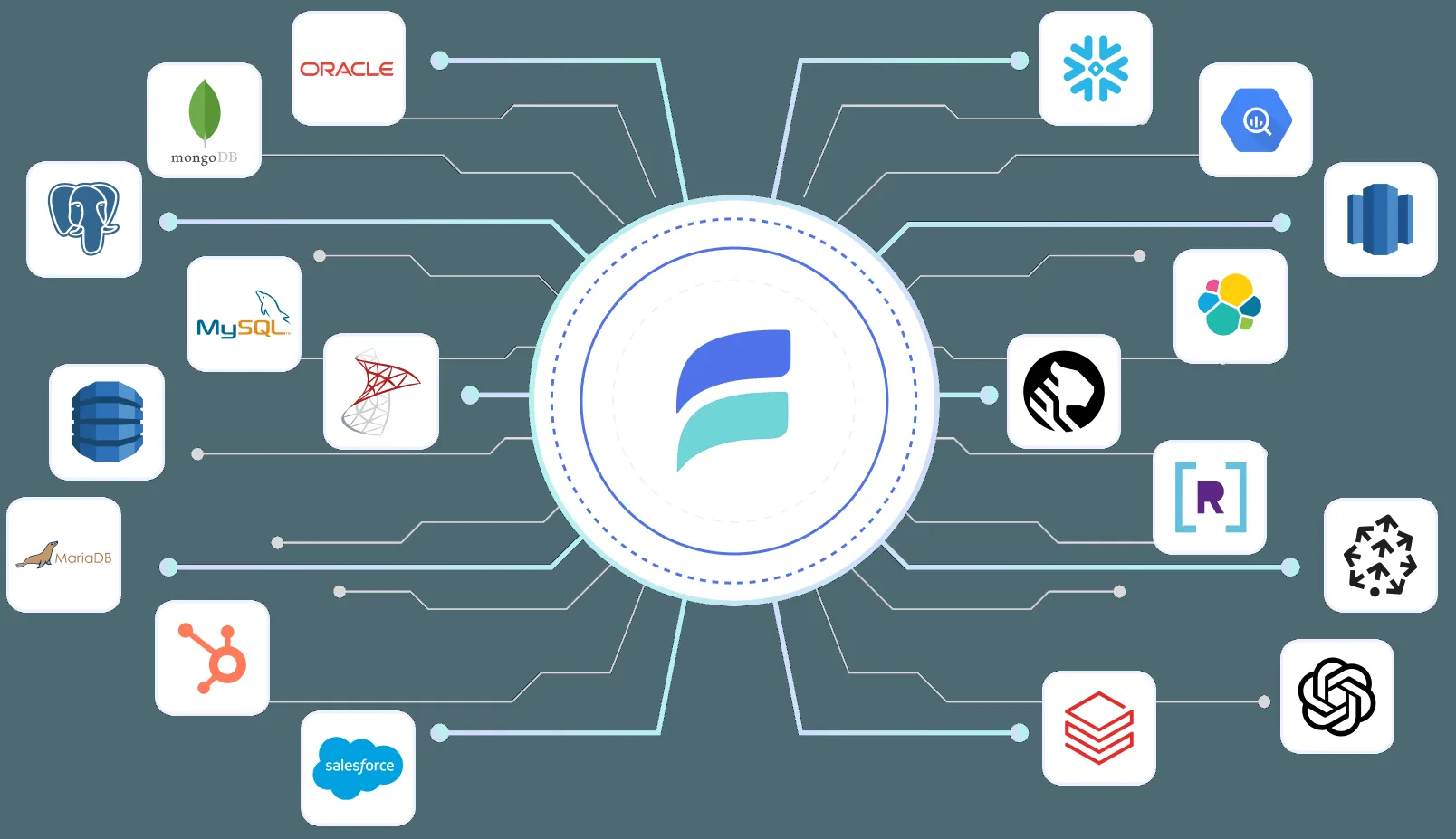
| Destination support | Loads into Snowflake, BigQuery, Redshift and Databricks, with dbt for transformation afterwards | Loads into Snowflake, BigQuery, Redshift and Databricks, with dbt for transformation afterwards |
Estuary Flow
- What it is:
- A streaming data platform where pipelines run continuously rather than on a schedule, with change data capture at their front
- Pipeline model:
- Continuous streaming, with change data capture applying changes as they happen
- Latency:
- Seconds behind the source
- Transformation:
- Streaming transformations applied in the pipeline
- Interface:
- Pipelines defined as specifications, with a UI over them
- Guarantees:
- Exactly-once delivery, with replay from a point in time
- Best fit:
- Pipelines where seconds matter and delivery guarantees are required
- Destination support:
- Loads into Snowflake, BigQuery, Redshift and Databricks, with dbt for transformation afterwards
Hevo Data
- What it is:
- A managed no-code elt platform with vendor-maintained connectors, near real-time replication and in-pipeline transformations
- Pipeline model:
- Managed syncs with near real-time replication on supported sources
- Latency:
- Near real-time on supported sources, scheduled otherwise
- Transformation:
- Python or SQL transformations in the pipeline before data lands
- Interface:
- No-code: sources configured in a browser
- Guarantees:
- At-least-once delivery with deduplication on the destination
- Best fit:
- Teams wanting pipelines running this week with nobody writing code
- Destination support:
- Loads into Snowflake, BigQuery, Redshift and Databricks, with dbt for transformation afterwards
Public signals
Verified factual signals only. Bars appear only for like-for-like metrics with five weekly assessments for every tool; missing evidence stays explicit. These signals do not establish enterprise adoption, product quality, or total cost.
| Metric | Estuary Flow | Hevo Data |
|---|---|---|
| GitHub commits, 90d(Product adoption) | 421 | Not available |
| GitHub stars(Product adoption) | 978 | Not available |
| Search interest(Market interest) | 0 | 0 |
| Hacker News mentions, 90d(Community interest) | 0 | Not available |
| Product Hunt comments(Community interest) | 115 | 2 |
| Product Hunt rating(Community interest) | 5.0/5 | Unavailable |
| Product Hunt reviews(Community interest) | 1 | 0 |
| Product Hunt votes(Community interest) | 225 | 90 |
As of September 21, 2026 — updated weekly.
Health & risk evidence
Observed public-source checks for mapped package versions and repositories.
Estuary Flow
September 21, 2026Package vulnerabilities
Not available
Repository security score
github.com/estuary/flow
4.9/10
Hevo Data
Package vulnerabilities
Not available
Repository security score
Not available
Interface Preview
Estuary Flow
Hevo Data
Feature Comparison
| Feature | Estuary Flow | Hevo Data |
|---|---|---|
| Freshness | ||
| Continuous streaming pipelines | Full support | Partial support |
| Sub-minute latency to the warehouse | Full support | Partial support |
| Change data capture from databases | Full support | Full support |
| Backfill and live on one path | Full support | Partial support |
| Guarantees | ||
| Exactly-once delivery guarantees | Full support | Partial support |
| Replay from a point in time | Full support | Not verified |
| In-pipeline transformation | Full support | Full support |
| Schema evolution handling | Full support | Full support |
| Adoption | ||
| No-code configuration | Partial support | Full support |
| Vendor-maintained connectors | Full support | Full support |
| Private deployment option | Full support | Not verified |
| Free tier | Full support | Partial support |
| Platform | ||
| Incremental syncs | Full support | Full support |
| Automatic schema change handling | Full support | Full support |
| Alerting on pipeline failure | Full support | Full support |
| REST API for automation | Full support | Full support |
Freshness
Continuous streaming pipelines
Sub-minute latency to the warehouse
Change data capture from databases
Backfill and live on one path
Guarantees
Exactly-once delivery guarantees
Replay from a point in time
In-pipeline transformation
Schema evolution handling
Adoption
No-code configuration
Vendor-maintained connectors
Private deployment option
Free tier
Platform
Incremental syncs
Automatic schema change handling
Alerting on pipeline failure
REST API for automation
Which to choose
Estuary Flow and Hevo Data are both managed and both promise freshness, with different engineering underneath. Estuary runs genuinely continuous pipelines with exactly-once delivery and replay from a point in time. Hevo is a no-code platform with near real-time replication on supported sources and transformations in Python or SQL before data lands.
Best-fit scenarios
Choose Estuary Flow if:
Choose Estuary Flow when delivery guarantees matter as much as latency. Exactly-once semantics and replay from a point in time are what a downstream consumer needs when it is doing something irreversible with the data, and one path for backfill and live changes removes the cutover that trips scheduled systems.
Choose Hevo Data if:
Choose Hevo Data when nobody should be writing pipeline code and near real-time is good enough. Sources are configured in a browser, connectors are vendor-maintained so API changes are their problem, and Python or SQL transformations handle masking and reshaping before data reaches the warehouse.
These scenarios reflect the available product evidence. Your requirements, existing stack, and team expertise should guide the final decision.
Frequently Asked Questions
What does exactly-once actually buy?
Confidence downstream. With at-least-once delivery, a record can arrive twice and something has to deduplicate it, usually a merge key on the destination. That works and it is another thing to get right, and it goes wrong quietly when a source lacks a stable key. Exactly-once removes the class of bug rather than giving you a way to handle it.
How near is near real-time?
It varies by source and it is worth pinning down rather than accepting the phrase. Ask for the expected lag on the specific sources you care about, under your volumes, and whether that lag is a target or a guarantee. A platform that is seconds behind a database log and minutes behind a SaaS API is being accurate, not evasive — but you should know which of your sources is which.
What happens when a source adds or changes a column?
Hevo maps the change into the destination automatically, which keeps pipelines running unattended and means a new column can arrive in your warehouse before anybody decided it should. Estuary Flow treats the schema as part of the collection's contract, so a change is explicit and the pipeline states what it now carries — more friction, and less chance of a silent structural surprise. The breaking case is identical for both: when a source removes a field your models depend on, both keep loading and only a test on the destination will tell you. Write those tests whichever you buy.
How should we compare the prices?
By pricing your own source list rather than the rate card. Volume-based pricing means your noisiest source decides the bill, and it is usually a product analytics or event table rather than the finance data the business runs on. List every source with its monthly row or event count and ask each vendor to price that list; the answer often differs sharply from the impression the published tiers give.
Where should transformation happen with these two?
Both let you transform before the data lands, and both are better used sparingly. Hevo's drag-and-drop and Python transformations are aimed at teams without an analytics engineer, and they earn their place when nobody downstream would otherwise model the data at all. Estuary Flow's derivations are aimed at reshaping streams — computing a rolling view, or splitting a payload — rather than at defining business metrics. The rule that holds for both: anything a person would question when a number looks wrong belongs in the warehouse, version controlled and tested, not inside a pipeline they would not think to open.
Does source data pass through the vendor?
On a managed service, usually yes, which is a question for your security policy before it is a question about features. Self-hosted or bring-your-own-cloud deployments keep data inside your network at the cost of running the platform. Confirm which arrangement each option offers, because a residency rule settles this comparison before connector counts enter it.