Decision comparison
Estuary Flow vs Fivetran
Estuary Flow and Fivetran both solve data movement but with fundamentally different architectures and strengths. Estuary Flow unifies batch and streaming into a single platform with sub-100ms latency, exactly-once delivery, and a CDC-first design that stores data as reusable collections in your private cloud. Fivetran is the established leader in automated ELT data ingestion, offering the broadest connector catalog at 700+ sources with fully hands-off pipeline management and deep compliance certifications. The right choice depends on whether your priority is real-time streaming with cost-predictable pricing or maximum connector coverage with zero-maintenance batch pipelines.
Direct comparison. These are reviewed substitutes bought for the same job, so the differences below are the ones that decide between them.
All 2 are ELT platforms.
Quick Comparison
| Decision factor | Estuary Flow | Fivetran |
|---|---|---|
| Pipeline Architecture | Unified batch and streaming on decoupled storage-compute with elastic scaling and replay | ELT-first managed pipelines with automated schema evolution and incremental syncs |
| Connector Ecosystem | 200+ no-code connectors for CDC, SaaS, databases, and data warehouses | 700+ fully managed connectors spanning SaaS, databases, ERPs, files, and streaming |
| Latency & Streaming | Sub-100ms end-to-end latency with exactly-once delivery and real-time CDC | Sync frequencies from 1-minute intervals to 24 hours depending on tier |
| Pricing Model | Developer is free for up to 10 GB/month and 2 concurrent connector instances. Cloud is $0.50 per GB plus $100 per connector, billed monthly, with a 30-day free trial. Enterprise is quote-based, with volume-based discounts and annual contracts for private or BYOC deployments. | Fivetran is consumption-priced on monthly active rows and quoted through its own estimator. The plans are Free, Standard, Enterprise and Business Critical. The Free plan covers up to 500,000 monthly active rows for connections, 3,500 for activations and 5,000 model runs. Fivetran advertises savings of up to 22% on an annual contract. No per-plan price is published. |
| Security & Compliance | SOC 2 Type II, HIPAA, GDPR, CCPA compliant with private and BYOC deployments | SOC 1, SOC 2, HIPAA, ISO 27001, PCI DSS Level 1, HITRUST, and GDPR certified |
| Best For | Teams needing real-time streaming and batch in one platform with predictable pricing | Teams wanting hands-off automated data ingestion with the broadest connector library |
Estuary Flow
- Pipeline Architecture:
- Unified batch and streaming on decoupled storage-compute with elastic scaling and replay
- Connector Ecosystem:
- 200+ no-code connectors for CDC, SaaS, databases, and data warehouses
- Latency & Streaming:
- Sub-100ms end-to-end latency with exactly-once delivery and real-time CDC
- Pricing Model:
- Developer is free for up to 10 GB/month and 2 concurrent connector instances. Cloud is $0.50 per GB plus $100 per connector, billed monthly, with a 30-day free trial. Enterprise is quote-based, with volume-based discounts and annual contracts for private or BYOC deployments.
- Security & Compliance:
- SOC 2 Type II, HIPAA, GDPR, CCPA compliant with private and BYOC deployments
- Best For:
- Teams needing real-time streaming and batch in one platform with predictable pricing
Fivetran
- Pipeline Architecture:
- ELT-first managed pipelines with automated schema evolution and incremental syncs
- Connector Ecosystem:
- 700+ fully managed connectors spanning SaaS, databases, ERPs, files, and streaming
- Latency & Streaming:
- Sync frequencies from 1-minute intervals to 24 hours depending on tier
- Pricing Model:
- Fivetran is consumption-priced on monthly active rows and quoted through its own estimator. The plans are Free, Standard, Enterprise and Business Critical. The Free plan covers up to 500,000 monthly active rows for connections, 3,500 for activations and 5,000 model runs. Fivetran advertises savings of up to 22% on an annual contract. No per-plan price is published.
- Security & Compliance:
- SOC 1, SOC 2, HIPAA, ISO 27001, PCI DSS Level 1, HITRUST, and GDPR certified
- Best For:
- Teams wanting hands-off automated data ingestion with the broadest connector library
Public signals
Verified factual signals only. Bars appear only for like-for-like metrics with five weekly assessments for every tool; missing evidence stays explicit. These signals do not establish enterprise adoption, product quality, or total cost.
| Metric | Estuary Flow | Fivetran |
|---|---|---|
| GitHub commits, 90d(Product adoption) | 421 | Not available |
| GitHub stars(Product adoption) | 978 | Not available |
| Search interest(Market interest) | 0 | 1 |
| Hacker News mentions, 90d(Community interest) | 0 | 3 |
| Product Hunt comments(Community interest) | 115 | 9 |
| Product Hunt rating(Community interest) | 5.0/5 | 5.0/5 |
| Product Hunt reviews(Community interest) | 1 | 1 |
| Product Hunt votes(Community interest) | 225 | 85 |
| GitHub commits, 90d(Developer adoption) | Not available | 19 |
| GitHub stars(Developer adoption) | Not available | 134 |
| PyPI weekly downloads(Developer adoption) | Not available | 29.0k |
| Stack Overflow questions(Community interest) | Not available | 22 |
As of September 21, 2026 — updated weekly.
Health & risk evidence
Observed public-source checks for mapped package versions and repositories.
Estuary Flow
September 21, 2026Package vulnerabilities
Not available
Repository security score
github.com/estuary/flow
4.9/10
Fivetran
September 21, 2026Package vulnerabilities
PyPI · fivetran-connector-sdk@2.12.1
0 vulnerabilities
across 1 package
Repository security score
Not available
Interface Preview
Estuary Flow
Feature Comparison
| Feature | Estuary Flow | Fivetran |
|---|---|---|
| Data Movement & Replication | ||
| Change Data Capture (CDC) | End-to-end streaming CDC with incremental backfill, collection reuse, and sub-100ms delivery | Log-based CDC replication for efficient database syncs with automatic schema management |
| Batch Processing | Unified batch and streaming in one pipeline; batch intervals configurable per destination | Core strength with sync frequencies from 1-minute to 24-hour intervals across all connectors |
| Schema Evolution | Automatic schema inference and evolution from source to destination with continuous validation | Fully automated schema evolution handling with 22.2M+ schema changes managed monthly |
| Connectors & Integrations | ||
| Pre-Built Connectors | 200+ no-code connectors for databases, SaaS apps, data warehouses, and streaming systems | 700+ fully managed connectors covering SaaS, databases, ERPs, files, and event streams |
| Custom Connector Options | CLI-driven automation with flowctl for custom pipeline configuration and deployment | Connector SDK for building custom sources plus a by-request program and partner-built connectors |
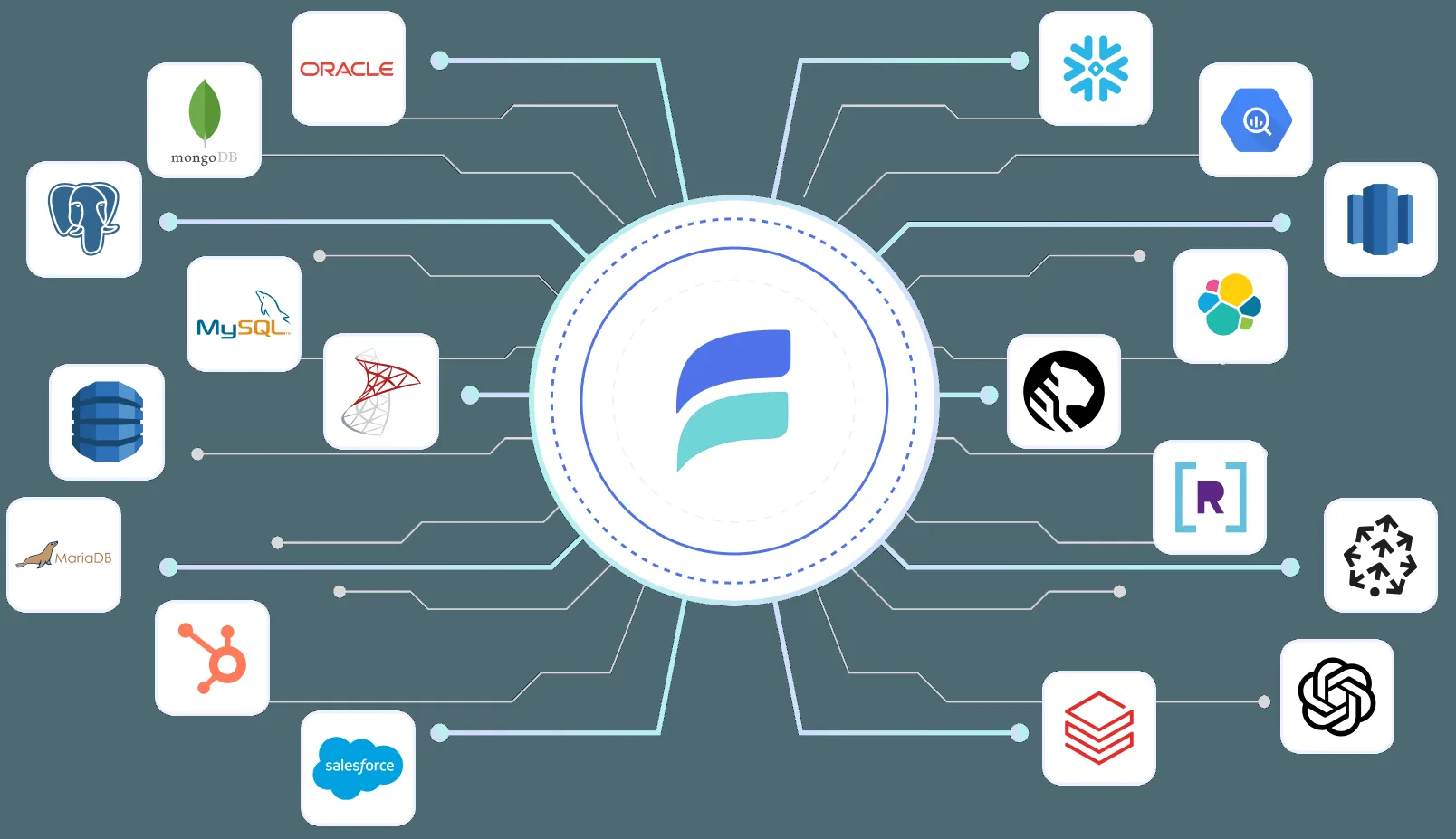
| Destination Support | Data warehouses, databases, and AI destinations including Pinecone, OpenAI, and Databricks | Data warehouses, data lakes with open table formats, and cloud databases across all providers |
| Real-Time & Streaming | ||
| Streaming Latency | Sub-100ms end-to-end latency with exactly-once delivery guarantees | Minimum 1-minute sync frequency on Enterprise tier; 15-minute syncs on Standard |
| Kafka Compatibility | Estuary Dekaf enables any Kafka-compatible destination to consume from Estuary as a Kafka cluster | Supports streaming replication from Kafka and event streams as a source connector |
| Stream Storage & Replay | Collections stored as durable append-only logs in private cloud; replay for backfill and time travel | Not a core capability; focuses on point-to-point replication rather than stream storage |
| Transformations & DataOps | ||
| In-Pipeline Transformations | Real-time ETL transforms using SQL or TypeScript; ELT via dbt in the warehouse | ELT-first with Quickstart dbt models; transformations run after data lands in the warehouse |
| Pipeline Monitoring | Real-time monitoring and alerting with detailed logging via UI and CLI | Reliability dashboards with logs, alerts, sync health monitoring, and application log exports |
| Multi-Destination Routing | Many-to-many data movement; capture once, materialize to multiple destinations simultaneously | Point-to-point pipelines; destination-to-destination replication available for migrations |
| Deployment & Security | ||
| Deployment Options | Public cloud, Private Deployment in your network, and Bring Your Own Cloud options | SaaS managed platform with Hybrid Deployment for data processing in your own environment |
| Compliance Certifications | SOC 2 Type II, HIPAA, GDPR, CCPA, and CPRA compliant | SOC 1, SOC 2, HIPAA, ISO 27001, PCI DSS Level 1, HITRUST, and GDPR certified |
| Data Residency Controls | US and EU data processing regions with private storage in your own cloud account | Pick any cloud provider (GCP, AWS, Azure) with private networking and customer-managed encryption keys |
Data Movement & Replication
Change Data Capture (CDC)
Batch Processing
Schema Evolution
Connectors & Integrations
Pre-Built Connectors
Custom Connector Options
Destination Support
Real-Time & Streaming
Streaming Latency
Kafka Compatibility
Stream Storage & Replay
Transformations & DataOps
In-Pipeline Transformations
Pipeline Monitoring
Multi-Destination Routing
Deployment & Security
Deployment Options
Compliance Certifications
Data Residency Controls
Which to choose
Estuary Flow and Fivetran both solve data movement but with fundamentally different architectures and strengths. Estuary Flow unifies batch and streaming into a single platform with sub-100ms latency, exactly-once delivery, and a CDC-first design that stores data as reusable collections in your private cloud. Fivetran is the established leader in automated ELT data ingestion, offering the broadest connector catalog at 700+ sources with fully hands-off pipeline management and deep compliance certifications. The right choice depends on whether your priority is real-time streaming with cost-predictable pricing or maximum connector coverage with zero-maintenance batch pipelines.
Best-fit scenarios
Choose Estuary Flow if:
Choose Estuary Flow if real-time data movement is a requirement for your operations, AI, or analytics workloads. Its sub-100ms streaming latency, exactly-once delivery, and many-to-many pipeline architecture make it the stronger platform for teams that need genuine CDC streaming rather than frequent batch intervals. The throughput-based pricing model at $0.50/GB provides predictable costs, and customers report 40-60% savings compared to MAR-based models. Private and Bring Your Own Cloud deployment options give you full infrastructure control.
Choose Fivetran if:
Choose Fivetran if your priority is breadth of connector coverage and fully automated, zero-maintenance data ingestion. With 700+ managed connectors, built-in dbt Quickstart models, and Connector SDK for custom sources, Fivetran covers virtually any SaaS, database, or ERP source your team needs. Its extensive compliance certifications including SOC 1, ISO 27001, PCI DSS Level 1, and HITRUST make it a strong fit for regulated industries. The Hybrid Deployment option addresses data residency concerns without sacrificing the managed experience.
These scenarios reflect the available product evidence. Your requirements, existing stack, and team expertise should guide the final decision.
Frequently Asked Questions
What is the main difference between Estuary Flow and Fivetran?
Estuary Flow is a unified batch and streaming data pipeline platform built around real-time CDC with sub-100ms latency and exactly-once delivery. It treats streaming as a first-class citizen, storing data as durable collections in your private cloud storage for replay and reuse. Fivetran is a managed ELT platform focused on fully automated batch data ingestion, with the industry's largest connector catalog at 700+ sources. The core distinction is that Estuary Flow unifies real-time and batch in one pipeline, while Fivetran optimizes for automated, hands-off batch ELT with sync intervals starting at one minute on its Enterprise tier.
Which platform is better for real-time data pipelines?
Estuary Flow is the stronger choice for real-time use cases. It delivers sub-100ms end-to-end latency with exactly-once guarantees and streams data continuously from source to destination. Its architecture decouples storage and compute, storing streams as collections that can be replayed or reused across multiple destinations. Fivetran supports near-real-time with 1-minute sync frequencies on its Enterprise tier, but its architecture is fundamentally batch-oriented. For operations, AI, and use cases where millisecond-level freshness matters, Estuary Flow provides genuine streaming capabilities rather than frequent batch intervals.
How do the pricing models compare between Estuary Flow and Fivetran?
Estuary charges $0.50/GB, with the first 6 connector instances at $100/month per connector instance and additional connector instances at $50/month each., with a free Developer tier offering 10GB/month and 2 connectors. Enterprise plans include volume discounts and flat-fee options. Fivetran uses a Monthly Active Rows (MAR) model, where pricing scales based on the number of unique rows synced each month. Fivetran offers a free tier with 500K MAR and Standard and Enterprise tiers with usage-based rates. The key difference is predictability: Estuary's per-GB model makes costs straightforward to forecast, while Fivetran's MAR model can be harder to predict when row counts fluctuate.
Which platform has more connectors?
Fivetran leads significantly with 700+ fully managed connectors covering SaaS applications, databases, ERPs, files, and event streams. It also offers a Connector SDK for building custom sources and a by-request program where Fivetran builds connectors on demand. Estuary Flow offers 200+ no-code connectors for databases, SaaS apps, data warehouses, and streaming systems. While Fivetran has a broader catalog, Estuary Flow's connectors support both real-time streaming and batch modes natively, and its Kafka compatibility via Dekaf extends integration reach to any Kafka-compatible system.
Can Estuary Flow replace Fivetran for analytics workloads?
Yes, Estuary Flow can handle analytics workloads by loading data into warehouses like Snowflake, BigQuery, Databricks, and Redshift at configurable intervals. Multiple customers have migrated from Fivetran to Estuary Flow, including Shippit, which reported 45% cost savings, and Headset, which cut Snowflake ingestion costs by 40%. However, if your workloads are purely batch analytics and you need connectors for a wide variety of niche SaaS sources, Fivetran's larger connector catalog and established Quickstart dbt models may provide a smoother experience. The right choice depends on whether real-time capabilities and cost predictability outweigh connector breadth for your use case.