Decision comparison
Apache Kafka vs RabbitMQ
Apache Kafka is the clear choice for high-throughput event streaming, real-time data pipelines, and log aggregation at massive scale. RabbitMQ excels as a traditional message broker for task queues, microservices communication, and scenarios requiring flexible routing with multi-protocol support.
Architecture choice. These take different approaches to the same problem. Read the table as a fit question rather than a feature race.
These are different kinds of product — Event Streaming Platform and Message Broker.
Quick Comparison
| Decision factor | Apache Kafka | RabbitMQ |
|---|---|---|
| Architecture | Distributed event log with pub/sub model, partitioned topics across broker clusters | Traditional message broker supporting queues, exchanges, and flexible routing patterns |
| Throughput | Millions of messages per second per cluster with latencies as low as 2ms | Handles high volumes reliably but moderate peak throughput than Kafka at extreme scale |
| Protocol Support | Custom binary protocol over TCP; integrates via Kafka Connect with hundreds of sources | Supports AMQP 1.0, MQTT 5.0, STOMP, and WebSockets natively with no vendor lock-in |
| Message Retention | Permanent storage with configurable time-based or size-based retention policies | Messages consumed and removed from queues; streams feature adds replay capability |
| Learning Curve | Steep; requires understanding of brokers, partitions, consumer groups, and ZooKeeper/KRaft | Moderate; lightweight setup with user-friendly management UI and solid documentation |
| Community Size | 33,000+ GitHub stars, 5M+ lifetime downloads, one of top 5 Apache projects | 13,000+ GitHub stars, latest release v4.2.5, backed by Broadcom/VMware Tanzu |
Apache Kafka
- Architecture:
- Distributed event log with pub/sub model, partitioned topics across broker clusters
- Throughput:
- Millions of messages per second per cluster with latencies as low as 2ms
- Protocol Support:
- Custom binary protocol over TCP; integrates via Kafka Connect with hundreds of sources
- Message Retention:
- Permanent storage with configurable time-based or size-based retention policies
- Learning Curve:
- Steep; requires understanding of brokers, partitions, consumer groups, and ZooKeeper/KRaft
- Community Size:
- 33,000+ GitHub stars, 5M+ lifetime downloads, one of top 5 Apache projects
RabbitMQ
- Architecture:
- Traditional message broker supporting queues, exchanges, and flexible routing patterns
- Throughput:
- Handles high volumes reliably but moderate peak throughput than Kafka at extreme scale
- Protocol Support:
- Supports AMQP 1.0, MQTT 5.0, STOMP, and WebSockets natively with no vendor lock-in
- Message Retention:
- Messages consumed and removed from queues; streams feature adds replay capability
- Learning Curve:
- Moderate; lightweight setup with user-friendly management UI and solid documentation
- Community Size:
- 13,000+ GitHub stars, latest release v4.2.5, backed by Broadcom/VMware Tanzu
Public signals
Verified factual signals only. Bars appear only for like-for-like metrics with five weekly assessments for every tool; missing evidence stays explicit. These signals do not establish enterprise adoption, product quality, or total cost.
| Metric | Apache Kafka | RabbitMQ |
|---|---|---|
| Docker Hub pulls(Product adoption) | 42.4M | 3.9B |
| GitHub commits, 90d(Product adoption) | 559 | 888 |
| GitHub stars(Product adoption) | 33,000+ | 13,000+ |
| Search interest(Market interest) | 5 | 5 |
| Hacker News mentions, 90d(Community interest) | 7 | Not available |
| npm weekly downloads(Ecosystem adoption) | 2.6M | 2.2M |
| PyPI weekly downloads(Ecosystem adoption) | 9.6M | 2.4M |
| Stack Overflow questions(Community interest) | 33.2k | 14.3k |
As of September 14, 2026 — updated weekly.
Health & risk evidence
Observed public-source checks for mapped package versions and repositories.
Apache Kafka
September 14, 2026Package vulnerabilities
PyPI · confluent-kafka@2.15.0 · npm · kafkajs@2.2.4
0 vulnerabilities
across 2 packages
Repository security score
github.com/apache/kafka
6.1/10
RabbitMQ
September 14, 2026Package vulnerabilities
npm · amqplib@2.0.1 · PyPI · pika@1.4.4
0 vulnerabilities
across 2 packages
Repository security score
Not available
Interface Preview
Apache Kafka
Feature Comparison
| Feature | Apache Kafka | RabbitMQ |
|---|---|---|
| Core Messaging | ||
| Publish/Subscribe Model | Native distributed pub/sub with topic partitioning across brokers | Pub/sub via exchanges and bindings with flexible routing patterns |
| Message Queuing | Partial; consumer groups simulate queuing but built as event log | Full native support with classic, quorum, and stream queue types |
| Message Ordering | Guaranteed ordering within partitions with exactly-once semantics | FIFO ordering within individual queues; no global ordering guarantee |
| Scalability & Performance | ||
| Horizontal Scaling | Scale to thousands of brokers, trillions of messages per day, petabytes of data | Supports clustering but not built for extreme scale beyond moderate workloads |
| Latency | As low as 2ms end-to-end with high throughput batch processing | Low latency for individual messages; optimized for per-message delivery |
| Fault Tolerance | Built-in replication across brokers and availability zones with automatic failover | Quorum queues with Raft-based replication; disaster recovery via standby clusters |
| Data Handling | ||
| Message Retention & Replay | Permanent storage in distributed log; full replay from any offset at any time | Messages removed after consumption; streams feature adds limited replay |
| Stream Processing | Built-in Kafka Streams library with joins, aggregations, and exactly-once processing | No native stream processing; relies on external consumers for transformation |
| Data Integration | Kafka Connect integrates with Postgres, Elasticsearch, S3, and hundreds more | Shovels and federation plugins for connecting brokers and external systems |
| Protocol & Ecosystem | ||
| Protocol Support | Custom Kafka protocol; ecosystem integration via connectors and client libraries | AMQP 1.0, MQTT 5.0, STOMP protocols natively supported out of the box |
| Client Libraries | Official clients for Java, Python, Go, and many community-maintained libraries | Multiple client libraries across all major programming languages |
| Management & Monitoring | No built-in UI; relies on third-party tools or Confluent Control Center | Built-in management UI with stream browser, audit logging, and monitoring |
| Operations & Deployment | ||
| Deployment Complexity | Complex; requires managing brokers, ZooKeeper/KRaft, partitions, and replication | Lightweight; single binary or Docker deployment with minimal configuration |
| Cloud & Container Support | Available via Confluent Cloud, Amazon MSK; Kubernetes via Strimzi operator | Tanzu RabbitMQ for Kubernetes; easy containerized deployment |
| Enterprise Support | Confluent offers enterprise platform with ksqlDB, schema registry, RBAC | VMware Tanzu RabbitMQ with 24/7 support, FIPS 140-2 compliance, audit logging |
Core Messaging
Publish/Subscribe Model
Message Queuing
Message Ordering
Scalability & Performance
Horizontal Scaling
Latency
Fault Tolerance
Data Handling
Message Retention & Replay
Stream Processing
Data Integration
Protocol & Ecosystem
Protocol Support
Client Libraries
Management & Monitoring
Operations & Deployment
Deployment Complexity
Cloud & Container Support
Enterprise Support
Which approach fits
Apache Kafka is the clear choice for high-throughput event streaming, real-time data pipelines, and log aggregation at massive scale. RabbitMQ excels as a traditional message broker for task queues, microservices communication, and scenarios requiring flexible routing with multi-protocol support.
When each approach fits
Choose Apache Kafka if:
Choose Apache Kafka when you need to process millions of messages per second, build real-time data pipelines, or implement event sourcing architectures. Kafka is ideal for organizations handling petabyte-scale data streams, log aggregation, streaming analytics, and mission-critical applications where message replay, permanent storage, and exactly-once processing are essential requirements.
Choose RabbitMQ if:
Choose RabbitMQ when you need a reliable, easy-to-deploy message broker for microservices communication, job queues, RPC patterns, or IoT messaging. RabbitMQ is the better fit for teams that value multi-protocol support (AMQP, MQTT, STOMP), flexible message routing, a built-in management UI, and lower operational complexity without the overhead of managing a distributed streaming platform.
These scenarios reflect the available product evidence. Your requirements, existing stack, and team expertise should guide the final decision.
Frequently Asked Questions
What is the main architectural difference between Apache Kafka and RabbitMQ?
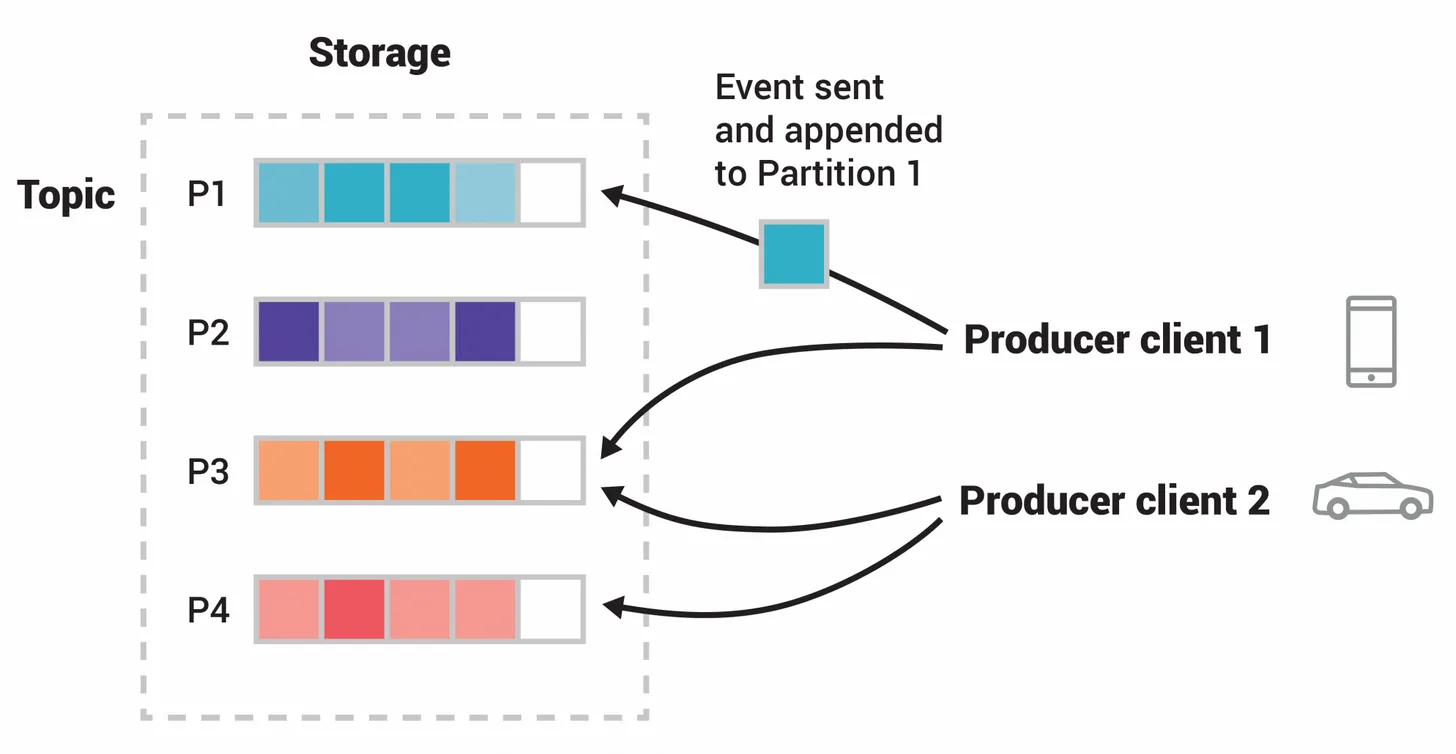
Apache Kafka is a distributed event streaming platform built around an immutable, append-only log. Messages are written to partitioned topics and retained permanently based on configurable policies, allowing consumers to replay data from any point. RabbitMQ is a traditional message broker that uses queues and exchanges to route messages from producers to consumers, with messages typically removed after acknowledgment. This fundamental difference means Kafka is optimized for high-throughput event streaming and data pipelines, while RabbitMQ excels at task distribution and point-to-point messaging.
Can Apache Kafka and RabbitMQ be used together in the same architecture?
Yes, many organizations use both tools in complementary roles within the same architecture. Kafka often serves as the central event backbone handling high-volume data ingestion, real-time streaming, and log aggregation across the organization. RabbitMQ then handles specific service-to-service communication patterns like RPC calls, task queues, and lightweight messaging between microservices where flexible routing and protocol support matter rather than throughput. This combination leverages the strengths of each platform rather than forcing one tool to cover all messaging needs.
Which tool is easier to set up and maintain for a small team?
RabbitMQ is significantly easier to set up and maintain for small teams. It can be deployed as a single binary or Docker container with minimal configuration, includes a built-in management UI for monitoring, and supports multiple protocols out of the box. Apache Kafka requires managing a distributed cluster of brokers, configuring ZooKeeper or the newer KRaft consensus protocol, handling partition assignments, and tuning replication factors. Multiple sources confirm that Kafka demands deep knowledge of distributed systems and can be resource-intensive in terms of CPU, memory, and disk I/O. For small teams without dedicated infrastructure engineers, RabbitMQ reduces operational burden.
How do Apache Kafka and RabbitMQ handle message durability and reliability differently?
Kafka stores all messages in a distributed, fault-tolerant log that persists data to disk with replication across multiple brokers. Messages remain available for replay based on retention policies, which can be indefinite. This makes Kafka suitable for event sourcing and audit trails. RabbitMQ provides durability through quorum queues with Raft-based replication, ensuring messages survive broker failures. However, messages are typically consumed and removed from queues. RabbitMQ's newer streams feature adds log-like replay capability, but it does not match Kafka's native design around permanent, replayable event storage at scale.