Decision comparison
Apache NiFi vs Apache Kafka
Apache NiFi excels at visual data flow management with its drag-and-drop interface and complete data provenance tracking, making it ideal for data routing and ingestion pipelines. Apache Kafka is a prominent solution for high-throughput event streaming with latencies as low as 2ms and the ability to scale to trillions of messages per day, making it a standard for real-time data infrastructure.
Used together. These are normally used together rather than chosen between. The comparison explains what each one does in the stack.
Applies to: Whether these two do the same job, or different jobs in one pipeline.
These are different kinds of product — ETL Platform and Event Streaming Platform.
Quick Comparison
| Decision factor | Apache NiFi | Apache Kafka |
|---|---|---|
| Primary Purpose | Visual data flow management and routing with drag-and-drop interface for ingestion pipelines | Distributed event streaming platform for high-throughput real-time data pipelines and analytics |
| Architecture | Flow-based processing with directed graphs, built-in data provenance tracking from source to destination | Distributed commit log with brokers, partitions, and consumer groups scaling to thousands of brokers |
| Throughput & Latency | Moderate throughput with configurable prioritization balancing latency and delivery guarantees | Network-limited throughput with latencies as low as 2ms, scaling to trillions of messages per day |
| Ease of Use | Browser-based drag-and-drop UI for designing, controlling, and monitoring data flows visually | Configuration-driven setup requiring more operational expertise but trusted by thousands of organizations |
| Data Processing | Built-in data transformation, routing, and enrichment with Python-native processor extensibility | Built-in stream processing with joins, aggregations, filters, and exactly-once event-time processing |
| Integration & Connectivity | Secure protocols including TLS, SFTP, HTTPS with REST API orchestration and extensible design | Connect interface integrating with Postgres, JMS, Elasticsearch, AWS S3, and hundreds of sources and sinks |
Apache NiFi
- Primary Purpose:
- Visual data flow management and routing with drag-and-drop interface for ingestion pipelines
- Architecture:
- Flow-based processing with directed graphs, built-in data provenance tracking from source to destination
- Throughput & Latency:
- Moderate throughput with configurable prioritization balancing latency and delivery guarantees
- Ease of Use:
- Browser-based drag-and-drop UI for designing, controlling, and monitoring data flows visually
- Data Processing:
- Built-in data transformation, routing, and enrichment with Python-native processor extensibility
- Integration & Connectivity:
- Secure protocols including TLS, SFTP, HTTPS with REST API orchestration and extensible design
Apache Kafka
- Primary Purpose:
- Distributed event streaming platform for high-throughput real-time data pipelines and analytics
- Architecture:
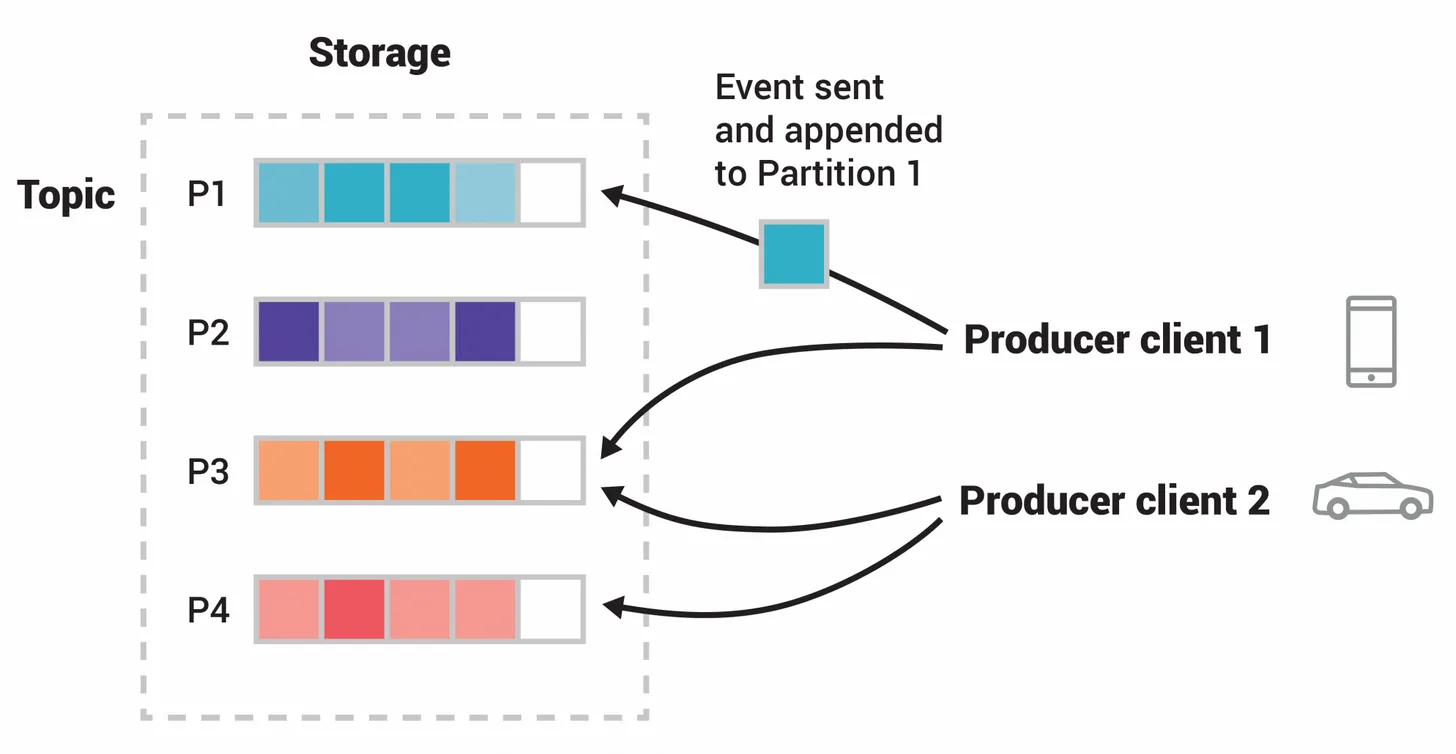
- Distributed commit log with brokers, partitions, and consumer groups scaling to thousands of brokers
- Throughput & Latency:
- Network-limited throughput with latencies as low as 2ms, scaling to trillions of messages per day
- Ease of Use:
- Configuration-driven setup requiring more operational expertise but trusted by thousands of organizations
- Data Processing:
- Built-in stream processing with joins, aggregations, filters, and exactly-once event-time processing
- Integration & Connectivity:
- Connect interface integrating with Postgres, JMS, Elasticsearch, AWS S3, and hundreds of sources and sinks
Public signals
Verified factual signals only. Bars appear only for like-for-like metrics with five weekly assessments for every tool; missing evidence stays explicit. These signals do not establish enterprise adoption, product quality, or total cost.
| Metric | Apache NiFi | Apache Kafka |
|---|---|---|
| Docker Hub pulls(Product adoption) | 25.1M | 42.4M |
| GitHub commits, 90d(Product adoption) | 269 | 559 |
| GitHub stars(Product adoption) | 6,000+ | 33,000+ |
| Search interest(Market interest) | 1 | 5 |
| Hacker News mentions, 90d(Community interest) | 0 | 7 |
| PyPI weekly downloads(Ecosystem adoption) | 15.3k | 9.6M |
| Stack Overflow questions(Community interest) | 5.3k | 33.2k |
| npm weekly downloads(Ecosystem adoption) | Not available | 2.6M |
As of September 14, 2026 — updated weekly.
Health & risk evidence
Observed public-source checks for mapped package versions and repositories.
Apache NiFi
September 14, 2026Package vulnerabilities
PyPI · nipyapi@1.7.0
0 vulnerabilities
across 1 package
Repository security score
github.com/apache/nifi
7.0/10
Apache Kafka
September 14, 2026Package vulnerabilities
PyPI · confluent-kafka@2.15.0 · npm · kafkajs@2.2.4
0 vulnerabilities
across 2 packages
Repository security score
github.com/apache/kafka
6.1/10
Interface Preview
Apache NiFi
Apache Kafka
Feature Comparison
| Feature | Apache NiFi | Apache Kafka |
|---|---|---|
| Visual Flow Designer | Full drag-and-drop browser UI | No built-in visual designer |
| Data Provenance Tracking | Complete lineage with searchable history | Offset-based tracking only |
| Back Pressure Management | Built-in flow control with runtime config | Consumer-side flow control |
| Horizontal Scaling | Clustering for distributed processing | Thousands of brokers, trillions of messages/day |
| Low Latency Processing | Configurable priority-based scheduling | As low as 2ms latency at network limits |
| Storage Capacity | Temporary flow file storage | Petabytes of persistent distributed storage |
| Encryption Protocols | TLS, SFTP, HTTPS built-in | TLS/SSL encryption support |
| Authentication | SAML 2, OpenID Connect SSO | SASL, Kerberos, OAuth |
| Multi-Tenant Authorization | Policy-based multi-tenant access | ACL-based authorization |
| Built-in Stream Processing | Flow-based transformation and routing | Joins, aggregations, filters, exactly-once |
| Event-Time Processing | Not natively supported | Native event-time semantics |
| Message Ordering Guarantees | Priority-based configurable ordering | Guaranteed partition-level ordering |
| Connector Ecosystem | Extensible processor architecture | Hundreds of pre-built Connect connectors |
| Custom Processing | Python-native processors, REST API | Multi-language client libraries |
| Delivery Guarantees | Guaranteed delivery with retry/backoff | Zero message loss, exactly-once processing |
Visual Flow Designer
Data Provenance Tracking
Back Pressure Management
Horizontal Scaling
Low Latency Processing
Storage Capacity
Encryption Protocols
Authentication
Multi-Tenant Authorization
Built-in Stream Processing
Event-Time Processing
Message Ordering Guarantees
Connector Ecosystem
Custom Processing
Delivery Guarantees
How they fit together
Apache NiFi excels at visual data flow management with its drag-and-drop interface and complete data provenance tracking, making it ideal for data routing and ingestion pipelines. Apache Kafka is a prominent solution for high-throughput event streaming with latencies as low as 2ms and the ability to scale to trillions of messages per day, making it a standard for real-time data infrastructure.
What each one handles
Use Apache NiFi for:
Choose Apache NiFi when you need a visual, browser-based interface for designing complex data routing and ingestion pipelines. Its drag-and-drop flow designer, complete data provenance tracking from source to destination, and built-in back pressure controls make it the stronger choice for teams that need to manage diverse data sources without deep engineering expertise. NiFi shines in scenarios requiring data transformation, protocol mediation between systems using TLS, SFTP, and HTTPS, and environments where auditability of every data movement matters.
Use Apache Kafka for:
Choose Apache Kafka when your primary requirement is high-throughput, low-latency event streaming at massive scale. With the ability to handle trillions of messages per day across thousands of brokers at latencies as low as 2ms, Kafka is purpose-built for real-time data pipelines, streaming analytics, and mission-critical applications. Its built-in stream processing with exactly-once semantics, permanent distributed storage, and an ecosystem of hundreds of pre-built connectors make it the foundation trusted by over 80% of Fortune 100 companies for their core data infrastructure.
These roles reflect the available product evidence. Most teams run both; which one owns a given job depends on your stack and team.
Frequently Asked Questions
Can Apache NiFi and Apache Kafka be used together?
Yes, Apache NiFi and Apache Kafka are highly complementary and frequently deployed together in production data architectures. NiFi serves as the data ingestion and routing layer, using its visual flow designer to collect data from diverse sources via protocols like SFTP, HTTPS, and REST APIs. It then publishes that data into Kafka topics for downstream real-time processing. Kafka handles the high-throughput event streaming, permanent storage, and distribution to multiple consumers. This combination gives teams the best of both worlds: NiFi's visual data provenance and flow management paired with Kafka's massive scalability and low-latency delivery.
Which tool is better for real-time data processing?
Apache Kafka is the stronger choice for pure real-time data processing at scale. It delivers network-limited throughput with latencies as low as 2ms and scales to trillions of messages per day across thousands of brokers. Kafka also includes built-in stream processing capabilities with joins, aggregations, filters, and exactly-once event-time processing. Apache NiFi handles near-real-time data flows effectively and offers configurable prioritization for latency versus throughput, but it is optimized more for data routing, transformation, and ingestion rather than ultra-low-latency event streaming workloads.
How do the pricing models compare for Apache NiFi and Apache Kafka?
Both Apache NiFi and Apache Kafka are open-source projects available at no cost under the Apache License 2.0. You can download, deploy, and run either platform without paying licensing fees. The actual costs come from infrastructure, operations, and staffing. Kafka clusters at scale require significant compute, storage, and networking resources, plus operational expertise to manage brokers, partitions, and replication. NiFi clusters tend to require fewer resources for moderate workloads. Both tools have commercial distributions available from vendors that offer managed hosting, enterprise support, and additional features for organizations that prefer not to self-manage.
What are the main operational challenges with each platform?
Apache Kafka's primary operational challenges include monitoring complexity, cluster management at scale, and the learning curve for configuring topics, partitions, and consumer groups effectively. Users note that monitoring tools and management interfaces could be improved. Apache NiFi's challenges center on scaling beyond moderate throughput levels, managing complex flow configurations as they grow, and memory management for large flow files. NiFi's browser-based UI simplifies initial operations, but very large deployments still require careful capacity planning. Both platforms benefit from dedicated operations teams, though NiFi's visual interface makes it more accessible to teams without deep distributed systems expertise.