Decision comparison
Apache Flink vs Apache Kafka
Apache Flink is the superior choice for complex stateful stream processing with sub-millisecond latency, while Apache Kafka excels as the industry-standard event streaming backbone for reliable data distribution and integration across systems.
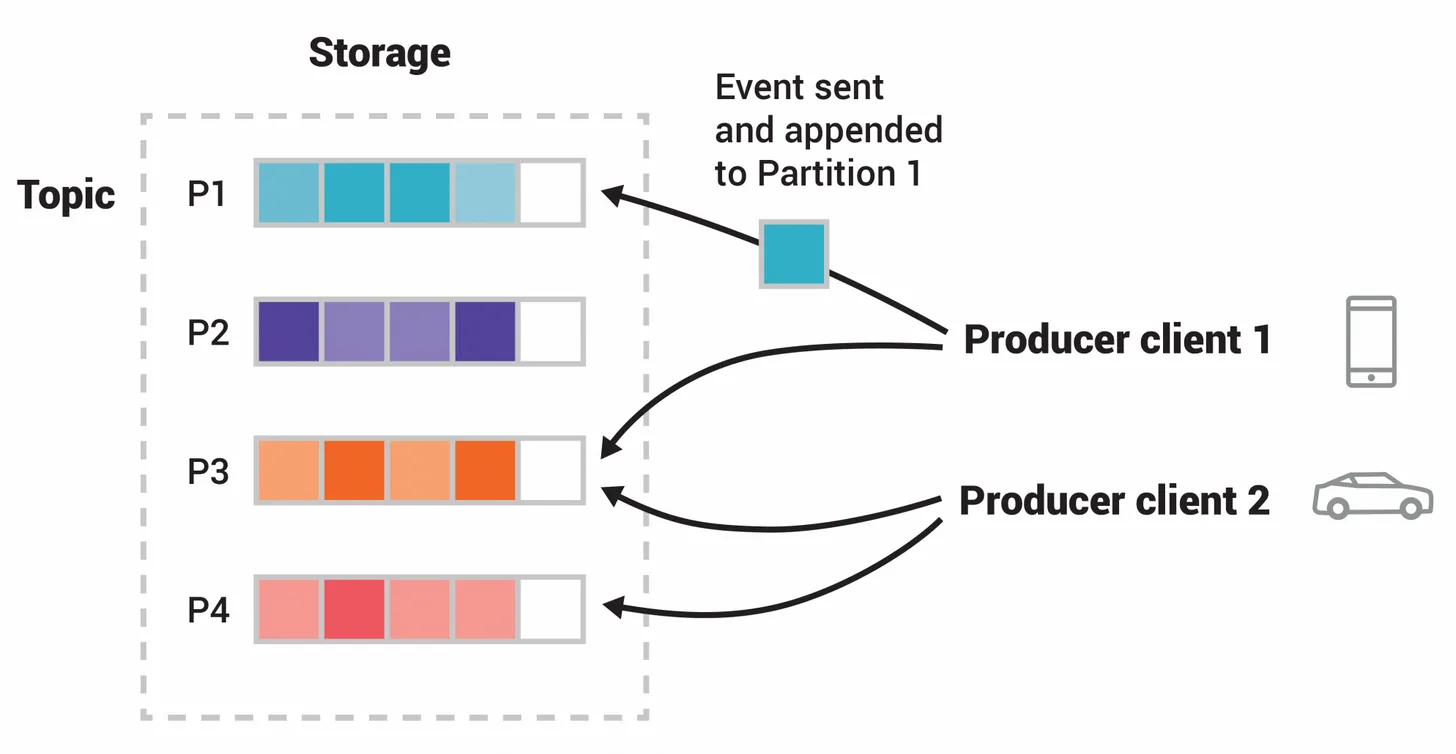
Used together. These are normally used together rather than chosen between. The comparison explains what each one does in the stack.
Applies to: Whether an event streaming platform can process events itself, or needs a compute engine.
These are different kinds of product — Data Processing Engine and Event Streaming Platform.
Quick Comparison
| Decision factor | Apache Flink | Apache Kafka |
|---|---|---|
| Primary Purpose | Distributed stream processing engine for stateful computations over bounded and unbounded data streams | Distributed event streaming platform for high-throughput data pipelines, analytics, and integration |
| Processing Model | Native per-event streaming with sub-millisecond latency and unified batch processing as finite streams | Publish-subscribe messaging broker with built-in Kafka Streams for lightweight stream processing |
| State Management | Advanced managed state with RocksDB backend, incremental checkpointing, and terabyte-scale local state | Durable distributed commit log with permanent storage and configurable retention policies |
| Scalability | Scales to thousands of nodes with in-memory computing and sophisticated back-pressure handling | Scales to thousands of brokers handling trillions of messages per day with elastic expansion |
| Ecosystem & Community | 26,000+ GitHub stars, 6 reviews on TrustRadius with a 9/10 rating, active Apache community | 33,000+ GitHub stars, 151 reviews on TrustRadius with 8.6/10 rating, used by 80% of Fortune 100 |
| Pricing | Free and open source | Apache Kafka is open-source software available at no cost. |
Apache Flink
- Primary Purpose:
- Distributed stream processing engine for stateful computations over bounded and unbounded data streams
- Processing Model:
- Native per-event streaming with sub-millisecond latency and unified batch processing as finite streams
- State Management:
- Advanced managed state with RocksDB backend, incremental checkpointing, and terabyte-scale local state
- Scalability:
- Scales to thousands of nodes with in-memory computing and sophisticated back-pressure handling
- Ecosystem & Community:
- 26,000+ GitHub stars, 6 reviews on TrustRadius with a 9/10 rating, active Apache community
- Pricing:
- Free and open source
Apache Kafka
- Primary Purpose:
- Distributed event streaming platform for high-throughput data pipelines, analytics, and integration
- Processing Model:
- Publish-subscribe messaging broker with built-in Kafka Streams for lightweight stream processing
- State Management:
- Durable distributed commit log with permanent storage and configurable retention policies
- Scalability:
- Scales to thousands of brokers handling trillions of messages per day with elastic expansion
- Ecosystem & Community:
- 33,000+ GitHub stars, 151 reviews on TrustRadius with 8.6/10 rating, used by 80% of Fortune 100
- Pricing:
- Apache Kafka is open-source software available at no cost.
Public signals
Verified factual signals only. Bars appear only for like-for-like metrics with five weekly assessments for every tool; missing evidence stays explicit. These signals do not establish enterprise adoption, product quality, or total cost.
| Metric | Apache Flink | Apache Kafka |
|---|---|---|
| Docker Hub pulls(Product adoption) | 10.8M | 42.4M |
| GitHub commits, 90d(Product adoption) | 456 | 559 |
| GitHub stars(Product adoption) | 26,000+ | 33,000+ |
| Search interest(Market interest) | 1 | 5 |
| Hacker News mentions, 90d(Community interest) | 2 | 7 |
| PyPI weekly downloads(Product adoption) | 21.3k | Not available |
| Stack Overflow questions(Community interest) | 7.9k | 33.2k |
| npm weekly downloads(Ecosystem adoption) | Not available | 2.6M |
| PyPI weekly downloads(Ecosystem adoption) | Not available | 9.6M |
As of September 14, 2026 — updated weekly.
Health & risk evidence
Observed public-source checks for mapped package versions and repositories.
Apache Flink
September 14, 2026Package vulnerabilities
PyPI · apache-flink@2.3.0
0 vulnerabilities
across 1 package
Repository security score
Not available
Apache Kafka
September 14, 2026Package vulnerabilities
PyPI · confluent-kafka@2.15.0 · npm · kafkajs@2.2.4
0 vulnerabilities
across 2 packages
Repository security score
github.com/apache/kafka
6.1/10
Interface Preview
Apache Kafka
Feature Comparison
| Feature | Apache Flink | Apache Kafka |
|---|---|---|
| Stream Processing | ||
| Exactly-Once Processing | Yes - native exactly-once state consistency via Chandy-Lamport checkpointing algorithm | Yes - exactly-once processing semantics with guaranteed message ordering and zero loss |
| Event-Time Processing | Yes - advanced event-time semantics with watermarks for out-of-order and late data handling | Yes - built-in event-time processing with joins, aggregations, and filters |
| Windowing Support | Yes - flexible time, count, session, and custom trigger windows across event and processing time | Yes - time-based and session windows available through Kafka Streams API |
| Data Management | ||
| State Backend | Yes - managed state with RocksDB for terabyte-scale local state and incremental checkpoints | Yes - distributed commit log with permanent storage in fault-tolerant clusters |
| Fault Tolerance | Yes - checkpointing and savepoints for consistent snapshots, automatic failover and recovery | Yes - built-in replication across availability zones and geographic regions |
| Data Retention | Stateful processing with configurable state TTL; no built-in long-term storage | Yes - permanent storage with configurable retention policies in distributed clusters |
| APIs & Integration | ||
| SQL Support | Yes - SQL on both stream and batch data with full table API for transformations and analytics | Yes - KSQL/ksqlDB for SQL-based stream processing (via Confluent ecosystem) |
| Connector Ecosystem | Connects to Kafka, Pulsar, and various data stores; fewer out-of-the-box connectors | Yes - Kafka Connect integrates with Postgres, JMS, Elasticsearch, AWS S3, and hundreds more |
| Client Libraries | Java, Scala, and Python APIs with DataStream, DataSet, and ProcessFunction layers | Client libraries for reading, writing, and processing streams in multiple programming languages |
| Operations & Deployment | ||
| Deployment Options | Standalone clusters, Apache YARN, Apache Mesos, and Kubernetes with flexible deployment | Self-managed clusters or managed services from Confluent, AWS MSK, and other cloud providers |
| High Availability | Yes - HA setup with automatic failover, savepoints for upgrades and debugging | Yes - stretches clusters across availability zones and connects clusters across regions |
| Monitoring & Observability | Metrics via REST API and JMX; integrates with Prometheus and Grafana dashboards | Basic JMX metrics; users report lack of enterprise-grade monitoring tools as a gap |
| Use Cases | ||
| Complex Event Processing | Yes - FlinkCEP library for detecting event patterns in data streams natively | Possible through Kafka Streams but no dedicated CEP library built in |
| Data Pipeline / ETL | Yes - streaming ETL with event-driven transformations and enrichment from external data | Yes - core strength as a data integration backbone connecting producers to consumers |
| Real-Time Analytics | Yes - real-time and batch analytics with low latency and high throughput processing | Yes - streaming analytics with 2ms latency and integration with downstream analytics tools |
Stream Processing
Exactly-Once Processing
Event-Time Processing
Windowing Support
Data Management
State Backend
Fault Tolerance
Data Retention
APIs & Integration
SQL Support
Connector Ecosystem
Client Libraries
Operations & Deployment
Deployment Options
High Availability
Monitoring & Observability
Use Cases
Complex Event Processing
Data Pipeline / ETL
Real-Time Analytics
How they fit together
Apache Flink is the superior choice for complex stateful stream processing with sub-millisecond latency, while Apache Kafka excels as the industry-standard event streaming backbone for reliable data distribution and integration across systems.
What each one handles
Use Apache Flink for:
Choose Apache Flink when your workloads demand complex stateful computations, real-time event pattern detection, or sophisticated windowing across data streams. Flink's native per-event processing delivers sub-millisecond latency, and its advanced state management with RocksDB handles terabytes of state with incremental checkpoints. Organizations running fraud detection, real-time analytics pipelines, or streaming ETL with complex business logic will benefit from Flink's CEP library, layered APIs, and exactly-once consistency guarantees.
Use Apache Kafka for:
Choose Apache Kafka when you need a reliable, high-throughput event streaming backbone to connect producers and consumers across your organization. Kafka's distributed commit log scales to trillions of messages per day and integrates with hundreds of systems through Kafka Connect. Organizations building event-driven architectures, microservice communication layers, or data integration pipelines benefit from Kafka's permanent storage, guaranteed message ordering, and the massive ecosystem trusted by 80% of Fortune 100 companies.
These roles reflect the available product evidence. Most teams run both; which one owns a given job depends on your stack and team.
Frequently Asked Questions
Can Apache Flink and Apache Kafka be used together?
Yes, Flink and Kafka are frequently used together in production architectures. Kafka serves as the event streaming backbone, ingesting and distributing data across systems, while Flink connects to Kafka as a source to perform complex stateful computations, windowed aggregations, and real-time analytics on those streams. Confluent, the company behind Kafka's commercial offerings, actively promotes Flink integration and provides courses on building Flink applications that consume from Kafka topics. This combination gives organizations both reliable data distribution and powerful stream processing capabilities.
Which tool handles larger-scale deployments better?
Both tools handle massive scale, but in different dimensions. Kafka scales to thousands of brokers and trillions of messages per day, making it the stronger choice for sheer data throughput and distribution volume. Flink scales to thousands of nodes for computation-intensive workloads, handling terabytes of application state with incremental checkpoints. Kafka's 32,417 GitHub stars and adoption by 80% of Fortune 100 companies reflect its extensive deployment footprint. For raw message throughput at scale, Kafka is prominent; for complex stateful computations at scale, Flink is prominent.
What is the learning curve for each tool?
Kafka has a gentler initial learning curve for basic producer-consumer messaging patterns, though users report that configuration, ZooKeeper dependency management, and operational tuning require significant expertise. Flink has a steeper learning curve due to its sophisticated state management, watermark concepts for event-time processing, and the complexity of tuning checkpoints with RocksDB. Flink reviewers note that documentation needs updates and more beginner examples, while Kafka benefits from a sizable community and extensive ecosystem of learning resources given its wide adoption.
How do the two tools compare on fault tolerance?
Both provide strong fault tolerance but through different mechanisms. Flink uses checkpointing based on the Chandy-Lamport algorithm to create consistent global snapshots of application state, enabling exactly-once processing guarantees even after failures. Savepoints allow manual snapshots for upgrades and debugging. Kafka achieves fault tolerance through built-in replication across brokers, stretching clusters over availability zones and geographic regions. Kafka guarantees zero message loss with configurable replication factors. Flink protects computation state; Kafka protects message durability and availability.