Apache Kafka: product and architecture
Our verdict: Apache Kafka is the right default for engineering-led organizations that need a durable, open-source backbone for high-volume, real-time data movement and can support its operational complexity. This Apache Kafka review recommends it for teams building mission-critical streaming pipelines, analytics feeds, and integrations—not for teams looking for a lightweight managed messaging experience with polished administration out of the box.
Overview
Apache Kafka is an open-source distributed event streaming platform for high-throughput, fault-tolerant data pipelines. Its stated use spans high-performance data pipelines, streaming analytics, data integration, and mission-critical applications, which is a broad remit but an accurate description of where Kafka belongs in a modern data architecture: at the center of continuous data flow rather than at the edge as a simple queue.
The adoption signals are substantial, although they should not be mistaken for proof that Kafka is automatically right for every enterprise. Apache Kafka states that more than 80% of Fortune 100 companies trust and use it, and the supplied source says it is used by thousands of companies. The project’s GitHub repository has 33,536 stars, uses Java as its primary language, carries the Apache-2.0 license, and had a recorded last push on 2026-08-13. Those are meaningful public signals of community attention and ongoing project activity.
Kafka is particularly credible in industries where continuous operational data is central. The supplied industry snapshot says Kafka is used by all 10 of the top 10 manufacturing companies, all 10 of the top 10 insurance companies, and all 10 of the top 10 energy and utilities companies. It also lists usage among 7 of the top 10 banks, 8 of the top 10 telecom companies, 8 of the top 10 transportation companies, and 8 of the top 10 companies in the remaining listed transportation-related category.
In our evaluation, Kafka’s core value is control. It gives data teams an open platform for moving, retaining, processing, and integrating data streams, but that control comes with design and operational responsibility. We recommend Apache Kafka for organizations that view streaming infrastructure as a strategic platform capability and have engineers prepared to own its conventions, administration, monitoring, and data-quality discipline.
Key Features and Architecture
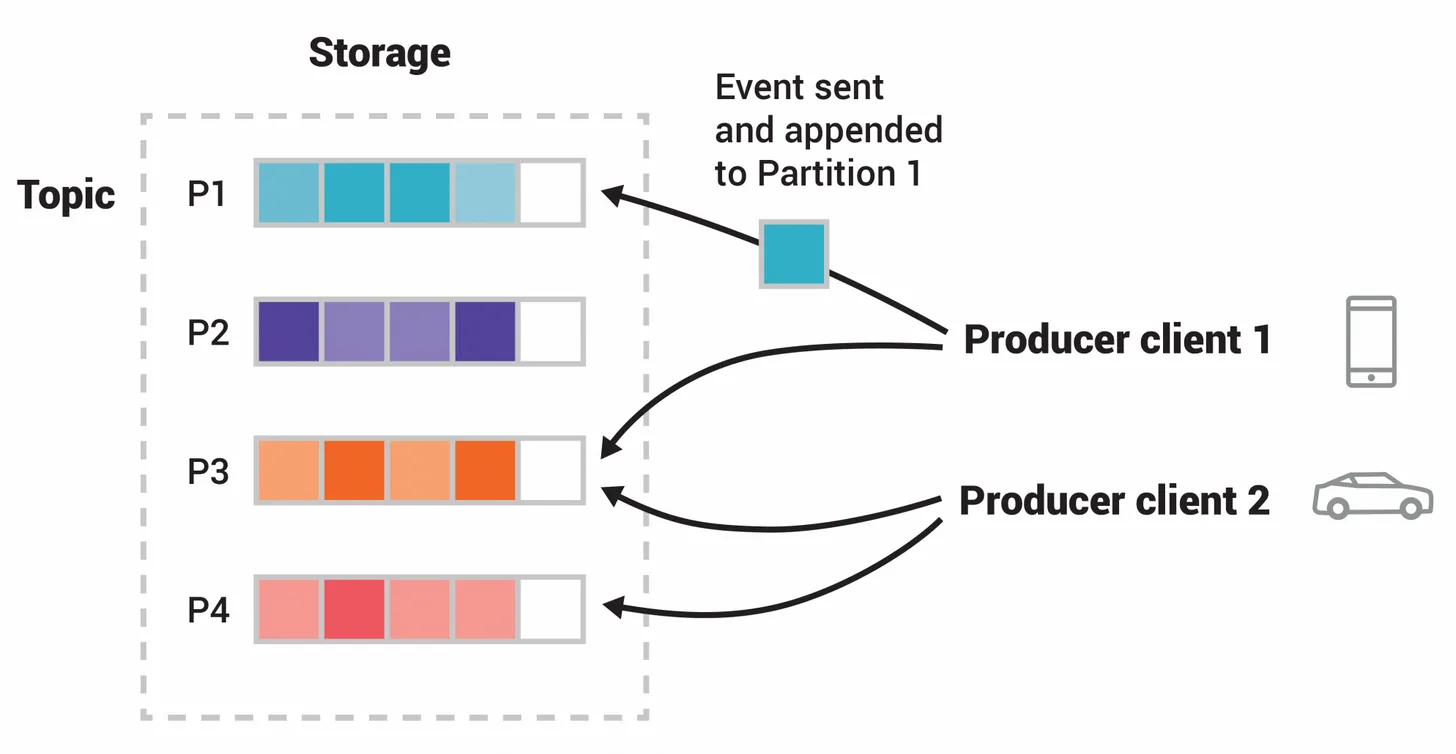
Apache Kafka is designed as a distributed event streaming platform, meaning it uses a cluster of machines rather than a single broker or application instance to deliver throughput and fault tolerance. The product description explicitly positions Kafka for messages delivered at network-limited throughput using a cluster. That architecture is a central reason it is used for high-performance pipelines: capacity and resilience are approached as distributed-system concerns rather than as the limits of one server.
Kafka supports real-time movement of high-volume data. User feedback specifically identifies low latency, high throughput, high volume, real time, and scalability as strengths, while the platform description places Kafka in workloads involving messaging, storage, processing, and integration of large data volumes. This matters for data engineers because Kafka is not limited to passing messages onward; it can serve as the persistent streaming layer through which operational and analytical data flows.
Key capabilities supported by the supplied data include:
-
Distributed clustering: Kafka uses a cluster of machines to support high throughput and fault-tolerant pipelines. This is the foundation for handling continuous production workloads rather than relying on a single messaging endpoint.
-
Network-limited throughput orientation: The product description says Kafka can deliver messages at network-limited throughput. That is a strong fit for data-intensive systems, but it also means network and cluster design are material parts of performance planning.
-
Low-latency streaming: Real user feedback identifies low latency as a practical strength. Kafka is therefore suited to data flows where downstream systems need new events promptly rather than only after periodic batch processing.
-
High-volume data capture: Users identify “capture data” and “high volume” among Kafka’s strengths. This aligns with its role in ingesting continuous operational events for downstream pipelines, analytics, and applications.
-
Streaming analytics support: Kafka is explicitly described as a platform for streaming analytics. It is appropriate when analytics engineers need continuously arriving data available to a wider pipeline instead of waiting for traditional scheduled delivery.
-
Data integration: Kafka is positioned for data integration and mission-critical applications. Its practical architectural role is to connect producing and consuming systems through a shared streaming platform rather than through point-to-point data movement.
-
Open-source implementation: Kafka is available under Apache-2.0 and is written primarily in Java, with repository topics including Java, Kafka, Scala, and streaming. This gives engineering teams source-level visibility and broad latitude to operate and extend the software, but it does not eliminate the need to run it well.
The architectural trade-off is direct: Kafka is strong at scalable, continuous event flow, yet its users identify monitoring tools, management tools, management interfaces, and admin tools as weak points. That is not a minor usability complaint. It means a Kafka deployment needs deliberate operational tooling and standards, especially as topics, producers, consumers, and data contracts grow. Kafka is weak as a “set it and forget it” platform; its strengths emerge when the team treats it as critical infrastructure.
Ideal Use Cases
Apache Kafka is best for a data platform team supporting several producers and consumers that need to exchange data continuously. A practical example is a retail, manufacturing, telecom, or financial-services organization where operational systems emit high volumes of events and multiple downstream applications need those events for analytics, integration, and mission-critical processing. The industry snapshot provides concrete evidence of Kafka’s relevance in these environments: it is used by 10 of the top 10 manufacturing companies and 8 of the top 10 telecom companies in the supplied data.
A second strong fit is streaming analytics. Teams building analytics systems that depend on real-time data can use Kafka as the event layer between operational applications and downstream analytical processes. Kafka’s stated support for low latency, high throughput, high volume, and streaming analytics makes it appropriate where fresh data changes decisions or system behavior. We recommend Kafka for data engineering organizations that need a common streaming platform, not merely an isolated feed for one dashboard or service.
A third fit is enterprise data integration across many internal systems. Kafka is explicitly positioned for data integration, and its distributed, fault-tolerant design suits environments where data pipelines are too important to depend on a single service instance. This is especially relevant when teams need to capture events from multiple systems and make them available to several consuming applications without creating a separate point-to-point integration for every new connection.
Kafka can also make sense for mission-critical application workloads where durable, continuous event streams form part of the application architecture. The source data describes it as serving mission-critical applications and states that more than 80% of Fortune 100 companies use it. We would interpret that as evidence that Kafka is established in large, operationally demanding environments, while still requiring each team to validate its own reliability, governance, and operating model.
Don’t use Apache Kafka if your main requirement is a simple administration experience with minimal platform ownership. User feedback specifically calls out management interfaces, management tools, monitoring tools, and admin tools as weaknesses. Avoid it as the default choice for a small team with no capacity to manage distributed infrastructure, or for a narrow workflow where the only need is occasional low-complexity messaging; Kafka’s architecture can become more platform than problem.
Pricing and Licensing
Apache Kafka uses an Open Source pricing model. Pricing details are not published in the supplied source data. The supplied pricing detail states that Apache Kafka is open-source software available at no cost, and the GitHub repository lists the Apache-2.0 license. For a buyer, that means the software license itself is not the cost center; the decision shifts to the resources and responsibilities required to deploy, operate, monitor, secure, and govern the platform.
This model can be attractive for data leaders who want to avoid per-seat licensing and keep direct control over their event-streaming foundation. It also gives engineering organizations the flexibility associated with Apache-2.0-licensed software, including source visibility and the ability to build their own operating approach. That said, “available at no cost” should never be read as “free to run.” Kafka’s own user feedback points to monitoring, management, administration, naming conventions, bad data, and SQL-related concerns, all of which can translate into internal engineering work.
The practical total cost of ownership is therefore driven by the operating model rather than a published license charge. Teams should budget for people who understand distributed streaming systems, the infrastructure needed for clusters, monitoring and administration capability, and governance for the data flowing through Kafka. The more business-critical the Kafka estate becomes, the more important those recurring responsibilities become.
This pricing model favors organizations with an established platform engineering function or a clear willingness to build one. It is less favorable for teams that need highly managed administration and support but do not want to own the underlying operational burden. Apache Kafka can reduce direct software acquisition cost while increasing the importance of internal expertise; that is a trade-off, not a loophole.
Strengths & Trade-offs
Apache Kafka’s strongest advantages are tied to its suitability for large-scale, real-time data infrastructure. The user rating of 8.6/10 across 151 reviews is positive, and the reported strengths closely match the product’s architectural positioning. Still, the same feedback makes clear that the operational experience is not uniformly polished.
Pros
-
High-throughput distributed streaming: Kafka is built to deliver messages at network-limited throughput using a cluster of machines. That makes it a credible foundation for high-volume pipelines where one machine or a basic application queue would be a bottleneck.
-
Low-latency, real-time processing support: Users explicitly cite low latency and real time as strengths. This is valuable when data must move continuously into analytics, integration, or mission-critical application flows.
-
Scalability for high-volume capture: “Highly scalable,” “high volume,” and “capture data” are reported user strengths. Kafka is designed for organizations that need to ingest ongoing streams rather than only run periodic batch transfers.
-
Open-source licensing with Apache-2.0: Kafka is available at no software cost under the Apache-2.0 license. This is a concrete advantage for teams that need source-level visibility and do not want a proprietary license to dictate the core streaming layer.
-
Strong public adoption and activity signals: The repository has 33,536 GitHub stars and a last recorded push on 2026-08-13. Kafka also states that more than 80% of Fortune 100 companies use it; these signals support confidence in its ecosystem relevance, though they do not guarantee fit for a particular implementation.
Cons
-
Monitoring is a stated weakness: Users identify monitoring tools as a weakness. For a platform expected to carry critical data, incomplete or unsatisfactory monitoring is a serious operational concern, not simply a cosmetic gap.
-
Administration and management experience can be weak: Management interface, management tools, and admin tool concerns appear in user feedback. Teams should expect to invest in operating practices and supporting tooling rather than assume Kafka provides a complete management experience by itself.
-
Naming conventions and bad data require governance: Users cite naming convention and bad data issues. Kafka does not solve ambiguous topic naming, inconsistent event definitions, or poor upstream data quality; without governance, a shared streaming platform can spread those problems quickly.
-
SQL-oriented use cases are a reported limitation: “Sql based” is listed among user-reported weaknesses. Teams whose primary requirement is a SQL-first streaming interaction should scrutinize Kafka carefully rather than assume its high-throughput reputation resolves that need.