Decision comparison
Dynatrace vs Observe
Dynatrace delivers the most comprehensive enterprise observability platform with deterministic AI, built-in security, and agentic automation, while Observe provides a cost-efficient alternative with AI SRE capabilities built on an open data lake architecture that reduces total cost of ownership by up to 60%.
Direct comparison. These are reviewed substitutes bought for the same job, so the differences below are the ones that decide between them.
All 2 are observability platforms.
Quick Comparison
| Decision factor | Dynatrace | Observe |
|---|---|---|
| Best For | Large enterprises needing full-stack observability with deterministic AI and agentic automation across complex environments | Engineering teams seeking cost-efficient observability with AI-driven troubleshooting and open data lake flexibility |
| Pricing Model | Dynatrace publishes a per-host rate card against a single annual platform commitment. Foundation & Discovery is $7 per month per host, Infrastructure Monitoring $29 per month per host, and Full-Stack Monitoring $58 per month per 8 GiB host, each also available at $0.01 per hour per host. Other capabilities draw down from the same commitment at published unit rates. There are no per-seat fees, and a 15-day free trial is offered. | Logs at $0.49, other tiers at $0.00, $0.01, $0.59 |
| AI Capabilities | Davis AI engine provides deterministic root cause analysis, anomaly detection, and agentic operations for automated remediation | AI SRE agent correlates signals using natural language and surfaces root causes with actionable fix suggestions |
| Data Architecture | Grail causal data lakehouse with massively parallel processing, schema-on-read, and built-in Smartscape topology mapping | O11y Context Graph with semantic relationships and token indexes on top of a streaming open data lake |
| Deployment Model | Fully managed SaaS with OneAgent auto-instrumentation deployed on each host for comprehensive data collection | Fully managed SaaS with OpenTelemetry-native data collection to avoid vendor lock-in and enable flexibility |
| Learning Curve | Steeper initial learning curve offset by powerful auto-discovery and extensive documentation for enterprise teams | More approachable interface designed for fast onboarding with familiar workflows for engineers and SRE teams |
Dynatrace
- Best For:
- Large enterprises needing full-stack observability with deterministic AI and agentic automation across complex environments
- Pricing Model:
- Dynatrace publishes a per-host rate card against a single annual platform commitment. Foundation & Discovery is $7 per month per host, Infrastructure Monitoring $29 per month per host, and Full-Stack Monitoring $58 per month per 8 GiB host, each also available at $0.01 per hour per host. Other capabilities draw down from the same commitment at published unit rates. There are no per-seat fees, and a 15-day free trial is offered.
- AI Capabilities:
- Davis AI engine provides deterministic root cause analysis, anomaly detection, and agentic operations for automated remediation
- Data Architecture:
- Grail causal data lakehouse with massively parallel processing, schema-on-read, and built-in Smartscape topology mapping
- Deployment Model:
- Fully managed SaaS with OneAgent auto-instrumentation deployed on each host for comprehensive data collection
- Learning Curve:
- Steeper initial learning curve offset by powerful auto-discovery and extensive documentation for enterprise teams
Observe
- Best For:
- Engineering teams seeking cost-efficient observability with AI-driven troubleshooting and open data lake flexibility
- Pricing Model:
- Logs at $0.49, other tiers at $0.00, $0.01, $0.59
- AI Capabilities:
- AI SRE agent correlates signals using natural language and surfaces root causes with actionable fix suggestions
- Data Architecture:
- O11y Context Graph with semantic relationships and token indexes on top of a streaming open data lake
- Deployment Model:
- Fully managed SaaS with OpenTelemetry-native data collection to avoid vendor lock-in and enable flexibility
- Learning Curve:
- More approachable interface designed for fast onboarding with familiar workflows for engineers and SRE teams
Public signals
Verified factual signals only. Bars appear only for like-for-like metrics with five weekly assessments for every tool; missing evidence stays explicit. These signals do not establish enterprise adoption, product quality, or total cost.
| Metric | Dynatrace | Observe |
|---|---|---|
| GitHub commits, 90d(Developer adoption) | 275 | Not available |
| GitHub stars(Developer adoption) | 220 | Not available |
| Search interest(Market interest) | 4 | Unavailable |
| Hacker News mentions, 90d(Community interest) | 4 | 0 |
| PyPI weekly downloads(Developer adoption) | 20.2k | 1 |
| Stack Overflow questions(Community interest) | 199 | Not available |
As of September 14, 2026 — updated weekly.
Health & risk evidence
Observed public-source checks for mapped package versions and repositories.
Dynatrace
September 14, 2026Package vulnerabilities
PyPI · oneagent-sdk@1.5.2.20260107.153442
0 vulnerabilities
across 1 package
Repository security score
Not available
Observe
September 14, 2026Package vulnerabilities
PyPI · observe-http-sender@1.3.3
0 vulnerabilities
across 1 package
Repository security score
Not available
Interface Preview
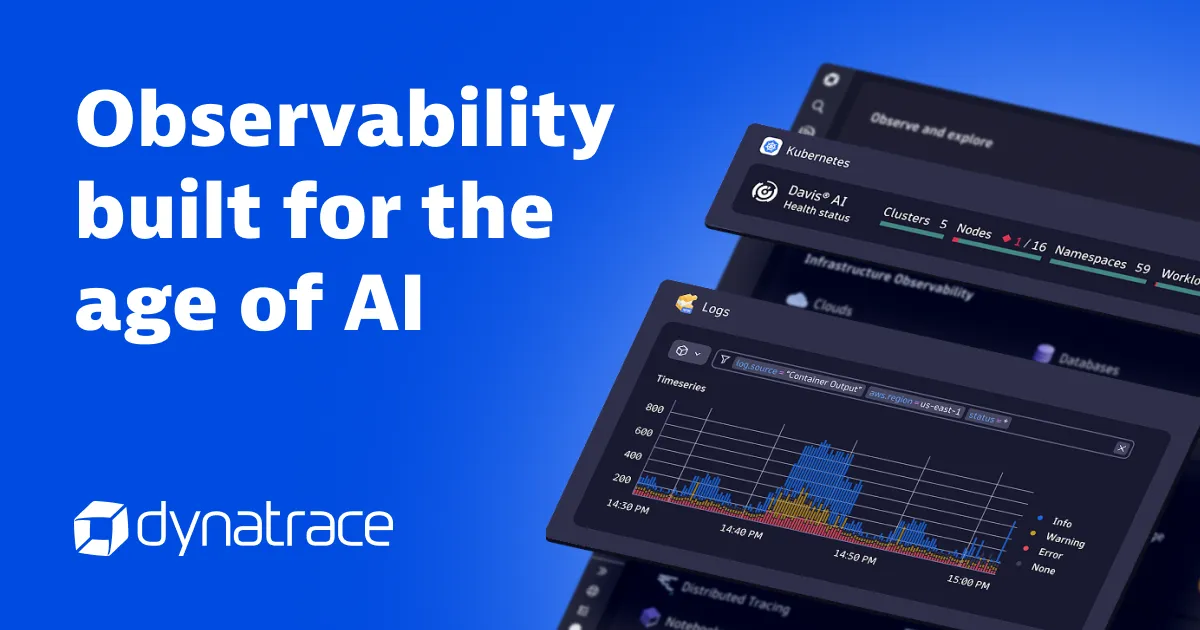
Dynatrace
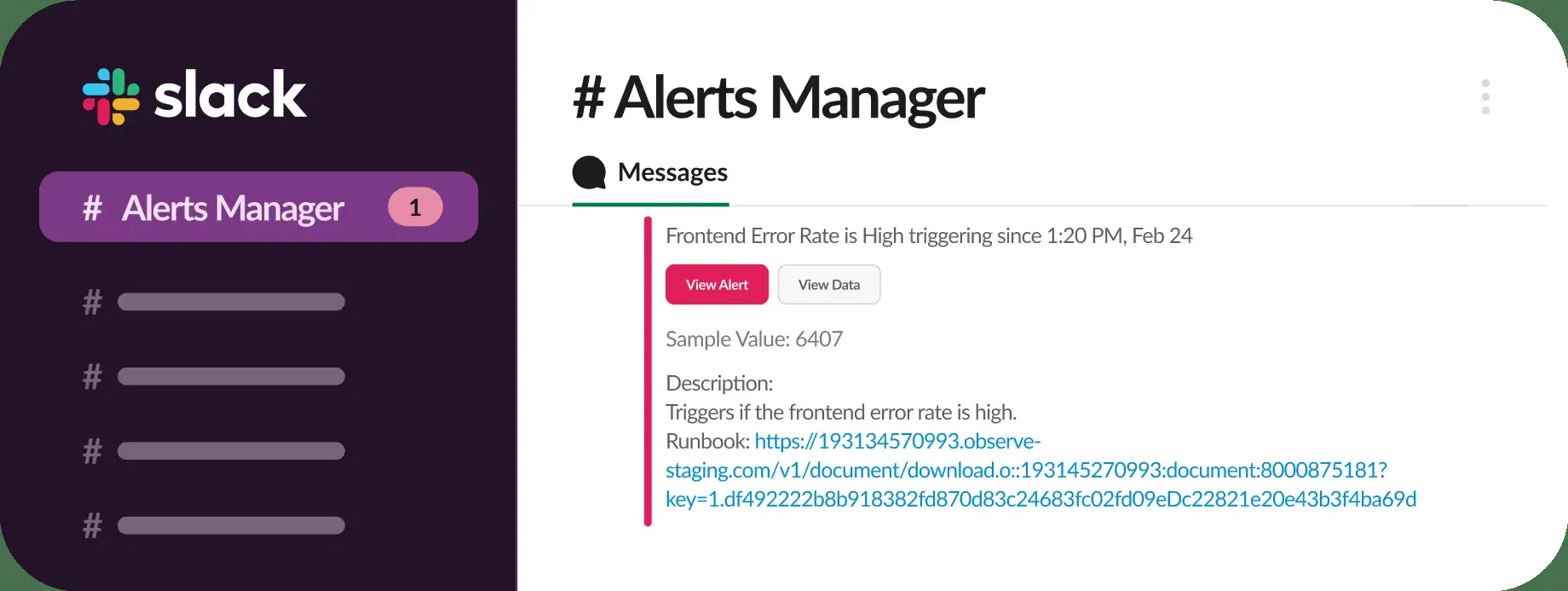
Observe
Feature Comparison
| Feature | Dynatrace | Observe |
|---|---|---|
| Core Observability | ||
| Application Performance Monitoring | Full APM with distributed tracing, code-level profiling via PurePath, and automatic service detection across cloud-native stacks | Complete APM capturing every user request without sampling, with service dependency maps from OpenTelemetry data |
| Infrastructure Monitoring | End-to-end infrastructure observability for multi-cloud environments with automatic topology mapping via Smartscape | Infrastructure monitoring across cloud and Kubernetes with 400+ pre-built integrations and real-time visualization |
| Log Management | Log Analytics with intelligent pattern detection, contextual analysis tied to traces and metrics through Grail data lakehouse | Full log management and analytics at a fraction of typical cost, with all log data kept hot for instant search |
| Distributed Tracing | PurePath captures code-level context for every distributed trace end-to-end across the full application stack | OpenTelemetry-based distributed tracing with service dependency visualization and seamless pivot to related logs |
| AI and Automation | ||
| AI Root Cause Analysis | Davis AI provides deterministic causal analysis with automatic anomaly detection and root cause identification in real time | AI SRE formulates investigation plans, delegates tasks to specialized agents, and suggests actionable remediation steps |
| Automated Remediation | Agentic operations with built-in and third-party agents that coordinate automated responses across cloud platforms | AI SRE surfaces root causes and suggests fixes with chat-based investigation history stored for future reference |
| AI Observability | Dedicated AI observability for generative AI applications, LLMs, and AI agents with performance and cost tracking | LLM Observability for monitoring AI applications, agentic workflows, infrastructure utilization, and token usage costs |
| Data Platform | ||
| Data Storage Architecture | Grail causal data lakehouse with massively parallel processing, fast indexless schema-on-read storage at enterprise scale | Open data lake with 10x compression on low-cost cloud storage, telemetry stored in Iceberg tables for reuse |
| Data Ingestion | OpenPipeline for high-performance stream processing to ingest, enrich, and contextualize data from any source at scale | Real-time ingest pipeline with filtering and enrichment, supporting OpenTelemetry collection to avoid vendor lock-in |
| Data Correlation | Smartscape topology mapping automatically identifies relationships between applications and underlying infrastructure in real time | O11y Context Graph structures telemetry using semantic relationships with incremental views and token indexes for fast search |
| Security and Experience | ||
| Application Security | Built-in runtime vulnerability detection, threat observability with automated response, and forensics for advanced protection | Focuses on observability rather than integrated security; relies on third-party tools for application security scanning |
| Digital Experience Monitoring | Real-user monitoring, synthetic monitoring, and session replays for comprehensive digital experience optimization | Provides service-level performance visibility but does not offer dedicated synthetic monitoring or session replay features |
| Business Observability | Customizable real-time business analytics with dashboards that connect technical performance to business outcomes directly | Customer success monitoring with error detection and workflow visibility focused on engineering and SRE team needs |
| Platform and Ecosystem | ||
| Custom Applications | AppEngine enables teams to build and share custom applications that leverage observability, security, and business data | Platform focuses on out-of-the-box explorers for logs, metrics, services, Kubernetes, and LLMs without custom app building |
| Integration Ecosystem | Expanding library of integrations, extensions, and apps covering technologies well beyond traditional observability scope | OpenTelemetry-native approach with 400+ pre-built integrations providing broad compatibility without proprietary agents |
Core Observability
Application Performance Monitoring
Infrastructure Monitoring
Log Management
Distributed Tracing
AI and Automation
AI Root Cause Analysis
Automated Remediation
AI Observability
Data Platform
Data Storage Architecture
Data Ingestion
Data Correlation
Security and Experience
Application Security
Digital Experience Monitoring
Business Observability
Platform and Ecosystem
Custom Applications
Integration Ecosystem
Which to choose
Dynatrace delivers the most comprehensive enterprise observability platform with deterministic AI, built-in security, and agentic automation, while Observe provides a cost-efficient alternative with AI SRE capabilities built on an open data lake architecture that reduces total cost of ownership by up to 60%.
Best-fit scenarios
Choose Dynatrace if:
Choose Dynatrace if you operate a large-scale enterprise environment requiring full-stack observability with built-in application security, digital experience monitoring, and automated remediation. Dynatrace excels when you need deterministic AI-driven root cause analysis across complex multi-cloud architectures, and when the ability to build custom applications on your observability data adds strategic value. Its comprehensive platform reduces tool sprawl by unifying APM, infrastructure monitoring, log analytics, security scanning, and business analytics in a single subscription with volume-based discounts.
Choose Observe if:
Choose Observe if cost efficiency is a primary concern and you want modern observability capabilities without the premium enterprise price tag. Observe is ideal for engineering and SRE teams that value OpenTelemetry-native data collection, open data lake storage formats like Iceberg, and transparent per-GB pricing starting at $0.49 for logs. Its AI SRE and O11y Context Graph provide quick troubleshooting at scale, and the platform claims to reduce observability costs by up to 60% compared to traditional solutions while maintaining a 3x quicker mean time to resolution.
These scenarios reflect the available product evidence. Your requirements, existing stack, and team expertise should guide the final decision.
Frequently Asked Questions
How does Dynatrace pricing compare to Observe pricing?
The supplied evidence lists Observe pricing starting at $0.49/GiB for logs, $0.008/DPM for metrics, and $0.59/GiB for traces. Compute is included; the listed plans include unlimited users, 30-day retention for logs and traces, and 13-month retention for metrics. Observe states that its subscription pricing is based on committed volume of uncompressed telemetry ingested, and that multi-year and volume-based discounts are available. The supplied evidence does not provide Dynatrace pricing, so it does not support a like-for-like pricing comparison.
Which platform has better AI capabilities for incident response?
Both platforms offer AI-driven incident response but approach it differently. Dynatrace uses its Davis AI engine for deterministic root cause analysis, meaning it follows causal logic rather than probabilistic guessing. Davis automatically detects anomalies and can trigger agentic operations that coordinate automated remediation across cloud platforms, developer tools, and IT service management systems. Observe provides an AI SRE agent that correlates signals using natural language queries, builds investigation plans, and delegates tasks to specialized agents. The AI SRE stores investigation history for future reference, making it useful for recurring issues.
Can I use OpenTelemetry with both Dynatrace and Observe?
Yes, both platforms support OpenTelemetry, but they approach it differently. Observe is OpenTelemetry-native by design, using it as the primary data collection mechanism to avoid vendor lock-in. Telemetry is stored in open Iceberg table formats for maximum reuse and portability. Dynatrace supports OpenTelemetry ingestion through its OpenPipeline but also offers its proprietary OneAgent for deeper auto-instrumentation that captures code-level context through PurePath distributed tracing. Organizations already invested in OpenTelemetry may find Observe more aligned with their strategy, while those wanting maximum depth may prefer Dynatrace OneAgent.
Which tool is better suited for Kubernetes monitoring?
Both Dynatrace and Observe provide strong Kubernetes monitoring capabilities. Dynatrace offers infrastructure observability that automatically maps container relationships through Smartscape topology, providing end-to-end visibility across multi-cloud Kubernetes clusters with automatic anomaly detection. Observe includes a dedicated Kubernetes Explorer with out-of-the-box visualizations for pod analysis, contextual log pivoting, and 400+ pre-built integrations for infrastructure metrics. Observe stores Kubernetes telemetry in its open data lake with 10x compression, which can significantly reduce storage costs for high-volume container environments.