Observe: product and architecture
Our verdict in this Observe review: Observe is a strong fit for engineering organizations that need a unified, data-lake-based observability product and are prepared to evaluate usage economics closely. Its differentiated proposition is the combination of a streaming data lake, the O11y Context Graph™, and AI SRE rather than a collection of separate monitoring tools. We recommend Observe for teams prioritizing cross-signal investigation at scale; teams seeking fully transparent, self-serve pricing across every telemetry type should look elsewhere.
Overview
Observe is a modern observability platform built on a streaming data lake. Its product design centers on bringing logs, metrics, and traces into one system for faster search, correlation, and incident investigation. The company positions the product as capable of troubleshooting 10x faster at 60% lower cost, but buyers should treat those as vendor claims rather than independently validated results.
The most important architectural decision is that Observe is not presented as a conventional point solution for just log management, application performance monitoring, or infrastructure dashboards. It combines an open data lake, a context graph, and AI SRE in one integrated product. That makes it particularly relevant when incident responders need to move from an application symptom to service dependencies, infrastructure conditions, and supporting logs without switching among disconnected tools.
Observe’s AI SRE is intended to support troubleshooting through natural-language correlation, root-cause investigation, and suggested fixes. The platform also describes an investigation workflow in which AI SRE builds a plan, delegates tasks to agents, and presents results to the on-call engineer. This is a meaningful distinction from an assistant that merely summarizes a dashboard, though organizations should validate the quality of root-cause output against their own incidents before treating it as operationally authoritative.
We see Observe as best suited to data-intensive DevOps and SRE environments where observability data volume, investigation speed, and storage efficiency all matter. It is less compelling for a small team that only needs basic alerting and a few infrastructure views, or for organizations that require detailed public pricing for every service before entering a sales process.
Key Features and Architecture
Observe’s foundation is a streaming data lake designed to collect and retain observability telemetry while supporting search and correlation. The product describes this lake as open and capable of storing telemetry in open formats, with 10x compression on low-cost cloud storage. That storage approach is central to its cost argument: rather than treating every telemetry signal as an expensive, isolated service, Observe emphasizes reuse of the underlying data.
The O11y Context Graph™ is the product’s primary correlation mechanism. Observe states that logs, metrics, and traces are structured through semantic relationships, incremental views, and token indexes. In practical terms, this design is intended to make cross-signal searches and pivots faster: an engineer should be able to start with an error, associate it with a service, inspect related infrastructure, and then validate the failure through contextual logs.
Key technical capabilities include:
-
Cross-signal investigation: Observe combines logs, metrics, and traces in one platform and supports drilling and pivoting across those signals. This directly addresses the common operational problem of troubleshooting from separate tools with separate data models.
-
Natural-language AI SRE: The AI SRE can correlate signals through natural-language interaction, surface suspected root causes, and suggest actions. It also formulates an investigation plan and delegates work to agents, returning completed findings to the responding engineer.
-
OpenTelemetry-driven service maps: Observe can automatically generate a consolidated service dependency map from OpenTelemetry data. The documented example ties a frontend issue to degradation in a cart service, giving responders a dependency-oriented path through the incident.
-
Infrastructure monitoring workflow: The platform provides out-of-the-box visualizations for analyzing pods associated with frontend services. Engineers can then pivot from infrastructure context into logs when they need evidence for root-cause analysis.
-
Log analytics at scale: Observe describes log search and analysis without scale limits or retention constraints. This is a strong product claim, but the published Logs plan separately specifies 30-day retention, so buyers should clarify which retention conditions apply to their selected commercial arrangement.
-
Chat-based root-cause history: O11y summarizes an investigation as it progresses, creating a stored record of how the responder reached root cause. This can improve handoffs and post-incident review quality, though it also makes governance over stored incident context an important procurement question.
The architecture has a clear trade-off. A context graph and shared lake can reduce signal silos, but they also make Observe a broader platform decision than adopting an isolated log viewer. Teams will need to validate data onboarding, OpenTelemetry coverage, and the usefulness of the graph for their own services rather than assuming a unified architecture automatically produces useful correlations.
Ideal Use Cases
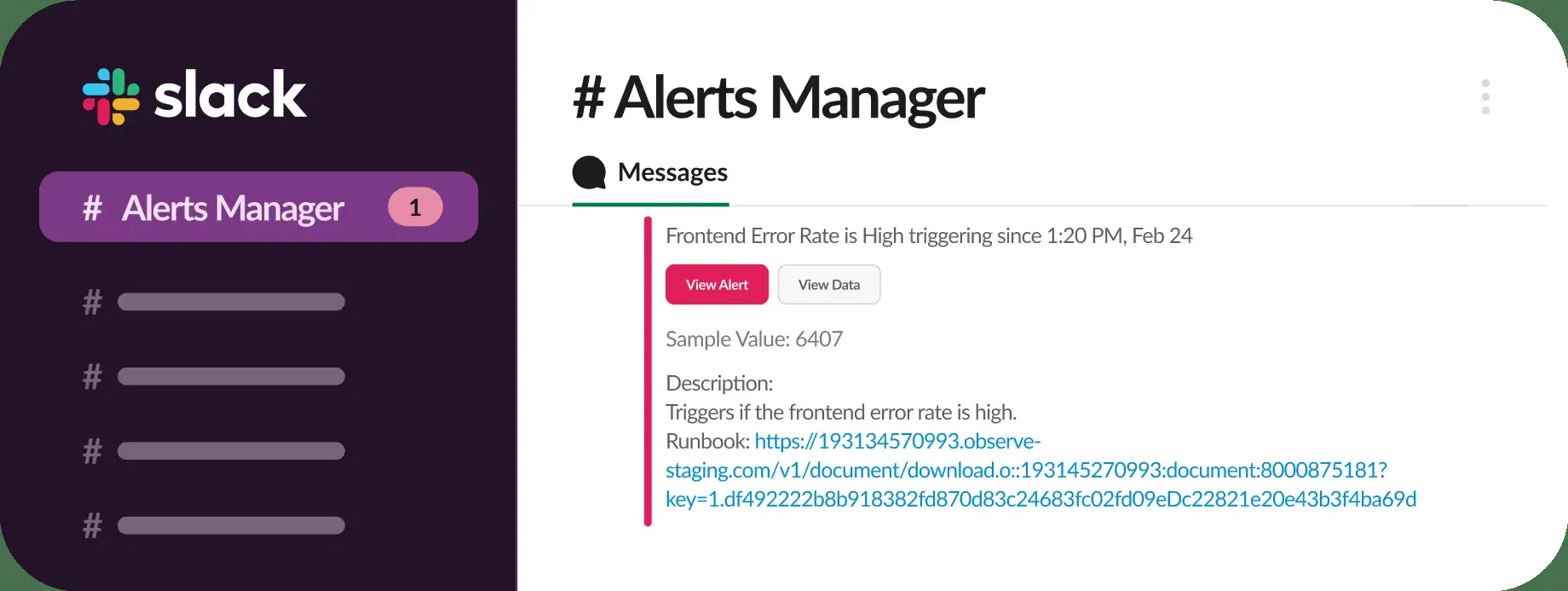
Observe is well matched to an SRE or platform engineering team supporting a distributed application estate where a customer-facing symptom can originate in application code, service dependencies, Kubernetes pods, or log-level failures. A team with 10 to 30 engineers supporting several services can benefit from the consolidated workflow: detect a high frontend error rate, review the OpenTelemetry-generated service map, inspect affected pods, and then analyze contextual logs. The product’s documented cart-service crashlooping example is exactly the type of incident where a cross-signal investigation path is more valuable than a standalone dashboard.
It is also a credible option for data leaders who need observability economics to remain workable as telemetry expands. Observe claims up to 60% lower observability cost and 10x compression on low-cost cloud storage, while its data-lake architecture emphasizes data reuse. For organizations processing high and growing telemetry volumes, the right evaluation question is not simply whether Observe’s headline savings materialize; it is whether the resulting data model, query workflow, and retention arrangement fit the operating model.
A third use case is a DevOps organization attempting to improve incident consistency across multiple responders. AI SRE’s ability to build an investigation plan, delegate tasks, summarize the path to root cause, and suggest fixes can give an on-call process more structure. This is especially useful when the operational burden is not only detection but also ensuring that responders can explain how the team reached a conclusion afterward.
Observe also has a clear fit for application developers who already work across logs, metrics, and traces. The company explicitly positions the interface as familiar and consistent with existing engineering workflows. That does not remove the need for instrumentation discipline: a service map generated from OpenTelemetry data is only as useful as the telemetry coverage feeding it.
Don’t use this if your organization needs a simple, narrow monitoring product with fixed, fully itemized public pricing before any vendor discussion. Avoid it as well if your team cannot invest in validating AI-assisted investigation output and OpenTelemetry-based service relationships. Observe is built for correlated observability at scale, not for minimizing every operational and procurement decision.
Strengths & Trade-offs
Observe’s strongest advantages stem from its integrated investigation design, but those same design choices create evaluation obligations. The product is not weak because it is broad; it is weak only when a buyer expects broad observability to require no telemetry discipline, commercial diligence, or workflow change.
Pros
-
One investigation path across logs, metrics, and traces. Observe explicitly supports drilling and pivoting across signals rather than leaving responders to manually reconcile separate tools. This is valuable when the evidence for an incident is distributed across application behavior, infrastructure state, and logs.
-
Context Graph mechanics are concrete, not generic AI language. The O11y Context Graph™ uses semantic relationships, incremental views, and token indexes. Those technical components give Observe a specific basis for its faster-search and correlation positioning.
-
AI SRE is designed for active incident work. It can create an investigation plan, assign tasks to agents, show results to the on-call engineer, and suggest actionable fixes. That is more operationally substantive than a passive chatbot layered over documentation.
-
OpenTelemetry service mapping supports dependency-aware debugging. The product can automatically generate a service map from OpenTelemetry data, including correlation from frontend degradation to a cart service. This makes service relationships directly usable during triage.
-
The named Logs offering includes unlimited users and compute. The published $0.49 Logs tier includes both unlimited users and compute, reducing the chance that responder access is constrained by seat counts.
-
The storage strategy directly targets observability cost pressure. Observe states that its open data lake stores telemetry in open formats with 10x compression on low-cost cloud storage. For high-volume data environments, that architectural emphasis is materially relevant.
Cons
-
Public pricing is incomplete. Only the Logs tier is named with concrete inclusions, while $0.00, $0.01, and $0.59 lack plan names and entitlement descriptions. This makes bottom-up cost modeling difficult before a sales conversation.
-
Published retention language needs clarification. The Logs plan lists 30-day retention, while the feature description says log analytics can operate without retention constraints. Buyers need a contractual explanation of how those statements apply to their selected configuration.
-
AI SRE adds a validation requirement. Observe says AI SRE surfaces root causes and suggested fixes, but the supplied data does not provide accuracy measurements or independent results. Teams cannot safely substitute its findings for engineering judgment without testing against known incidents.
-
OpenTelemetry dependency mapping depends on telemetry coverage. The service map is automatically generated from OpenTelemetry data, so incomplete instrumentation can limit the usefulness of that workflow. This is a real implementation dependency, not a product checkbox.
-
The platform can be more than a basic monitoring need requires. A streaming data lake, context graph, and AI-assisted investigation may be disproportionate for a team that only wants lightweight host visibility and a few alerts.