Decision comparison
Splunk vs Observe
Splunk and Observe serve different segments of the observability market. Splunk delivers a comprehensive enterprise platform combining security operations with observability, backed by 2,000+ integrations and a mature ecosystem. Observe offers a modern, cost-efficient alternative built on a streaming data lake that claims up to 60% lower costs while providing AI-driven troubleshooting. The right choice depends on whether you need Splunk's unified security-plus-observability depth or Observe's streamlined, cost-optimized cloud-native approach.
Direct comparison. These are reviewed substitutes bought for the same job, so the differences below are the ones that decide between them.
These are different kinds of product — Log Management and Observability Platform.
Quick Comparison
| Decision factor | Splunk | Observe |
|---|---|---|
| Best For | Large enterprises needing unified security and observability with advanced SIEM, compliance monitoring, and 2,000+ integrations across hybrid environments | Cloud-native teams seeking unified logs, metrics, and traces with AI-driven troubleshooting, OpenTelemetry-native collection, and dramatically lower total cost of ownership |
| Architecture | On-premises or cloud-deployed platform with SmartStore for independent compute and storage scaling, supporting distributed search clusters and index replication | Fully managed SaaS built on a streaming data lake with O11y Context Graph structuring data via semantic relationships, incremental views, and token indexes |
| Pricing Model | Splunk Free is a perpetual no-cost licence for a single self-hosted instance, capped at 500 MB of daily indexing and without alerting. Splunk Enterprise and Splunk Cloud use workload, ingest, or entity-based pricing that Splunk does not publish. | Logs at $0.49, other tiers at $0.00, $0.01, $0.59 |
| Ease of Use | Rated 8.6/10 across 542 reviews; users praise real-time dashboards and SPL query language but consistently cite a steep learning curve for new administrators | AI SRE enables natural language investigation and automated root cause analysis; users report a familiar interface consistent with existing engineering workflows |
| Scalability | SmartStore architecture independently scales compute and storage; Workload Management reserves CPU and memory by priority; handles 500+ GB/day at enterprise scale | Streaming data lake with elastic compute and 10x compression on low-cost cloud storage; stores telemetry in open Iceberg table formats for data reuse |
| Community/Support | Splunkbase marketplace with 2,000+ integrations, official certifications, professional services at $150-$300/hour, and dedicated customer success programs | OpenTelemetry-native data collection to avoid vendor lock-in, 400+ pre-built integrations, dedicated customer success teams, and fully managed SaaS operations |
Splunk
- Best For:
- Large enterprises needing unified security and observability with advanced SIEM, compliance monitoring, and 2,000+ integrations across hybrid environments
- Architecture:
- On-premises or cloud-deployed platform with SmartStore for independent compute and storage scaling, supporting distributed search clusters and index replication
- Pricing Model:
- Splunk Free is a perpetual no-cost licence for a single self-hosted instance, capped at 500 MB of daily indexing and without alerting. Splunk Enterprise and Splunk Cloud use workload, ingest, or entity-based pricing that Splunk does not publish.
- Ease of Use:
- Rated 8.6/10 across 542 reviews; users praise real-time dashboards and SPL query language but consistently cite a steep learning curve for new administrators
- Scalability:
- SmartStore architecture independently scales compute and storage; Workload Management reserves CPU and memory by priority; handles 500+ GB/day at enterprise scale
- Community/Support:
- Splunkbase marketplace with 2,000+ integrations, official certifications, professional services at $150-$300/hour, and dedicated customer success programs
Observe
- Best For:
- Cloud-native teams seeking unified logs, metrics, and traces with AI-driven troubleshooting, OpenTelemetry-native collection, and dramatically lower total cost of ownership
- Architecture:
- Fully managed SaaS built on a streaming data lake with O11y Context Graph structuring data via semantic relationships, incremental views, and token indexes
- Pricing Model:
- Logs at $0.49, other tiers at $0.00, $0.01, $0.59
- Ease of Use:
- AI SRE enables natural language investigation and automated root cause analysis; users report a familiar interface consistent with existing engineering workflows
- Scalability:
- Streaming data lake with elastic compute and 10x compression on low-cost cloud storage; stores telemetry in open Iceberg table formats for data reuse
- Community/Support:
- OpenTelemetry-native data collection to avoid vendor lock-in, 400+ pre-built integrations, dedicated customer success teams, and fully managed SaaS operations
Public signals
Verified factual signals only. Bars appear only for like-for-like metrics with five weekly assessments for every tool; missing evidence stays explicit. These signals do not establish enterprise adoption, product quality, or total cost.
| Metric | Splunk | Observe |
|---|---|---|
| Docker Hub pulls(Product adoption) | 93.3M | Not available |
| GitHub commits, 90d(Developer adoption) | 9 | Not available |
| GitHub stars(Developer adoption) | 743 | Not available |
| Search interest(Market interest) | 15 | Unavailable |
| Hacker News mentions, 90d(Community interest) | 1 | 0 |
| npm weekly downloads(Developer adoption) | 27.3k | Not available |
| Product Hunt comments(Community interest) | 0 | Not available |
| Product Hunt reviews(Community interest) | 0 | Not available |
| Product Hunt votes(Community interest) | 67 | Not available |
| PyPI weekly downloads(Developer adoption) | 318.5k | 0 |
| Stack Overflow questions(Community interest) | 2.3k | Not available |
As of September 21, 2026 — updated weekly.
Health & risk evidence
Observed public-source checks for mapped package versions and repositories.
Splunk
September 21, 2026Package vulnerabilities
npm · splunk-logging@0.11.1 · PyPI · splunk-sdk@3.0.1
0 vulnerabilities
across 2 packages
Repository security score
github.com/splunk/splunk-sdk-python
6.9/10
Observe
September 21, 2026Package vulnerabilities
PyPI · observe-http-sender@1.3.3
0 vulnerabilities
across 1 package
Repository security score
Not available
Interface Preview
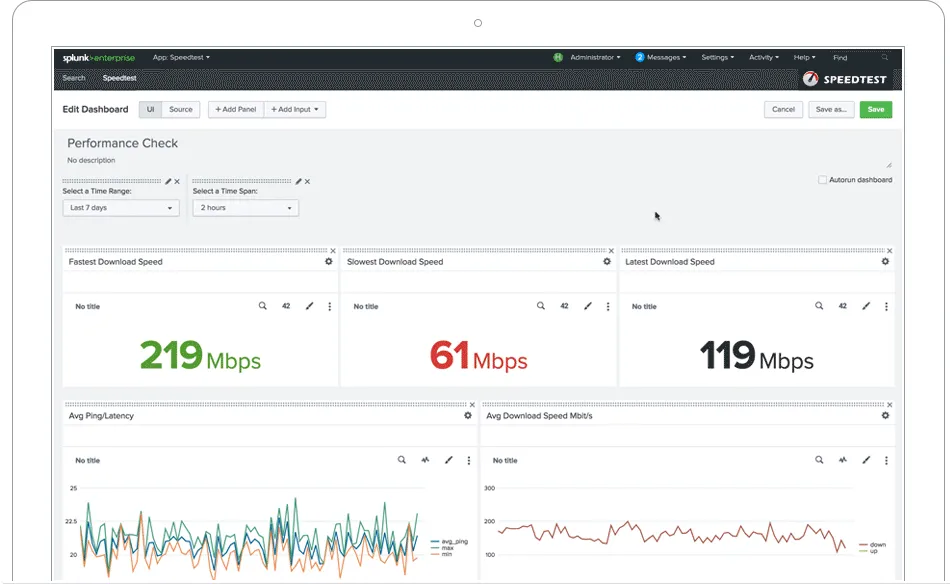
Splunk
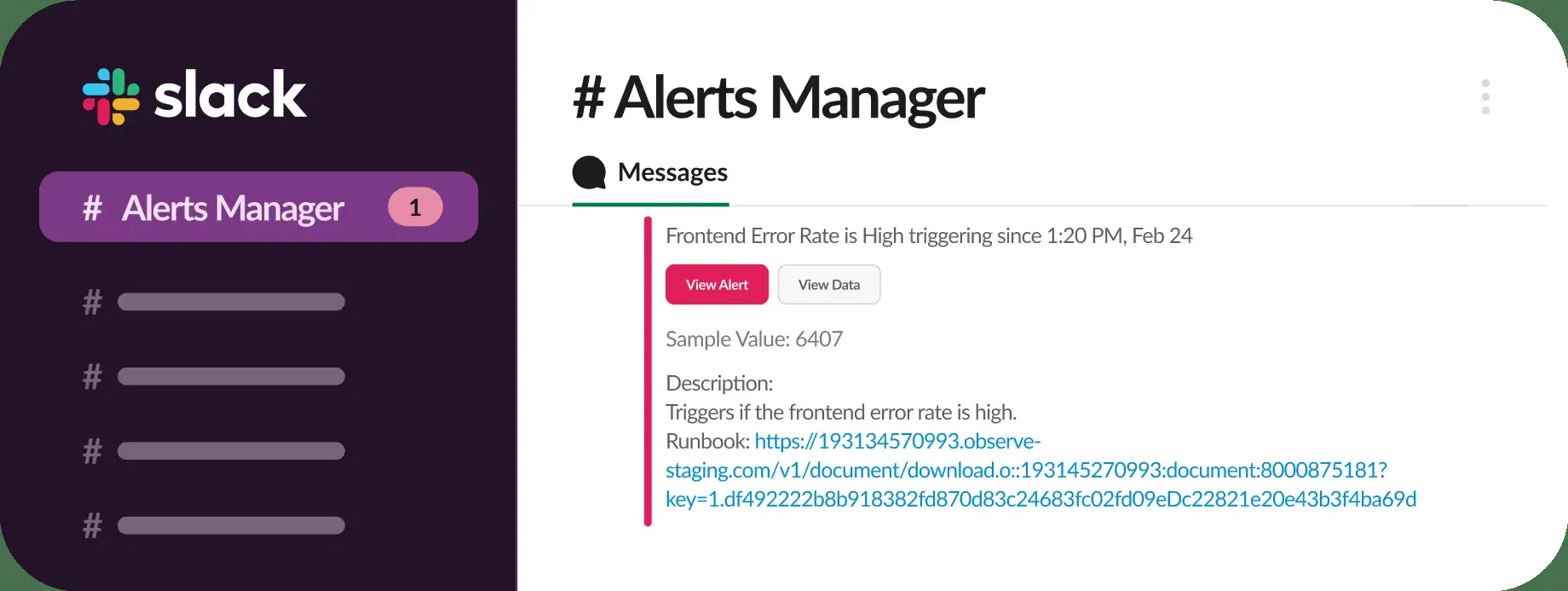
Observe
Feature Comparison
| Feature | Splunk | Observe |
|---|---|---|
| Data Ingestion & Management | ||
| Data Collection | Universal Forwarders and 2,000+ Splunkbase integrations with built-in OpenTelemetry support and SDKs | OpenTelemetry-native real-time ingest pipeline with filtering and enrichment at collection time |
| Storage Architecture | SmartStore with application-aware cache placing active data locally, inactive data in remote storage | Streaming data lake storing telemetry in open Iceberg tables with 10x compression on cloud storage |
| Data Retention | Configurable retention policies with SmartStore extending retention via lower-cost remote storage tiers | 30-day standard retention or 13-month extended retention with compute included in all tiers |
| Monitoring & Observability | ||
| Log Management | Real-time indexing and SPL-based search across machine data with scheduled searches and custom alerts | Search and analyze logs without scale limits or retention constraints at $0.49/GB |
| APM | Full-stack APM with real-time issue detection from third-party APIs to code level with AI assistants | Captures every request without sampling; navigates from service-level issues to root cause traces in seconds |
| Infrastructure Monitoring | Monitoring Console with topology views, alerting, and system health for all deployment components | Metrics across cloud and Kubernetes with 400+ pre-built integrations and real-time stack visualization |
| AI & Analytics | ||
| AI-Driven Investigation | Agentic AI with GenAI and ML for natural language insights, workflow automation, and model deployment | AI SRE correlates signals via natural language, surfaces root causes, and suggests actionable fixes automatically |
| Machine Learning | MLTK with pre-built analytics, custom model development via guided assistants, and outlier detection | O11y Context Graph structures data with semantic relationships for automated correlation and pattern detection |
| Dashboards & Visualization | Dashboard Studio with custom visualizations, mobile dashboards, AR, and Apple TV display support | Dedicated Log, Metric, Service, Kubernetes, and LLM Explorers with drill-and-pivot across signals |
| Security & Compliance | ||
| Security Operations | Unified SIEM with threat detection, investigation, and response; behavioral analytics and risk scoring | Focused on observability; security handled through operational visibility and anomaly detection in telemetry |
| Compliance Certification | SOC2 Type 2, ISO 27001 certified; HIPAA and PCI-DSS compliant with automated compliance monitoring | Fully managed SaaS with enterprise security controls and centralized pre-correlated data layer |
| Alerting & Incident Response | Custom alert actions with automated remediation scripts, granular conditions, and behavioral pattern triggers | AI SRE builds investigation plans and delegates tasks to agents with chat-based root cause analysis |
| Deployment & Integration | ||
| Deployment Model | Self-hosted Enterprise, managed Splunk Cloud, or hybrid; supports on-premises and customer-managed cloud | Fully managed SaaS only; eliminates infrastructure overhead with elastic compute scaling automatically |
| OpenTelemetry Support | Built-in OpenTelemetry support with SDKs and agents alongside proprietary forwarder ecosystem | OpenTelemetry-native by design; uses open formats to avoid vendor lock-in from the ground up |
| LLM Observability | AI infrastructure monitoring capabilities through the broader observability and security platform | Dedicated LLM Explorer for monitoring AI applications, agentic workflows, and token usage costs |
Data Ingestion & Management
Data Collection
Storage Architecture
Data Retention
Monitoring & Observability
Log Management
APM
Infrastructure Monitoring
AI & Analytics
AI-Driven Investigation
Machine Learning
Dashboards & Visualization
Security & Compliance
Security Operations
Compliance Certification
Alerting & Incident Response
Deployment & Integration
Deployment Model
OpenTelemetry Support
LLM Observability
Which to choose
Splunk and Observe serve different segments of the observability market. Splunk delivers a comprehensive enterprise platform combining security operations with observability, backed by 2,000+ integrations and a mature ecosystem. Observe offers a modern, cost-efficient alternative built on a streaming data lake that claims up to 60% lower costs while providing AI-driven troubleshooting. The right choice depends on whether you need Splunk's unified security-plus-observability depth or Observe's streamlined, cost-optimized cloud-native approach.
Best-fit scenarios
Choose Splunk if:
Choose Splunk when your organization requires a unified platform for both security operations (SIEM, threat detection, compliance) and observability. Splunk excels in large enterprise environments with complex hybrid infrastructure, diverse data sources, and strict compliance requirements like HIPAA and PCI-DSS. If you need 2,000+ integrations, advanced machine learning with MLTK, and the flexibility of on-premises or cloud deployment, Splunk's ecosystem is unmatched. Be prepared for a median annual cost around $75,312 and a steep learning curve that requires dedicated administrator training.
Choose Observe if:
Choose Observe when your priority is cloud-native observability with the lowest possible total cost of ownership. Observe is ideal for engineering teams that want unified logs, metrics, and traces on a single platform without managing infrastructure. Its AI SRE and O11y Context Graph provide fast troubleshooting through natural language queries and automated root cause analysis. Starting at $0.49/GB for logs with unlimited users and compute included, Observe suits organizations looking to cut observability costs dramatically while maintaining full telemetry coverage and OpenTelemetry-native flexibility.
These scenarios reflect the available product evidence. Your requirements, existing stack, and team expertise should guide the final decision.
Frequently Asked Questions
What is the main difference between Splunk and Observe?
Splunk is a comprehensive enterprise platform that combines security operations (SIEM, threat detection, compliance monitoring) with full-stack observability, backed by 2,000+ integrations and multiple deployment options including on-premises. Observe is a modern, cloud-native observability platform built on a streaming data lake with an O11y Context Graph that structures logs, metrics, and traces using semantic relationships. While Splunk serves organizations needing both security and observability under one roof, Observe focuses specifically on observability with AI-driven troubleshooting and claims up to 60% lower costs than legacy platforms.
How does Splunk pricing compare to Observe pricing?
Splunk uses consumption-based pricing with multiple models (Workload, Ingest, Entity), starting at $1,800/year for 1GB/day. Infrastructure, implementation ($10,000-$200,000), and training ($2,000-$4,000 per admin) add 30-50% to base costs. Observe prices logs at $0.49/GB with compute included and unlimited users. Observe claims up to 60% lower observability costs and offers 30-day or 13-month retention tiers, positioning itself as the cost-efficient alternative.
Can Observe replace Splunk for security use cases?
Observe is not a direct replacement for Splunk's security capabilities. Splunk provides a full SIEM platform with unified threat detection, investigation, and response (TDIR), behavioral analytics, risk scoring, and compliance automation for standards like HIPAA, PCI-DSS, and GDPR. Splunk Enterprise Security is purpose-built for security operations centers. Observe focuses on observability rather than security operations, handling anomaly detection through operational telemetry monitoring rather than dedicated SIEM functionality. Organizations with significant security requirements should evaluate Splunk or pair Observe with a dedicated security tool.
Which observability platform is better for cloud-native Kubernetes environments?
Observe has a strong advantage for cloud-native Kubernetes environments. It offers a dedicated Kubernetes Explorer, OpenTelemetry-native data collection to avoid vendor lock-in, and a streaming data lake designed for elastic compute scaling. Its AI SRE can analyze pod-level issues using out-of-the-box visualizations and pivot to contextual logs for root cause analysis. Splunk also supports Kubernetes monitoring through its observability suite with OpenTelemetry support and 2,000+ integrations, but requires more setup and infrastructure management. For pure Kubernetes observability at lower cost, Observe delivers a more streamlined experience.