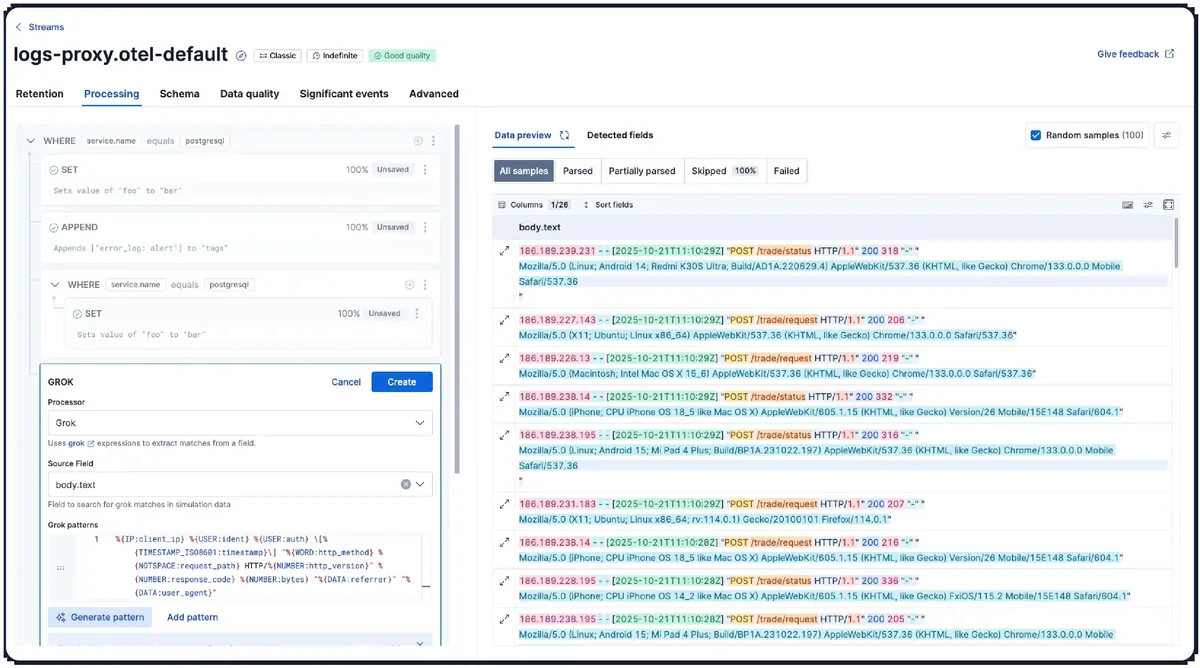
Elastic Observability review is a critical evaluation of a tool that positions itself as a leader in modern observability, leveraging open-source foundations and AI-driven capabilities. This review targets data engineers, analytics engineers, and data leaders who require actionable insights from complex systems. We will assess Elastic Observability’s architecture, use cases, pricing, and trade-offs, ensuring a candid assessment that avoids marketing fluff and focuses on technical reality. Our goal is to help you determine whether this tool aligns with your team’s needs, or whether alternatives might be more suitable.
Overview
Elastic Observability is built on open-source technologies, positioning itself as a scalable, AI-powered platform for observability. It claims leadership in the 2025 Gartner® Magic Quadrant™ for Observability Platforms, a testament to its market recognition. The tool emphasizes reducing troubleshooting time and costs through agentic AI, which automates root-cause analysis and anomaly detection. Its core value proposition includes OTel-compliant data ingestion, instant dashboards, and AI-assisted insights. The platform is designed to handle large volumes of log data, metrics, and traces, with a focus on performance and scalability. Elastic Observability’s freemium model allows teams to evaluate its capabilities before committing to paid plans, though specific pricing details are not publicly disclosed. The tool’s integration with the broader Elastic Stack (including Elasticsearch and Kibana) provides a cohesive ecosystem for data storage, search, and visualization. However, its reliance on Elastic’s ecosystem may limit flexibility for organizations already invested in competing platforms. We recommend considering Elastic Observability for teams that prioritize open-source extensibility and AI-driven automation but should evaluate its compatibility with existing infrastructure before adoption.
Key Features and Architecture
Elastic Observability’s architecture is centered on three core pillars: ingestion, insights, and analysis. The ingestion layer supports OTel-compliant data from a wide range of sources, including logs, metrics, and traces, ensuring compatibility with modern monitoring frameworks. This is a significant advantage for teams using tools like Prometheus, OpenTelemetry, or cloud-native services that adhere to standard telemetry protocols. The insights layer provides instant dashboards, always-on anomaly detection, and pattern analysis, enabling teams to identify issues before they escalate. Anomaly detection leverages machine learning models trained on historical data, though users have noted that configuring these models for niche use cases can be time-consuming. The analysis layer integrates Elastic’s AI Assistant and agentic AI workflows, which automate root-cause investigations and reduce the need for manual query writing. This is particularly useful for teams with limited observability expertise, though advanced users may find the AI’s suggestions overly simplistic for complex scenarios.
The platform’s open-source foundation allows for deep customization, with the ability to extend its capabilities through plugins and custom scripts. However, this flexibility comes at the cost of increased complexity for teams unfamiliar with Elasticsearch’s query language. Elastic Observability also supports real-time data processing, with low-latency ingestion pipelines that can handle high-throughput environments. This is critical for organizations managing petabyte-scale log data, as the system’s distributed architecture ensures scalability. The tool’s integration with the Elastic Stack provides seamless data flow between observability, search, and analytics workflows, but this tight coupling may be a drawback for organizations seeking decoupled systems. Finally, Elastic Observability’s support for agentic AI workflows is a standout feature, as it reduces the manual effort required to diagnose issues. However, users have reported that the AI’s contextual understanding is limited in scenarios involving non-standard data formats or complex microservices architectures.
Ideal Use Cases
Elastic Observability is best suited for large enterprises with complex, distributed systems that generate vast amounts of log data and require real-time insights. For example, a global e-commerce company with 10,000+ microservices and 100+ terabytes of daily logs could leverage Elastic Observability’s AI-powered anomaly detection to identify performance bottlenecks before they impact users. The platform’s OTel-compliant ingestion layer ensures compatibility with cloud-native services like AWS Lambda and Kubernetes, while its agentic AI workflows reduce the manual effort required to troubleshoot distributed systems. This use case aligns with the tool’s strengths in scalability and automation but requires a team with strong DevOps and data engineering expertise to configure the AI models and custom dashboards.
A second ideal use case is for DevOps teams managing hybrid cloud environments that require centralized observability. For instance, a financial services firm with on-premises data centers and cloud-based applications could use Elastic Observability to unify logs, metrics, and traces across environments. The platform’s integration with the Elastic Stack allows for centralized storage and search, enabling teams to perform root-cause analysis across siloed systems. However, this use case may be challenging for teams without prior experience with Elasticsearch, as the tool’s query language and configuration workflows can be steep learning curves.
A third use case is for open-source-driven organizations that prioritize cost efficiency and customization. Elastic Observability’s freemium model and open-source foundation make it an attractive option for startups or academic institutions that want to avoid vendor lock-in. For example, a university research lab analyzing petabyte-scale scientific data could use Elastic Observability’s scalability features to process and visualize results without expensive proprietary tools. However, this use case is not recommended for teams requiring a user-friendly interface or mobile support, as user feedback highlights confusion with the query language and limited mobile application capabilities.
Pricing and Licensing
Elastic Observability operates on a freemium pricing model, allowing teams to access core features without cost. However, specific pricing details for paid plans are not publicly disclosed, and the vendor must be contacted for information on enterprise tiers. This lack of transparency may be a drawback for organizations evaluating observability tools, as budget planning requires clear cost structures. The free tier includes limited data ingestion, basic anomaly detection, and access to the AI Assistant for simple queries. However, users report that the free tier’s data volume caps are restrictive for teams generating more than 10 terabytes of daily logs, forcing them to upgrade to paid plans.
Enterprise plans, while not detailed, likely include advanced features such as increased storage capacity, enhanced AI workflows, and dedicated support. The absence of specific pricing tiers or dollar amounts makes it difficult to compare Elastic Observability with competitors like Splunk or New Relic, which offer tiered pricing models with clear cost breakdowns. Additionally, the tool’s reliance on the Elastic Stack may incur additional licensing costs for organizations using Elasticsearch or Kibana in production. For teams prioritizing cost predictability and transparency, this lack of detailed pricing information could be a significant barrier. We recommend contacting Elastic directly for a tailored quote, but note that this approach may delay procurement decisions for budget-constrained teams.
Pros and Cons
Pros
- Open-source foundation: Elastic Observability’s open-source nature allows for deep customization and integration with existing infrastructure, which is a strength reported by users. Teams can modify the codebase to meet specific requirements, reducing dependency on vendor-provided features.
- Scalability for large data volumes: The platform is designed to handle petabyte-scale log data, making it suitable for enterprises with high-throughput environments. User feedback highlights its ability to scale without performance degradation, even under heavy workloads.
- AI-driven automation: The agentic AI workflows and AI Assistant reduce manual effort in troubleshooting, enabling teams to identify root causes faster. This is particularly beneficial for DevOps teams managing complex microservices architectures.
- Integration with the Elastic Stack: Seamless data flow between observability, search, and analytics tools provides a cohesive ecosystem for data engineers. This integration is a key differentiator for organizations already using Elasticsearch and Kibana.
Cons
- Complex query language: Users report that the platform’s query language (based on Elasticsearch) is challenging for new users, requiring a steep learning curve. This can slow down adoption for teams without prior experience with Elasticsearch.
- Limited mobile support: The tool lacks native mobile applications, making it difficult for teams requiring on-the-go access to observability dashboards. This is a drawback for remote or mobile-first teams.
- Custom dashboards require advanced skills: While the platform offers instant dashboards, creating custom visualizations often requires expertise in Elasticsearch and Kibana. This can be a barrier for teams with limited data engineering resources.
Alternatives and How It Compares
While Elastic Observability is a strong contender in the observability space, it is not the only option available. Competitors such as Splunk, New Relic, and Prometheus offer distinct advantages depending on use cases and team requirements. For example, Splunk’s platform is known for its robust data processing capabilities and extensive app ecosystem, making it a popular choice for enterprises with legacy systems. New Relic, on the other hand, excels in real-time performance monitoring and user experience analytics, which may be more relevant for teams focused on application performance rather than log analysis. Prometheus, an open-source tool, is widely used for metrics collection and is often paired with Grafana for visualization, offering a lightweight alternative to Elastic Observability for teams prioritizing simplicity.
However, Elastic Observability’s AI-driven automation and integration with the Elastic Stack provide unique advantages for teams already invested in the Elastic ecosystem. Its open-source foundation and agentic AI workflows differentiate it from proprietary tools like Splunk and New Relic, which may be more expensive and less customizable. That said, the lack of detailed pricing information and mobile support may make it less attractive for certain organizations. Teams should evaluate their specific needs—such as the importance of AI automation, existing infrastructure compatibility, and budget constraints—to determine whether Elastic Observability is the best fit or whether alternatives like Prometheus or New Relic might be more suitable.
Frequently Asked Questions
What is Elastic Observability?
Elastic Observability is an open-source, AI-powered observability tool designed to help teams resolve problems faster and reduce operational costs. It combines logs, metrics, and traces into a unified platform for proactive issue detection and analysis.
Is Elastic Observability free to use?
Elastic Observability offers a freemium pricing model. The free tier provides basic features, while advanced capabilities require paid plans. Exact pricing details are not publicly listed but depend on usage and scalability needs.
How does Elastic Observability compare to Datadog or Splunk?
Elastic Observability stands out with its open-source foundation and AI-driven insights, offering a more cost-effective solution for teams prioritizing customization. Datadog and Splunk provide broader ecosystem integrations but may lack the same level of AI automation in troubleshooting.
What industries benefit most from Elastic Observability?
Industries with complex, distributed systems—such as SaaS, fintech, and e-commerce—benefit greatly from Elastic Observability. Its AI capabilities help quickly identify and resolve issues in high-traffic, mission-critical applications.
Does Elastic Observability support cloud-native environments?
Yes, Elastic Observability is optimized for cloud-native architectures, including Kubernetes and containerized workloads. It integrates seamlessly with major cloud providers and supports real-time monitoring of microservices and serverless functions.
Can Elastic Observability reduce IT operational costs?
Yes, by proactively identifying issues before they impact users, Elastic Observability reduces downtime and troubleshooting time. Its efficient resource usage and open-source model also lower long-term licensing costs compared to proprietary tools.