Decision comparison
Monte Carlo vs Observe
Monte Carlo and Observe are observability platforms that operate in fundamentally different layers of the technology stack. Monte Carlo is built for data and AI observability, monitoring the health and quality of data pipelines, warehouses, BI dashboards, and AI agent outputs. Observe is built for infrastructure and application observability, unifying logs, metrics, traces, and APM into a single platform powered by a streaming data lake. There is minimal overlap between the two tools, and many organizations may find value in running both. The right choice depends entirely on whether your primary concern is data reliability or infrastructure reliability.
Architecture choice. These take different approaches to the same problem. Read the table as a fit question rather than a feature race.
These are different kinds of product — Data Observability and Observability Platform.
Quick Comparison
| Decision factor | Monte Carlo | Observe |
|---|---|---|
| Primary Focus | Data and AI observability — monitors data quality, pipelines, warehouses, and AI agent outputs | Infrastructure and application observability — monitors logs, metrics, traces, and service health |
| Observability Domain | Data layer: tables, pipelines, ETL jobs, BI dashboards, and AI agents | Infrastructure layer: servers, containers, Kubernetes, application services, and LLM applications |
| AI Capabilities | ML-driven anomaly detection, AI monitoring agent for automated coverage, and agent observability for LLM outputs | AI SRE that formulates investigation plans, correlates signals, and suggests actionable root cause fixes |
| Pricing Model | Monte Carlo publishes no amounts. Its tiers are Start, Scale, Enterprise and Business Critical, purchased as credits, and all are quote-only. Every tier includes agent, ML and data observability. | Logs at $0.49, other tiers at $0.00, $0.01, $0.59 |
| Integration Approach | Deep integrations with data warehouses (Snowflake, Databricks, BigQuery), BI tools, ETL pipelines, and AI frameworks | OpenTelemetry-native with 400+ pre-built integrations for cloud, Kubernetes, and application services |
| Best For | Enterprise data teams managing large-scale data pipelines and AI systems that require proactive data quality monitoring | DevOps and SRE teams needing unified log, metric, and trace analysis with fast correlation at reduced cost |
Monte Carlo
- Primary Focus:
- Data and AI observability — monitors data quality, pipelines, warehouses, and AI agent outputs
- Observability Domain:
- Data layer: tables, pipelines, ETL jobs, BI dashboards, and AI agents
- AI Capabilities:
- ML-driven anomaly detection, AI monitoring agent for automated coverage, and agent observability for LLM outputs
- Pricing Model:
- Monte Carlo publishes no amounts. Its tiers are Start, Scale, Enterprise and Business Critical, purchased as credits, and all are quote-only. Every tier includes agent, ML and data observability.
- Integration Approach:
- Deep integrations with data warehouses (Snowflake, Databricks, BigQuery), BI tools, ETL pipelines, and AI frameworks
- Best For:
- Enterprise data teams managing large-scale data pipelines and AI systems that require proactive data quality monitoring
Observe
- Primary Focus:
- Infrastructure and application observability — monitors logs, metrics, traces, and service health
- Observability Domain:
- Infrastructure layer: servers, containers, Kubernetes, application services, and LLM applications
- AI Capabilities:
- AI SRE that formulates investigation plans, correlates signals, and suggests actionable root cause fixes
- Pricing Model:
- Logs at $0.49, other tiers at $0.00, $0.01, $0.59
- Integration Approach:
- OpenTelemetry-native with 400+ pre-built integrations for cloud, Kubernetes, and application services
- Best For:
- DevOps and SRE teams needing unified log, metric, and trace analysis with fast correlation at reduced cost
Public signals
Verified factual signals only. Bars appear only for like-for-like metrics with five weekly assessments for every tool; missing evidence stays explicit. These signals do not establish enterprise adoption, product quality, or total cost.
| Metric | Monte Carlo | Observe |
|---|---|---|
| GitHub commits, 90d(Developer adoption) | 231 | Not available |
| GitHub stars(Developer adoption) | 2 | Not available |
| Search interest(Market interest) | 0 | Unavailable |
| Hacker News mentions, 90d(Community interest) | 0 | 0 |
| PyPI weekly downloads(Developer adoption) | 41.2k | 0 |
As of September 21, 2026 — updated weekly.
Health & risk evidence
Observed public-source checks for mapped package versions and repositories.
Monte Carlo
September 21, 2026Package vulnerabilities
PyPI · montecarlodata@0.175.0
0 vulnerabilities
across 1 package
Repository security score
Not available
Observe
September 21, 2026Package vulnerabilities
PyPI · observe-http-sender@1.3.3
0 vulnerabilities
across 1 package
Repository security score
Not available
Interface Preview
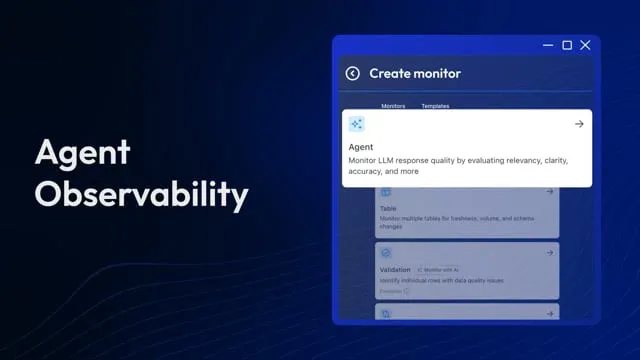
Monte Carlo
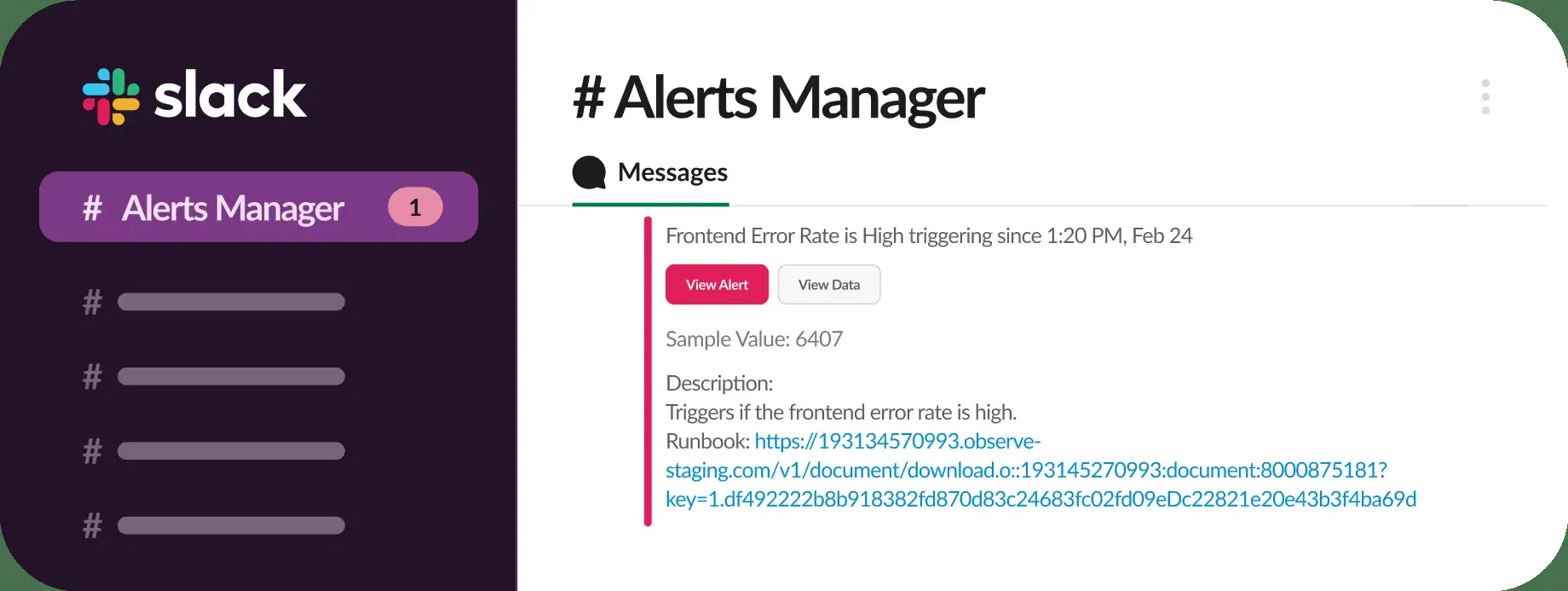
Observe
Feature Comparison
| Feature | Monte Carlo | Observe |
|---|---|---|
| Core Observability | ||
| Data Quality Monitoring | Automated ML-based monitoring for freshness, volume, schema, distribution, and custom SQL rules | Not a core capability; focuses on infrastructure and application telemetry rather than data pipeline quality |
| Infrastructure Monitoring | Limited to data infrastructure health; does not monitor servers, containers, or network | Full-stack infrastructure monitoring with Kubernetes, cloud, and 400+ pre-built integrations in real time |
| Application Performance Monitoring | Not offered; focused on data assets rather than application request tracing | Full APM with request-level tracing, service dependency maps, and latency analysis without sampling |
| AI and Automation | ||
| AI-Powered Root Cause Analysis | Automated root cause tracing through column-level lineage and impact analysis across pipelines | AI SRE that builds investigation plans, delegates to agents, and surfaces actionable root cause suggestions |
| AI Agent Monitoring | Dedicated agent observability for monitoring AI agent context, behavior, performance, and outputs in production | LLM observability for AI application workflows and token usage monitoring |
| Automated Coverage Deployment | AI monitoring agent creates and deploys monitors through natural language prompts within minutes | Out-of-the-box visualizations and dashboards with OpenTelemetry-based automatic instrumentation |
| Data Management | ||
| Data Lineage | End-to-end column-level lineage tracking across the entire data ecosystem with visual lineage maps | Service dependency maps for application architecture; no data pipeline lineage |
| Impact Analysis | Comprehensive impact analysis mapping data issues to affected dashboards, reports, and business processes | Service-level impact correlation through the O11y Context Graph for infrastructure dependencies |
| Data Cost Management | Enterprise cost attribution with chargebacks for data warehouse and pipeline spend optimization | Platform cost reduction focus — claims up to 60% lower TCO through efficient storage and compression |
| Log and Event Management | ||
| Log Analytics | Not a core feature; monitors data pipeline events and anomalies rather than application logs | Full log management with unlimited scale, hot retention, and search without retention constraints |
| Alerting and Notification | Intelligent alerts with granular routing, automated lineage grouping, and root-cause context for triage | Alert-driven investigation workflow with AI SRE providing contextual notification and investigation plans |
| Incident Management | Built-in incident management with SLA tracking, ownership assignment, and cross-team communication | Chat-based investigation summaries stored for future reference; integrates with external incident tools |
| Platform and Enterprise | ||
| Security and Compliance | SSO, SCIM, self-hosted storage, PII filtering, and audit logging available from Scale tier upward | Fully managed SaaS delivery; enterprise security features available on higher tiers |
| Multi-Workspace Support | Multi-workspace for testing and development environments at Enterprise tier and above | Single unified platform with shared data lake; multi-tenancy through RBAC |
| OpenTelemetry Support | Not OpenTelemetry-based; uses proprietary connectors and native integrations for data platforms | OpenTelemetry-native data collection as a core design principle to avoid vendor lock-in |
Core Observability
Data Quality Monitoring
Infrastructure Monitoring
Application Performance Monitoring
AI and Automation
AI-Powered Root Cause Analysis
AI Agent Monitoring
Automated Coverage Deployment
Data Management
Data Lineage
Impact Analysis
Data Cost Management
Log and Event Management
Log Analytics
Alerting and Notification
Incident Management
Platform and Enterprise
Security and Compliance
Multi-Workspace Support
OpenTelemetry Support
Which approach fits
Monte Carlo and Observe are observability platforms that operate in fundamentally different layers of the technology stack. Monte Carlo is built for data and AI observability, monitoring the health and quality of data pipelines, warehouses, BI dashboards, and AI agent outputs. Observe is built for infrastructure and application observability, unifying logs, metrics, traces, and APM into a single platform powered by a streaming data lake. There is minimal overlap between the two tools, and many organizations may find value in running both. The right choice depends entirely on whether your primary concern is data reliability or infrastructure reliability.
When each approach fits
Choose Monte Carlo if:
Choose Monte Carlo if your primary challenge is data quality and pipeline reliability. We recommend it for enterprise data teams managing complex data ecosystems where freshness failures, schema changes, and volume anomalies directly impact business decisions and AI outputs. Its column-level lineage, automated monitoring agent, and agent observability capabilities make it the stronger platform for teams responsible for the trustworthiness of data flowing into analytics and AI systems. Organizations like Nasdaq, JetBlue, and Axios rely on Monte Carlo to reduce data incidents and build organizational trust in their data assets.
Choose Observe if:
Choose Observe if your primary challenge is infrastructure monitoring and application troubleshooting at scale. We recommend it for DevOps and SRE teams that need to correlate logs, metrics, and traces across distributed systems while keeping costs under control. Its AI SRE, O11y Context Graph, and open data lake architecture deliver faster mean-time-to-resolution at a fraction of the cost of legacy observability platforms. Teams managing Kubernetes clusters, microservices, and cloud infrastructure will benefit from Observe's unified platform and OpenTelemetry-native data collection.
These scenarios reflect the available product evidence. Your requirements, existing stack, and team expertise should guide the final decision.
Frequently Asked Questions
What is the main difference between Monte Carlo and Observe?
Monte Carlo focuses on data and AI observability, monitoring the quality and reliability of data pipelines, warehouses, and AI agent outputs. Observe focuses on infrastructure and application observability, unifying logs, metrics, traces, and APM into a single platform. Monte Carlo watches your data layer to catch quality issues before they reach dashboards and AI models. Observe watches your infrastructure layer to help DevOps teams troubleshoot service outages and performance problems.
Can Monte Carlo and Observe be used together?
Yes. The two platforms serve different layers of the stack and complement each other well. Monte Carlo monitors data quality, pipeline health, and AI agent behavior, while Observe monitors infrastructure health, application performance, and service availability. An organization running both would have observability coverage across the full technology stack, from the compute infrastructure up through the data assets built on top of it.
Which platform is better for monitoring AI applications?
It depends on what aspect of AI you need to monitor. Monte Carlo offers dedicated agent observability for tracking AI agent context, behavior, performance, and outputs in production, making it the better choice for teams concerned about data quality feeding into AI models and the reliability of agent outputs. Observe offers LLM observability for monitoring AI application workflows and token usage, making it better suited for teams focused on the infrastructure performance and cost of running AI workloads.
How does pricing compare between Monte Carlo and Observe?
Monte Carlo uses a tiered credit-based model across Start, Scale, Enterprise, and Business Critical tiers, with consumption based on the number of monitors deployed. Specific pricing requires contacting their sales team. Observe uses usage-based pricing starting at $0.49 per GB for logs, with compute included and unlimited users across all tiers. Observe provides more upfront pricing transparency, while Monte Carlo's costs scale with the breadth of data monitoring coverage.
Which tool offers better data lineage capabilities?
Monte Carlo is the clear leader for data lineage. It provides end-to-end column-level lineage tracking across the entire data ecosystem, mapping how data flows from ingestion through transformation to BI dashboards and AI consumption. Observe offers service dependency maps for application architecture but does not provide data pipeline lineage. If understanding data flow and tracing the impact of data issues across your pipeline is a priority, Monte Carlo is the right choice.