Decision comparison
Kedro vs Weights & Biases
Kedro and Weights & Biases solve fundamentally different MLOps problems. Kedro excels at structuring production-ready data pipelines with clean code practices, while W&B dominates experiment tracking and model visualization. Most serious ML teams will benefit from using both tools together rather than choosing one over the other.
Architecture choice. These take different approaches to the same problem. Read the table as a fit question rather than a feature race.
These are different kinds of product — ML Pipeline Framework and Experiment Tracking.
Quick Comparison
| Decision factor | Kedro | Weights & Biases |
|---|---|---|
| Best For | Teams building reproducible, production-ready data and ML pipelines with clean code practices | ML teams needing experiment tracking, model visualization, and collaborative hyperparameter optimization |
| Pricing | Free and open source | Free (Free tier), $60/mo (Pro), CONTACT US (Enterprise) |
| Core Strength | Enforces software engineering best practices with standardized project templates and data catalog | Best-in-class experiment tracking with real-time visualization and team collaboration features |
| Learning Curve | Moderate learning curve requiring familiarity with Python project structure and pipeline concepts | Low barrier to entry with simple Python SDK integration into existing training scripts |
| Integration Breadth | Integrates with Airflow, Spark, SageMaker, Databricks, Kubeflow, Azure ML, and VertexAI | Deep integrations with PyTorch, TensorFlow, Keras, JAX, and all major ML frameworks |
| Community Size | 11,000+ GitHub stars with active Linux Foundation backing and open-source contributor community | 11,000+ GitHub stars with strong adoption among ML researchers and industry practitioners |
Kedro
- Best For:
- Teams building reproducible, production-ready data and ML pipelines with clean code practices
- Pricing:
- Free and open source
- Core Strength:
- Enforces software engineering best practices with standardized project templates and data catalog
- Learning Curve:
- Moderate learning curve requiring familiarity with Python project structure and pipeline concepts
- Integration Breadth:
- Integrates with Airflow, Spark, SageMaker, Databricks, Kubeflow, Azure ML, and VertexAI
- Community Size:
- 11,000+ GitHub stars with active Linux Foundation backing and open-source contributor community
Weights & Biases
- Best For:
- ML teams needing experiment tracking, model visualization, and collaborative hyperparameter optimization
- Pricing:
- Free (Free tier), $60/mo (Pro), CONTACT US (Enterprise)
- Core Strength:
- Best-in-class experiment tracking with real-time visualization and team collaboration features
- Learning Curve:
- Low barrier to entry with simple Python SDK integration into existing training scripts
- Integration Breadth:
- Deep integrations with PyTorch, TensorFlow, Keras, JAX, and all major ML frameworks
- Community Size:
- 11,000+ GitHub stars with strong adoption among ML researchers and industry practitioners
Public signals
Verified factual signals only. Bars appear only for like-for-like metrics with five weekly assessments for every tool; missing evidence stays explicit. These signals do not establish enterprise adoption, product quality, or total cost.
| Metric | Kedro | Weights & Biases |
|---|---|---|
| GitHub commits, 90d(Product adoption) | 68 | 477 |
| GitHub stars(Product adoption) | 11,000+ | 11,000+ |
| Search interest(Market interest) | 0 | 0 |
| Product Hunt comments(Community interest) | 2 | 8 |
| Product Hunt rating(Community interest) | Unavailable | 5.0/5 |
| Product Hunt reviews(Community interest) | 0 | 3 |
| Product Hunt votes(Community interest) | 14 | 110 |
| PyPI weekly downloads(Product adoption) | 488.1k | 3.2M |
| Stack Overflow questions(Community interest) | 212 | 139 |
| Docker Hub pulls(Product adoption) | Not available | 4.1M |
| Hacker News mentions, 90d(Community interest) | Not available | 0 |
| Hugging Face downloads(Product adoption) | Not available | 2.7k |
| Hugging Face likes(Product adoption) | Not available | 31 |
| npm weekly downloads(Developer adoption) | Not available | 8.2k |
As of September 21, 2026 — updated weekly.
Health & risk evidence
Observed public-source checks for mapped package versions and repositories.
Kedro
September 21, 2026Package vulnerabilities
PyPI · kedro@1.6.0
0 vulnerabilities
across 1 package
Repository security score
Not available
Weights & Biases
September 21, 2026Package vulnerabilities
npm · @wandb/sdk@0.5.1 · PyPI · wandb@0.30.0
0 vulnerabilities
across 2 packages
Repository security score
Not available
Interface Preview
Kedro
Feature Comparison
| Feature | Kedro | Weights & Biases |
|---|---|---|
| Pipeline & Workflow Management | ||
| Pipeline Definition | Dataset-driven workflow with automatic dependency resolution between pure Python functions | No built-in pipeline orchestration; focuses on tracking experiments within existing workflows |
| Pipeline Visualization | Kedro-Viz provides data lineage, execution time, node status, and dataset statistics in an interactive UI | Run-level dashboards with real-time metric charts, system resource monitoring, and comparison views |
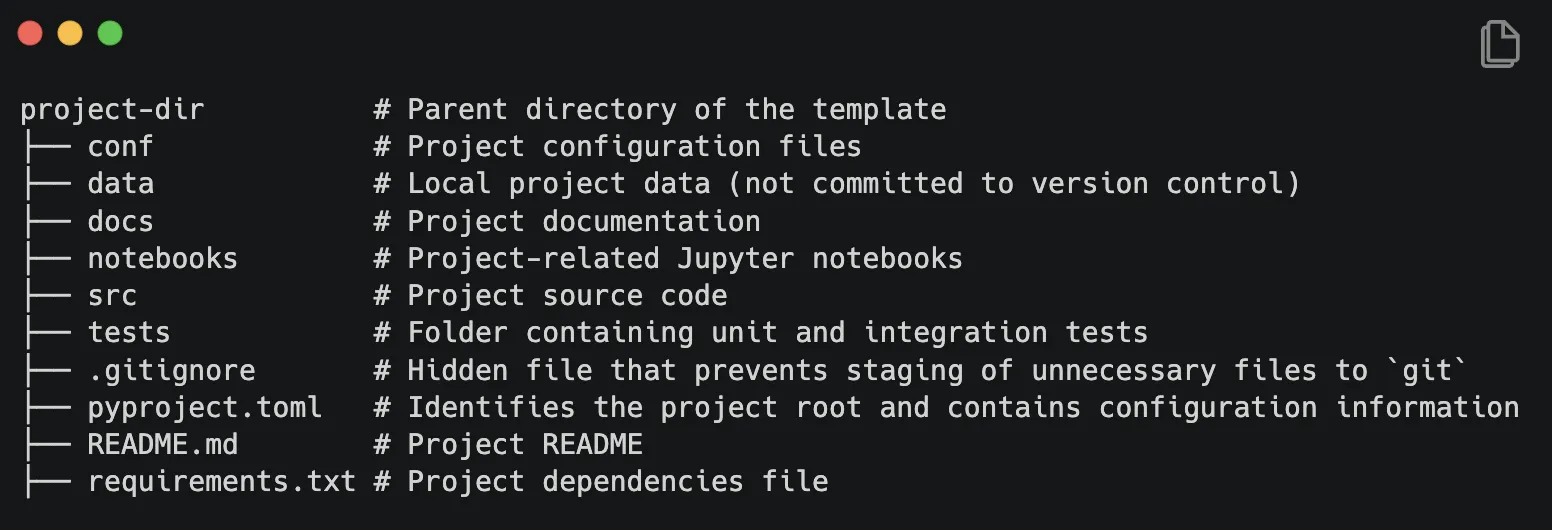
| Project Scaffolding | Standardized project template with cookiecutter Starters for configuration, source code, tests, and docs | No project scaffolding; integrates into any existing Python project via a lightweight SDK |
| Experiment Tracking & Reproducibility | ||
| Experiment Logging | Reproducibility through versioned data catalog and pipeline snapshots; no built-in experiment tracker | Automatic logging of hyperparameters, metrics, git commits, model weights, GPU usage, and datasets |
| Run Comparison | Compare pipeline runs through Kedro-Viz data lineage and manual versioned dataset inspection | Side-by-side run comparison with parallel coordinates, scatter plots, and configurable metric tables |
| Hyperparameter Tuning | No native hyperparameter sweep support; relies on external tools like Optuna or Ray Tune | Built-in Sweeps feature for automated hyperparameter search with Bayesian and grid strategies |
| Data Management | ||
| Data Catalog | Lightweight data connectors supporting S3, GCP, Azure, sFTP, DBFS, and local filesystems with Pandas, Spark, and Dask | Artifacts system for versioning datasets and models with lineage tracking across training runs |
| Model Registry | No built-in model registry; typically paired with MLflow or similar tools for model management | Native model registry with lineage tracking, version management, and staging workflow support |
| Dataset Versioning | File-based data and model snapshots through the Data Catalog versioning system | Artifact versioning with automatic deduplication and reference tracking across experiments |
| Collaboration & Team Features | ||
| Team Collaboration | Code-level collaboration through standardized project structure and Git-based workflows | Real-time collaborative dashboards, shared workspaces, and team-based access controls on Pro tier |
| Reporting & Sharing | Documentation generation via Sphinx; pipeline visualization shareable through Kedro-Viz export | Interactive Reports for sharing experiment results with stakeholders, embeddable in notebooks |
| Access Control | No built-in access control; relies on Git permissions and infrastructure-level security | Team-based access controls on Pro; custom roles, SSO, SCIM provisioning, and audit logs on Enterprise |
| Deployment & Operations | ||
| Deployment Options | Single or distributed-machine deployment with support for Argo, Prefect, Kubeflow, AWS Batch, and Databricks | SaaS cloud platform, self-hosted with Docker, or single-tenant Enterprise deployment with region choice |
| CI/CD Integration | Test-driven development with pytest and ruff linting; integrates with standard CI/CD pipelines | Built-in CI/CD automations with Slack and email alerts for model performance monitoring |
| IDE Support | Dedicated VS Code extension with enhanced code navigation and autocompletion for Kedro projects | Jupyter notebook integration with inline visualization; no dedicated IDE extension |
Pipeline & Workflow Management
Pipeline Definition
Pipeline Visualization
Project Scaffolding
Experiment Tracking & Reproducibility
Experiment Logging
Run Comparison
Hyperparameter Tuning
Data Management
Data Catalog
Model Registry
Dataset Versioning
Collaboration & Team Features
Team Collaboration
Reporting & Sharing
Access Control
Deployment & Operations
Deployment Options
CI/CD Integration
IDE Support
Which approach fits
Kedro and Weights & Biases solve fundamentally different MLOps problems. Kedro excels at structuring production-ready data pipelines with clean code practices, while W&B dominates experiment tracking and model visualization. Most serious ML teams will benefit from using both tools together rather than choosing one over the other.
When each approach fits
Choose Kedro if:
Choose Kedro if your primary challenge is building maintainable, reproducible data and ML pipelines. Kedro is the right fit for data engineering teams that need standardized project structure, a powerful data catalog supporting multiple storage backends, and deployment flexibility across Airflow, Kubeflow, Databricks, and other orchestrators. Its open-source Apache-2.0 license means zero licensing cost, making it especially attractive for organizations that want production-grade pipeline tooling without vendor lock-in.
Choose Weights & Biases if:
Choose Weights & Biases if your team needs robust experiment tracking, real-time metric visualization, and collaborative model development. W&B is ideal for ML researchers and engineers running many training experiments who need to compare runs, tune hyperparameters with Sweeps, and share results through interactive Reports. The free tier supports up to 5 model seats with 5 GB storage, while the Pro plan starts at $60/month, billed monthly and unlocks unlimited teams and priority support for growing organizations.
These scenarios reflect the available product evidence. Your requirements, existing stack, and team expertise should guide the final decision.
Frequently Asked Questions
Can Kedro and Weights & Biases be used together?
Kedro and Weights & Biases complement each other well and many teams use them in tandem. Kedro handles the pipeline orchestration layer, providing standardized project structure, a data catalog for managing inputs and outputs, and deployment abstractions for running pipelines on platforms like Airflow or Kubeflow. W&B plugs into the experiment tracking layer, logging metrics, hyperparameters, and artifacts from within Kedro pipeline nodes. This combination gives teams both reproducible pipeline structure and detailed experiment visibility without overlap or conflict between the tools.
Is Kedro truly free, or are there hidden costs?
Kedro is genuinely free and open source under the Apache-2.0 license, hosted by the Linux Foundation's LF AI & Data initiative. There are no paid tiers, no premium features behind a paywall, and no usage-based charges. The only costs you incur are infrastructure costs for running your pipelines, which depend on your chosen deployment target such as AWS, GCP, Azure, or on-premises servers. Kedro itself adds zero software licensing expense to your MLOps stack, making it one of the most cost-effective pipeline frameworks available.
What are the main limitations of the W&B free tier?
The Weights & Biases free tier includes up to 5 model seats and 5 GB of storage per month, along with core features like experiment tracking, AI application evaluations, tracing, and registry with lineage tracking. The primary limitations are the seat cap and storage quota. You also get community support rather than priority email and chat support. Team-based access controls, service accounts, and unlimited teams for collaboration require upgrading to the Pro plan, which starts at $60/month, billed monthly. Enterprise features like SSO, HIPAA compliance, custom roles, and audit logs require custom pricing.
Which tool has better community support and long-term viability?
Both tools have strong communities and promising trajectories. Kedro has over 11,000+ GitHub stars, is backed by the Linux Foundation, and was originally developed by McKinsey's QuantumBlack, giving it institutional credibility and ongoing maintenance. W&B has over 11,000+ GitHub stars and has established itself as the de facto standard for experiment tracking among ML researchers and practitioners. Kedro's open-source foundation under the Linux Foundation ensures it remains vendor-neutral, while W&B's commercial backing funds continuous feature development. Both tools are actively maintained with recent releases in April 2026.