Decision comparison
LangChain vs LangGraph
LangChain is the right starting point for most LLM applications, providing the broadest ecosystem and fastest path to production for RAG pipelines, chatbots, and document Q&A. Its modular components, pre-built chains, and LCEL pipelines suit workflows that flow from input to output without complex execution control. Add LangGraph when an application needs directed cycles, persistent checkpointed state, multi-agent coordination, or human approval gates. LangSmith complements either approach with tracing, evaluation, and deployment capabilities.
Used together. These are normally used together rather than chosen between. The comparison explains what each one does in the stack.
Applies to: Whether an existing LangChain application needs graph orchestration added, or rewritten.
All 2 are agent frameworks.
Quick Comparison
| Decision factor | LangChain | LangGraph |
|---|---|---|
| Best For | Building standard LLM applications with broad integrations (RAG, chatbots, document Q&A), using modular components, pre-built chains, and LCEL-style sequential pipelines. | Building stateful multi-agent applications with cycles, checkpointing, and human-in-the-loop controls, including long-running, hierarchical, and reliability-focused production agent workflows. |
| Pricing | $0 / seat (Developer), $39 / seat | Open Source — free framework, uses LangSmith for observability ($0-$39/seat); Developer provides 1 seat, community support, and 10k base traces/month before pay-as-you-go. |
| Programming Model | Sequential chains and LCEL pipelines, supported by a modular component-based architecture for model interoperability and integration with LangGraph or Deep Agents workflows. | Directed graphs with nodes, edges, and cycles, using low-level primitives to express single-agent, multi-agent, and hierarchical control flows in one framework. |
| State Management | Conversation memory modules (buffer, summary, entity), alongside LangSmith deployment capabilities for memory, checkpointing, and distributed runtime agent swarms. | First-class persistent state with checkpointing, plus built-in memory that stores conversation histories and maintains context across sessions for personalized future interactions. |
| Key Features | LangSmith tracing with message threading, automated and human-feedback evaluation, prompt tools, annotation queues, and deployment-oriented observability for multi-turn agent applications. | Human-in-the-loop moderation and approval controls, customizable workflows, persistent memory, and native token-by-token streaming of reasoning and actions for responsive user experiences. |
| Open Source & Ecosystem | MIT-licensed Python project with 145,844 GitHub stars; latest release langchain-core==1.6.2 on 2026-09-04, covering agents and enterprise framework topics. | MIT-licensed Python project with 41,170 GitHub stars; latest release sdk==0.4.4 on 2026-08-27, focused on resilient agents and framework development. |
LangChain
- Best For:
- Building standard LLM applications with broad integrations (RAG, chatbots, document Q&A), using modular components, pre-built chains, and LCEL-style sequential pipelines.
- Pricing:
- $0 / seat (Developer), $39 / seat
- Programming Model:
- Sequential chains and LCEL pipelines, supported by a modular component-based architecture for model interoperability and integration with LangGraph or Deep Agents workflows.
- State Management:
- Conversation memory modules (buffer, summary, entity), alongside LangSmith deployment capabilities for memory, checkpointing, and distributed runtime agent swarms.
- Key Features:
- LangSmith tracing with message threading, automated and human-feedback evaluation, prompt tools, annotation queues, and deployment-oriented observability for multi-turn agent applications.
- Open Source & Ecosystem:
- MIT-licensed Python project with 145,844 GitHub stars; latest release langchain-core==1.6.2 on 2026-09-04, covering agents and enterprise framework topics.
LangGraph
- Best For:
- Building stateful multi-agent applications with cycles, checkpointing, and human-in-the-loop controls, including long-running, hierarchical, and reliability-focused production agent workflows.
- Pricing:
- Open Source — free framework, uses LangSmith for observability ($0-$39/seat); Developer provides 1 seat, community support, and 10k base traces/month before pay-as-you-go.
- Programming Model:
- Directed graphs with nodes, edges, and cycles, using low-level primitives to express single-agent, multi-agent, and hierarchical control flows in one framework.
- State Management:
- First-class persistent state with checkpointing, plus built-in memory that stores conversation histories and maintains context across sessions for personalized future interactions.
- Key Features:
- Human-in-the-loop moderation and approval controls, customizable workflows, persistent memory, and native token-by-token streaming of reasoning and actions for responsive user experiences.
- Open Source & Ecosystem:
- MIT-licensed Python project with 41,170 GitHub stars; latest release sdk==0.4.4 on 2026-08-27, focused on resilient agents and framework development.
Public signals
Verified factual signals only. Bars appear only for like-for-like metrics with five weekly assessments for every tool; missing evidence stays explicit. These signals do not establish enterprise adoption, product quality, or total cost.
| Metric | LangChain | LangGraph |
|---|---|---|
| GitHub commits, 90d(Product adoption) | 541 | 127 |
| GitHub stars(Product adoption) | 146,000+ | 41,000+ |
| Search interest(Market interest) | 14 | 10 |
| Hacker News mentions, 90d(Community interest) | 31 | 22 |
| npm weekly downloads(Product adoption) | 2.1M | Not available |
| PyPI weekly downloads(Product adoption) | 38.2M | 10.0M |
| Stack Overflow questions(Community interest) | 2.0k | 143 |
| npm weekly downloads(Developer adoption) | Not available | 2.5M |
As of September 14, 2026 — updated weekly.
Health & risk evidence
Observed public-source checks for mapped package versions and repositories.
LangChain
September 14, 2026Package vulnerabilities
npm · langchain@1.5.11 · PyPI · langchain@1.4.0
0 vulnerabilities
across 2 packages
Repository security score
Not available
LangGraph
September 14, 2026Package vulnerabilities
npm · @langchain/langgraph@1.4.15 · PyPI · langgraph@1.2.11
0 vulnerabilities
across 2 packages
Repository security score
Not available
Interface Preview
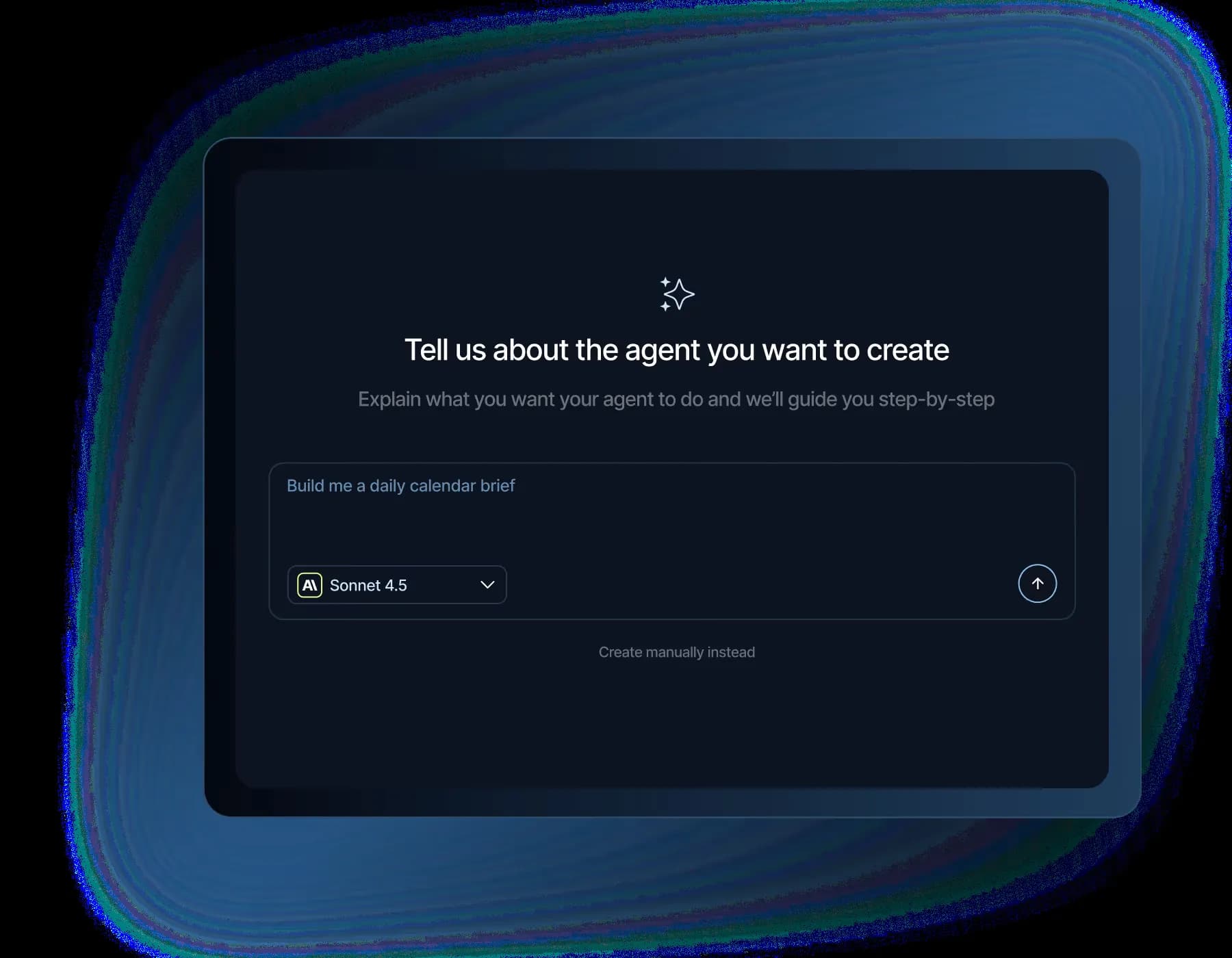
LangChain
LangGraph
Feature Comparison
| Feature | LangChain | LangGraph |
|---|---|---|
| Core Architecture | ||
| Programming Model | Sequential chains and LCEL pipelines | Directed graphs with nodes, edges, and cycles |
| State Management | Conversation memory modules (buffer, summary, entity) | First-class persistent state with checkpointing |
| Control Flow | Linear with limited branching via router chains | Full graph control: cycles, conditionals, parallel branches |
| Error Handling | Try/catch with retry decorators | Graph-level error routing with fallback nodes |
| Agent Capabilities | ||
| Multi-Agent Support | Agent executor with tool selection | Multi-actor graphs with shared state and message passing |
| Human-in-the-Loop | Basic callback hooks | Native interrupt/resume with checkpoint persistence |
| Streaming | Token-level streaming from LLM providers | Node-level streaming with intermediate state updates |
| Persistence | In-memory or external store via callbacks | Built-in checkpointer with SQLite and PostgreSQL backends |
| Ecosystem & Integrations | ||
| LLM Provider Support | 50+ providers (OpenAI, Anthropic, Google, Cohere, local models) | Inherits all LangChain provider integrations |
| Vector Store Integrations | 40+ vector databases (Pinecone, Weaviate, Chroma, Qdrant) | Inherits all LangChain integrations |
| Observability | LangSmith tracing integration | LangSmith tracing with graph-aware visualization |
| Deployment Options | LangServe for REST API endpoints | LangGraph Platform with task queues and auto-scaling |
| Developer Experience | ||
| Learning Curve | Moderate — extensive docs and large community | Steeper — requires understanding graph theory concepts |
| Ideal Project Size | Small to medium LLM applications | Medium to large multi-agent systems |
Core Architecture
Programming Model
State Management
Control Flow
Error Handling
Agent Capabilities
Multi-Agent Support
Human-in-the-Loop
Streaming
Persistence
Ecosystem & Integrations
LLM Provider Support
Vector Store Integrations
Observability
Deployment Options
Developer Experience
Learning Curve
Ideal Project Size
How they fit together
LangChain is the right starting point for most LLM applications, providing the broadest ecosystem and fastest path to production for RAG pipelines, chatbots, and document Q&A. Its modular components, pre-built chains, and LCEL pipelines suit workflows that flow from input to output without complex execution control. Add LangGraph when an application needs directed cycles, persistent checkpointed state, multi-agent coordination, or human approval gates. LangSmith complements either approach with tracing, evaluation, and deployment capabilities.
What each one handles
Use LangChain for:
Choose LangChain for RAG pipelines, chatbots, document Q&A, rapid prototyping, and any workflow that flows linearly from input to output without complex state management needs. Use its modular integrations and pre-built chains when broad model interoperability and fast application assembly are priorities.
Use LangGraph for:
Choose LangGraph for multi-agent systems, human-in-the-loop workflows, long-running stateful processes, and production agent applications where reliability, auditability, and fine-grained control over execution flow are requirements. Its graph model, checkpointing, persistent memory, and streaming support fit applications requiring cycles and controlled agent actions.
These roles reflect the available product evidence. Most teams run both; which one owns a given job depends on your stack and team.
Frequently Asked Questions
Can I use LangChain and LangGraph together?
Yes. LangGraph is built on top of LangChain and is designed to be used alongside it. Most LangGraph applications use LangChain components as building blocks inside graph nodes.
Is LangGraph harder to learn than LangChain?
Yes, LangGraph has a steeper learning curve that requires understanding graph-based state machines. Expect 2-3 weeks of ramp-up for developers experienced with LangChain.
What happens if I start with LangChain and later need LangGraph?
Migration is incremental. LangChain components work directly inside LangGraph nodes. The main effort is restructuring sequential chain logic into graph topology.