Decision comparison
LangChain vs Anthropic
LangChain and Anthropic serve fundamentally different roles in the AI ecosystem. LangChain is an agent engineering platform that provides the infrastructure to build, observe, evaluate, and deploy AI agents using any model provider. Anthropic delivers a proprietary AI model family through Claude, optimized for safety, long-document analysis, and direct user interaction. Teams building production agent systems need LangChain's orchestration and observability stack, while teams seeking a powerful AI assistant for knowledge work and coding benefit most from Anthropic's Claude.
Used together. These are normally used together rather than chosen between. The comparison explains what each one does in the stack.
These are different kinds of product — Agent Framework and Foundation Model Provider.
Quick Comparison
| Decision factor | LangChain | Anthropic |
|---|---|---|
| Best For | Engineering teams building, testing, and deploying production AI agents with observability, evaluation, and multi-framework orchestration via LangSmith | Professionals and teams needing a safety-first AI assistant for long-document analysis, writing, coding, and collaborative problem-solving with Claude |
| Architecture | Open-source modular framework with LangGraph for low-level agent control, Deep Agents for autonomous work, and LangSmith SaaS platform for full lifecycle management | Closed-source Constitutional AI models with 200K-token context window, Cowork task delegation system, and direct API access across multiple model tiers |
| Pricing Model | $0 / seat (Developer), $39 / seat | Free tier, Pro $20/month, Team $25/user/month, Enterprise custom |
| Ease of Use | Developer-focused with SDKs for Python, TypeScript, Go, and Java; rated 8.6/10 across 5 reviews; requires coding proficiency for setup and configuration | Consumer-grade chat interface on web, desktop (macOS, Windows), and mobile; rated 4.4/5 on Gartner (38 ratings); accessible to non-technical users |
| Scalability | Distributed fault-tolerant runtime handles agent swarms with durable checkpointing, background agents, input concurrency, and native A2A and MCP protocol support | Enterprise plan with SCIM, audit logs, SSO, HIPAA-ready compliance; API pay-per-use model scales to organizational demand with seat-based team plans |
| Community/Support | 142,000+ GitHub stars, MIT license, 100M+ monthly open-source downloads, 6,000+ active LangSmith customers, 5 of the Fortune 10 use LangSmith | Approximately 30 million monthly active users, Claude Code at $2.5B annual revenue run rate, integrations with Slack and Notion, enterprise sales support |
LangChain
- Best For:
- Engineering teams building, testing, and deploying production AI agents with observability, evaluation, and multi-framework orchestration via LangSmith
- Architecture:
- Open-source modular framework with LangGraph for low-level agent control, Deep Agents for autonomous work, and LangSmith SaaS platform for full lifecycle management
- Pricing Model:
- $0 / seat (Developer), $39 / seat
- Ease of Use:
- Developer-focused with SDKs for Python, TypeScript, Go, and Java; rated 8.6/10 across 5 reviews; requires coding proficiency for setup and configuration
- Scalability:
- Distributed fault-tolerant runtime handles agent swarms with durable checkpointing, background agents, input concurrency, and native A2A and MCP protocol support
- Community/Support:
- 142,000+ GitHub stars, MIT license, 100M+ monthly open-source downloads, 6,000+ active LangSmith customers, 5 of the Fortune 10 use LangSmith
Anthropic
- Best For:
- Professionals and teams needing a safety-first AI assistant for long-document analysis, writing, coding, and collaborative problem-solving with Claude
- Architecture:
- Closed-source Constitutional AI models with 200K-token context window, Cowork task delegation system, and direct API access across multiple model tiers
- Pricing Model:
- Free tier, Pro $20/month, Team $25/user/month, Enterprise custom
- Ease of Use:
- Consumer-grade chat interface on web, desktop (macOS, Windows), and mobile; rated 4.4/5 on Gartner (38 ratings); accessible to non-technical users
- Scalability:
- Enterprise plan with SCIM, audit logs, SSO, HIPAA-ready compliance; API pay-per-use model scales to organizational demand with seat-based team plans
- Community/Support:
- Approximately 30 million monthly active users, Claude Code at $2.5B annual revenue run rate, integrations with Slack and Notion, enterprise sales support
Public signals
Verified factual signals only. Bars appear only for like-for-like metrics with five weekly assessments for every tool; missing evidence stays explicit. These signals do not establish enterprise adoption, product quality, or total cost.
| Metric | LangChain | Anthropic |
|---|---|---|
| GitHub commits, 90d(Product adoption) | 484 | Not available |
| GitHub stars(Product adoption) | 146,000+ | Not available |
| Search interest(Market interest) | 13 | 46 |
| Hacker News mentions, 90d(Community interest) | 32 | 1.1k |
| npm weekly downloads(Product adoption) | 2.1M | Not available |
| PyPI weekly downloads(Product adoption) | 39.5M | Not available |
| Stack Overflow questions(Community interest) | 2.0k | 2 |
| GitHub commits, 90d(Developer adoption) | Not available | 244 |
| GitHub stars(Developer adoption) | Not available | 3,500+ |
| Hugging Face downloads(Product adoption) | Not available | 58.1k |
| Hugging Face likes(Product adoption) | Not available | 2.7k |
| npm weekly downloads(Developer adoption) | Not available | 28.2M |
| PyPI weekly downloads(Developer adoption) | Not available | 33.1M |
As of September 21, 2026 — updated weekly.
Health & risk evidence
Observed public-source checks for mapped package versions and repositories.
LangChain
September 21, 2026Package vulnerabilities
npm · langchain@1.5.11 · PyPI · langchain@1.4.2
0 vulnerabilities
across 2 packages
Repository security score
Not available
Anthropic
September 21, 2026Package vulnerabilities
npm · @anthropic-ai/sdk@0.127.0 · PyPI · anthropic@1.7.0
0 vulnerabilities
across 2 packages
Repository security score
Not available
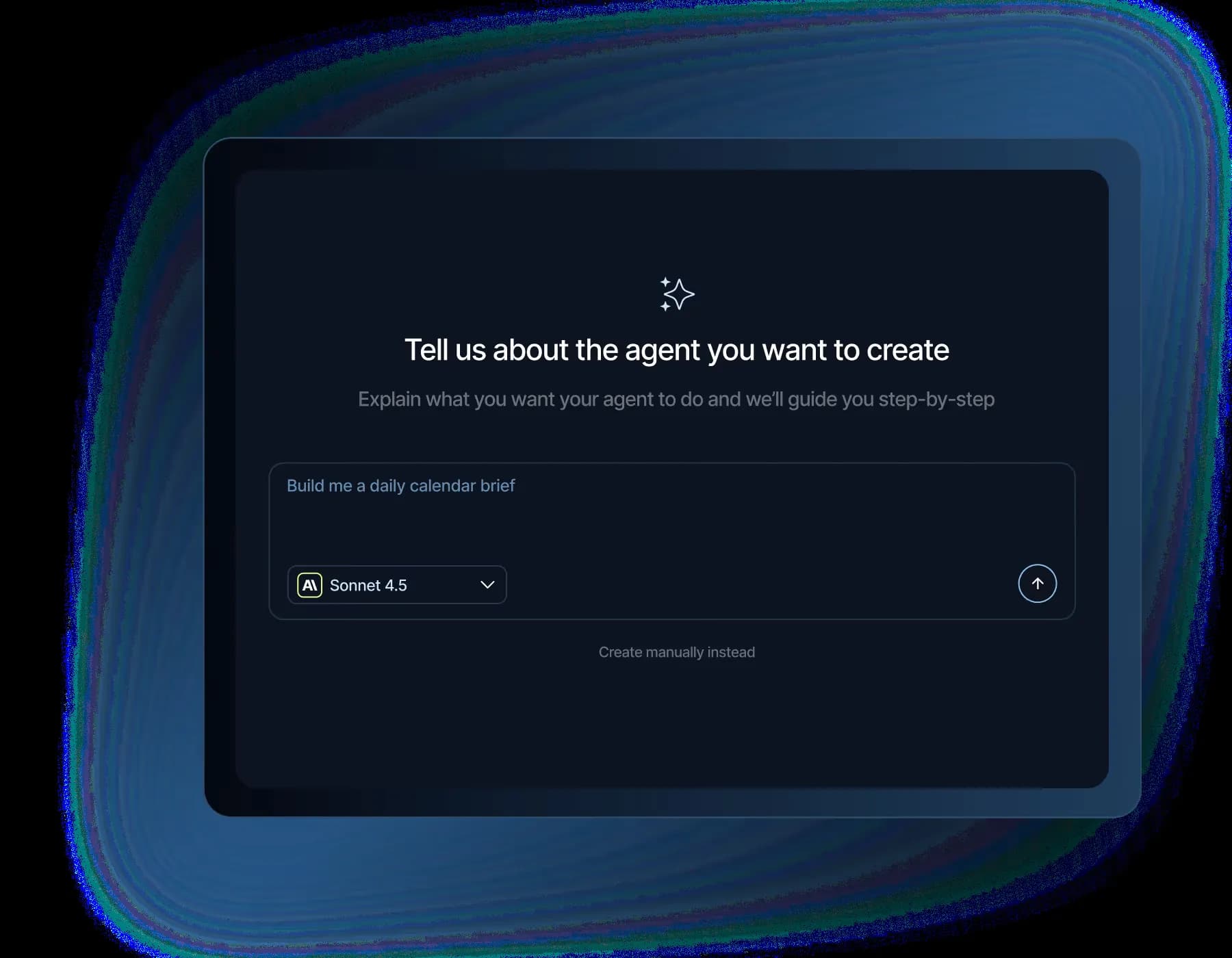
Interface Preview
LangChain
Feature Comparison
| Feature | LangChain | Anthropic |
|---|---|---|
| Core AI Capabilities | ||
| Model Access | Model-agnostic framework connecting to OpenAI, Anthropic, Gemini, and open-source providers through modular components | Proprietary Claude model family including Sonnet 4.6 and Opus with Constitutional AI alignment training |
| Context Window | Inherits context limits from connected model providers; manages context through chunking and retrieval strategies | Native 200,000-token context window supporting analysis of 500-page documents in a single prompt |
| Safety Framework | Relies on safety mechanisms of connected model providers; no proprietary alignment layer | Constitutional AI with explicit written principles, Responsible Scaling Policy, and public benefit corporation governance |
| Agent Development | ||
| Agent Frameworks | Three tiers: LangChain for quick-start templates, LangGraph for low-level control, Deep Agents for autonomous long-running work | Claude-based agents through Cowork task delegation for file and cloud app operations with step-by-step user approval |
| Multi-Agent Orchestration | Distributed runtime with agent swarms, background agents, input concurrency, and native A2A protocol support | Single-agent architecture with human-in-the-loop delegation; no built-in multi-agent swarm orchestration |
| Deployment Infrastructure | LangSmith agent server with memory, conversational threads, durable checkpointing, and fault-tolerant scaling | API-based deployment with pay-per-use pricing; no managed agent server or checkpointing infrastructure |
| Observability and Evaluation | ||
| Tracing and Debugging | Structured timeline tracing with message threading, analytics, and AI-driven insights across OpenTelemetry SDKs | Conversation history within chat interface; no dedicated tracing, timeline visualization, or debugging tools |
| Evaluation Pipelines | LLM-as-judge scoring, multi-turn evals, human feedback annotations, and automated eval calibration workflows | No built-in evaluation pipeline; teams rely on external testing frameworks or manual quality assessment |
| Production Monitoring | Real-time monitoring dashboards with alerting, analytics across traces, and pattern detection at scale | API usage tracking and rate limits; no native production monitoring dashboards or alerting system |
| Integration and Ecosystem | ||
| SDK and Language Support | Official SDKs for Python, TypeScript, Go, and Java with OpenTelemetry-compatible instrumentation | API access with Python and TypeScript SDKs; Claude Code CLI tool for developer workflows |
| Platform Integrations | Connects to any model provider; Fleet agents work across daily tools with MCP server extensions | Native integrations with Slack, Notion, Google Drive; Cowork connects to local files and cloud apps |
| Open Source | MIT-licensed core with 142,000+ GitHub stars; fully open-source LangChain, LangGraph, and Deep Agents frameworks | Proprietary closed-source models; no open-source framework or community-contributed components |
| Enterprise and Pricing | ||
| Free Tier | Developer plan at $0/seat with 5,000 base traces per month, 1 Fleet agent, and 50 Fleet runs | Free tier with Claude Sonnet access, limited daily usage, and basic chat functionality |
| Team Plans | Plus plan at $39/seat with pay-as-you-go traces from $0.05 per additional trace batch | Team plan at $25/user/month with admin controls and higher usage limits per seat |
| Enterprise Security | Enterprise tier with custom pricing, dedicated support, and bring-your-own-model deployment options | Enterprise plan with SCIM provisioning, audit logs, access controls, SSO, and HIPAA-ready compliance |
Core AI Capabilities
Model Access
Context Window
Safety Framework
Agent Development
Agent Frameworks
Multi-Agent Orchestration
Deployment Infrastructure
Observability and Evaluation
Tracing and Debugging
Evaluation Pipelines
Production Monitoring
Integration and Ecosystem
SDK and Language Support
Platform Integrations
Open Source
Enterprise and Pricing
Free Tier
Team Plans
Enterprise Security
How they fit together
LangChain and Anthropic serve fundamentally different roles in the AI ecosystem. LangChain is an agent engineering platform that provides the infrastructure to build, observe, evaluate, and deploy AI agents using any model provider. Anthropic delivers a proprietary AI model family through Claude, optimized for safety, long-document analysis, and direct user interaction. Teams building production agent systems need LangChain's orchestration and observability stack, while teams seeking a powerful AI assistant for knowledge work and coding benefit most from Anthropic's Claude.
What each one handles
Use LangChain for:
Choose LangChain when your team is building production AI agent systems that require structured observability, automated evaluation pipelines, and multi-agent orchestration. LangChain excels when you need model-agnostic flexibility to switch between providers, low-level control over agent behavior through LangGraph, and a fault-tolerant deployment runtime that handles agent swarms with durable checkpointing. Its 134,126 GitHub stars and MIT license make it the strongest choice for engineering teams that want open-source foundations with enterprise-grade tooling through LangSmith.
Use Anthropic for:
Choose Anthropic when your organization needs a powerful, safety-conscious AI assistant for knowledge work, long-document analysis, writing, and collaborative problem-solving. Anthropic's 200,000-token context window handles entire codebases and 500-page documents in a single prompt, and its Constitutional AI framework ensures reliable, brand-safe output for enterprise environments. The consumer-friendly interface across web, desktop, and mobile makes Claude accessible to non-technical team members, while enterprise features like SCIM, audit logs, and HIPAA-ready compliance satisfy strict security requirements.
These roles reflect the available product evidence. Most teams run both; which one owns a given job depends on your stack and team.
Frequently Asked Questions
What is the main difference between LangChain and Anthropic?
LangChain is an open-source agent engineering platform that provides frameworks (LangChain, LangGraph, Deep Agents) and a commercial observability platform (LangSmith) for building, testing, and deploying AI agents with any model provider. Anthropic is an AI safety company that develops the proprietary Claude model family and sells access through a consumer chat interface and API. LangChain focuses on the infrastructure layer for agent development, while Anthropic focuses on delivering a single, high-quality AI model. Many teams actually use both together, connecting LangChain's orchestration framework to Anthropic's Claude models.
How do LangChain and Anthropic pricing compare for teams?
LangChain offers a free Developer tier at $0/seat with 5,000 base traces per month and a Plus plan at $39/seat with pay-as-you-go pricing for additional traces starting at $0.05 per batch. Anthropic charges $20/month for its Pro plan (individual Claude Opus access), $25/user/month for its Team plan with admin controls, and custom pricing for Enterprise with SCIM and compliance features. The key difference is that LangChain charges for platform tooling (observability, evaluation, deployment) while Anthropic charges for model access and usage. Teams using LangChain still pay separately for the underlying model API calls to providers like Anthropic or OpenAI.
Can LangChain and Anthropic be used together?
LangChain and Anthropic work together naturally in production agent architectures. LangChain's model-agnostic design supports Anthropic's Claude models as a first-class integration, listed among its GitHub topics alongside OpenAI and Gemini. Teams commonly use LangChain's orchestration frameworks to build agent workflows powered by Claude, then leverage LangSmith's tracing and evaluation tools to monitor and improve those Claude-based agents in production. This combination gives teams Anthropic's strong reasoning and 200K-token context window with LangChain's observability, deployment infrastructure, and multi-agent capabilities.
Which tool is better for building AI-powered applications in 2026?
For building AI-powered applications, LangChain provides the more complete development toolkit. Its three-tier framework approach (LangChain for quick prototyping, LangGraph for production control, Deep Agents for autonomous systems) covers the full spectrum of agent complexity. LangSmith adds production-grade observability with structured tracing, automated evaluation pipelines, and a fault-tolerant deployment runtime. Anthropic's Claude is better positioned as the underlying model powering those applications, particularly when tasks require long-document understanding, safety-critical output, or nuanced writing. The strongest architecture for production AI applications in 2026 uses LangChain's orchestration layer with Anthropic's Claude as one of the model providers.