Decision comparison
Amazon QuickSight vs Sisense
QuickSight and Sisense are both capable of embedding analytics and are bought for different audiences. QuickSight is AWS-native BI priced per session, which suits a wide internal readership. Sisense is built around embedding: an in-memory engine, a developer SDK, white-labelling and multi-tenant management for analytics that ship inside a product.
Direct comparison. These are reviewed substitutes bought for the same job, so the differences below are the ones that decide between them.
All 2 are BI platforms.
Quick Comparison
| Decision factor | Amazon QuickSight | Sisense |
|---|---|---|
| What it is | AWS's BI service, priced per session for readers and backed by the SPICE in-memory engine | A BI and embedded analytics platform built around its own in-memory analytical engine and a developer SDK |
| Primary audience | Internal readers across an AWS organisation | Customers, through analytics embedded in a product |
| Pricing model | Per-user pricing: Reader $3 per user/month, Reader Pro $20 per user/month, Author $24 per user/month and Author Pro $40 per user/month. A $250/month per-account infrastructure fee applies to some configurations. Capacity pricing starts at $250/month for 500 sessions with additional sessions at $0.50, or $20,000/year for 50,000 sessions with additional sessions at $0.40. Enterprise pricing on request. The captured pricing page states no free tier. | Sisense publishes no prices. Its pricing URL resolves to a plans page offering SELF-SERVE, for startups and growing teams embedding analytics, and ENTERPRISE, for regulated industries needing HIPAA-ready compliance and control. Both are quote-only. |
| Embedding | Supported, with AWS-native identity and session management | A developer SDK and white-labelling built around embedding as the main case |
| Engine | SPICE in-memory engine, or direct query against the source | In-memory analytical engine, or live querying against the warehouse |
| Deployment | AWS service | Cloud or self-managed, including your own infrastructure |
| Best fit | AWS organisations with a wide, occasional internal audience | Software vendors shipping analytics inside their product |
| Connectivity | Connects to Snowflake, BigQuery, Redshift and Databricks over standard drivers, with REST APIs for automation | Connects to Snowflake, BigQuery, Redshift and Databricks over standard drivers, with REST APIs for automation |
Amazon QuickSight
- What it is:
- AWS's BI service, priced per session for readers and backed by the SPICE in-memory engine
- Primary audience:
- Internal readers across an AWS organisation
- Pricing model:
- Per-user pricing: Reader $3 per user/month, Reader Pro $20 per user/month, Author $24 per user/month and Author Pro $40 per user/month. A $250/month per-account infrastructure fee applies to some configurations. Capacity pricing starts at $250/month for 500 sessions with additional sessions at $0.50, or $20,000/year for 50,000 sessions with additional sessions at $0.40. Enterprise pricing on request. The captured pricing page states no free tier.
- Embedding:
- Supported, with AWS-native identity and session management
- Engine:
- SPICE in-memory engine, or direct query against the source
- Deployment:
- AWS service
- Best fit:
- AWS organisations with a wide, occasional internal audience
- Connectivity:
- Connects to Snowflake, BigQuery, Redshift and Databricks over standard drivers, with REST APIs for automation
Sisense
- What it is:
- A BI and embedded analytics platform built around its own in-memory analytical engine and a developer SDK
- Primary audience:
- Customers, through analytics embedded in a product
- Pricing model:
- Sisense publishes no prices. Its pricing URL resolves to a plans page offering SELF-SERVE, for startups and growing teams embedding analytics, and ENTERPRISE, for regulated industries needing HIPAA-ready compliance and control. Both are quote-only.
- Embedding:
- A developer SDK and white-labelling built around embedding as the main case
- Engine:
- In-memory analytical engine, or live querying against the warehouse
- Deployment:
- Cloud or self-managed, including your own infrastructure
- Best fit:
- Software vendors shipping analytics inside their product
- Connectivity:
- Connects to Snowflake, BigQuery, Redshift and Databricks over standard drivers, with REST APIs for automation
Public signals
Verified factual signals only. Bars appear only for like-for-like metrics with five weekly assessments for every tool; missing evidence stays explicit. These signals do not establish enterprise adoption, product quality, or total cost.
| Metric | Amazon QuickSight | Sisense |
|---|---|---|
| Search interest(Market interest) | 0 | 0 |
| npm weekly downloads(Developer adoption) | 140.3k | 2.1k |
| Product Hunt comments(Community interest) | 2 | 2 |
| Product Hunt rating(Community interest) | 5.0/5 | Unavailable |
| Product Hunt reviews(Community interest) | 1 | 0 |
| Product Hunt votes(Community interest) | 78 | 130 |
| Stack Overflow questions(Community interest) | 718 | 30 |
| GitHub commits, 90d(Developer adoption) | Not available | 9 |
| GitHub stars(Developer adoption) | Not available | 38 |
| Hacker News mentions, 90d(Community interest) | Not available | 0 |
| PyPI weekly downloads(Developer adoption) | Not available | 202 |
As of September 21, 2026 — updated weekly.
Health & risk evidence
Observed public-source checks for mapped package versions and repositories.
Amazon QuickSight
September 21, 2026Package vulnerabilities
npm · amazon-quicksight-embedding-sdk@2.11.3
0 vulnerabilities
across 1 package
Repository security score
Not available
Sisense
September 21, 2026Package vulnerabilities
npm · @sisense/sdk-ui@2.36.0 · PyPI · pysisense@2.1.0
0 vulnerabilities
across 2 packages
Repository security score
Not available
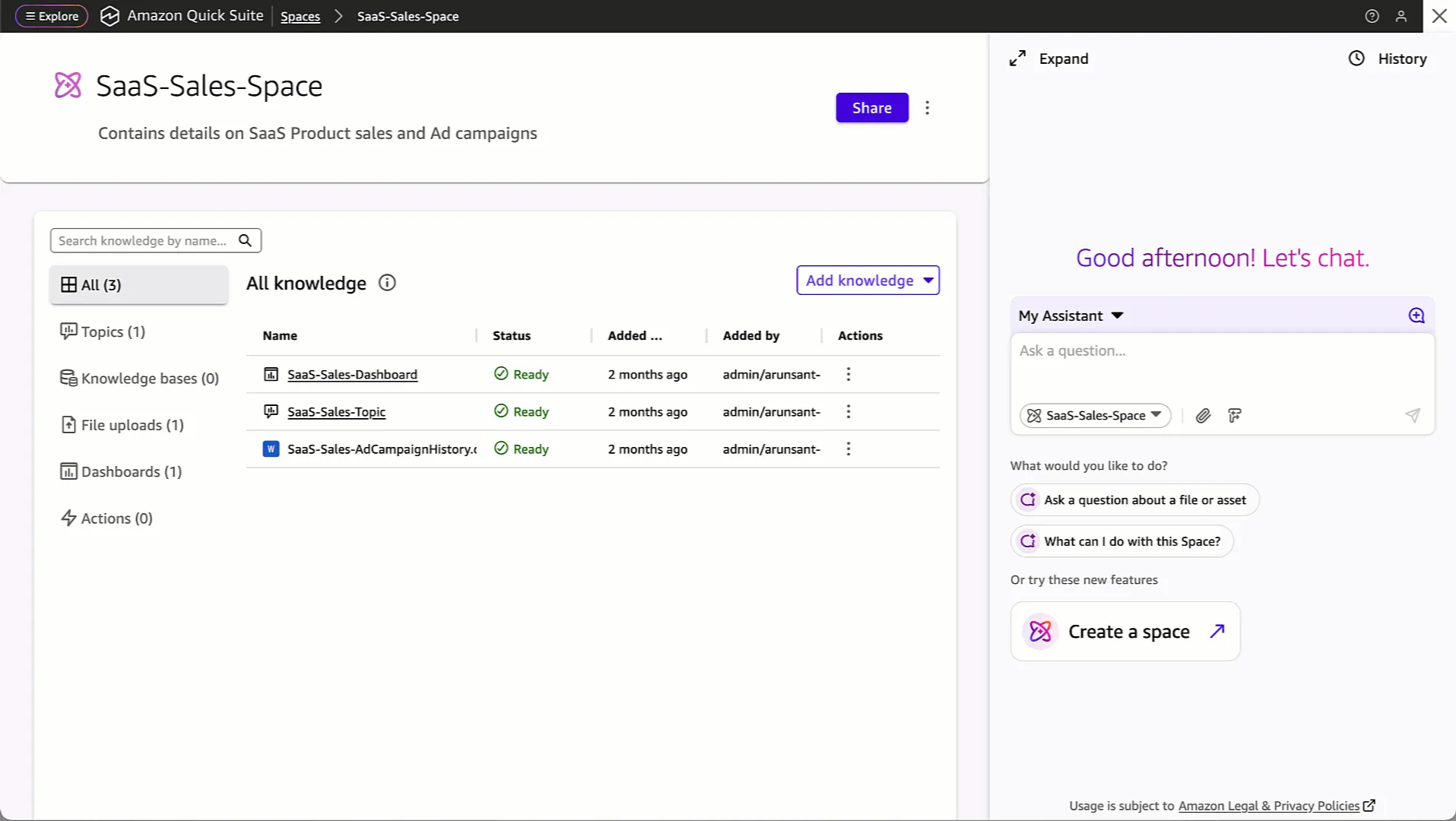
Interface Preview
Amazon QuickSight
Sisense
Feature Comparison
| Feature | Amazon QuickSight | Sisense |
|---|---|---|
| Embedding | ||
| White-labelling for external customers | Partial support | Full support |
| Developer SDK for embedding | Partial support | Full support |
| Multi-tenant customer deployments | Partial support | Full support |
| Own in-memory analytical engine | Full support | Full support |
| Commercial | ||
| Per-session pricing for readers | Full support | Not verified |
| Cost scales with use rather than headcount | Full support | Partial support |
| Native cloud integration | Full support | Partial support |
| Predictable capacity pricing | Partial support | Full support |
| Operations | ||
| Run in your own infrastructure | Not verified | Full support |
| Enterprise access control | Full support | Full support |
| Alerting on data changes | Full support | Full support |
| Natural language querying | Full support | Partial support |
| Platform | ||
| Warehouse connectivity | Full support | Full support |
| Scheduled distribution | Full support | Full support |
| Row-level security | Full support | Full support |
| REST API for automation | Full support | Full support |
Embedding
White-labelling for external customers
Developer SDK for embedding
Multi-tenant customer deployments
Own in-memory analytical engine
Commercial
Per-session pricing for readers
Cost scales with use rather than headcount
Native cloud integration
Predictable capacity pricing
Operations
Run in your own infrastructure
Enterprise access control
Alerting on data changes
Natural language querying
Platform
Warehouse connectivity
Scheduled distribution
Row-level security
REST API for automation
Which to choose
QuickSight and Sisense are both capable of embedding analytics and are bought for different audiences. QuickSight is AWS-native BI priced per session, which suits a wide internal readership. Sisense is built around embedding: an in-memory engine, a developer SDK, white-labelling and multi-tenant management for analytics that ship inside a product.
Best-fit scenarios
Choose Amazon QuickSight if:
Choose Amazon QuickSight when the audience is internal and the organisation is on AWS. Per-session pricing makes a wide occasional readership affordable, IAM handles access with the model you already run, and integration with S3, Redshift and Athena removes configuration work.
Choose Sisense if:
Choose Sisense when analytics are part of your product. White-labelling means the result looks like your application rather than a vendor's, multi-tenant management handles customer isolation, the engine keeps many concurrent viewers responsive, and self-managed deployment covers residency requirements.
These scenarios reflect the available product evidence. Your requirements, existing stack, and team expertise should guide the final decision.
Frequently Asked Questions
What breaks when an internal tool is used for customers?
White-labelling limits first, because the analytics look like the vendor's product rather than yours. Then tenant isolation, which has to survive a customer's security review rather than merely work. Then pricing, when the viewer count becomes your customer count. All three surface after the integration is built, which is what makes the mistake expensive.
When does per-session pricing win?
When the audience is wide and shallow: many people who look at a dashboard occasionally rather than daily. Per-seat pricing charges for all of them regardless; per-session charges for the ones who show up. It stops winning when a large audience uses the platform constantly, at which point sessions accumulate and a capacity model may be cheaper. Model your own pattern rather than the rate card.
Where do metric definitions live in each?
QuickSight defines calculated fields on datasets, reusable across the analyses built from them, and nothing stops a second dataset from defining the same measure differently — which is how revenue ends up computed three ways across forty dashboards. Sisense centres the ElastiCube: measures defined there are reused by every dashboard and embedded view built on it, which is real discipline provided the model is the shared one rather than one of several. In both cases the durable answer is to define reported measures once in the warehouse with dbt, and treat the BI layer as a consumer.
Does it query the warehouse, or a copy?
Both usually query a copy, which is unusual and worth noticing. QuickSight's SPICE loads data into memory on a schedule so dashboards stay fast and Redshift or Athena is not queried on every filter change; direct query is available when freshness wins. Sisense's ElastiCube does the same job for a customer-facing audience, keeping interaction responsive while warehouse spend stays flat. The shared consequence is a refresh schedule somebody owns and a window in which the dashboard and the source can disagree. Plan for that window rather than discovering it.
How does licensing behave as the audience grows?
QuickSight's per-session reader pricing is built for breadth inside a company: a thousand people who each look twice a month cost far less than a thousand named seats. Sisense's embedded licensing is built for an audience outside it, negotiated around capacity and tenancy because the customer count is not yours to control. Both handle growth well for the audience they target and badly for the other one. Settle who the readers are, then price that population — the models are not comparable in the abstract.
How should we evaluate them?
Build the same two things on both: the dashboard your executives read every Monday, and the open-ended question an analyst raised last quarter. The first tests modelling, refresh, delivery and governance; the second tests exploration. Most teams find one platform suited to each, which turns an abstract comparison into a decision about which half of the work matters more.