Decision comparison
Sisense vs Tableau
Choose Sisense when the primary deliverable is embedded, white-label analytics inside a product and developers need Compose SDK, Embed SDK, extensive connectors, and AI-assisted creation. Choose Tableau when analyst-led interactive visualization, governed enterprise distribution, Slack workflows, and the choice between Tableau Cloud and Tableau Server are central requirements.
Direct comparison. These are reviewed substitutes bought for the same job, so the differences below are the ones that decide between them.
All 2 are BI platforms.
Quick Comparison
| Decision factor | Sisense | Tableau |
|---|---|---|
| Best For | Product teams embedding white-label analytics and developers building composable, AI-assisted data experiences within customer-facing applications. | Business analysts creating interactive visual dashboards across governed cloud or self-hosted deployments, including enterprise workflows and Slack-based decision making. |
| Architecture | Cloud analytics platform using Single Stack and In-Chip technologies, API-first composability, Compose SDK, Embed SDK, and 400-plus connectors. | Tableau Cloud provides hosted analytics; Tableau Server is self-hosted; Tableau Next adds agentic analytics, Data 360, semantic modeling, and APIs. |
| Pricing Model | Sisense publishes no prices. Its pricing URL resolves to a plans page offering SELF-SERVE, for startups and growing teams embedding analytics, and ENTERPRISE, for regulated industries needing HIPAA-ready compliance and control. Both are quote-only. | Tableau Cloud Standard Edition: Viewer $15/user/month, Explorer $42/user/month, Creator $75/user/month; Enterprise Edition: Viewer $35/user/month, Explorer $70/user/month, Creator $115/user/month; Tableau+ Bundle requires contact sales for pricing details. |
| Ease of Use | AI Assistant enables natural-language analytics and users cite ease of use, though feedback also identifies field-name and stability issues. | Drag-and-drop visualization is a reported strength, while calculated fields, data cleaning, and onboarding new users can require additional expertise. |
| Scalability | Secure cloud architecture supports large, disparate datasets, embedded delivery, row-level security, on-premises connectivity, and scalable analytics applications. | Cloud and self-hosted deployment choices support secure sharing and enterprise analytics, with semantic-layer, Data 360, and permission-aware Slack integration. |
| Community/Support | Community support and basic embedding support are included on Launch; users praise customer support but also report technical-support concerns. | User feedback rates Tableau 8.4/10 across 2,320 reviews; its REST API Python library has 714 GitHub stars and an MIT license. |
Sisense
- Best For:
- Product teams embedding white-label analytics and developers building composable, AI-assisted data experiences within customer-facing applications.
- Architecture:
- Cloud analytics platform using Single Stack and In-Chip technologies, API-first composability, Compose SDK, Embed SDK, and 400-plus connectors.
- Pricing Model:
- Sisense publishes no prices. Its pricing URL resolves to a plans page offering SELF-SERVE, for startups and growing teams embedding analytics, and ENTERPRISE, for regulated industries needing HIPAA-ready compliance and control. Both are quote-only.
- Ease of Use:
- AI Assistant enables natural-language analytics and users cite ease of use, though feedback also identifies field-name and stability issues.
- Scalability:
- Secure cloud architecture supports large, disparate datasets, embedded delivery, row-level security, on-premises connectivity, and scalable analytics applications.
- Community/Support:
- Community support and basic embedding support are included on Launch; users praise customer support but also report technical-support concerns.
Tableau
- Best For:
- Business analysts creating interactive visual dashboards across governed cloud or self-hosted deployments, including enterprise workflows and Slack-based decision making.
- Architecture:
- Tableau Cloud provides hosted analytics; Tableau Server is self-hosted; Tableau Next adds agentic analytics, Data 360, semantic modeling, and APIs.
- Pricing Model:
- Tableau Cloud Standard Edition: Viewer $15/user/month, Explorer $42/user/month, Creator $75/user/month; Enterprise Edition: Viewer $35/user/month, Explorer $70/user/month, Creator $115/user/month; Tableau+ Bundle requires contact sales for pricing details.
- Ease of Use:
- Drag-and-drop visualization is a reported strength, while calculated fields, data cleaning, and onboarding new users can require additional expertise.
- Scalability:
- Cloud and self-hosted deployment choices support secure sharing and enterprise analytics, with semantic-layer, Data 360, and permission-aware Slack integration.
- Community/Support:
- User feedback rates Tableau 8.4/10 across 2,320 reviews; its REST API Python library has 714 GitHub stars and an MIT license.
Public signals
Verified factual signals only. Bars appear only for like-for-like metrics with five weekly assessments for every tool; missing evidence stays explicit. These signals do not establish enterprise adoption, product quality, or total cost.
| Metric | Sisense | Tableau |
|---|---|---|
| GitHub commits, 90d(Developer adoption) | 9 | 37 |
| GitHub stars(Developer adoption) | 38 | 716 |
| Search interest(Market interest) | 0 | 85 |
| Hacker News mentions, 90d(Community interest) | 0 | 2 |
| npm weekly downloads(Developer adoption) | 2.1k | 32.2k |
| Product Hunt comments(Community interest) | 2 | 3 |
| Product Hunt rating(Community interest) | Unavailable | 4.2/5 |
| Product Hunt reviews(Community interest) | 0 | 5 |
| Product Hunt votes(Community interest) | 130 | 7 |
| PyPI weekly downloads(Developer adoption) | 202 | 965.7k |
| Stack Overflow questions(Community interest) | 30 | 5.4k |
As of September 21, 2026 — updated weekly.
Health & risk evidence
Observed public-source checks for mapped package versions and repositories.
Sisense
September 21, 2026Package vulnerabilities
npm · @sisense/sdk-ui@2.36.0 · PyPI · pysisense@2.1.0
0 vulnerabilities
across 2 packages
Repository security score
Not available
Tableau
September 21, 2026Package vulnerabilities
npm · @tableau/embedding-api@3.16.1 · PyPI · tableauserverclient@0.41
0 vulnerabilities
across 2 packages
Repository security score
github.com/tableau/server-client-python
5.5/10
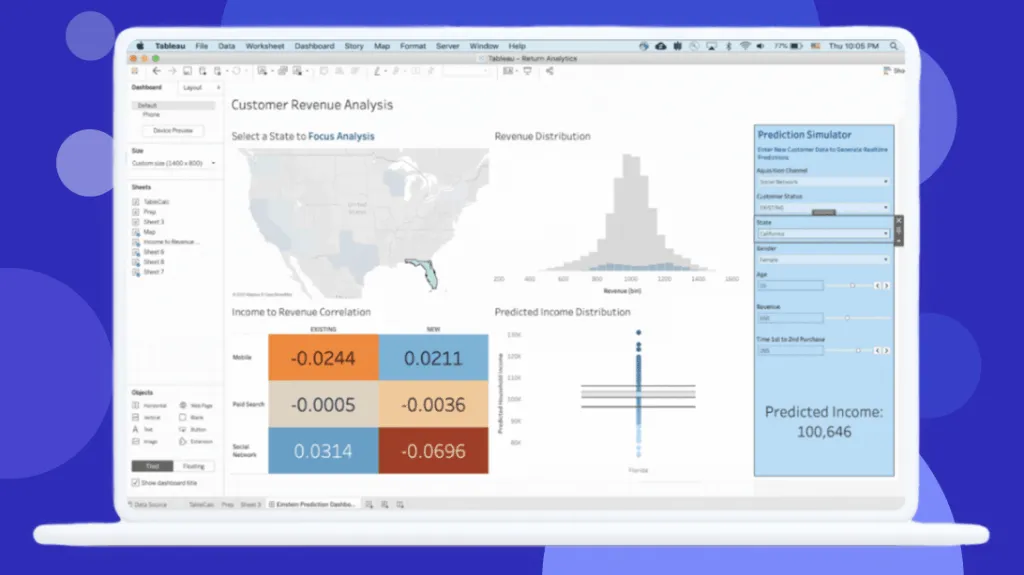
Interface Preview
Sisense
Tableau
Feature Comparison
| Feature | Sisense | Tableau |
|---|---|---|
| Embedded and Composable Analytics | ||
| Embedded analytics delivery | Embeds dashboards and widgets through iFrames or Embed SDK. | Shares visual analytics through Tableau Cloud or self-hosted Tableau Server. |
| Developer extensibility | API-first platform with Compose SDK for reusable analytics experiences. | API-first architecture supported by a Python Tableau Server REST API library. |
| Product-oriented analytics | Compose SDK supports white-label self-service analytics within products. | Built-in enterprise workflows turn governed insights into business actions. |
| AI and Assisted Analytics | ||
| Natural-language assistance | Assistant builds analytics from natural-language requests for creators. | Tableau Next uses agentic analytics to fuel insights and action. |
| AI capability suite | Sisense Intelligence provides AI features for application creators and developers. | Tableau+ includes Tableau Next and agentic analytics capabilities. |
| AI data modeling | AI-powered tools assist data modeling, visualization, and embedded experiences. | Semantic layer supports AI-assisted model creation over trusted data. |
| Data Connectivity and Preparation | ||
| Data source connectivity | Provides over 400 connectors and modeling for any source. | Connects data for cloud visual analytics and secure sharing. |
| Data modeling and blending | Models and blends disparate data without specialized engineering teams. | Uses a semantic layer for governed, AI-assisted data models. |
| On-premises data access | Launch plan connects to on-premises data through SSH. | Tableau Server enables self-hosted analytics deployment and data control. |
| Governance and Security | ||
| Row-level security | Launch includes Row Level Data Security for embedded access control. | Permission-aware analytics integrate with Slack for controlled insight delivery. |
| Security certifications | Architecture holds SOC 2 Type II, ISO 27001, and ISO 27701 certifications. | Secure sharing is provided through hosted Tableau Cloud or controlled Tableau Server. |
| Deployment control | Cloud deployment emphasizes collaboration and maintenance-free platform operations. | Choose fully hosted Tableau Cloud or self-hosted Tableau Server control. |
| Visualization and Consumption | ||
| Dashboard authoring | Dashboard and widget designer combines with AI-powered creation assistance. | Interactive visual analytics support dashboard creation and data exploration. |
| Business-user interaction | Natural-language Assistant accelerates building and refining analytics experiences. | Drag-and-drop workflows are a reported strength for visual analysis. |
| Collaboration and action | Cloud environment supports collaboration around modeled and embedded analytics. | Slack integration delivers permission-aware analytics and actionable enterprise workflows. |
Embedded and Composable Analytics
Embedded analytics delivery
Developer extensibility
Product-oriented analytics
AI and Assisted Analytics
Natural-language assistance
AI capability suite
AI data modeling
Data Connectivity and Preparation
Data source connectivity
Data modeling and blending
On-premises data access
Governance and Security
Row-level security
Security certifications
Deployment control
Visualization and Consumption
Dashboard authoring
Business-user interaction
Collaboration and action
Which to choose
Choose Sisense when the primary deliverable is embedded, white-label analytics inside a product and developers need Compose SDK, Embed SDK, extensive connectors, and AI-assisted creation. Choose Tableau when analyst-led interactive visualization, governed enterprise distribution, Slack workflows, and the choice between Tableau Cloud and Tableau Server are central requirements.
Best-fit scenarios
Choose Sisense if:
Choose Sisense for SaaS or internal-product teams that need to model disparate data, embed dashboards or widgets, deliver white-label analytics, and build reusable experiences through an API-first SDK approach.
Choose Tableau if:
Choose Tableau for organizations prioritizing interactive dashboarding for analysts, secure enterprise sharing, agentic analytics through Tableau Next, Slack-integrated insight delivery, or self-hosted deployment control.
These scenarios reflect the available product evidence. Your requirements, existing stack, and team expertise should guide the final decision.
Frequently Asked Questions
What is the main difference between Sisense and Tableau?
Sisense is particularly oriented toward developers and product teams delivering embedded analytics. Its platform combines In-Chip and Single Stack technologies with more than 400 connectors, natural-language Assistant capabilities, and Compose SDK or Embed SDK options for white-label experiences. Tableau is centered on interactive visual analytics for business users and analysts, with Tableau Cloud for managed hosting, Tableau Server for self-hosting, and Tableau Next capabilities such as agentic analytics, Data 360, semantic modeling, and permission-aware Slack integration.
Which is better for small teams?
The better fit depends on the team’s operating model. Sisense Launch costs $399 per month and includes 20GB storage, 20K credits, two designer seats, and 50 viewer seats, which can suit a small product team distributing embedded dashboards to many viewers. Tableau Standard starts at $15 per Viewer per user per month, $42 per Explorer, and $75 per Creator, billed annually, which can be attractive for a small analyst team with a limited number of named users. Both provide a free trial.
Can I migrate from Sisense to Tableau?
Yes, but it should be treated as a rebuild and validation project rather than a direct dashboard-file conversion. Inventory Sisense data sources, data models, blends, row-level security rules, dashboards, widgets, embedded iFrame or SDK integrations, and calculated logic. Recreate governed models and visualizations in Tableau Cloud or Tableau Server, map access controls, then validate metrics side by side. Embedded product experiences require additional engineering because Sisense Compose SDK and Embed SDK integrations must be replaced with Tableau-compatible delivery patterns.
What are the pricing differences?
Sisense publishes a seven-day trial, then a Launch plan at $399 per month with 20GB storage, 20K credits, two designer seats, and 50 viewer seats. Its Grow plan is $1,299 per month; other commercial tiers may require a sales discussion. Tableau prices named licenses per user per month, billed annually: Standard Edition is $15 Viewer, $42 Explorer, and $75 Creator; Enterprise Edition is $35 Viewer, $70 Explorer, and $115 Creator. Tableau+ pricing requires contacting sales.