Decision comparison
Looker vs Sisense
Looker and Sisense are both enterprise-grade BI platforms with strong embedded analytics capabilities, but they target different buyer profiles and solve different problems. Looker is the governed analytics powerhouse, built for organizations that want a single source of truth through LookML semantic modeling with tight Google Cloud integration. Sisense is the embedded analytics specialist, designed for product teams that need to ship white-label, AI-powered data experiences inside their own applications. The choice between them depends on whether your priority is centralized data governance and internal BI or customer-facing embedded analytics with rapid time to value.
Direct comparison. These are reviewed substitutes bought for the same job, so the differences below are the ones that decide between them.
All 2 are BI platforms.
Quick Comparison
| Decision factor | Looker | Sisense |
|---|---|---|
| Primary Focus | Governed BI with semantic modeling via LookML and direct warehouse queries | Embedded analytics for product teams with AI-powered data experiences |
| Architecture | Direct-query against warehouses with no data storage; always-fresh results via SQL generation | In-Chip technology with optional ElastiCube caching or live warehouse connections |
| Embedding Approach | Robust embedding APIs, SDKs, and white-labeling options with deep Google Cloud integration | Compose SDK, Embed SDK, and iFrame options with full white-labeling and multi-tenant support |
| AI Capabilities | Conversational Analytics powered by Gemini for natural language data exploration | Sisense Intelligence suite with assistant for natural language queries, forecast, and trend analysis |
| Pricing Model | Looker (Google Cloud core) publishes no platform or per-user price. It offers three platform editions — Standard for organisations under 50 users, Enterprise, and Embed — each including one production instance, 10 Standard Users and 2 Developer Users, and each requiring a custom quote. Data-token overages beyond an instance's monthly allocation are published, at $3.00 per 1M input tokens and $20.00 per 1M output tokens. | Sisense publishes no prices. Its pricing URL resolves to a plans page offering SELF-SERVE, for startups and growing teams embedding analytics, and ENTERPRISE, for regulated industries needing HIPAA-ready compliance and control. Both are quote-only. |
| Best For | Enterprise data teams needing centralized metrics governance and Google Cloud-native BI | SaaS companies embedding analytics into customer-facing products |
Looker
- Primary Focus:
- Governed BI with semantic modeling via LookML and direct warehouse queries
- Architecture:
- Direct-query against warehouses with no data storage; always-fresh results via SQL generation
- Embedding Approach:
- Robust embedding APIs, SDKs, and white-labeling options with deep Google Cloud integration
- AI Capabilities:
- Conversational Analytics powered by Gemini for natural language data exploration
- Pricing Model:
- Looker (Google Cloud core) publishes no platform or per-user price. It offers three platform editions — Standard for organisations under 50 users, Enterprise, and Embed — each including one production instance, 10 Standard Users and 2 Developer Users, and each requiring a custom quote. Data-token overages beyond an instance's monthly allocation are published, at $3.00 per 1M input tokens and $20.00 per 1M output tokens.
- Best For:
- Enterprise data teams needing centralized metrics governance and Google Cloud-native BI
Sisense
- Primary Focus:
- Embedded analytics for product teams with AI-powered data experiences
- Architecture:
- In-Chip technology with optional ElastiCube caching or live warehouse connections
- Embedding Approach:
- Compose SDK, Embed SDK, and iFrame options with full white-labeling and multi-tenant support
- AI Capabilities:
- Sisense Intelligence suite with assistant for natural language queries, forecast, and trend analysis
- Pricing Model:
- Sisense publishes no prices. Its pricing URL resolves to a plans page offering SELF-SERVE, for startups and growing teams embedding analytics, and ENTERPRISE, for regulated industries needing HIPAA-ready compliance and control. Both are quote-only.
- Best For:
- SaaS companies embedding analytics into customer-facing products
Public signals
Verified factual signals only. Bars appear only for like-for-like metrics with five weekly assessments for every tool; missing evidence stays explicit. These signals do not establish enterprise adoption, product quality, or total cost.
| Metric | Looker | Sisense |
|---|---|---|
| Search interest(Market interest) | 2 | 0 |
| Hacker News mentions, 90d(Community interest) | 2 | 0 |
| npm weekly downloads(Developer adoption) | 104.6k | 2.1k |
| Product Hunt comments(Community interest) | 5 | 2 |
| Product Hunt reviews(Community interest) | 0 | 0 |
| Product Hunt votes(Community interest) | 83 | 130 |
| PyPI weekly downloads(Developer adoption) | 2.0M | 202 |
| Stack Overflow questions(Community interest) | 226 | 30 |
| GitHub commits, 90d(Developer adoption) | Not available | 9 |
| GitHub stars(Developer adoption) | Not available | 38 |
As of September 21, 2026 — updated weekly.
Health & risk evidence
Observed public-source checks for mapped package versions and repositories.
Looker
September 21, 2026Package vulnerabilities
npm · @looker/sdk@26.12.0 · PyPI · looker-sdk@26.12.0
0 vulnerabilities
across 2 packages
Repository security score
Not available
Sisense
September 21, 2026Package vulnerabilities
npm · @sisense/sdk-ui@2.36.0 · PyPI · pysisense@2.1.0
0 vulnerabilities
across 2 packages
Repository security score
Not available
Interface Preview
Looker
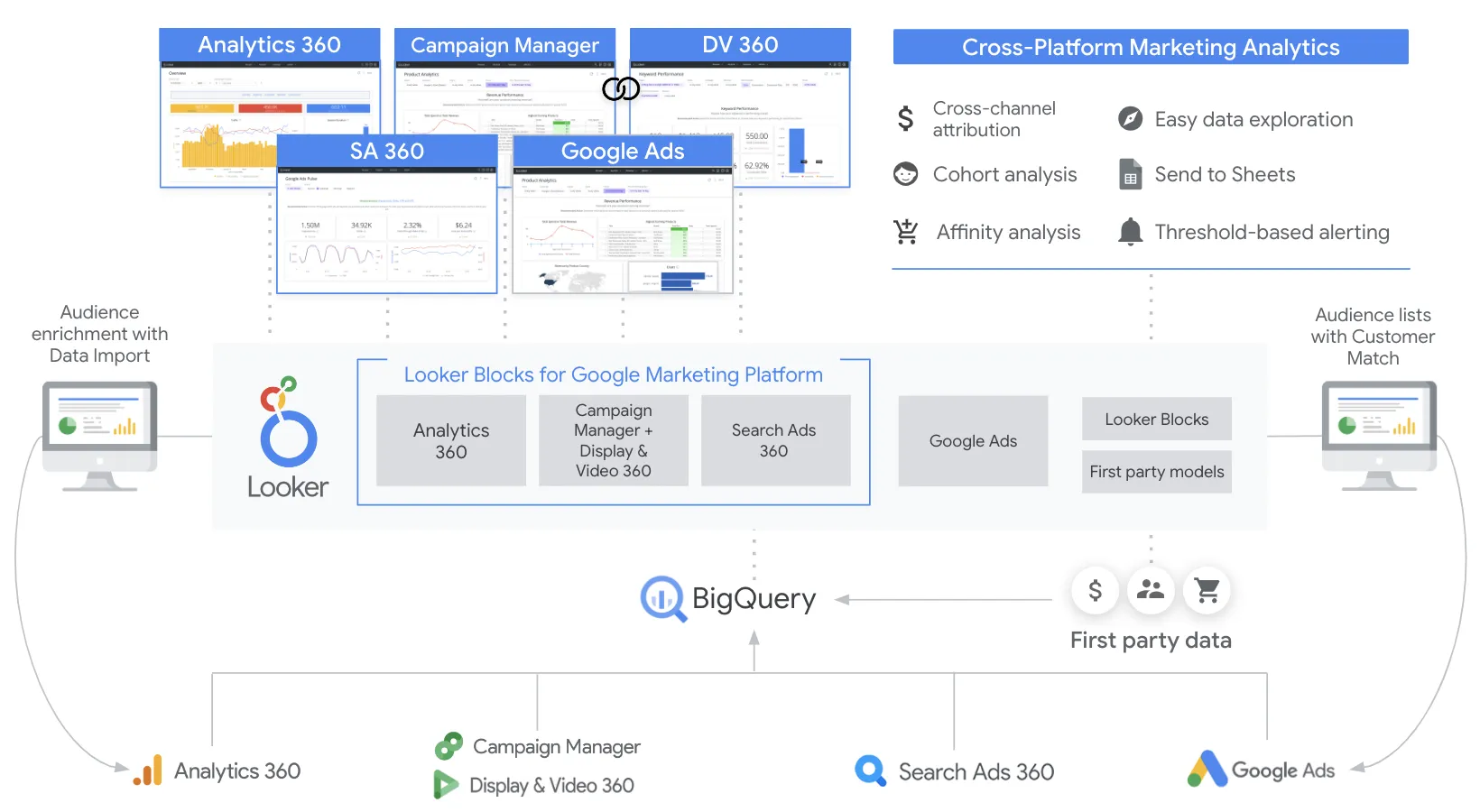
Sisense
Feature Comparison
| Feature | Looker | Sisense |
|---|---|---|
| Data Modeling & Governance | ||
| Semantic Layer | LookML-based semantic modeling with version-controlled, reusable metrics and Git integration | Data modeling and blending without specialized engineering; AI enrichment features for faster setup |
| Access Control | Row-level and column-level security with enterprise audit features and Google Cloud IAM SSO | Row-level data security with SOC 2 Type II, ISO 27001, and ISO 27701 certifications |
| Version Control | Built-in Git integration for LookML models with full version history and branching | No native version control for data models; changes managed through environment promotion |
| Visualization & Self-Service | ||
| Dashboard Builder | Enterprise dashboards with real-time governed data, drill-down to row-level detail, and Looker Studio for ad hoc reports | Drag-and-drop dashboard designer with widgets, filters, and interactive drill-down capabilities |
| Self-Service Exploration | Explores let business users query governed data models without writing SQL | No-code analytics interface with AI assistant for natural language data exploration |
| Data Connectivity | Direct query against major cloud warehouses including BigQuery, Snowflake, and Redshift | Over 400 connectors spanning databases, cloud services, APIs, and file-based sources |
| Embedded Analytics | ||
| Embedding Options | SSO embed, public embed, and API-driven embedding with full Looker functionality exposed | Compose SDK for component-level embedding, Embed SDK for dashboards, and iFrame for simple integration |
| White-Labeling | Full white-labeling available for embedded deployments within SaaS products | Complete white-labeling with multi-tenant support available from the Grow tier onward |
| API Coverage | Comprehensive REST APIs and SDKs covering content management, user provisioning, and scheduling | API-first architecture with REST APIs, Compose SDK, and MCP server connectivity |
| AI & Advanced Analytics | ||
| Natural Language Interface | Conversational Analytics powered by Gemini for chat-with-your-data across governed models | Assistant feature for building analytics and querying data using natural language |
| Predictive Analytics | Vertex AI integration through Looker extensions for custom AI workflows | Built-in forecast and trend features for anticipating patterns and surfacing anomalies |
| AI-Powered Insights | Gemini-powered analysis with governed data ensuring consistent, trustworthy AI results | Sisense Intelligence suite with narrative summaries that turn complex data into clear explanations |
| Deployment & Scalability | ||
| Cloud Deployment | Fully managed on Google Cloud with SSO via IAM, private networking, and BigQuery integration | Cloud-native with seamless collaboration, auto-scaling on Scale tier, and multi-region support |
| Multi-Tenant Support | Multi-tenancy achievable through row-level security and parameterized data models | Native multi-tenant support on the Scale tier with tenant isolation and custom viewers |
| Free Trial | Free trial available through Google Cloud; proof of concept program offered | 7-day free trial with guided sample data or bring-your-own-data option |
Data Modeling & Governance
Semantic Layer
Access Control
Version Control
Visualization & Self-Service
Dashboard Builder
Self-Service Exploration
Data Connectivity
Embedded Analytics
Embedding Options
White-Labeling
API Coverage
AI & Advanced Analytics
Natural Language Interface
Predictive Analytics
AI-Powered Insights
Deployment & Scalability
Cloud Deployment
Multi-Tenant Support
Free Trial
Which to choose
Looker and Sisense are both enterprise-grade BI platforms with strong embedded analytics capabilities, but they target different buyer profiles and solve different problems. Looker is the governed analytics powerhouse, built for organizations that want a single source of truth through LookML semantic modeling with tight Google Cloud integration. Sisense is the embedded analytics specialist, designed for product teams that need to ship white-label, AI-powered data experiences inside their own applications. The choice between them depends on whether your priority is centralized data governance and internal BI or customer-facing embedded analytics with rapid time to value.
Best-fit scenarios
Choose Looker if:
Choose Looker if your organization needs a governed semantic layer that ensures every team works from the same trusted metrics. Looker is the stronger platform for enterprises already invested in Google Cloud, teams that rely on version-controlled data modeling through LookML, and organizations where data governance, audit trails, and centralized business logic are non-negotiable. Its direct-query architecture means results are always fresh without maintaining a separate data cache. Recognized as a Leader in the 2025 Gartner Magic Quadrant for Analytics and Business Intelligence Platforms, Looker delivers the most value when a dedicated data team can build and maintain LookML models that the rest of the organization consumes.
Choose Sisense if:
Choose Sisense if your primary goal is embedding analytics directly into a customer-facing product. Sisense offers more flexible embedding options through its Compose SDK, which lets developers build component-level analytics experiences rather than simply dropping in full dashboards. The platform's self-serve pricing tiers starting at $399/mo with a 7-day free trial make it easier to evaluate without a lengthy sales process. Sisense Intelligence adds AI capabilities like natural language queries, forecast, and narrative summaries that enhance the end-user experience. SaaS companies, ISVs, and product teams that need to ship analytics as a feature rather than run an internal BI program will find Sisense a quick path to production.
These scenarios reflect the available product evidence. Your requirements, existing stack, and team expertise should guide the final decision.
Frequently Asked Questions
What is the main difference between Looker and Sisense?
Looker is a semantic modeling and governed BI platform that uses LookML to define centralized business logic, with direct queries running against your data warehouse for always-fresh results. Sisense is an embedded analytics platform built for product teams, offering In-Chip technology for performance, Compose SDK for flexible embedding, and AI features for end-user self-service. Looker prioritizes data governance and a single source of truth, while Sisense prioritizes embedding speed and customer-facing analytics experiences.
How does pricing compare between Looker and Sisense?
Looker uses annual commitment pricing with custom quotes through sales, incorporating usage-based and per-seat components. Sisense publishes tiered pricing starting at $399/mo for Launch, $1,299/mo for Grow, and custom pricing for Scale. Sisense also offers a 7-day free trial. Third-party data suggests Sisense median contracts run around $53,821/year, while Looker contracts typically start around $60,000/year. Both platforms see costs increase with user count, data volume, and advanced feature requirements.
Which platform has better embedded analytics capabilities?
Both platforms offer strong embedded analytics, but they approach it differently. Sisense is purpose-built for embedding with its Compose SDK enabling component-level analytics, full white-labeling, and native multi-tenant support. Looker provides robust embedding through SSO embed, APIs, and SDKs that expose full Looker functionality within external applications. Sisense gives product developers more granular control over the embedded experience, while Looker ensures embedded analytics inherit the same governance and security rules as internal dashboards.
Can Looker and Sisense connect to the same data sources?
Both platforms connect to major cloud data warehouses like Snowflake, BigQuery, and Amazon Redshift. Looker uses a direct-query model that generates optimized SQL against your warehouse, so it does not store data locally. Sisense offers over 400 connectors and can either query live or cache data using its ElastiCube engine. Sisense provides broader out-of-the-box connector coverage, while Looker's direct-query approach ensures data is always current without requiring a separate caching layer.
Which platform is easier to learn for non-technical users?
Sisense generally offers a lower barrier to entry for non-technical users with its drag-and-drop dashboard designer and AI assistant for natural language queries. Looker's Explores provide guided self-service exploration, but building data models requires learning LookML, which has a steeper learning curve. User reviews consistently note that Looker is easy to use for end users consuming dashboards but takes time to learn for model builders. Sisense's no-code interface lets business users build dashboards without developer involvement.