Decision comparison
Alation vs Great Expectations
Alation and Great Expectations serve fundamentally different purposes in the data ecosystem. Alation is an enterprise data intelligence platform that provides data cataloging, governance, lineage, and AI-powered discovery to help organizations find, understand, and trust their data assets. Great Expectations is an open-source data validation framework that lets data engineers write explicit, codified quality checks and run them inside data pipelines. These tools overlap only in the broad category of data quality. In practice, Alation governs and catalogs data at the organizational level while Great Expectations validates data at the pipeline level. Many enterprises benefit from using both.
Used together. These are normally used together rather than chosen between. The comparison explains what each one does in the stack.
These are different kinds of product — Data Catalog and Data Validation Framework.
Quick Comparison
| Decision factor | Alation | Great Expectations |
|---|---|---|
| Best For | Enterprises needing a unified data catalog, governance, and AI-powered data intelligence platform | Data engineers who want code-first, explicit data validation embedded in their pipelines |
| Pricing Model | Alation publishes no pricing. alation.com/pricing resolves to a contact form, and no plan or edition names are published either, so every figure is set in a quote. | Free and Open-Source, Paid upgrades available |
| Core Approach | Data cataloging, metadata management, governance, and agentic AI workflows for data intelligence | Expectation-based data validation with codified rules, auto-generated documentation, and pipeline integration |
| Deployment | SaaS (Alation Cloud Service) or customer-managed on-premises | Self-hosted (GX Core) or SaaS (GX Cloud) |
| Learning Curve | Moderate — intuitive search interface for consumers, stewardship workflows require training | Steeper — requires Python proficiency and manual expectation definition |
| Open Source | No — proprietary commercial platform | Yes — Apache-2.0 license with 11,000+ GitHub stars |
Alation
- Best For:
- Enterprises needing a unified data catalog, governance, and AI-powered data intelligence platform
- Pricing Model:
- Alation publishes no pricing. alation.com/pricing resolves to a contact form, and no plan or edition names are published either, so every figure is set in a quote.
- Core Approach:
- Data cataloging, metadata management, governance, and agentic AI workflows for data intelligence
- Deployment:
- SaaS (Alation Cloud Service) or customer-managed on-premises
- Learning Curve:
- Moderate — intuitive search interface for consumers, stewardship workflows require training
- Open Source:
- No — proprietary commercial platform
Great Expectations
- Best For:
- Data engineers who want code-first, explicit data validation embedded in their pipelines
- Pricing Model:
- Free and Open-Source, Paid upgrades available
- Core Approach:
- Expectation-based data validation with codified rules, auto-generated documentation, and pipeline integration
- Deployment:
- Self-hosted (GX Core) or SaaS (GX Cloud)
- Learning Curve:
- Steeper — requires Python proficiency and manual expectation definition
- Open Source:
- Yes — Apache-2.0 license with 11,000+ GitHub stars
Public signals
Verified factual signals only. Bars appear only for like-for-like metrics with five weekly assessments for every tool; missing evidence stays explicit. These signals do not establish enterprise adoption, product quality, or total cost.
| Metric | Alation | Great Expectations |
|---|---|---|
| GitHub commits, 90d(Developer adoption) | 2 | Not available |
| GitHub stars(Developer adoption) | 19 | Not available |
| Search interest(Market interest) | Unavailable | 0 |
| Product Hunt comments(Community interest) | 0 | Not available |
| Product Hunt reviews(Community interest) | 0 | Not available |
| Product Hunt votes(Community interest) | 2 | Not available |
| Stack Overflow questions(Community interest) | 12 | 148 |
| GitHub commits, 90d(Product adoption) | Not available | 181 |
| GitHub stars(Product adoption) | Not available | 11,000+ |
| Hacker News mentions, 90d(Community interest) | Not available | 0 |
| PyPI weekly downloads(Product adoption) | Not available | 4.5M |
As of October 12, 2026 — updated weekly.
Health & risk evidence
Observed public-source checks for mapped package versions and repositories.
Alation
Package vulnerabilities
Not available
Repository security score
Not available
Great Expectations
October 12, 2026Package vulnerabilities
PyPI · great-expectations@1.24.0
0 vulnerabilities
across 1 package
Repository security score
Not available
Interface Preview
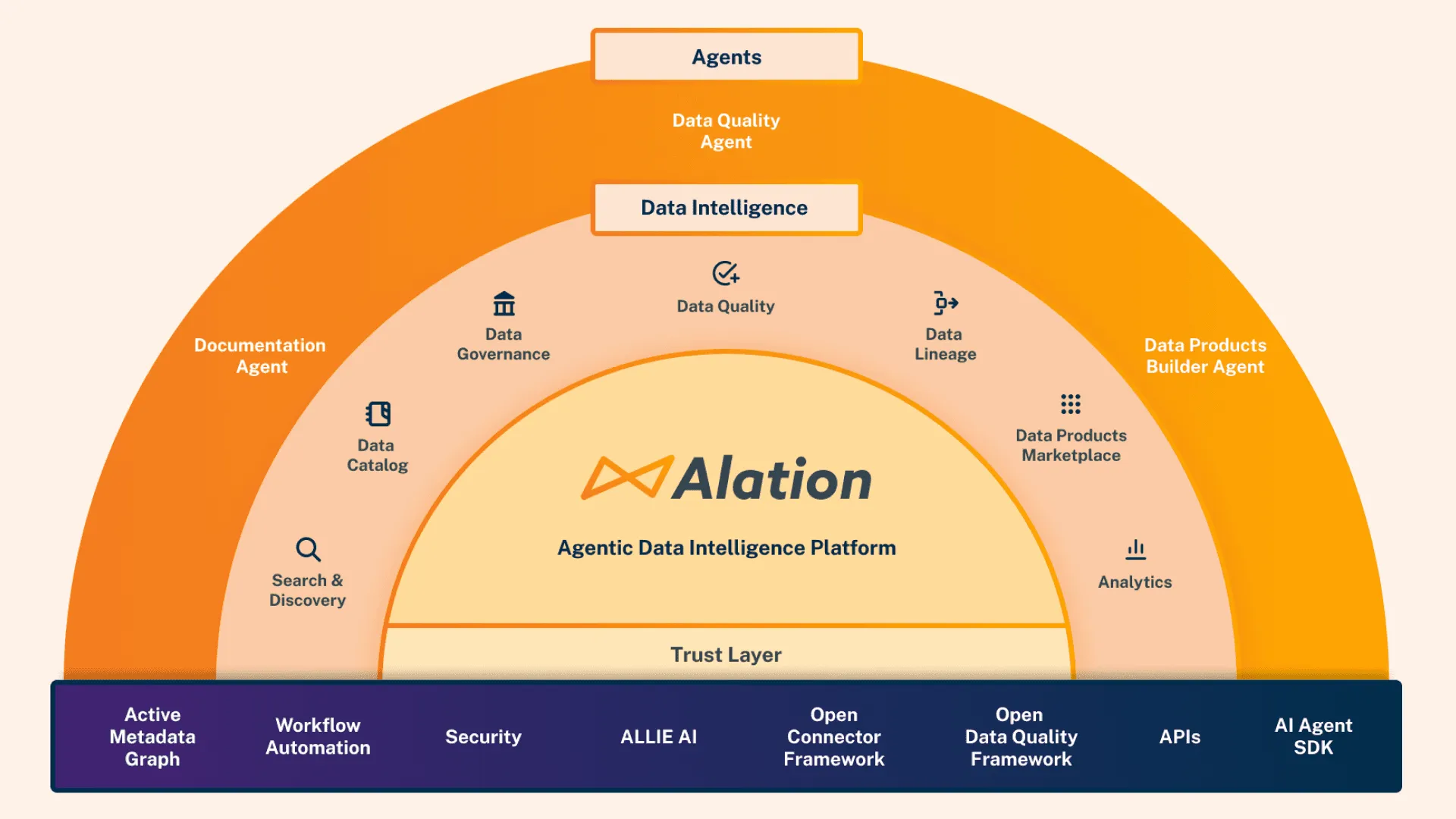
Alation
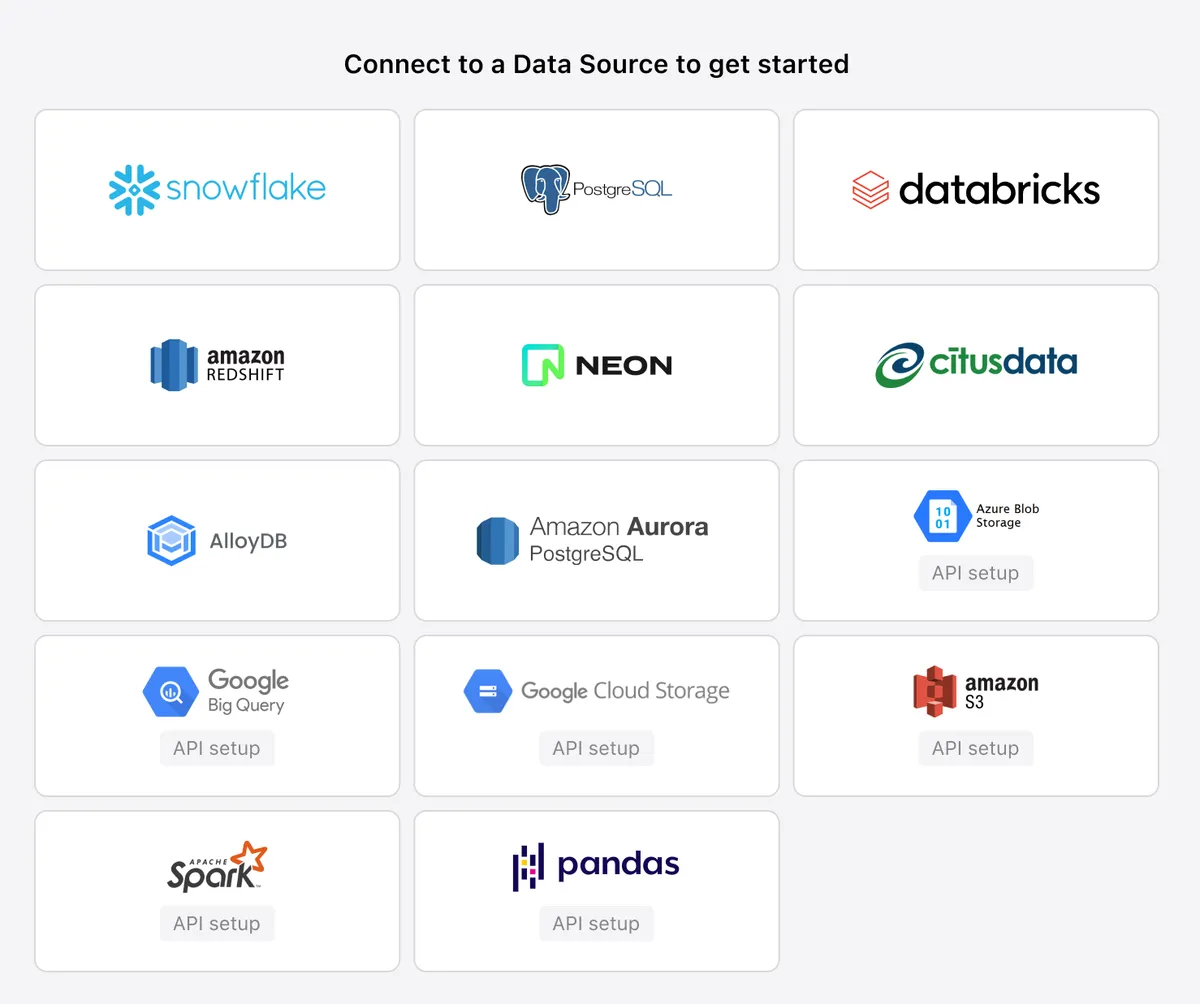
Great Expectations
Feature Comparison
| Feature | Alation | Great Expectations |
|---|---|---|
| Data Discovery & Cataloging | ||
| Data Catalog | Enterprise data catalog with natural-language search, 120+ connectors, and unified metadata discovery | Not a data catalog — focused on data validation only |
| Metadata Management | Active metadata with automated harvesting, business glossary, and AI-powered curation via ALLIE AI | Captures validation metadata and generates Data Docs as auto-generated documentation |
| Data Lineage | End-to-end data lineage from source to report including column-level tracking | No built-in lineage — depends on external catalog or lineage tools |
| Data Quality & Validation | ||
| Data Validation | Integrates with external data quality tools via Open Data Quality Framework; aggregates results into a single view | Core strength — codified Expectation Suites define explicit validation rules across SQL, Pandas, and Spark backends |
| Data Profiling | Behavioral Analysis Engine surfaces usage patterns and trust signals across cataloged assets | Profiling via Expectation Suites with auto-generated Data Docs and validation results |
| Automated Test Generation | Not available — relies on integrated quality tools for data testing | ExpectAI auto-generates test expectations from data patterns |
| Governance & Collaboration | ||
| Data Governance | Centralized governance with automated stewardship, access control, data masking, and approval workflows | No governance features — focused on validation, not policy enforcement |
| Collaboration Tools | Wiki-like articles, endorsements, trust flags, comments, and shared SQL queries via Compose | GX Cloud provides team collaboration; GX Core is individual-developer focused |
| Access Control | Tiered RBAC with Creator, Steward, and Viewer personas plus policy-driven access management | Basic access control via GX Cloud; no built-in RBAC in GX Core |
| Integration & Extensibility | ||
| Data Source Connectors | 120+ pre-built connectors for databases, data lakes, cloud storage, BI systems, and applications | Supports SQL databases, Pandas DataFrames, and Apache Spark as validation backends |
| Pipeline Integration | Integrates with BI tools, Slack, Teams, Excel via Alation Anywhere; API access for custom workflows | Native integration with Airflow, Dagster, and Prefect for in-pipeline validation |
| Extensibility | Open Connector Framework and Open Data Quality Framework for custom integrations | Fully extensible Python framework with custom Expectations, plugins, and community contributions |
| AI & Automation | ||
| AI Capabilities | Agentic AI workflows automate documentation, enforce policies, and enable natural-language querying of data products | ExpectAI for automated test generation; no agentic AI features |
| Natural Language Interface | Natural-language search across the catalog and Chat with Your Data for querying data products | Not verified |
| Automated Documentation | ALLIE AI recommends metadata descriptions and assists with intelligent catalog curation | Data Docs auto-generates human-readable documentation of all validation checks and results |
Data Discovery & Cataloging
Data Catalog
Metadata Management
Data Lineage
Data Quality & Validation
Data Validation
Data Profiling
Automated Test Generation
Governance & Collaboration
Data Governance
Collaboration Tools
Access Control
Integration & Extensibility
Data Source Connectors
Pipeline Integration
Extensibility
AI & Automation
AI Capabilities
Natural Language Interface
Automated Documentation
How they fit together
Alation and Great Expectations serve fundamentally different purposes in the data ecosystem. Alation is an enterprise data intelligence platform that provides data cataloging, governance, lineage, and AI-powered discovery to help organizations find, understand, and trust their data assets. Great Expectations is an open-source data validation framework that lets data engineers write explicit, codified quality checks and run them inside data pipelines. These tools overlap only in the broad category of data quality. In practice, Alation governs and catalogs data at the organizational level while Great Expectations validates data at the pipeline level. Many enterprises benefit from using both.
What each one handles
Use Alation for:
Choose Alation if you are a mid-to-large enterprise that needs a centralized data catalog, metadata management, and governance platform. Alation excels when your organization has data spread across dozens of systems and needs unified discovery, natural-language search, data lineage, policy enforcement, and AI-powered data intelligence. It is the right fit for teams with dedicated data governance budgets and requirements for compliance, stewardship, and cross-team collaboration at scale.
Use Great Expectations for:
Choose Great Expectations if you are a data engineer or data team that needs code-first data validation embedded directly in your pipelines. Great Expectations is the right choice when you want zero-cost entry, full developer control over quality checks, native orchestrator integration with Airflow, Dagster, or Prefect, and auto-generated documentation. It fits teams that value open-source flexibility, Python-native workflows, and no vendor lock-in over enterprise platform features.
These roles reflect the available product evidence. Most teams run both; which one owns a given job depends on your stack and team.
Frequently Asked Questions
Can Alation and Great Expectations be used together?
Yes, and this combination addresses complementary needs. Alation serves as the centralized data catalog and governance layer where teams discover, document, and trust data assets across the organization. Great Expectations handles in-pipeline data validation, running codified quality checks before data moves downstream. Alation can aggregate quality results from Great Expectations through its Open Data Quality Framework, giving teams a single view of catalog metadata alongside validation status. This pairing is common among enterprises that need both broad data intelligence and granular pipeline-level quality control.
Is Great Expectations truly free to use?
Yes. GX Core is fully open source under the Apache-2.0 license and free to download, deploy, and extend with no usage limits or feature restrictions. Great Expectations also offers GX Cloud, a managed platform with a free Developer tier and paid Team and Enterprise tiers for teams that want collaboration features, a hosted UI, and managed infrastructure without self-hosting overhead. The open-source core has over 11,430 GitHub stars and active community support.
How does Alation's pricing compare to Great Expectations?
Alation is an enterprise-priced platform. Alation publishes no prices: base subscription, connectors, governance add-ons, AI modules and professional services are all set in a quote. Great Expectations' GX Core is completely free. GX Cloud offers paid tiers for managed features, but the core validation framework costs nothing. For teams focused solely on data validation, Great Expectations is dramatically more cost-effective.
Which tool is better for data governance?
Alation is the clear choice for data governance. It provides centralized policy management, automated stewardship, data masking, approval workflows, access control, and compliance tracking tied to data lineage. Alation was named a 5X Leader in Gartner's 2025 Magic Quadrant for Metadata Management Solutions, and Forrester recognized its governance capabilities in its 2025 Data Governance Solutions Report. Great Expectations does not provide governance features. It validates data quality through codified checks but does not manage policies, access controls, or compliance workflows.