Decision comparison
Cohere vs OpenAI
Cohere and OpenAI serve overlapping but distinct segments of the enterprise AI market. Cohere is a focused NLP platform with dedicated retrieval infrastructure, published per-model token rates from $0.30/1M, and data privacy controls aimed at regulated enterprises. OpenAI offers the broadest model lineup with the most capable general-purpose LLMs, multimodal capabilities, and a comprehensive agent development platform. The right choice depends on whether your priority is cost-effective, privacy-first NLP pipelines or maximum model capability with a full-featured development ecosystem.
Direct comparison. These are reviewed substitutes bought for the same job, so the differences below are the ones that decide between them.
All 2 are foundation model providers.
Quick Comparison
| Decision factor | Cohere | OpenAI |
|---|---|---|
| Best For | Enterprise teams needing production-grade NLP with data residency controls, fine-tuning, and private cloud deployment options | Teams requiring the most capable general-purpose LLMs with multimodal support, massive context windows, and a broad agent platform |
| Model Lineup | Command R 03-2024 at $0.50/1M input and $1.50/1M output tokens, Command R+ 08-2024 at $2.50/$10.00, and Command-light at $0.30/$0.60; Rerank 4 and Parse 5 are priced per model tier | GPT-5.4, GPT-5.4 mini and GPT-5.4 nano for text, billed per million input and output tokens on a tier that falls with model size, plus DALL-E for images and Whisper for speech |
| Pricing Model | Free tier: rate-limited API access for prototyping. Production: Command R models from $0.15/M input tokens, $0.60/M output tokens. Embed models from $0.10/M tokens. Rerank from $1/1000 searches. Enterprise: custom pricing with data residency, fine-tuning, private deployment. | Contact for pricing |
| Enterprise Readiness | Private deployment options with data residency controls, fine-tuning support, and dedicated enterprise agreements for regulated industries | SOC 2 Type 2 compliance, BAA for HIPAA, data residency controls, SSO/MFA, IP allowlist, mTLS, and dedicated account teams |
| Developer Experience | Focused API surface covering generation, embeddings, retrieval, and classification with straightforward SDKs and clear documentation | Comprehensive platform with Agent Builder, Agents SDK, ChatKit frontend toolkit, Playground testing, and extensive API documentation |
| Data Privacy | Strong emphasis on data privacy with no training on customer data by default, private cloud deployments, and regional data residency | No training on API data, zero data retention policy by request, AES-256 encryption at rest and TLS 1.2+ in transit |
Cohere
- Best For:
- Enterprise teams needing production-grade NLP with data residency controls, fine-tuning, and private cloud deployment options
- Model Lineup:
- Command R 03-2024 at $0.50/1M input and $1.50/1M output tokens, Command R+ 08-2024 at $2.50/$10.00, and Command-light at $0.30/$0.60; Rerank 4 and Parse 5 are priced per model tier
- Pricing Model:
- Free tier: rate-limited API access for prototyping. Production: Command R models from $0.15/M input tokens, $0.60/M output tokens. Embed models from $0.10/M tokens. Rerank from $1/1000 searches. Enterprise: custom pricing with data residency, fine-tuning, private deployment.
- Enterprise Readiness:
- Private deployment options with data residency controls, fine-tuning support, and dedicated enterprise agreements for regulated industries
- Developer Experience:
- Focused API surface covering generation, embeddings, retrieval, and classification with straightforward SDKs and clear documentation
- Data Privacy:
- Strong emphasis on data privacy with no training on customer data by default, private cloud deployments, and regional data residency
OpenAI
- Best For:
- Teams requiring the most capable general-purpose LLMs with multimodal support, massive context windows, and a broad agent platform
- Model Lineup:
- GPT-5.4, GPT-5.4 mini and GPT-5.4 nano for text, billed per million input and output tokens on a tier that falls with model size, plus DALL-E for images and Whisper for speech
- Pricing Model:
- Contact for pricing
- Enterprise Readiness:
- SOC 2 Type 2 compliance, BAA for HIPAA, data residency controls, SSO/MFA, IP allowlist, mTLS, and dedicated account teams
- Developer Experience:
- Comprehensive platform with Agent Builder, Agents SDK, ChatKit frontend toolkit, Playground testing, and extensive API documentation
- Data Privacy:
- No training on API data, zero data retention policy by request, AES-256 encryption at rest and TLS 1.2+ in transit
Public signals
Verified factual signals only. Bars appear only for like-for-like metrics with five weekly assessments for every tool; missing evidence stays explicit. These signals do not establish enterprise adoption, product quality, or total cost.
| Metric | Cohere | OpenAI |
|---|---|---|
| GitHub commits, 90d(Developer adoption) | 10 | 129 |
| GitHub stars(Developer adoption) | 396 | 31,000+ |
| Search interest(Market interest) | 1 | 459 |
| Hacker News mentions, 90d(Community interest) | 0 | 1.5k |
| Hugging Face downloads(Product adoption) | 362.0k | 44.3M |
| Hugging Face likes(Product adoption) | 5.0k | 14.1k |
| npm weekly downloads(Developer adoption) | 365.6k | 29.5M |
| Product Hunt comments(Community interest) | 2 | 1 |
| Product Hunt rating(Community interest) | 4.9/5 | 5.0/5 |
| Product Hunt reviews(Community interest) | 13 | 1 |
| Product Hunt votes(Community interest) | 132 | 7 |
| PyPI weekly downloads(Developer adoption) | 2.3M | 65.5M |
| Stack Overflow questions(Community interest) | Not available | 2.5k |
As of September 14, 2026 — updated weekly.
Health & risk evidence
Observed public-source checks for mapped package versions and repositories.
Cohere
September 14, 2026Package vulnerabilities
PyPI · cohere@7.1.1 · npm · cohere-ai@8.1.0
0 vulnerabilities
across 2 packages
Repository security score
Not available
OpenAI
September 14, 2026Package vulnerabilities
npm · openai@7.15.0 · PyPI · openai@3.13.0
0 vulnerabilities
across 2 packages
Repository security score
Not available
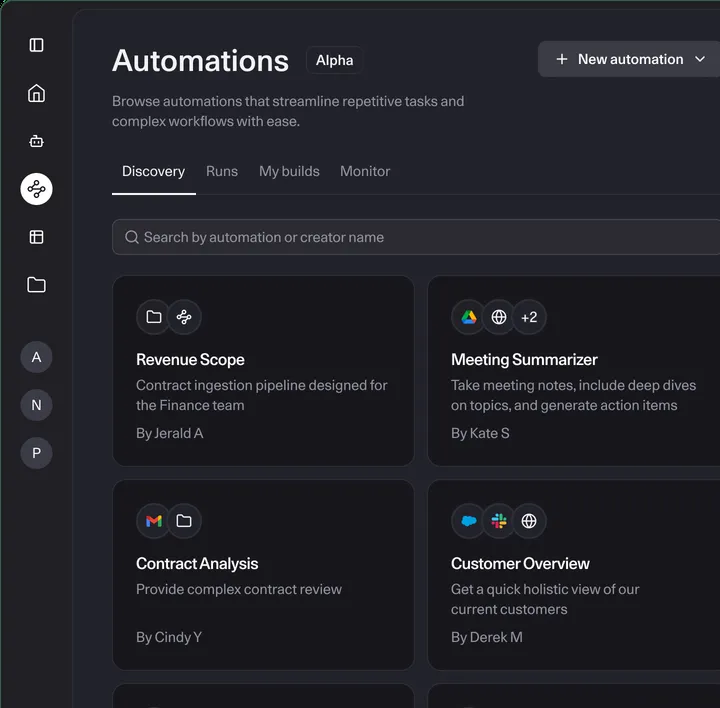
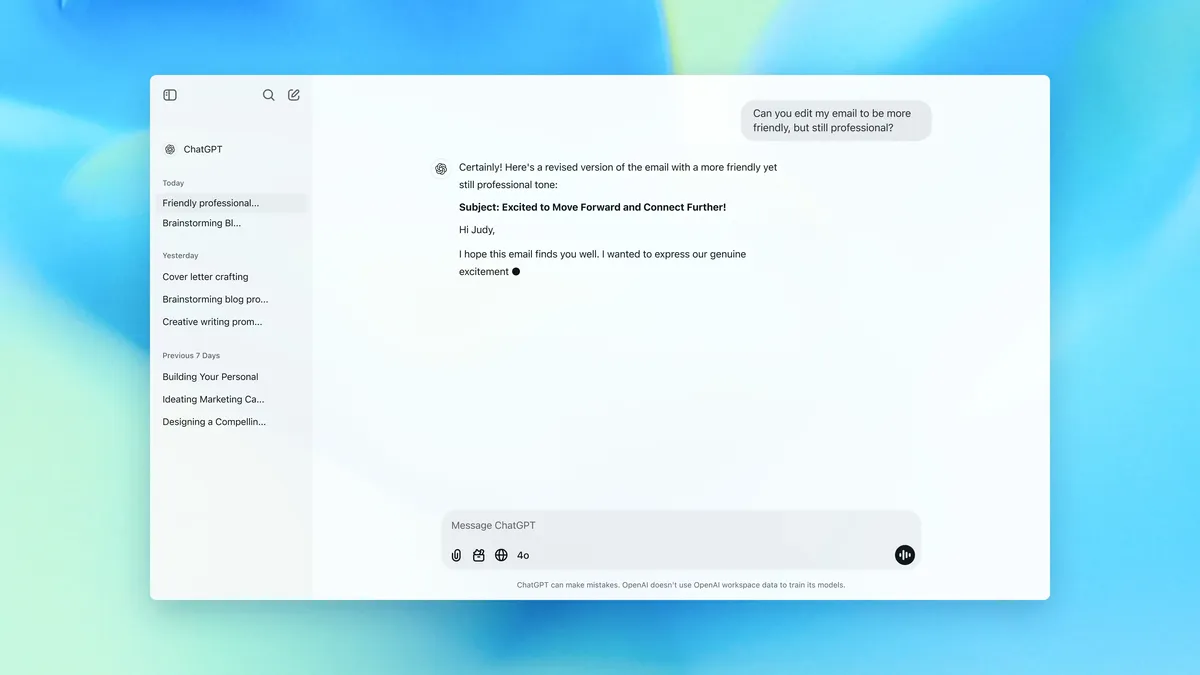
Interface Preview
Cohere
OpenAI
Feature Comparison
| Feature | Cohere | OpenAI |
|---|---|---|
| Language Models | ||
| Flagship Text Generation | Command R models optimized for enterprise RAG workflows; Command-light runs $0.30/1M input and $0.60/1M output tokens | GPT-5.4 with 1.05M context length and 128K max output tokens, priced at $2.50/M input and $15/M output tokens |
| Lower-Cost Model Tiers | Command-light is the entry tier at $0.30/1M input and $0.60/1M output tokens, with Command R 03-2024 at $0.50/$1.50 for production workloads | GPT-5.4 nano with 400K context for high-volume, cost-efficient tasks |
| Embedding Models | Dedicated Embed models purpose-built for semantic search and retrieval pipelines, with Rerank 4 Fast and Rerank 4 Pro Medium at $5.00 per tier | Embedding API available alongside generation models with competitive per-token pricing for vector search applications |
| Retrieval & Search | ||
| Reranking Capability | Dedicated Rerank endpoint at $1 per 1,000 searches designed to improve retrieval quality in RAG pipelines | No dedicated reranking API; teams typically implement reranking through prompt engineering or third-party solutions |
| RAG Pipeline Support | End-to-end RAG stack with Embed for indexing, Rerank for retrieval quality, and Command R for grounded generation | Supports RAG through embeddings and generation APIs; relies on external vector databases and orchestration frameworks |
| Classification & Analysis | Built-in classification endpoint for text categorization, sentiment analysis, and content moderation workflows | Classification handled through general-purpose chat completions with structured output and function calling |
| Agent & Application Platform | ||
| Agent Building Tools | API-level support for building agent workflows through generation and retrieval endpoints without a dedicated agent platform | Full agent platform with visual Agent Builder canvas, code-first Agents SDK, and ChatKit for frontend experiences |
| Multimodal Capabilities | Primarily focused on text-based NLP tasks including generation, embeddings, retrieval, and classification | Comprehensive multimodal support across text, vision, audio (Whisper), image generation (DALL-E), and real-time voice |
| Real-Time Voice API | No dedicated real-time voice or audio processing API; focused on text-based enterprise NLP workflows | Realtime API for building natural-sounding voice agents used in production by companies like Zillow for customer support |
| Enterprise & Security | ||
| Data Residency | Regional data residency controls with private cloud deployment options for organizations with strict data sovereignty requirements | Data residency controls available on enterprise plans alongside IP allowlist and mTLS network controls |
| Fine-Tuning Support | Enterprise fine-tuning available for customizing Command R models on proprietary datasets with private deployment | Fine-tuning API for GPT models with prompt optimization and evaluation tools to measure performance improvements |
| Compliance & Certifications | Enterprise data privacy controls with agreements for regulated industries; private deployment for maximum data isolation | SOC 2 Type 2 certified, BAA for HIPAA compliance, AES-256 encryption at rest, TLS 1.2+ in transit, SSO and MFA |
| Developer Tools & Ecosystem | ||
| API Design & SDKs | Focused REST API covering generation, embed, rerank, and classify endpoints with Python, Node, Go, and Java SDKs | Extensive API surface covering chat completions, assistants, embeddings, images, audio, and moderation with broad SDK support |
| Testing & Evaluation | API-level testing through standard development workflows; enterprise customers receive dedicated integration support | Built-in Playground for prompt testing, evaluation framework for measuring agent performance, and prompt optimization tools |
| Community & Ecosystem | Growing developer community focused on enterprise NLP; integration partnerships with major cloud providers and frameworks | Sizable AI developer ecosystem with extensive third-party integrations, community libraries, and enterprise partnerships globally |
Language Models
Flagship Text Generation
Lower-Cost Model Tiers
Embedding Models
Retrieval & Search
Reranking Capability
RAG Pipeline Support
Classification & Analysis
Agent & Application Platform
Agent Building Tools
Multimodal Capabilities
Real-Time Voice API
Enterprise & Security
Data Residency
Fine-Tuning Support
Compliance & Certifications
Developer Tools & Ecosystem
API Design & SDKs
Testing & Evaluation
Community & Ecosystem
Which to choose
Cohere and OpenAI serve overlapping but distinct segments of the enterprise AI market. Cohere is a focused NLP platform with dedicated retrieval infrastructure, published per-model token rates from $0.30/1M, and data privacy controls aimed at regulated enterprises. OpenAI offers the broadest model lineup with the most capable general-purpose LLMs, multimodal capabilities, and a comprehensive agent development platform. The right choice depends on whether your priority is cost-effective, privacy-first NLP pipelines or maximum model capability with a full-featured development ecosystem.
Best-fit scenarios
Choose Cohere if:
Choose Cohere when your organization needs a dedicated enterprise NLP platform with strong data privacy guarantees and cost-effective token pricing. Cohere is the better fit when you are building retrieval-augmented generation pipelines that benefit from its integrated Embed, Rerank, and Command R stack, which provides end-to-end RAG support without stitching together multiple vendors. Its Command R models make it significantly more affordable than GPT-5.4 for high-volume text generation workloads. Cohere also stands out for regulated industries that require private cloud deployment, regional data residency, and enterprise fine-tuning on proprietary data without exposing sensitive information to shared infrastructure.
Choose OpenAI if:
Choose OpenAI when your project demands the most capable general-purpose language models, multimodal processing across text, vision, audio, and images, or a comprehensive agent development platform. OpenAI is the right choice when you need massive context windows of up to 1.05 million tokens with GPT-5.4, when your application requires real-time voice interactions through the Realtime API, or when your team wants to build production agents using the visual Agent Builder and code-first Agents SDK. The GPT-5.4 nano model also provides a competitive budget option, while the extensive ecosystem and extensive third-party integrations ensure you will find community support and pre-built tooling for virtually any use case.
These scenarios reflect the available product evidence. Your requirements, existing stack, and team expertise should guide the final decision.
Frequently Asked Questions
How do Cohere and OpenAI compare on pricing for high-volume text generation?
The supplied OpenAI evidence lists standard processing rates for context lengths under 270K: GPT-5.6 Sol costs $4.00 per 1M input tokens. It does not include Cohere pricing, so a like-for-like high-volume cost comparison cannot be established from the supplied evidence.
Can I use Cohere and OpenAI together in the same application?
Yes, many organizations use Cohere and OpenAI together by leveraging each platform's strengths. A common architecture uses Cohere's Embed models for indexing documents into a vector database, Cohere's Rerank API at $1 per 1,000 searches for improving retrieval precision, and then sends the retrieved context to OpenAI's GPT-5.4 or GPT-5.4 mini for final answer generation. This hybrid approach captures Cohere's cost-effective, purpose-built retrieval infrastructure while utilizing OpenAI's superior generation quality for customer-facing responses. The combined cost for a RAG query using Cohere embeddings and reranking plus OpenAI generation is often lower than using OpenAI for the entire pipeline.
Which platform provides better data privacy controls for regulated industries?
Both platforms offer strong enterprise data privacy, but they approach it differently. Cohere emphasizes private cloud deployment where your models and data never leave your infrastructure, regional data residency controls, and a default policy of not training on customer data. This makes Cohere particularly attractive for financial services, healthcare, and government organizations with strict data sovereignty requirements. OpenAI counters with SOC 2 Type 2 compliance, Business Associate Agreements for HIPAA compliance, AES-256 encryption at rest, zero data retention by request, and administrative controls including SSO, MFA, and IP allowlisting. For maximum data isolation, Cohere's private deployment model provides the strongest guarantees, while OpenAI's compliance certifications may satisfy regulatory requirements without self-hosting.
What are the main differences in their approach to building AI agents?
OpenAI has invested heavily in a dedicated agent development platform that includes a visual Agent Builder canvas for designing agent workflows, a code-first Agents SDK for programmatic control, and ChatKit for building customizable frontend experiences. The platform supports building, deploying, and optimizing production agents with built-in evaluation tools. Cohere takes a more API-centric approach where developers build agent workflows by composing its generation, embedding, reranking, and classification endpoints using external orchestration frameworks like LangChain or LlamaIndex. While Cohere lacks a dedicated agent platform, its focused API design makes it cost-effective for teams that already have orchestration infrastructure and want fine-grained control over their agent architecture.