Decision comparison
Hugging Face vs OpenAI
Hugging Face is the clear winner for teams that need model flexibility, open-source access, and cost-effective self-hosted deployments. OpenAI wins when you need the absolute best proprietary LLM performance with minimal infrastructure overhead. The choice depends on whether you prioritize control and model diversity or raw capability and simplicity.
Architecture choice. These take different approaches to the same problem. Read the table as a fit question rather than a feature race.
These are different kinds of product — Model Hub and Foundation Model Provider.
Quick Comparison
| Decision factor | Hugging Face | OpenAI |
|---|---|---|
| Best For | Teams building custom ML pipelines with open-source models | Teams needing state-of-the-art proprietary LLMs via simple API calls |
| Pricing Model | Free tier, Pro $9/month, Enterprise custom | Contact for pricing |
| Open Source | Fully open-source Transformers library with Apache-2.0 license | Closed-source proprietary models with no self-hosting option |
| Model Selection | 2M+ community models across text, image, video, audio, and 3D | GPT-5.4, GPT-5.4 mini, GPT-5.4 nano, DALL-E 3, Whisper |
| Deployment Flexibility | Self-hosted, Inference Endpoints starting at $0.60/hour, or ZeroGPU | Cloud API only with enterprise data residency controls |
| Community Size | 163,000+ GitHub stars, 50,000+ organizations on the platform | 9.2/10 rating from 41 reviews, dominant market position in LLM APIs |
Hugging Face
- Best For:
- Teams building custom ML pipelines with open-source models
- Pricing Model:
- Free tier, Pro $9/month, Enterprise custom
- Open Source:
- Fully open-source Transformers library with Apache-2.0 license
- Model Selection:
- 2M+ community models across text, image, video, audio, and 3D
- Deployment Flexibility:
- Self-hosted, Inference Endpoints starting at $0.60/hour, or ZeroGPU
- Community Size:
- 163,000+ GitHub stars, 50,000+ organizations on the platform
OpenAI
- Best For:
- Teams needing state-of-the-art proprietary LLMs via simple API calls
- Pricing Model:
- Contact for pricing
- Open Source:
- Closed-source proprietary models with no self-hosting option
- Model Selection:
- GPT-5.4, GPT-5.4 mini, GPT-5.4 nano, DALL-E 3, Whisper
- Deployment Flexibility:
- Cloud API only with enterprise data residency controls
- Community Size:
- 9.2/10 rating from 41 reviews, dominant market position in LLM APIs
Public signals
Verified factual signals only. Bars appear only for like-for-like metrics with five weekly assessments for every tool; missing evidence stays explicit. These signals do not establish enterprise adoption, product quality, or total cost.
| Metric | Hugging Face | OpenAI |
|---|---|---|
| GitHub commits, 90d(Developer adoption) | 850 | 209 |
| GitHub stars(Developer adoption) | 166,000+ | 31,000+ |
| Search interest(Market interest) | 52 | 422 |
| Hacker News mentions, 90d(Community interest) | 241 | 1.6k |
| Hugging Face downloads(Product adoption) | 5.2M | 44.7M |
| Hugging Face likes(Product adoption) | 3.1k | 14.2k |
| npm weekly downloads(Developer adoption) | 327.1k | 28.2M |
| Product Hunt comments(Community interest) | 69 | 1 |
| Product Hunt rating(Community interest) | Unavailable | 5.0/5 |
| Product Hunt reviews(Community interest) | 0 | 1 |
| Product Hunt votes(Community interest) | 404 | 7 |
| PyPI weekly downloads(Product adoption) | 21.6M | Not available |
| Stack Overflow questions(Community interest) | 3.4k | 2.5k |
| PyPI weekly downloads(Developer adoption) | Not available | 68.2M |
As of September 21, 2026 — updated weekly.
Health & risk evidence
Observed public-source checks for mapped package versions and repositories.
Hugging Face
September 21, 2026Package vulnerabilities
npm · @huggingface/inference@4.13.30 · PyPI · transformers@5.17.0
0 vulnerabilities
across 2 packages
Repository security score
Not available
OpenAI
September 21, 2026Package vulnerabilities
npm · openai@7.20.0 · PyPI · openai@3.16.2
0 vulnerabilities
across 2 packages
Repository security score
Not available
Interface Preview
Hugging Face

OpenAI
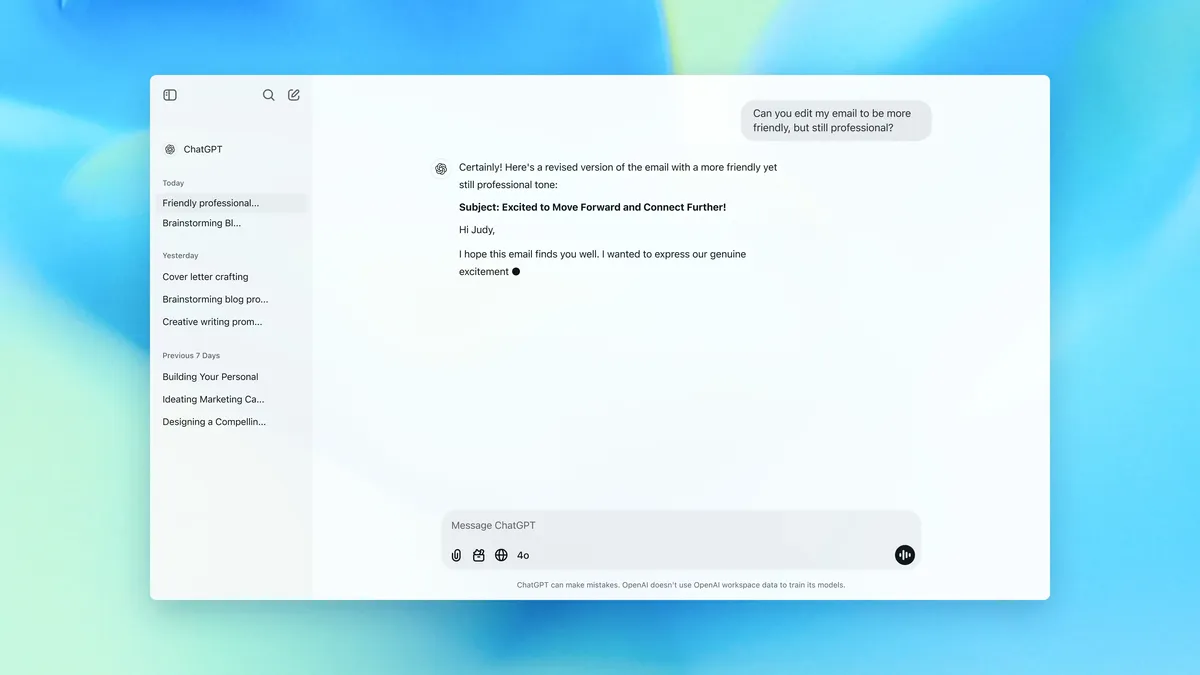
Feature Comparison
| Feature | Hugging Face | OpenAI |
|---|---|---|
| Model Access | ||
| Available Models | 2M+ open-source models across all modalities | GPT-5.4 family, DALL-E 3, Whisper, Codex |
| Context Window | Varies by model; community models range from 2K to 128K+ tokens | Up to 1.05M tokens on GPT-5.4, 400K on mini and nano |
| Max Output Tokens | Model-dependent, typically 2K-32K tokens | 128K max output tokens across GPT-5.4 family |
| Pricing and Cost | ||
| Free Tier | Free for public models, datasets, and Spaces; free CPU and ZeroGPU | Free tier for ChatGPT; API requires payment |
| API Pricing | Inference Providers with no service fees; GPU from $0.60/hour | GPT-5.4: $2.50/$15.00 per 1M tokens; nano: $0.20/$1.25 per 1M tokens |
| Enterprise Plans | Starting at $50/user/month with SSO, audit logs, and priority support | Custom enterprise pricing with dedicated account teams and SOC 2 compliance |
| Developer Experience | ||
| SDK and Libraries | Transformers, Diffusers, TRL, PEFT, Tokenizers, smolagents, Accelerate | Official Python and Node.js SDKs, Agents SDK, REST API |
| Fine-Tuning Support | Full fine-tuning, LoRA, QLoRA, PEFT with any open model | Fine-tuning API for GPT models with managed training infrastructure |
| Deployment Options | Self-hosted, Inference Endpoints, Spaces, ZeroGPU, TGI | Cloud API only with data residency controls and IP allowlisting |
| Platform and Collaboration | ||
| Model Hub | 2M+ models, 500K+ datasets, 300K+ Spaces with version control | No public model hub; access limited to OpenAI's own models |
| Community Features | Public profiles, model cards, dataset viewers, discussion forums | Developer forums and documentation; no collaborative model sharing |
| Team Collaboration | Organizations with resource groups, SSO, audit logs, and analytics | Project-based access controls, role-based permissions, usage dashboards |
| Security and Compliance | ||
| Data Privacy | GDPR compliant, SOC 2 Type 2, private storage with data region selection | SOC 2 Type 2, zero data retention by request, HIPAA BAA available |
| Authentication | SSO/SAML on Team plans, centralized token management | SSO and MFA, IP allowlist, mTLS network controls |
| Audit and Monitoring | Comprehensive audit logs, repository usage analytics | Granular usage and cost activity tracking by project |
Model Access
Available Models
Context Window
Max Output Tokens
Pricing and Cost
Free Tier
API Pricing
Enterprise Plans
Developer Experience
SDK and Libraries
Fine-Tuning Support
Deployment Options
Platform and Collaboration
Model Hub
Community Features
Team Collaboration
Security and Compliance
Data Privacy
Authentication
Audit and Monitoring
Which approach fits
Hugging Face is the clear winner for teams that need model flexibility, open-source access, and cost-effective self-hosted deployments. OpenAI wins when you need the absolute best proprietary LLM performance with minimal infrastructure overhead. The choice depends on whether you prioritize control and model diversity or raw capability and simplicity.
When each approach fits
Choose Hugging Face if:
Choose Hugging Face when your team needs access to a massive ecosystem of open-source models across text, image, video, and audio modalities. It is the right platform for organizations that want to fine-tune models with full control using techniques like LoRA and QLoRA, deploy on their own infrastructure to manage costs predictably, and contribute to or leverage community-built models. With GPU compute starting at $0.60/hour and a free tier for public projects, Hugging Face delivers unmatched value for ML teams building custom pipelines. The Transformers library with 159,000+ GitHub stars has become the industry standard for working with pre-trained models in PyTorch.
Choose OpenAI if:
Choose OpenAI when your team needs access to the most capable proprietary large language models without the complexity of managing ML infrastructure. OpenAI is the right choice for product teams that need to ship AI features quickly using battle-tested APIs, organizations that require enterprise-grade compliance including HIPAA BAA and SOC 2 Type 2 certification, and developers building agentic applications with the Agents SDK and Realtime API. With GPT-5.4 offering a 1.05M token context window and 128K max output tokens, OpenAI provides capabilities that no open-source model currently matches at that scale. The usage-based pricing with GPT-5.4 nano at $0.20 per 1M input tokens makes it accessible for cost-sensitive use cases.
These scenarios reflect the available product evidence. Your requirements, existing stack, and team expertise should guide the final decision.
Frequently Asked Questions
Is Hugging Face free to use?
Yes, Hugging Face offers a generous free tier that includes unlimited public model hosting, datasets, Spaces applications, free CPU compute, and ZeroGPU access. The Pro plan at $9/month adds 10x private storage and enhanced inference credits. Team plans start at $20/user/month with SSO and audit logs. Enterprise plans begin at $50/user/month with dedicated support and advanced security controls.
How does OpenAI API pricing compare to Hugging Face Inference?
OpenAI’s official API page lists standard processing rates for context lengths under 270K: GPT-5.6 Sol costs $4.00 per 1M input tokens and $20.00 per 1M output tokens, while GPT-5.6 Luna costs $0.20 per 1M input tokens and $1.20 per 1M output tokens. The supplied evidence does not provide Hugging Face Inference pricing, so it cannot establish a like-for-like cost comparison between the platforms.
Can I fine-tune models on both Hugging Face and OpenAI?
Both platforms support fine-tuning, but the approaches differ substantially. Hugging Face provides full control through libraries like TRL and PEFT, supporting LoRA, QLoRA, and full fine-tuning on any open-source model. OpenAI offers a managed fine-tuning API for GPT models with simpler setup but less flexibility. Hugging Face is better for teams with ML expertise who need maximum control, while OpenAI suits teams that want managed fine-tuning without infrastructure management.
Which platform has better enterprise security features?
Both platforms offer strong enterprise security. OpenAI provides SOC 2 Type 2 compliance, HIPAA BAA, zero data retention policies, SSO with MFA, data encryption with AES-256, and IP allowlisting with mTLS. Hugging Face offers GDPR compliance, SOC 2 Type 2, SSO/SAML, data region selection, centralized token management, and comprehensive audit logs. OpenAI has an edge for healthcare and regulated industries with its HIPAA BAA, while Hugging Face offers more granular data residency controls for European organizations.