Decision comparison
CrowdStrike Falcon vs Wiz
CrowdStrike Falcon and Wiz represent two fundamentally different approaches to cybersecurity that complement rather than replace each other. Falcon delivers endpoint-first security with a single agent architecture spanning EDR, identity protection, and threat intelligence, while Wiz provides agentless cloud-native security through a unified security graph connecting code, cloud, and runtime. Organizations with significant endpoint estates and hybrid infrastructure will benefit most from Falcon, while cloud-native organizations running primarily in public cloud environments will find Wiz addresses their most critical visibility gaps.
Architecture choice. These take different approaches to the same problem. Read the table as a fit question rather than a feature race.
These are different kinds of product — Endpoint Security and Cloud Security Platform.
Quick Comparison
| Decision factor | CrowdStrike Falcon | Wiz |
|---|---|---|
| Best For | Endpoint-first security with a single lightweight agent covering EDR, identity protection, and threat intelligence across hybrid environments | Agentless cloud-native security connecting code, cloud, and runtime into a unified security graph for complete cloud risk visibility |
| Architecture | Single-agent architecture deployed on endpoints, feeding telemetry into a cloud-native AI platform for real-time detection and response | Agentless API-based scanning with optional eBPF runtime sensor; unified security graph correlating risks across the entire cloud stack |
| Pricing Model | Falcon Go is $7.99 per device billed monthly, or $59.99 per device billed annually. Falcon Pro is $14.99 monthly or $99.99 annually. Falcon Enterprise is $19.99 monthly or $184.99 annually. All three are bought directly from the pricing page. A 15-day Falcon free trial needs no credit card. Larger deployments are quoted. | Enterprise-only pricing, custom quotes. Wiz publishes no rate and quotes every deal. Per-workload pricing model. No free tier or self-service plans. |
| Deployment Approach | Agent-based deployment requiring installation on each endpoint; single lightweight agent consolidates multiple security functions into one | Agentless API connectivity achieving full coverage in minutes without performance impact; optional runtime sensor for extensive detection |
| Cloud Security Focus | Extends endpoint protection into cloud workloads with runtime visibility, container security, and cloud workload protection modules | Purpose-built for cloud and AI security with CSPM, CWPP, code-to-cloud correlation, and AI workload protection as core capabilities |
| Threat Detection | AI-native detection using behavioral analysis and threat intelligence from trillions of security events processed weekly across its customer base | Context-driven detection combining agentless cloud telemetry with eBPF runtime sensor for real-time threat blocking and investigation |
CrowdStrike Falcon
- Best For:
- Endpoint-first security with a single lightweight agent covering EDR, identity protection, and threat intelligence across hybrid environments
- Architecture:
- Single-agent architecture deployed on endpoints, feeding telemetry into a cloud-native AI platform for real-time detection and response
- Pricing Model:
- Falcon Go is $7.99 per device billed monthly, or $59.99 per device billed annually. Falcon Pro is $14.99 monthly or $99.99 annually. Falcon Enterprise is $19.99 monthly or $184.99 annually. All three are bought directly from the pricing page. A 15-day Falcon free trial needs no credit card. Larger deployments are quoted.
- Deployment Approach:
- Agent-based deployment requiring installation on each endpoint; single lightweight agent consolidates multiple security functions into one
- Cloud Security Focus:
- Extends endpoint protection into cloud workloads with runtime visibility, container security, and cloud workload protection modules
- Threat Detection:
- AI-native detection using behavioral analysis and threat intelligence from trillions of security events processed weekly across its customer base
Wiz
- Best For:
- Agentless cloud-native security connecting code, cloud, and runtime into a unified security graph for complete cloud risk visibility
- Architecture:
- Agentless API-based scanning with optional eBPF runtime sensor; unified security graph correlating risks across the entire cloud stack
- Pricing Model:
- Enterprise-only pricing, custom quotes. Wiz publishes no rate and quotes every deal. Per-workload pricing model. No free tier or self-service plans.
- Deployment Approach:
- Agentless API connectivity achieving full coverage in minutes without performance impact; optional runtime sensor for extensive detection
- Cloud Security Focus:
- Purpose-built for cloud and AI security with CSPM, CWPP, code-to-cloud correlation, and AI workload protection as core capabilities
- Threat Detection:
- Context-driven detection combining agentless cloud telemetry with eBPF runtime sensor for real-time threat blocking and investigation
Public signals
Verified factual signals only. Bars appear only for like-for-like metrics with five weekly assessments for every tool; missing evidence stays explicit. These signals do not establish enterprise adoption, product quality, or total cost.
| Metric | CrowdStrike Falcon | Wiz |
|---|---|---|
| GitHub commits, 90d(Developer adoption) | 211 | Not available |
| GitHub stars(Developer adoption) | 513 | Not available |
| Search interest(Market interest) | Not available | 0 |
| Hacker News mentions, 90d(Community interest) | 1 | 0 |
| PyPI weekly downloads(Developer adoption) | 398.0k | Not available |
As of September 14, 2026 — updated weekly.
Health & risk evidence
Observed public-source checks for mapped package versions and repositories.
CrowdStrike Falcon
September 14, 2026Package vulnerabilities
PyPI · crowdstrike-falconpy@1.6.5
0 vulnerabilities
across 1 package
Repository security score
Not available
Wiz
Package vulnerabilities
Not available
Repository security score
Not available
Interface Preview
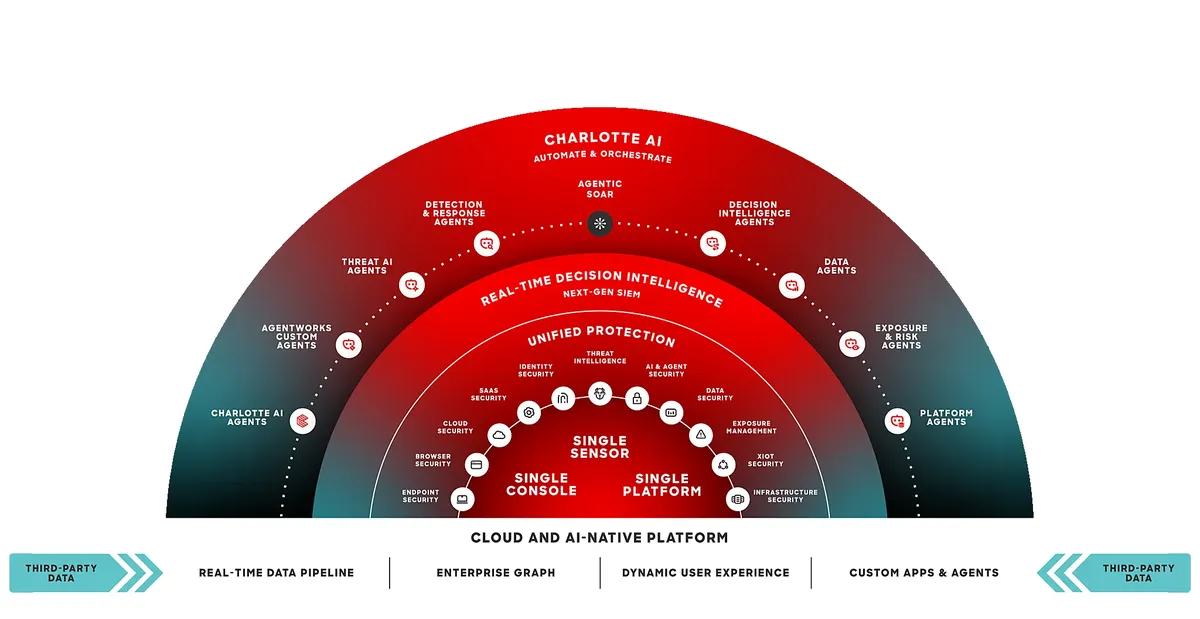
CrowdStrike Falcon
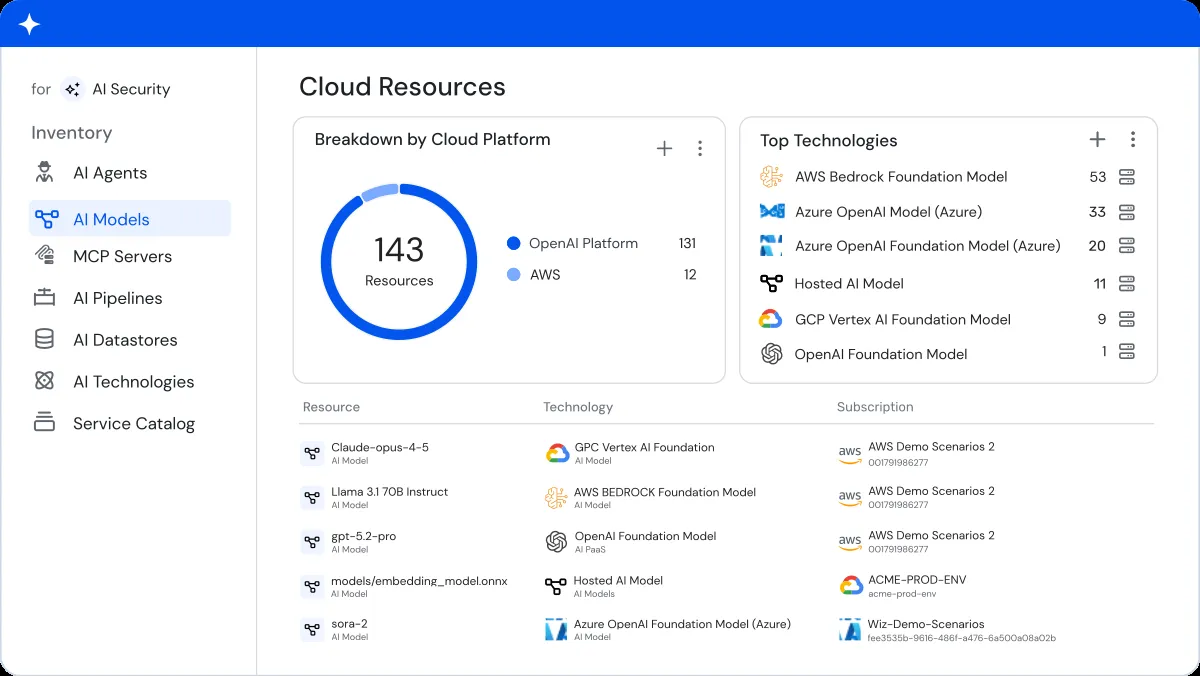
Wiz
Feature Comparison
| Feature | CrowdStrike Falcon | Wiz |
|---|---|---|
| Cloud Security Posture | ||
| Cloud Configuration Scanning | Cloud security posture management through Falcon Cloud Security module with misconfiguration detection across AWS, Azure, and GCP | Deep agentless scanning across all major clouds with security graph that maps every resource, configuration, and identity relationship |
| Attack Path Analysis | Threat graph technology correlating endpoint telemetry with cloud indicators to identify potential attack chains across environments | Dedicated attack path analysis producing prioritized toxic combinations of cloud risk with high probability of exploitation and business impact |
| Multi-Cloud Coverage | Supports AWS, Azure, and GCP cloud environments through Falcon Cloud Security with unified visibility from the same Falcon console | Native multi-cloud support covering AWS, Azure, GCP, and OCI with full PaaS, VM, container, serverless, and AI workload scanning |
| Runtime Protection | ||
| Endpoint Detection and Response | Industry-leading EDR with behavioral AI analysis, memory scanning, and real-time threat hunting across all endpoint types | Runtime sensor using eBPF technology for deep cloud workload visibility; not designed as a traditional endpoint detection platform |
| Container Security | Container runtime protection with image scanning, drift prevention, and real-time monitoring of containerized workloads via the Falcon agent | Agentless container scanning with optional runtime sensor for Kubernetes workloads; discovers running containers without requiring agent deployment |
| Real-Time Threat Blocking | Automated prevention engine blocking malware, ransomware, and fileless attacks in real time based on behavioral and AI-driven indicators | eBPF runtime sensor blocks exploitation attempts and lateral movement in progress with full contextual lineage for cloud investigations |
| Identity and Access Security | ||
| Identity Threat Detection | Falcon Identity Protection module detects lateral movement, compromised credentials, and identity-based attacks across Active Directory | Identity analysis integrated into the security graph to model privilege escalation paths and excessive permissions across cloud IAM |
| Zero Trust Assessment | Zero Trust Assessment scoring device health and compliance posture for conditional access policy enforcement across the organization | Role-based access control with projects and services grouping cloud resources by ownership for least-privilege security enforcement |
| Credential Protection | Active Directory credential theft prevention with real-time monitoring of authentication protocols and lateral movement detection | Cloud identity risk analysis connecting IAM misconfigurations to data access chains and exploitable attack paths across environments |
| Code and DevSecOps | ||
| Code-to-Cloud Correlation | Application security capabilities through Falcon modules with vulnerability management and exposure tracking across the software supply chain | Automatic correlation from running cloud resources back to source code, pipeline, and developer with one-click pull request code fixes |
| Developer Workflow Integration | CI/CD pipeline integration for image scanning and vulnerability detection before deployment through Falcon Container Security module | AI-IDE integration giving developers cloud context and immediate security feedback; coding agent integrations that fix risks at the source |
| Infrastructure as Code Scanning | IaC scanning capabilities for detecting misconfigurations in Terraform, CloudFormation, and Kubernetes manifests before deployment | Code scanning with graph context identifying the right fix location, assigning the correct owner, and generating direct infrastructure fixes |
| AI and Automation | ||
| AI-Powered Investigation | Charlotte AI assistant accelerates SOC operations with natural language threat investigation, automated analysis, and response recommendations | AI-powered security agents including Green agent for auto-fixes, Red agent for automated penetration testing, and Blue agent for threat hunting |
| AI Workload Security | Secure AI capabilities for shadow AI detection, AI agent visibility, governance, and threat detection across the organization | Comprehensive AI security posture management discovering models, agents, MCP servers, and services across cloud and SaaS environments |
| Automated Remediation | Charlotte AI AgentWorks ecosystem for building secure autonomous agents that can take automated response actions within workflows | No-code workflow orchestration automating detection to remediation with visual canvas, triggers, logic, approvals, and AI integration |
Cloud Security Posture
Cloud Configuration Scanning
Attack Path Analysis
Multi-Cloud Coverage
Runtime Protection
Endpoint Detection and Response
Container Security
Real-Time Threat Blocking
Identity and Access Security
Identity Threat Detection
Zero Trust Assessment
Credential Protection
Code and DevSecOps
Code-to-Cloud Correlation
Developer Workflow Integration
Infrastructure as Code Scanning
AI and Automation
AI-Powered Investigation
AI Workload Security
Automated Remediation
Which approach fits
CrowdStrike Falcon and Wiz represent two fundamentally different approaches to cybersecurity that complement rather than replace each other. Falcon delivers endpoint-first security with a single agent architecture spanning EDR, identity protection, and threat intelligence, while Wiz provides agentless cloud-native security through a unified security graph connecting code, cloud, and runtime. Organizations with significant endpoint estates and hybrid infrastructure will benefit most from Falcon, while cloud-native organizations running primarily in public cloud environments will find Wiz addresses their most critical visibility gaps.
When each approach fits
Choose CrowdStrike Falcon if:
Choose CrowdStrike Falcon when your organization needs comprehensive endpoint protection as the foundation of your security strategy. Falcon excels in environments with large fleets of workstations, servers, and hybrid infrastructure where a single lightweight agent must cover endpoint detection and response, identity threat protection, and next-generation SIEM capabilities. Its behavioral AI engine, trained on trillions of security events, provides industry-leading detection rates for malware, ransomware, and fileless attacks. Falcon is particularly strong for organizations that need to consolidate multiple point security products into a unified platform with SOC transformation capabilities through Charlotte AI.
Choose Wiz if:
Choose Wiz when your primary security challenge is gaining complete visibility across cloud-native infrastructure without deploying agents to every workload. Wiz connects via API in minutes and immediately maps your entire cloud estate, revealing misconfigurations, exposed secrets, vulnerable packages, and toxic attack path combinations through its security graph. It is the superior choice for organizations running primarily in AWS, Azure, or GCP that need cloud security posture management, code-to-cloud correlation, and developer-friendly remediation workflows. Wiz is especially valuable for teams adopting AI workloads that need specialized AI security posture management covering models, agents, and data pipelines.
These scenarios reflect the available product evidence. Your requirements, existing stack, and team expertise should guide the final decision.
Frequently Asked Questions
Can CrowdStrike Falcon and Wiz be used together in the same security stack?
Yes, many enterprise security teams deploy both CrowdStrike Falcon and Wiz as complementary layers in their security architecture. CrowdStrike Falcon provides endpoint-level protection with its lightweight agent handling EDR, behavioral analysis, and identity threat detection across workstations, servers, and hybrid infrastructure. Wiz operates at the cloud infrastructure layer, providing agentless visibility into cloud configurations, attack paths, and code-to-cloud correlation. Together, they cover both the endpoint attack surface through Falcon and the cloud infrastructure attack surface through Wiz, creating layered defense without significant overlap in core capabilities.
Which platform provides better visibility for cloud-native containerized environments?
Wiz generally offers more comprehensive cloud-native container visibility because its agentless approach discovers every container, Kubernetes cluster, and serverless function across your cloud estate without requiring deployment on each workload. The security graph then correlates container vulnerabilities with network exposure, IAM permissions, and data access paths to prioritize the most dangerous combinations. CrowdStrike Falcon provides strong container runtime protection through its agent-based approach, with image scanning, drift prevention, and real-time monitoring of running containers. However, Falcon requires agent deployment in each environment, which adds operational overhead. For pure visibility breadth, Wiz leads; for active runtime prevention inside containers, Falcon's agent-based approach offers deeper real-time blocking.
How do the two platforms compare for organizations with significant on-premises infrastructure?
CrowdStrike Falcon is the clear choice for organizations with substantial on-premises infrastructure. Its single agent architecture was originally designed for endpoint protection across physical workstations, servers, and data center environments, and it extends naturally into cloud workloads. Falcon's identity protection module specifically monitors Active Directory, which is the backbone of on-premises identity management. Wiz is purpose-built for public cloud environments and connects via cloud provider APIs, meaning it has limited applicability for on-premises servers, network devices, or traditional data center infrastructure. Organizations running hybrid environments typically need Falcon for the on-premises layer and may add Wiz for cloud-specific visibility.
What is the typical deployment timeline for each platform?
Wiz can achieve initial cloud visibility remarkably quickly because its agentless approach connects via cloud provider APIs. Organizations frequently report seeing comprehensive results within 60 minutes of connecting their first cloud account, with no agents to deploy and zero impact on workload performance. Full onboarding across multiple cloud accounts typically takes days rather than weeks. CrowdStrike Falcon requires agent deployment across your endpoint fleet, which means the timeline depends on your environment size and deployment automation capabilities. Small organizations can deploy the Falcon agent in days using standard software distribution tools, while enterprise rollouts across tens of thousands of endpoints typically take several weeks. The 15-day free trial helps teams evaluate Falcon's capabilities before committing to a full deployment.