Decision comparison
Domino Data Lab vs MLflow
MLflow is the right default choice for most organizations due to its zero licensing cost, broad ecosystem support, and massive community. Domino Data Lab is the better choice for large regulated enterprises (50+ data scientists) that need turnkey governance, GPU scheduling, and compliance controls and can justify six-figure annual contracts.
Architecture choice. These take different approaches to the same problem. Read the table as a fit question rather than a feature race.
These are different kinds of product — ML Platform and Experiment Tracking.
Quick Comparison
| Decision factor | Domino Data Lab | MLflow |
|---|---|---|
| Best For | Enterprise teams needing centralized governance, GPU scheduling, and compliance at scale | Teams of any size needing flexible, open-source experiment tracking and model management |
| Pricing Model | Domino Data Lab uses enterprise quote-based pricing only. No public pricing, no self-serve plans, no free tier. Deployment options: Domino Cloud (hosted), self-hosted, or hybrid. Annual enterprise contracts. Contact sales for pricing. Third-party estimates suggest six-figure annual contracts for enterprise deployments. | Open-source license (Apache-2.0), self-hosted for free |
| Deployment Model | Domino Cloud (hosted), self-hosted, or hybrid on AWS/Azure/GCP | Self-hosted on any infrastructure; managed version available via Databricks |
| Governance & Compliance | SOC 2, HIPAA, FedRAMP-ready with full RBAC and audit trails | Basic access control; enterprise governance requires Databricks or custom build |
| Ecosystem Breadth | Pre-built connectors for major cloud services, Snowflake, Databricks, SageMaker | 30+ ML framework integrations, LangChain, OpenAI, PyTorch, TensorFlow, scikit-learn |
| Community Size | Commercial product with dedicated enterprise support team | 27,000+ GitHub stars, 800+ contributors, extensive community documentation |
Domino Data Lab
- Best For:
- Enterprise teams needing centralized governance, GPU scheduling, and compliance at scale
- Pricing Model:
- Domino Data Lab uses enterprise quote-based pricing only. No public pricing, no self-serve plans, no free tier. Deployment options: Domino Cloud (hosted), self-hosted, or hybrid. Annual enterprise contracts. Contact sales for pricing. Third-party estimates suggest six-figure annual contracts for enterprise deployments.
- Deployment Model:
- Domino Cloud (hosted), self-hosted, or hybrid on AWS/Azure/GCP
- Governance & Compliance:
- SOC 2, HIPAA, FedRAMP-ready with full RBAC and audit trails
- Ecosystem Breadth:
- Pre-built connectors for major cloud services, Snowflake, Databricks, SageMaker
- Community Size:
- Commercial product with dedicated enterprise support team
MLflow
- Best For:
- Teams of any size needing flexible, open-source experiment tracking and model management
- Pricing Model:
- Open-source license (Apache-2.0), self-hosted for free
- Deployment Model:
- Self-hosted on any infrastructure; managed version available via Databricks
- Governance & Compliance:
- Basic access control; enterprise governance requires Databricks or custom build
- Ecosystem Breadth:
- 30+ ML framework integrations, LangChain, OpenAI, PyTorch, TensorFlow, scikit-learn
- Community Size:
- 27,000+ GitHub stars, 800+ contributors, extensive community documentation
Public signals
Verified factual signals only. Bars appear only for like-for-like metrics with five weekly assessments for every tool; missing evidence stays explicit. These signals do not establish enterprise adoption, product quality, or total cost.
| Metric | Domino Data Lab | MLflow |
|---|---|---|
| GitHub commits, 90d(Developer adoption) | 3 | Not available |
| GitHub stars(Developer adoption) | 58 | Not available |
| Search interest(Market interest) | 0 | 2 |
| Hacker News mentions, 90d(Community interest) | 0 | 1 |
| PyPI weekly downloads(Developer adoption) | 11.0k | Not available |
| GitHub commits, 90d(Product adoption) | Not available | 874 |
| GitHub stars(Product adoption) | Not available | 27,000+ |
| PyPI weekly downloads(Product adoption) | Not available | 4.9M |
| Stack Overflow questions(Community interest) | Not available | 771 |
As of September 14, 2026 — updated weekly.
Health & risk evidence
Observed public-source checks for mapped package versions and repositories.
Domino Data Lab
September 14, 2026Package vulnerabilities
PyPI · dominodatalab@2.2.0
0 vulnerabilities
across 1 package
Repository security score
Not available
MLflow
September 14, 2026Package vulnerabilities
PyPI · mlflow@3.16.0
0 vulnerabilities
across 1 package
Repository security score
Not available
Interface Preview
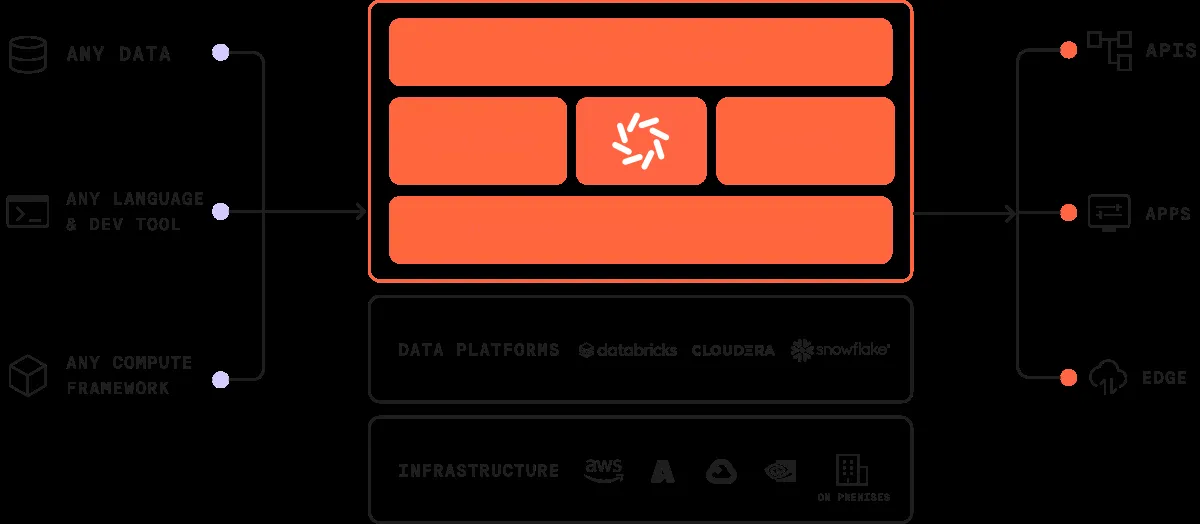
Domino Data Lab
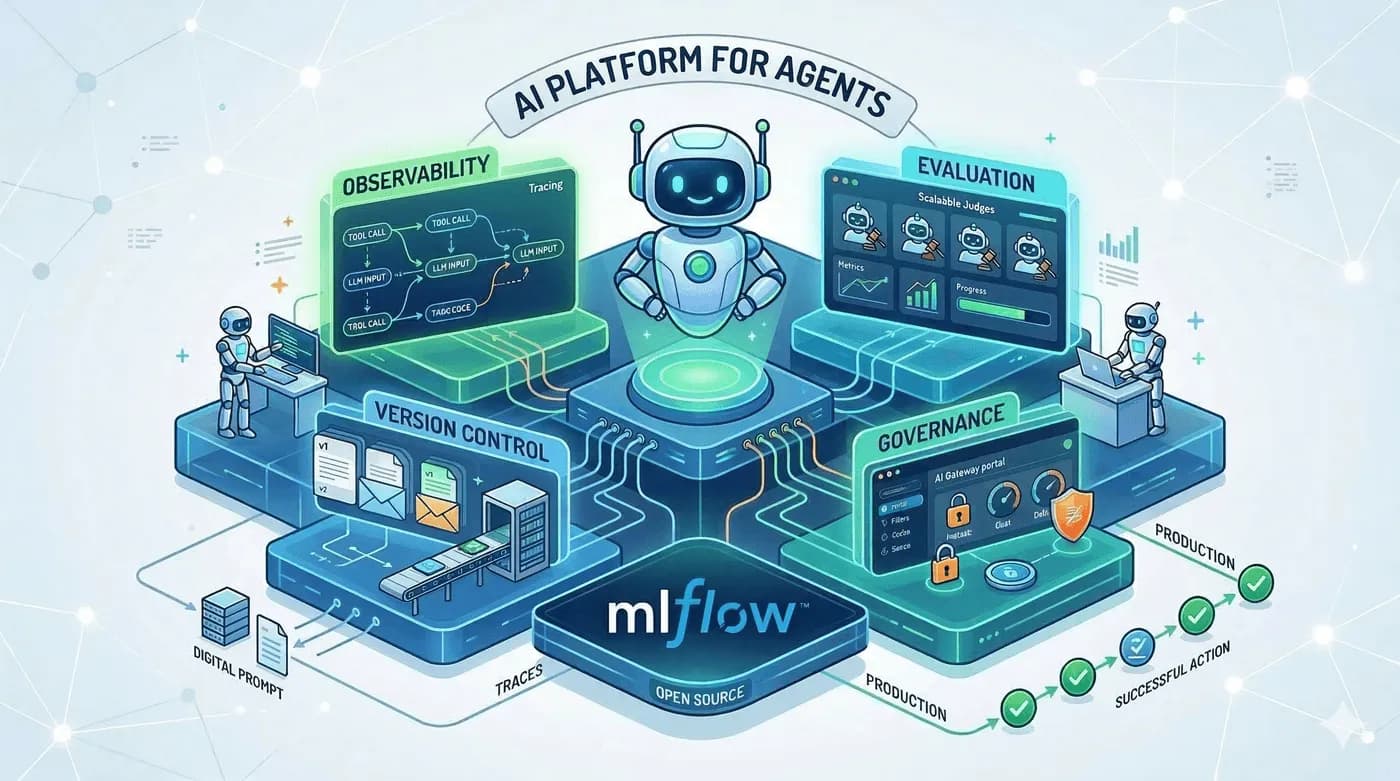
MLflow
Feature Comparison
| Feature | Domino Data Lab | MLflow |
|---|---|---|
| Core ML Capabilities | ||
| Experiment Tracking | Integrated workspace with automatic lineage capture and project-level organization | MLflow Tracking with metrics, parameters, and artifact logging via Python SDK |
| Model Registry | Enterprise registry with approval workflows, RBAC, and version management | Open-source registry with staging, production, and archived lifecycle stages |
| Model Deployment | One-click REST API endpoints with auto-scaling and A/B testing support | MLflow Models supporting Docker, Kubernetes, SageMaker, and Azure ML deployments |
| Model Monitoring | Built-in drift detection, performance monitoring, and automated alerting | No native monitoring; requires external tools like Evidently, Whylabs, or Grafana |
| Infrastructure & Governance | ||
| GPU Scheduling | Built-in multi-cloud GPU orchestration with quotas, cost tracking, and team allocation | No built-in GPU scheduling; relies on Kubernetes or cloud provider resource management |
| RBAC & Access Control | Enterprise RBAC with project-level, dataset-level, and model-level permissions | Basic access control in open-source; full RBAC available through Databricks managed MLflow |
| Compliance & Audit | SOC 2, HIPAA, FedRAMP-ready with comprehensive audit trails for all actions | No built-in compliance features; must implement audit and compliance at infrastructure level |
| Environment Management | Docker-based compute environments with admin-controlled base images and dependency management | MLflow Projects with conda and Docker environments for reproducible runs |
| Ecosystem & Integration | ||
| Notebook Support | Managed Jupyter, RStudio, and VS Code workspaces with persistent environments | Framework-agnostic; works with any notebook environment via lightweight Python SDK |
| ML Framework Integrations | Supports major frameworks through managed compute environments | Native integrations with 30+ frameworks: PyTorch, TensorFlow, scikit-learn, XGBoost, LangChain |
| LLM & AI Support | Workspace support for LLM fine-tuning and deployment on managed GPU infrastructure | MLflow AI Gateway, native LangChain integration, OpenAI and Hugging Face support |
| CI/CD Integration | Built-in scheduled jobs, API triggers, and integration with enterprise CI/CD pipelines | CLI and Python API for pipeline integration; MLflow Projects support reproducible runs in CI/CD |
Core ML Capabilities
Experiment Tracking
Model Registry
Model Deployment
Model Monitoring
Infrastructure & Governance
GPU Scheduling
RBAC & Access Control
Compliance & Audit
Environment Management
Ecosystem & Integration
Notebook Support
ML Framework Integrations
LLM & AI Support
CI/CD Integration
Which approach fits
MLflow is the right default choice for most organizations due to its zero licensing cost, broad ecosystem support, and massive community. Domino Data Lab is the better choice for large regulated enterprises (50+ data scientists) that need turnkey governance, GPU scheduling, and compliance controls and can justify six-figure annual contracts.
When each approach fits
Choose MLflow if:
Choose MLflow for startups, mid-size companies, cost-conscious enterprises, teams working across multiple ML frameworks, and organizations that want zero licensing cost with Apache 2.0 freedom.
Choose Domino Data Lab if:
Choose Domino Data Lab for regulated enterprises with 50+ data scientists that need centralized GPU scheduling, SOC 2/HIPAA/FedRAMP compliance, and are prepared for six-figure annual contracts.
Choose MLflow if:
Choose MLflow if you are already on Databricks, as managed MLflow is included at no additional cost with full enterprise features.
These scenarios reflect the available product evidence. Your requirements, existing stack, and team expertise should guide the final decision.
Frequently Asked Questions
Is Domino Data Lab worth the enterprise price?
For large organizations with 50+ data scientists in regulated industries, Domino can be worth the investment. The platform eliminates the need for a dedicated platform engineering team to build governance, GPU scheduling, and compliance tooling on top of open-source alternatives. However, for teams under 30 people or in non-regulated industries, the six-figure annual cost is difficult to justify when MLflow plus Kubernetes can deliver comparable functionality at a fraction of the price.
Can MLflow handle enterprise-scale deployments?
Yes. MLflow is used in production at thousands of organizations, including many Fortune 500 companies through Databricks. The open-source version scales well with PostgreSQL as the backend store and S3 or GCS for artifact storage. Enterprise governance features (RBAC, audit trails, compliance) require either Databricks managed MLflow or custom implementation.
Can I use Domino Data Lab and MLflow together?
Yes, and many enterprises do. MLflow can run inside Domino compute environments, providing experiment tracking at the individual data scientist level while Domino manages the infrastructure, governance, and compute orchestration layer.
What is the migration effort from MLflow to Domino Data Lab?
Moderate to significant. MLflow experiments and model registry entries need to be migrated to Domino's native tracking system, and existing CI/CD pipelines need to be reconfigured. Most organizations report a 2-4 month transition period for full migration.