Decision comparison
BentoML vs MLflow
BentoML and MLflow serve complementary roles in the MLOps ecosystem rather than being direct competitors. BentoML excels at the model serving and inference layer, giving teams fine-grained control over deployment, scaling, and GPU optimization. MLflow covers the broader ML lifecycle with experiment tracking, evaluation, prompt management, and observability. Many teams use both tools together, with MLflow managing the development and experimentation phase while BentoML handles production inference. Your choice depends on which stage of the ML pipeline presents the biggest bottleneck for your team.
Used together. These are normally used together rather than chosen between. The comparison explains what each one does in the stack.
These are different kinds of product — Model Serving and Experiment Tracking.
Quick Comparison
| Decision factor | BentoML | MLflow |
|---|---|---|
| Primary Focus | Model serving and inference optimization | End-to-end ML lifecycle management and AI engineering |
| Pricing Model | Free and open source | Open-source license (Apache-2.0), self-hosted for free |
| GitHub Stars | 8,500+ | 25,000+ |
| License | Apache 2.0 | Apache 2.0 |
| Best For | Teams deploying and scaling AI model inference in production | Teams managing the full ML lifecycle from experimentation to production |
| Learning Curve | Moderate; requires understanding of model packaging and deployment concepts | Low to moderate; quick setup with minimal code changes required |
BentoML
- Primary Focus:
- Model serving and inference optimization
- Pricing Model:
- Free and open source
- GitHub Stars:
- 8,500+
- License:
- Apache 2.0
- Best For:
- Teams deploying and scaling AI model inference in production
- Learning Curve:
- Moderate; requires understanding of model packaging and deployment concepts
MLflow
- Primary Focus:
- End-to-end ML lifecycle management and AI engineering
- Pricing Model:
- Open-source license (Apache-2.0), self-hosted for free
- GitHub Stars:
- 25,000+
- License:
- Apache 2.0
- Best For:
- Teams managing the full ML lifecycle from experimentation to production
- Learning Curve:
- Low to moderate; quick setup with minimal code changes required
Public signals
Verified factual signals only. Bars appear only for like-for-like metrics with five weekly assessments for every tool; missing evidence stays explicit. These signals do not establish enterprise adoption, product quality, or total cost.
| Metric | BentoML | MLflow |
|---|---|---|
| GitHub commits, 90d(Product adoption) | 6 | 926 |
| GitHub stars(Product adoption) | 8,500+ | 28,000+ |
| Search interest(Market interest) | 0 | 2 |
| PyPI weekly downloads(Product adoption) | 27.1k | 4.6M |
| Stack Overflow questions(Community interest) | 8 | 771 |
| Hacker News mentions, 90d(Community interest) | Not available | 1 |
As of September 21, 2026 — updated weekly.
Health & risk evidence
Observed public-source checks for mapped package versions and repositories.
BentoML
September 21, 2026Package vulnerabilities
PyPI · bentoml@1.4.39
0 vulnerabilities
across 1 package
Repository security score
Not available
MLflow
September 21, 2026Package vulnerabilities
PyPI · mlflow@3.16.1
0 vulnerabilities
across 1 package
Repository security score
github.com/mlflow/mlflow
5.4/10
Interface Preview
MLflow
Feature Comparison
| Feature | BentoML | MLflow |
|---|---|---|
| Model Serving & Deployment | ||
| Model Packaging | Unified Bento format packages code, models, data, and configs into deployable archives | MLflow Models format with flavors for packaging across frameworks |
| Production Deployment | Full deployment automation with CI/CD, canary, shadow, and A/B testing | Agent Server for FastAPI-based hosting with request validation and streaming |
| Multi-Model Serving | Native support for chaining multiple models in complex RAG and compound AI workflows | Supports multi-step pipelines through model registry and deployment tools |
| Scaling & Infrastructure | ||
| Auto-Scaling | Inference-specific intelligent auto-scaling with cold-start acceleration and scale-to-zero | No built-in auto-scaling; relies on external infrastructure for scaling |
| GPU Support | Direct access to Nvidia (B200, H100) and AMD (MI300X) GPUs; distributed LLM inference across multiple GPUs | Framework-agnostic GPU support through integrations; no native GPU orchestration |
| Infrastructure Options | BYOC, on-prem Kubernetes, and BentoCloud with multi-cloud compute orchestration | Self-hosted on any infrastructure; integrates with any cloud provider |
| Experiment Tracking & Observability | ||
| Experiment Tracking | Not a core feature; relies on integration with tools like MLflow for experiment tracking | Comprehensive experiment tracking with parameters, metrics, and artifact logging |
| Observability | Full observability for inference including compute and LLM-specific performance metrics | OpenTelemetry-based tracing for LLM applications and agents with production quality monitoring |
| Model Registry | Local Model Store for saving, loading, and managing models | Central model registry with versioning, stage transitions, and lineage tracking |
| LLM & Agent Support | ||
| LLM Serving | Optimized LLM inference with vLLM, TRT-LLM, and SGLang support; LLM Gateway for unified provider access | AI Gateway for unified LLM provider access with rate limiting, fallbacks, and cost controls |
| Prompt Management | No native prompt management capabilities | Full prompt versioning, testing, deployment, and automatic optimization |
| Evaluation | No built-in evaluation framework | 50+ built-in metrics and LLM judges for systematic evaluation and regression detection |
| Enterprise & Community | ||
| Enterprise Features | SOC 2 Type II, ISO 27001, HIPAA compliance; SSO, audit logs, and dedicated support engineering | Linux Foundation backed; enterprise features available through Databricks managed offering |
| Community & Ecosystem | 8,500+ GitHub stars; focused community around model serving and inference | 27,000+ GitHub stars, 900+ contributors, 30M+ monthly downloads; sizable open-source AI engineering community |
| Framework Integrations | Supports vLLM, TRT-LLM, JAX, SGLang, PyTorch, Transformers, and custom frameworks | 100+ integrations including LangChain, OpenAI, PyTorch; supports Python, TypeScript, Java, and R |
Model Serving & Deployment
Model Packaging
Production Deployment
Multi-Model Serving
Scaling & Infrastructure
Auto-Scaling
GPU Support
Infrastructure Options
Experiment Tracking & Observability
Experiment Tracking
Observability
Model Registry
LLM & Agent Support
LLM Serving
Prompt Management
Evaluation
Enterprise & Community
Enterprise Features
Community & Ecosystem
Framework Integrations
How they fit together
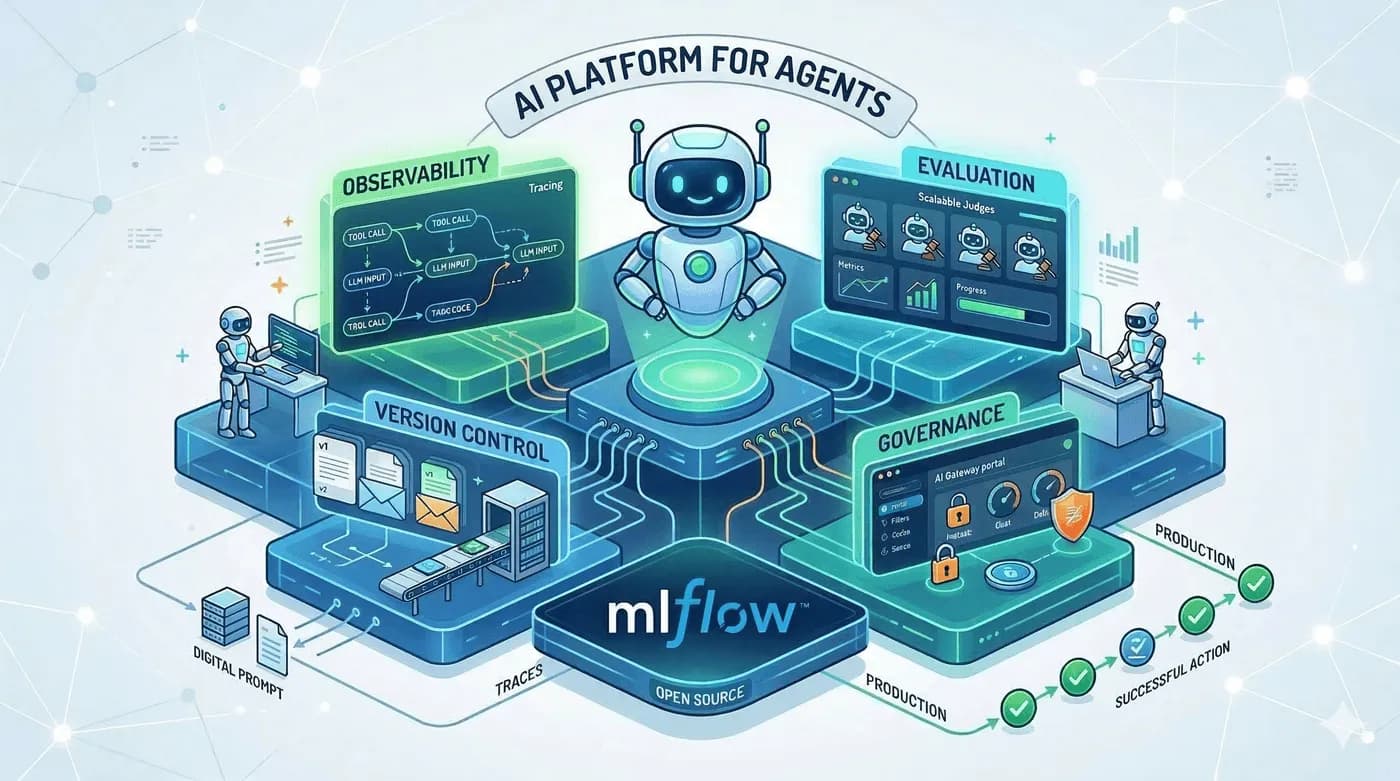
BentoML and MLflow serve complementary roles in the MLOps ecosystem rather than being direct competitors. BentoML excels at the model serving and inference layer, giving teams fine-grained control over deployment, scaling, and GPU optimization. MLflow covers the broader ML lifecycle with experiment tracking, evaluation, prompt management, and observability. Many teams use both tools together, with MLflow managing the development and experimentation phase while BentoML handles production inference. Your choice depends on which stage of the ML pipeline presents the biggest bottleneck for your team.
What each one handles
Use BentoML for:
Choose BentoML when your primary challenge is deploying and scaling AI model inference in production. BentoML is the stronger choice if you need optimized LLM serving with GPU orchestration, intelligent auto-scaling with cold-start acceleration, or multi-model pipeline orchestration. Teams running inference-heavy workloads that require fine-tuned performance across distributed GPUs will benefit from BentoML's specialized infrastructure. The BentoCloud managed platform adds enterprise-grade features like SOC 2 Type II compliance and dedicated support engineering for mission-critical deployments.
Use MLflow for:
Choose MLflow when you need a comprehensive platform that covers the entire ML lifecycle from experimentation through production monitoring. MLflow is the better fit if experiment tracking, model evaluation, prompt management, and AI governance are priorities. With 30 million monthly downloads and backing from the Linux Foundation, MLflow offers a sizable open-source AI engineering community and integrates with over 100 frameworks. Teams that need systematic evaluation with built-in metrics and LLM judges, or that want a unified AI Gateway for managing costs across LLM providers, will find MLflow more complete.
These roles reflect the available product evidence. Most teams run both; which one owns a given job depends on your stack and team.
Frequently Asked Questions
Can BentoML and MLflow be used together?
Yes, BentoML and MLflow are commonly used together in production ML workflows. MLflow handles experiment tracking, model versioning, and evaluation during the development phase, while BentoML takes over for model packaging, serving, and scaling in production. BentoML integrates with MLflow's model registry, allowing you to pull models tracked in MLflow and deploy them through BentoML's inference infrastructure.
Which tool is better for deploying large language models?
BentoML offers more specialized LLM deployment capabilities, including optimized inference with vLLM, TRT-LLM, and SGLang, distributed inference across multiple GPUs, and an open model catalog with pre-optimized popular models like Llama, DeepSeek, and Qwen. MLflow provides an AI Gateway for unified LLM provider access and an Agent Server for deploying LLM-based agents, but it focuses more on managing and evaluating LLM applications than on optimizing inference performance.
Is BentoML truly free, or does it require the paid BentoCloud platform?
BentoML's core framework is fully open source under the Apache 2.0 license and free to use for model serving and packaging. You can deploy Bentos on your own infrastructure using Docker and Kubernetes at no cost. BentoCloud is the optional managed platform that adds features like managed GPU access, cross-region scaling, enterprise security compliance, and dedicated support engineering, with pricing across Starter (pay-as-you-go), Scale, and Enterprise tiers.
How do the communities and adoption rates compare?
MLflow has extensive adoption with over 27,000 GitHub stars, 900+ contributors, and 30 million monthly package downloads. It is backed by the Linux Foundation and used by thousands of organizations including Fortune 500 companies. BentoML has a focused community with over 8,500 GitHub stars and strong adoption among teams specifically working on model inference and serving. MLflow's sizable ecosystem reflects its extensive scope covering the entire ML lifecycle.
Which tool offers better observability and monitoring?
Both tools provide observability, but with different focuses. MLflow offers OpenTelemetry-based tracing for LLM applications and agents, with production quality monitoring, cost tracking, and safety analysis. BentoML provides inference-specific observability including compute performance metrics, LLM-specific monitoring, and system health tracking. MLflow's observability covers the full AI application lifecycle, while BentoML's monitoring is optimized for the inference and serving layer.