Decision comparison
DVC vs MLflow
DVC and MLflow serve complementary roles in the MLOps ecosystem. DVC excels at Git-based data versioning and reproducible pipelines, while MLflow provides a comprehensive experiment tracking platform with modern LLM observability and agent deployment capabilities. Many teams use both tools together.
Architecture choice. These take different approaches to the same problem. Read the table as a fit question rather than a feature race.
All 2 are experiment tracking.
Quick Comparison
| Decision factor | DVC | MLflow |
|---|---|---|
| Primary Focus | Data and model version control with Git-like workflows for ML projects | End-to-end ML lifecycle platform covering tracking, registry, and deployment |
| Pricing Model | GitHub license: Apache-2.0 (tool can be self-hosted for free) | Open-source license (Apache-2.0), self-hosted for free |
| Best For | Teams that need Git-based data versioning and reproducible ML pipelines | Teams needing experiment tracking, model registry, and LLM observability |
| Learning Curve | Moderate for Git users; CLI-driven workflow feels natural to developers | Low to moderate; Python SDK integrates with minimal code changes |
| Community Size | 15,000+ GitHub stars with active open-source contributor community | 27,000+ GitHub stars, 900+ contributors, backed by Linux Foundation |
| Deployment Model | Local-first CLI tool with optional DVC Studio web UI for collaboration | Server-based with web UI; supports Docker and cloud deployment |
DVC
- Primary Focus:
- Data and model version control with Git-like workflows for ML projects
- Pricing Model:
- GitHub license: Apache-2.0 (tool can be self-hosted for free)
- Best For:
- Teams that need Git-based data versioning and reproducible ML pipelines
- Learning Curve:
- Moderate for Git users; CLI-driven workflow feels natural to developers
- Community Size:
- 15,000+ GitHub stars with active open-source contributor community
- Deployment Model:
- Local-first CLI tool with optional DVC Studio web UI for collaboration
MLflow
- Primary Focus:
- End-to-end ML lifecycle platform covering tracking, registry, and deployment
- Pricing Model:
- Open-source license (Apache-2.0), self-hosted for free
- Best For:
- Teams needing experiment tracking, model registry, and LLM observability
- Learning Curve:
- Low to moderate; Python SDK integrates with minimal code changes
- Community Size:
- 27,000+ GitHub stars, 900+ contributors, backed by Linux Foundation
- Deployment Model:
- Server-based with web UI; supports Docker and cloud deployment
Public signals
Verified factual signals only. Bars appear only for like-for-like metrics with five weekly assessments for every tool; missing evidence stays explicit. These signals do not establish enterprise adoption, product quality, or total cost.
| Metric | DVC | MLflow |
|---|---|---|
| GitHub commits, 90d(Product adoption) | 8 | 926 |
| GitHub stars(Product adoption) | 15,000+ | 28,000+ |
| Search interest(Market interest) | Unavailable | 2 |
| PyPI weekly downloads(Product adoption) | 402.2k | 4.6M |
| Stack Overflow questions(Community interest) | 165 | 771 |
| Hacker News mentions, 90d(Community interest) | Not available | 1 |
As of September 21, 2026 — updated weekly.
Health & risk evidence
Observed public-source checks for mapped package versions and repositories.
DVC
September 21, 2026Package vulnerabilities
PyPI · dvc@3.67.1
0 vulnerabilities
across 1 package
Repository security score
Not available
MLflow
September 21, 2026Package vulnerabilities
PyPI · mlflow@3.16.1
0 vulnerabilities
across 1 package
Repository security score
github.com/mlflow/mlflow
5.4/10
Interface Preview
MLflow
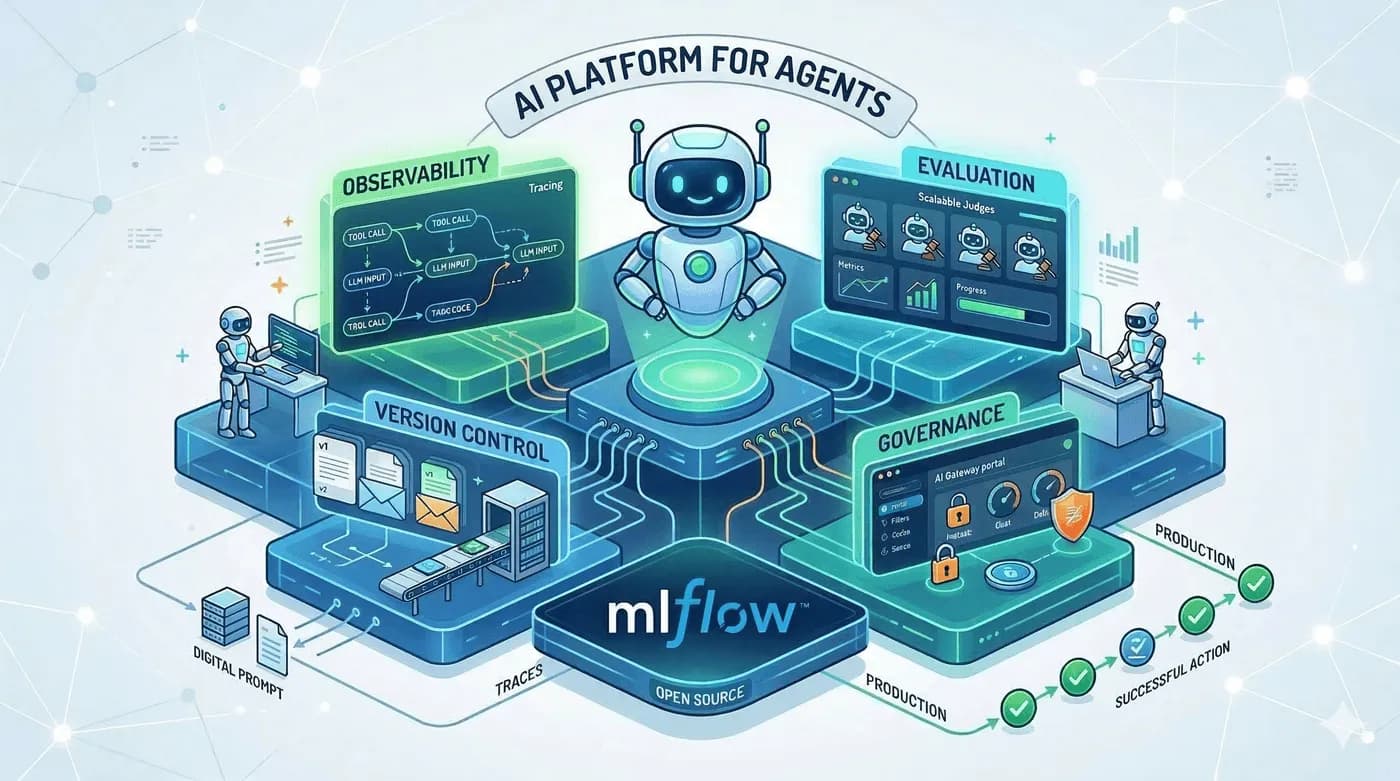
Feature Comparison
| Feature | DVC | MLflow |
|---|---|---|
| Version Control & Tracking | ||
| Data Version Control | Core strength: Git-like versioning for datasets and models across S3, GCS, Azure | Artifact logging and storage, but not designed for large dataset versioning |
| Experiment Tracking | Local experiment tracking through Git commits and DVC metrics files | Full-featured tracking server with parameters, metrics, and artifact logging |
| Model Registry | Model files tracked via DVC alongside code in Git repositories | Dedicated model registry with versioning, staging, and production lifecycle |
| Pipeline & Reproducibility | ||
| Pipeline Orchestration | DVC pipelines connect code and data stages for reproducible DAG execution | MLflow Projects define reproducible runs but lack built-in DAG orchestration |
| Reproducibility | Strong reproducibility through Git + DVC file locking of data and code versions | Run-level reproducibility via logged parameters, code version, and environment |
| CI/CD Integration | Native CI/CD pipeline integration using standard Git workflows and hooks | REST API and CLI enable integration with CI/CD systems for model deployment |
| Storage & Infrastructure | ||
| Remote Storage Support | Supports S3, GCS, Azure Blob, SSH, HDFS, and local storage backends | Artifact storage on S3, Azure Blob, GCS, SFTP, and local filesystem |
| Server Requirements | No server needed; runs entirely as a local CLI tool alongside Git | Requires MLflow tracking server for team collaboration and web UI access |
| Scalability | Handles large datasets through chunked storage and remote caching strategies | Battle-tested at Fortune 500 scale with 30M+ monthly package downloads |
| AI & LLM Capabilities | ||
| LLM Observability | No built-in LLM observability; focused on traditional ML data workflows | OpenTelemetry-based tracing for LLM applications and agent frameworks |
| Prompt Management | No prompt management capabilities; not designed for LLM workflows | Prompt versioning, testing, and optimization with state-of-the-art algorithms |
| Agent Deployment | No agent deployment features; focused on data and model versioning | Agent Server provides FastAPI-based hosting with streaming and tracing |
| Collaboration & Ecosystem | ||
| Web UI | Optional DVC Studio provides experiment tracking and visualization | Built-in web UI for exploring experiments, comparing runs, and artifacts |
| Framework Integrations | Works with any ML framework; integrates through CLI and Python API | 100+ integrations including LangChain, OpenAI, PyTorch, and scikit-learn |
| Language Support | Python CLI and API; language-agnostic for data versioning workflows | Python, TypeScript, JavaScript, Java, R with native OpenTelemetry support |
Version Control & Tracking
Data Version Control
Experiment Tracking
Model Registry
Pipeline & Reproducibility
Pipeline Orchestration
Reproducibility
CI/CD Integration
Storage & Infrastructure
Remote Storage Support
Server Requirements
Scalability
AI & LLM Capabilities
LLM Observability
Prompt Management
Agent Deployment
Collaboration & Ecosystem
Web UI
Framework Integrations
Language Support
Which approach fits
DVC and MLflow serve complementary roles in the MLOps ecosystem. DVC excels at Git-based data versioning and reproducible pipelines, while MLflow provides a comprehensive experiment tracking platform with modern LLM observability and agent deployment capabilities. Many teams use both tools together.
When each approach fits
Choose DVC if:
We recommend DVC for data science teams that prioritize Git-based version control for large datasets and ML models. DVC is the stronger choice when your workflow centers on reproducible pipelines, you need to track data across multiple storage backends like S3, GCS, or Azure, and your team prefers a local-first CLI tool that integrates directly into existing Git workflows without requiring a separate server.
Choose MLflow if:
We recommend MLflow for teams that need a full-featured experiment tracking platform with a built-in web UI, model registry, and deployment capabilities. MLflow is the better choice when you require LLM observability and prompt management, want a centralized server for team-wide collaboration, or need to deploy ML models and AI agents to production with built-in tracing and monitoring out of the box.
These scenarios reflect the available product evidence. Your requirements, existing stack, and team expertise should guide the final decision.
Frequently Asked Questions
Can DVC and MLflow be used together in the same ML project?
DVC and MLflow complement each other well in practice. DVC handles data and model versioning at the storage layer, tracking large datasets across remote backends like S3 and GCS using Git-like workflows. MLflow sits on top as the experiment tracking and model management layer, logging parameters, metrics, and artifacts for each run. Many teams use DVC to version their training data and model files while using MLflow to track experiment results and manage the model lifecycle from staging to production.
Which tool is better for managing large datasets in ML workflows?
DVC is specifically designed for large dataset management and versioning. It uses a Git-like approach where data files are tracked by hash references stored in small .dvc files committed to Git, while the actual data lives in remote storage backends such as S3, GCS, Azure Blob, or SSH servers. MLflow can log artifacts and store model files, but it lacks DVC's dedicated data versioning capabilities, chunked storage strategies, and pipeline-level data dependency tracking. For teams working with large or frequently changing datasets, DVC provides a more robust solution.
Does MLflow support LLM and AI agent workflows that DVC does not?
MLflow has expanded significantly into LLM and AI agent territory with capabilities that DVC does not offer. MLflow provides OpenTelemetry-based observability for capturing traces from LLM applications and agent frameworks, prompt versioning and optimization with automated algorithms, an AI Gateway for unified LLM provider access with rate limiting and fallbacks, and an Agent Server for deploying agents to production with FastAPI-based hosting. DVC remains focused on data versioning and reproducible ML pipelines, making MLflow the clear choice for teams building LLM-powered applications.
What are the infrastructure requirements for running DVC versus MLflow?
DVC operates as a lightweight CLI tool that requires no server infrastructure. It runs locally alongside Git, storing metadata in the repository and pushing data to configured remote storage backends. This makes DVC simple to set up and operate for individual developers or small teams. MLflow requires a tracking server for team collaboration features, including the web UI, experiment comparison, and model registry. The MLflow server can be started with a single command and supports Docker deployment. For production use, MLflow typically runs on a dedicated server with a database backend for metadata storage and remote artifact storage.