Decision comparison
ClearML vs MLflow
ClearML and MLflow serve different segments of the MLOps market. ClearML is the right choice when you need a comprehensive, all-in-one MLOps platform that handles everything from experiment tracking to GPU orchestration and model serving. MLflow is the better fit when you want the industry-standard experiment tracking tool with strong LLMOps capabilities, massive community support, and seamless integration into existing infrastructure. Both are open source under Apache 2.0, but they solve fundamentally different problems at different scales of complexity.
Architecture choice. These take different approaches to the same problem. Read the table as a fit question rather than a feature race.
These are different kinds of product — ML Platform and Experiment Tracking.
Quick Comparison
| Decision factor | ClearML | MLflow |
|---|---|---|
| Best For | Teams wanting a full MLOps suite with pipelines, data versioning, and model serving in one platform | Teams needing lightweight experiment tracking with broad framework integrations and LLMOps capabilities |
| Pricing | Open Source free, $15/unknown tier | Open-source license (Apache-2.0), self-hosted for free |
| Open Source | Yes — Apache 2.0 license, fully self-hostable | Yes — Apache 2.0 license, backed by Linux Foundation |
| Ease of Setup | Moderate — self-hosted setup requires infrastructure knowledge; hosted option available for quicker start | Easy — single command to start the server, minimal code changes needed |
| Community Size | 6,500+ GitHub stars, 300,000+ users, growing community | 27,000+ GitHub stars, 900+ contributors, 30M+ monthly downloads |
| Platform Scope | Full MLOps platform: experiment tracking, pipelines, data versioning, model serving, GPU orchestration | Experiment tracking, model registry, observability, evaluation, prompt management, AI gateway |
ClearML
- Best For:
- Teams wanting a full MLOps suite with pipelines, data versioning, and model serving in one platform
- Pricing:
- Open Source free, $15/unknown tier
- Open Source:
- Yes — Apache 2.0 license, fully self-hostable
- Ease of Setup:
- Moderate — self-hosted setup requires infrastructure knowledge; hosted option available for quicker start
- Community Size:
- 6,500+ GitHub stars, 300,000+ users, growing community
- Platform Scope:
- Full MLOps platform: experiment tracking, pipelines, data versioning, model serving, GPU orchestration
MLflow
- Best For:
- Teams needing lightweight experiment tracking with broad framework integrations and LLMOps capabilities
- Pricing:
- Open-source license (Apache-2.0), self-hosted for free
- Open Source:
- Yes — Apache 2.0 license, backed by Linux Foundation
- Ease of Setup:
- Easy — single command to start the server, minimal code changes needed
- Community Size:
- 27,000+ GitHub stars, 900+ contributors, 30M+ monthly downloads
- Platform Scope:
- Experiment tracking, model registry, observability, evaluation, prompt management, AI gateway
Public signals
Verified factual signals only. Bars appear only for like-for-like metrics with five weekly assessments for every tool; missing evidence stays explicit. These signals do not establish enterprise adoption, product quality, or total cost.
| Metric | ClearML | MLflow |
|---|---|---|
| Docker Hub pulls(Product adoption) | 89.0k | Not available |
| GitHub commits, 90d(Product adoption) | 67 | 926 |
| GitHub stars(Product adoption) | 6,500+ | 28,000+ |
| Search interest(Market interest) | 0 | 2 |
| PyPI weekly downloads(Product adoption) | 221.7k | 4.6M |
| Stack Overflow questions(Community interest) | 54 | 771 |
| Hacker News mentions, 90d(Community interest) | Not available | 1 |
As of September 21, 2026 — updated weekly.
Health & risk evidence
Observed public-source checks for mapped package versions and repositories.
ClearML
September 21, 2026Package vulnerabilities
PyPI · clearml@2.1.12
0 vulnerabilities
across 1 package
Repository security score
Not available
MLflow
September 21, 2026Package vulnerabilities
PyPI · mlflow@3.16.1
0 vulnerabilities
across 1 package
Repository security score
github.com/mlflow/mlflow
5.4/10
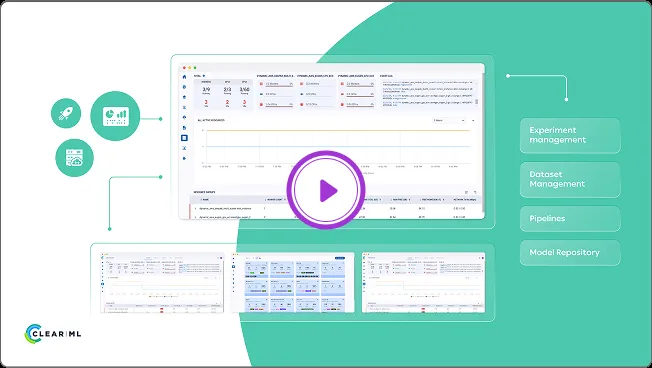
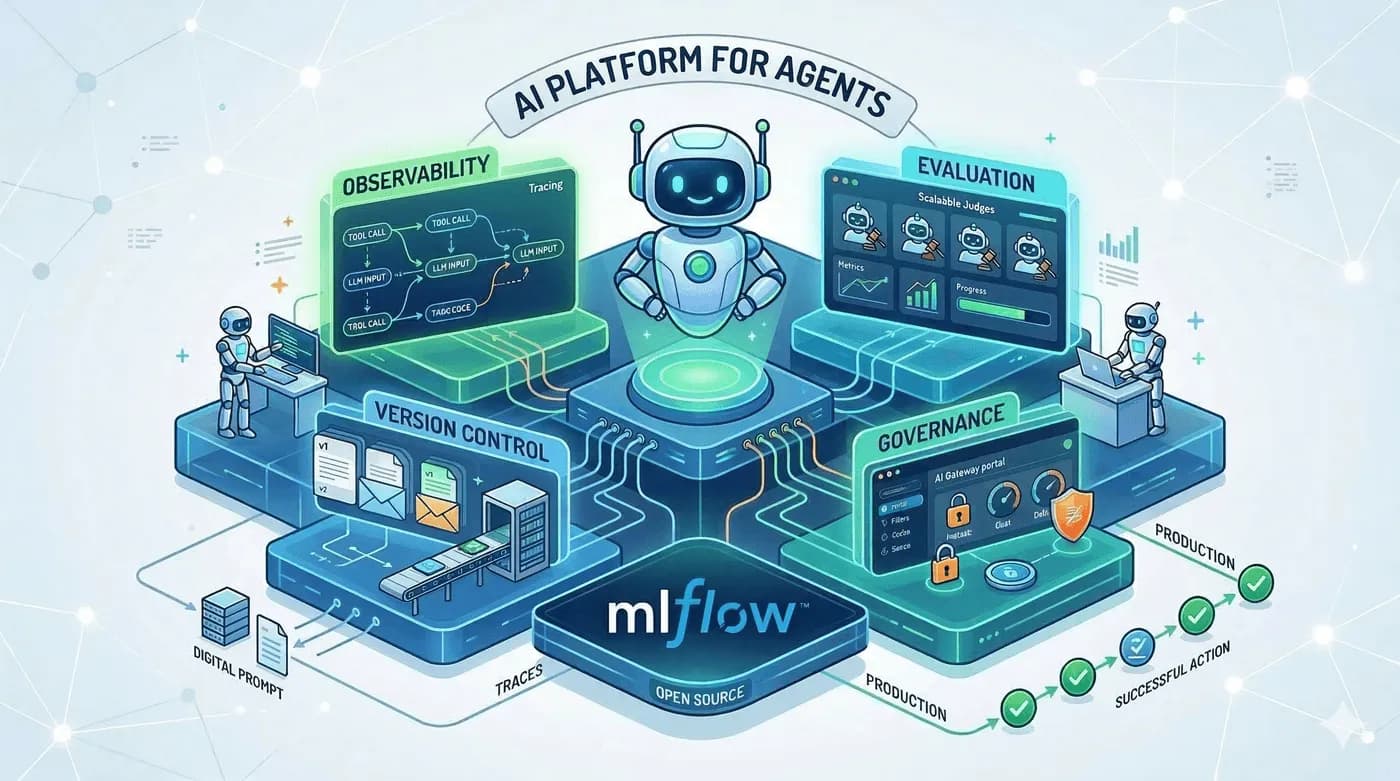
Interface Preview
ClearML
MLflow
Feature Comparison
| Feature | ClearML | MLflow |
|---|---|---|
| Experiment Tracking | ||
| Auto-logging | Automatic capture of hyperparameters, metrics, git diffs, and uncommitted changes with zero manual logging | Autolog support for 100+ frameworks including TensorFlow, PyTorch, scikit-learn, and OpenAI |
| Experiment Comparison | Built-in comparison dashboards for experiments, datasets, and models | Side-by-side run comparison with metrics, parameters, and artifacts |
| Git Integration | Automatic git repo tracking including uncommitted changes | Tracks git commit hash and repo URL for reproducibility |
| Pipeline & Orchestration | ||
| Pipeline Automation | Turn any Python function into a pipeline step with dependency injection, caching, and parallel execution | MLflow Recipes for predefined ML workflows; less flexible for custom pipelines |
| Remote Execution | ClearML Agent queues experiments on GPU clusters, cloud VMs, and on-premise infrastructure | Relies on external orchestrators like Databricks Jobs, Airflow, or Kubernetes |
| Compute Orchestration | Built-in GPU cluster management with fractional GPUs, priority scheduling, and multi-tenant support | No built-in compute orchestration; depends on external infrastructure |
| Data & Model Management | ||
| Dataset Versioning | Native dataset versioning tied to experiments with metadata tracking and enterprise security | Basic artifact logging; no built-in dataset versioning system |
| Model Registry | Built-in model repository for managing trained models across the lifecycle | Mature model registry with stage transitions, versioning, and annotations |
| Model Serving | Cloud-ready serving with GPU optimization backed by Nvidia Triton, batch and real-time inference | Agent Server with FastAPI-based hosting, automatic validation, and streaming support |
| LLMOps & AI Engineering | ||
| LLM Observability | General experiment monitoring; no dedicated LLM tracing | Full OpenTelemetry-based tracing for LLM applications and agents with production monitoring |
| Prompt Management | No dedicated prompt management features | Version, test, and deploy prompts with lineage tracking and automatic optimization |
| AI Gateway | GenAI App Engine for deploying LLMs on compute clusters with access control | Unified API gateway for all LLM providers with rate limiting, fallbacks, and cost control |
| Enterprise & Operations | ||
| Self-Hosting | Full self-hosted deployment including air-gapped environments, VPC, and hybrid setups | Self-hosted via single command; Docker setup available |
| Multi-Tenancy | Secure multi-tenancy with isolated networks, storage, role-based access, and granular billing | No built-in multi-tenancy; relies on external identity management |
| Hyperparameter Optimization | Built-in HPO with grid search, random search, and Bayesian optimization | No native HPO; integrates with external tools like Optuna and Hyperopt |
Experiment Tracking
Auto-logging
Experiment Comparison
Git Integration
Pipeline & Orchestration
Pipeline Automation
Remote Execution
Compute Orchestration
Data & Model Management
Dataset Versioning
Model Registry
Model Serving
LLMOps & AI Engineering
LLM Observability
Prompt Management
AI Gateway
Enterprise & Operations
Self-Hosting
Multi-Tenancy
Hyperparameter Optimization
Which approach fits
ClearML and MLflow serve different segments of the MLOps market. ClearML is the right choice when you need a comprehensive, all-in-one MLOps platform that handles everything from experiment tracking to GPU orchestration and model serving. MLflow is the better fit when you want the industry-standard experiment tracking tool with strong LLMOps capabilities, massive community support, and seamless integration into existing infrastructure. Both are open source under Apache 2.0, but they solve fundamentally different problems at different scales of complexity.
When each approach fits
Choose ClearML if:
Choose ClearML if you need a unified MLOps platform that covers the entire ML lifecycle in a single tool. ClearML excels when your team requires built-in pipeline orchestration, native dataset versioning, GPU cluster management with fractional GPU support, and self-hosted deployment with enterprise security features like multi-tenancy and air-gapped environments. It is particularly strong for organizations running multiple AI projects across distributed compute infrastructure who want to avoid stitching together separate tools for each stage of the ML workflow. The Pro tier at $15/user/month makes it significantly more affordable than commercial alternatives for teams that need managed features beyond the free self-hosted edition.
Choose MLflow if:
Choose MLflow if experiment tracking and LLMOps are your primary needs and you want the most widely adopted open source tool in the space. With 25,400+ GitHub stars, 900+ contributors, and 30 million monthly downloads, MLflow has a sizable community and extensive ecosystem integration among MLOps tools. It is the strongest option for teams building LLM applications thanks to its OpenTelemetry-based observability, prompt management with optimization, evaluation framework with 50+ built-in metrics, and unified AI gateway. MLflow works best when you already have infrastructure for compute orchestration and need a reliable tracking and registry layer that integrates with Databricks, any cloud provider, and 100+ AI frameworks out of the box.
These scenarios reflect the available product evidence. Your requirements, existing stack, and team expertise should guide the final decision.
Frequently Asked Questions
Is ClearML truly free for production use?
Yes. ClearML's open source edition under Apache 2.0 is fully functional for production workloads with unlimited experiments, pipeline automation, dataset versioning, and model serving. You can self-host it at no cost on your own infrastructure. The hosted Free tier supports teams of up to 3 with 100GB artifact storage and 1M API calls per month. The Pro tier at $15/user/month adds cloud auto-scaling, advanced HPO, and additional storage for teams up to 10.
Can MLflow handle the full ML lifecycle like ClearML?
MLflow covers experiment tracking, model registry, model serving, evaluation, and LLMOps features extremely well, but it does not include built-in pipeline orchestration, dataset versioning, or compute resource management. For those capabilities, teams typically pair MLflow with external tools like Airflow for orchestration, DVC for data versioning, and Kubernetes for compute management. ClearML bundles all of these into a single platform.
Which tool has better LLM and agent support?
MLflow has stronger LLMOps capabilities as of 2026. It provides dedicated OpenTelemetry-based tracing for LLM applications, prompt management with automatic optimization, an evaluation framework with 50+ built-in metrics and LLM judges, and a unified AI gateway for managing multiple LLM providers. ClearML offers a GenAI App Engine for deploying LLMs on compute clusters but lacks the dedicated observability and prompt engineering tooling that MLflow provides.
How do ClearML and MLflow compare on community and ecosystem support?
MLflow has a sizable community with 27,000+ GitHub stars, 900+ contributors, and over 30 million monthly package downloads. It is backed by the Linux Foundation and integrates with 100+ AI frameworks. ClearML has a focused but active community with 6,500+ GitHub stars and over 300,000 users across 2,100+ organizations. MLflow has more Stack Overflow answers and third-party tutorials, making it easier to find help when troubleshooting.
Can we migrate from MLflow to ClearML or vice versa?
Both tools support standard ML frameworks and artifact formats, making migration feasible but not seamless. ClearML can import MLflow experiment data through its SDK, and both tools log models in compatible formats like ONNX and standard pickle files. The main migration effort involves reconfiguring pipeline definitions, updating logging calls in your codebase, and adapting any CI/CD integrations that reference the previous tool's API.