Decision comparison
Apache Kafka vs RabbitMQ vs Redis
Apache Kafka, RabbitMQ, and Redis serve fundamentally different messaging needs despite overlapping in some areas. Kafka is a prominent solution for high-throughput event streaming and data pipeline workloads where durability and replay are critical. RabbitMQ excels at traditional message queuing with rich protocol support and flexible routing for microservices. Redis delivers unmatched speed for in-memory operations and lightweight messaging where sub-millisecond latency matters most.
Architecture choice. These take different approaches to the same problem. Read the table as a fit question rather than a feature race.
These are different kinds of product — Event Streaming Platform, Message Broker and Key-Value Store.
Quick Comparison
| Decision factor | Apache Kafka | RabbitMQ | Redis |
|---|---|---|---|
| Best For | High-throughput event streaming, real-time data pipelines, and log aggregation at enterprise scale | Traditional message queuing, microservices communication, RPC patterns, and IoT messaging use cases | In-memory caching, real-time data structures, low-latency pub/sub, and lightweight message brokering |
| Architecture | Distributed commit log with brokers, partitions, and consumer groups using publish-subscribe model | Message broker supporting AMQP, MQTT, and STOMP protocols with exchanges, queues, and bindings | In-memory data structure store supporting strings, hashes, lists, sets, sorted sets, and streams |
| Pricing Model | Apache Kafka is open-source software available at no cost. | RabbitMQ is free and open source, so the broker carries no licence fee. Commercial support and the Tanzu RabbitMQ distribution are sold separately by Broadcom and are quoted, not published. | $0.00, $5/mo, $200 /mo |
| Ease of Use | Steeper learning curve with complex cluster setup, ZooKeeper dependency, and partition management required | Lightweight and user-friendly with built-in management UI, detailed documentation, and plugin ecosystem | Extremely easy to set up and use with simple commands, rich client libraries, and Redis Insight GUI |
| Scalability | Scales to trillions of messages per day across thousands of brokers with petabyte-level data handling | Supports clustering and federation but not designed for extreme-scale event streaming workloads | Scales through clustering and Active-Active geo-distribution with sub-millisecond latency at scale |
| Community/Support | 33,000+ GitHub stars, 151 reviews rated 8.6/10, used by 80% of Fortune 100 companies worldwide | 13,000+ GitHub stars, 42 reviews rated 9/10, backed by Broadcom with 24/7 commercial support | 75,000+ GitHub stars, 231 reviews rated 9.1/10, massive developer community across all platforms |
Apache Kafka
- Best For:
- High-throughput event streaming, real-time data pipelines, and log aggregation at enterprise scale
- Architecture:
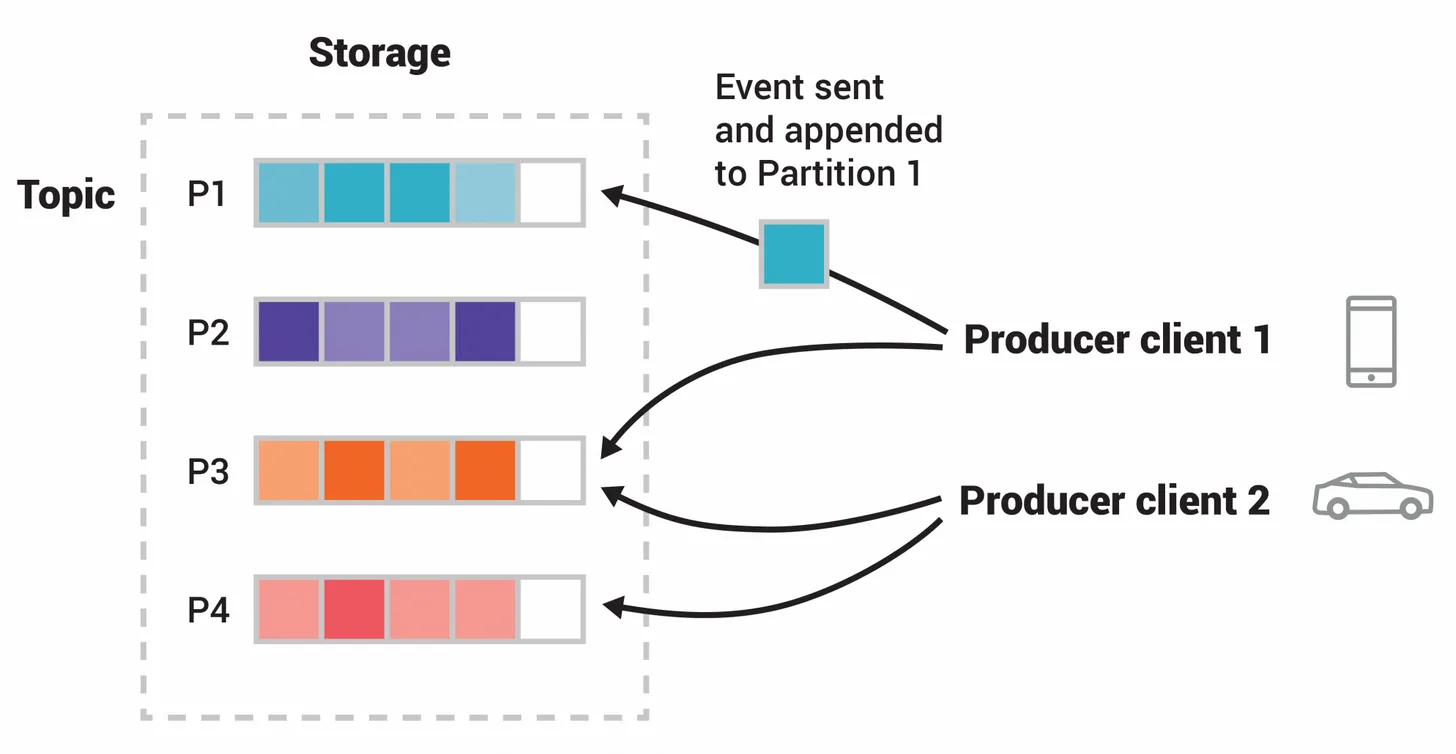
- Distributed commit log with brokers, partitions, and consumer groups using publish-subscribe model
- Pricing Model:
- Apache Kafka is open-source software available at no cost.
- Ease of Use:
- Steeper learning curve with complex cluster setup, ZooKeeper dependency, and partition management required
- Scalability:
- Scales to trillions of messages per day across thousands of brokers with petabyte-level data handling
- Community/Support:
- 33,000+ GitHub stars, 151 reviews rated 8.6/10, used by 80% of Fortune 100 companies worldwide
RabbitMQ
- Best For:
- Traditional message queuing, microservices communication, RPC patterns, and IoT messaging use cases
- Architecture:
- Message broker supporting AMQP, MQTT, and STOMP protocols with exchanges, queues, and bindings
- Pricing Model:
- RabbitMQ is free and open source, so the broker carries no licence fee. Commercial support and the Tanzu RabbitMQ distribution are sold separately by Broadcom and are quoted, not published.
- Ease of Use:
- Lightweight and user-friendly with built-in management UI, detailed documentation, and plugin ecosystem
- Scalability:
- Supports clustering and federation but not designed for extreme-scale event streaming workloads
- Community/Support:
- 13,000+ GitHub stars, 42 reviews rated 9/10, backed by Broadcom with 24/7 commercial support
Redis
- Best For:
- In-memory caching, real-time data structures, low-latency pub/sub, and lightweight message brokering
- Architecture:
- In-memory data structure store supporting strings, hashes, lists, sets, sorted sets, and streams
- Pricing Model:
- $0.00, $5/mo, $200 /mo
- Ease of Use:
- Extremely easy to set up and use with simple commands, rich client libraries, and Redis Insight GUI
- Scalability:
- Scales through clustering and Active-Active geo-distribution with sub-millisecond latency at scale
- Community/Support:
- 75,000+ GitHub stars, 231 reviews rated 9.1/10, massive developer community across all platforms
Public signals
Verified factual signals only. Bars appear only for like-for-like metrics with five weekly assessments for every tool; missing evidence stays explicit. These signals do not establish enterprise adoption, product quality, or total cost.
| Metric | Apache Kafka | RabbitMQ | Redis |
|---|---|---|---|
| Docker Hub pulls(Product adoption) | 43.7M | 3.9B | 11.3B |
| GitHub commits, 90d(Product adoption) | 567 | 937 | 159 |
| GitHub stars(Product adoption) | 33,000+ | 13,000+ | 76,000+ |
| Search interest(Market interest) | 5 | 5 | 1 |
| Hacker News mentions, 90d(Community interest) | 8 | Not available | 61 |
| npm weekly downloads(Ecosystem adoption) | 2.5M | 2.1M | Not available |
| PyPI weekly downloads(Ecosystem adoption) | 9.6M | 2.5M | Not available |
| Stack Overflow questions(Community interest) | 33.2k | 14.3k | 25.4k |
| npm weekly downloads(Developer adoption) | Not available | Not available | 9.6M |
| Product Hunt comments(Community interest) | Not available | Not available | 0 |
| Product Hunt rating(Community interest) | Not available | Not available | 5.0/5 |
| Product Hunt reviews(Community interest) | Not available | Not available | 16 |
| Product Hunt votes(Community interest) | Not available | Not available | 2 |
| PyPI weekly downloads(Developer adoption) | Not available | Not available | 45.6M |
As of September 21, 2026 — updated weekly.
Health & risk evidence
Observed public-source checks for mapped package versions and repositories.
Apache Kafka
September 21, 2026Package vulnerabilities
PyPI · confluent-kafka@2.15.1 · npm · kafkajs@2.2.4
0 vulnerabilities
across 2 packages
Repository security score
github.com/apache/kafka
6.1/10
RabbitMQ
September 21, 2026Package vulnerabilities
npm · amqplib@2.0.1 · PyPI · pika@1.4.4
0 vulnerabilities
across 2 packages
Repository security score
Not available
Redis
September 21, 2026Package vulnerabilities
npm · redis@6.2.1 · PyPI · redis@8.1.0
0 vulnerabilities
across 2 packages
Repository security score
Not available
Interface Preview
Apache Kafka
Redis
Feature Comparison
| Feature | Apache Kafka | RabbitMQ | Redis |
|---|---|---|---|
| Messaging & Streaming | |||
| Message Model | Distributed commit log with publish-subscribe model, persistent message storage, and consumer group offsets | Traditional message broker with exchanges, queues, bindings, and support for both pub/sub and point-to-point | In-memory pub/sub with Redis Streams providing persistent, append-only log with consumer groups |
| Message Ordering | Guaranteed ordering within partitions with configurable partition keys for related messages | FIFO ordering within individual queues, with priority queue support for message reordering | Ordered within streams using auto-generated IDs with timestamp-based sequencing |
| Message Replay | Full replay support with configurable retention policies, time-based and offset-based seeking | Streams feature supports replay; classic queues delete messages after acknowledgment | Redis Streams support replay by ID or timestamp with configurable retention and trimming |
| Performance & Scalability | |||
| Throughput | Millions of messages per second per cluster, handles trillions of messages per day at production scale | Tens of thousands of messages per second per node, optimized for moderate-volume workloads | Hundreds of thousands of operations per second with sub-millisecond latency for in-memory operations |
| Latency | As low as 2ms end-to-end latency at network-limited throughput using optimized batching | Low-latency message delivery suitable for RPC patterns and real-time task distribution | Sub-millisecond latency for in-memory operations with 99.999% uptime on Active-Active deployments |
| Horizontal Scaling | Scales by adding brokers and partitions across thousands of nodes with elastic expand and contract | Clustering across nodes with federation for multi-datacenter deployments and distributed shovels | Automatic clustering splits data across multiple nodes with Active-Active geo-distribution |
| Reliability & Durability | |||
| Data Persistence | Permanent storage in distributed, durable, fault-tolerant cluster with configurable retention periods | Quorum queues provide durable, replicated storage with acknowledgment-based delivery guarantees | Optional persistence through RDB snapshots and AOF logs; primarily operates in-memory |
| Fault Tolerance | Built-in replication across brokers with automatic failover spanning availability zones and regions | High availability through mirrored queues, quorum queues, and standby cluster disaster recovery | Automatic failover to replicas with no downtime; supports Active-Active geo-distribution for 99.999% uptime |
| Delivery Guarantees | Supports at-least-once, at-most-once, and exactly-once processing semantics with idempotent producers | At-least-once delivery with publisher confirms and consumer acknowledgments for reliable messaging | At-most-once for pub/sub; at-least-once with Redis Streams consumer groups and acknowledgments |
| Protocol & Integration | |||
| Protocol Support | Custom Kafka protocol with client libraries in Java, Python, Go, C++, and many other languages | Supports AMQP 1.0, MQTT 5.0, STOMP, and AMQP 0-9-1 protocols with no vendor lock-in | RESP protocol with client libraries for Node.js, Java, Python, Go, PHP, .NET, C++, and more |
| Ecosystem Integration | Kafka Connect integrates with Postgres, Elasticsearch, AWS S3, JMS, and hundreds of other systems | Plugin ecosystem with shovels, federation, and integrations for common enterprise middleware | Integrates with AWS, Azure, Google Cloud, Vercel, Heroku, Kubernetes, Docker, and LangChain for AI |
| Stream Processing | Built-in Kafka Streams library for joins, aggregations, filters, and transformations using event-time | RabbitMQ Streams for append-only log consumption; no built-in stream processing engine | Redis Search for real-time queries and data processing; Redis Data Integration for CDC pipelines |
| Operations & Management | |||
| Deployment Complexity | High operational complexity requiring broker management, ZooKeeper or KRaft, and partition tuning | Moderate complexity with straightforward deployment, easy-to-use management UI, and plugin system | Low complexity with simple setup, single-binary deployment, and Redis Insight graphical interface |
| Monitoring & Management | Relies on third-party tools for monitoring; lacks built-in enterprise-grade observability dashboards | Built-in management UI with queue inspection, stream browser, and audit logging in commercial edition | Redis Insight provides free GUI for development, debugging, and visualization of data structures |
| Cloud & Managed Options | Confluent Cloud, Amazon MSK, and Aiven offer fully managed Kafka services in the cloud | Tanzu RabbitMQ from Broadcom offers enterprise support, cloud deployment, and disaster recovery | Redis Cloud provides fully managed service on AWS, Azure, and Google Cloud with free tier available |
Messaging & Streaming
Message Model
Message Ordering
Message Replay
Performance & Scalability
Throughput
Latency
Horizontal Scaling
Reliability & Durability
Data Persistence
Fault Tolerance
Delivery Guarantees
Protocol & Integration
Protocol Support
Ecosystem Integration
Stream Processing
Operations & Management
Deployment Complexity
Monitoring & Management
Cloud & Managed Options
Which approach fits
Apache Kafka, RabbitMQ, and Redis serve fundamentally different messaging needs despite overlapping in some areas. Kafka is a prominent solution for high-throughput event streaming and data pipeline workloads where durability and replay are critical. RabbitMQ excels at traditional message queuing with rich protocol support and flexible routing for microservices. Redis delivers unmatched speed for in-memory operations and lightweight messaging where sub-millisecond latency matters most.
When each approach fits
Choose Apache Kafka if:
Choose Apache Kafka when you need a distributed event streaming platform that handles massive data volumes at enterprise scale. Kafka is the right choice for real-time data pipelines, log aggregation, event sourcing, and streaming analytics where you need to process trillions of messages per day. Its permanent storage, message replay capabilities, and exactly-once processing semantics make it ideal for mission-critical applications in financial services, e-commerce, and IoT. Accept the operational complexity in exchange for high throughput and durability.
Choose RabbitMQ if:
Choose RabbitMQ when you need a reliable, flexible message broker for microservices communication, task distribution, and RPC patterns. RabbitMQ is the right fit when your application requires multi-protocol support including AMQP, MQTT, and STOMP, and when you value ease of deployment over extreme throughput. Its built-in management UI, plugin ecosystem, and mature routing capabilities make it excellent for decoupling services, IoT messaging, and enterprise integration scenarios where moderate message volumes and flexible delivery patterns are important rather than raw streaming performance.
Choose Redis if:
Choose Redis when your primary need is ultra-low-latency in-memory operations with messaging as a secondary capability. Redis is ideal when you already use it for caching or session management and want to add lightweight pub/sub or stream processing without deploying a separate message broker. Redis Streams provide a good middle ground for applications needing ordered, persistent messaging at moderate scale. Its simple setup, rich data structure support, and sub-millisecond performance make it a prominent choice for real-time applications, AI agent memory, and scenarios where speed is a close priority alongside advanced queuing features.
These scenarios reflect the available product evidence. Your requirements, existing stack, and team expertise should guide the final decision.
Frequently Asked Questions
Can Redis replace Kafka for event streaming?
Redis Streams provide append-only log functionality with consumer groups similar to Kafka, but Redis is not a full Kafka replacement for large-scale event streaming. Kafka handles trillions of messages per day with permanent disk-based storage and exactly-once semantics, while Redis operates primarily in-memory with optional persistence. Redis Streams work well for moderate-volume, low-latency streaming where data fits in memory, but Kafka remains the better choice for high-throughput data pipelines, log aggregation, and workloads requiring long-term message retention and replay across petabytes of data.
Which tool has the lowest operational complexity?
Redis has the lowest operational complexity among the three tools. It features simple setup, a single-binary deployment model, and the free Redis Insight GUI for development and debugging. RabbitMQ ranks second with its built-in management UI, detailed documentation, and straightforward clustering. Kafka has the highest operational complexity, requiring management of brokers, partitions, replication, and either ZooKeeper or the newer KRaft consensus protocol. Teams choosing Kafka typically need dedicated infrastructure expertise or opt for managed services like Confluent Cloud or Amazon MSK to reduce the operational burden.
How do the three tools compare on pricing?
All three tools offer open-source editions at no cost. Apache Kafka is fully open-source under the Apache 2.0 license with no commercial tiers from the Apache project itself, though managed services like Confluent Cloud charge for hosting. RabbitMQ is free under the Mozilla Public License 2.0, with Broadcom offering commercial Tanzu RabbitMQ with 24/7 support at enterprise pricing available on request. Redis provides open-source Redis 8 for free, while Redis Cloud offers a free tier at no publisher license fee, a basic plan at $5 per month, and a pro plan starting at $200 per month for fully managed cloud deployments.
Can I use RabbitMQ and Kafka together in the same architecture?
Yes, many organizations use RabbitMQ and Kafka together to leverage the strengths of each tool. A common pattern places Kafka as the central event streaming backbone for high-volume data pipelines and log aggregation, while RabbitMQ handles task distribution, RPC calls, and microservices communication where flexible routing and protocol support matter more than raw throughput. Kafka excels at durable event storage and replay, while RabbitMQ provides superior message routing with exchanges and bindings. This hybrid approach lets teams use the right tool for each specific messaging pattern within their overall system architecture.