Decision comparison
MLflow vs PyTorch
MLflow and PyTorch serve fundamentally different roles in the ML stack. PyTorch is the deep learning framework where you build and train models, while MLflow is the lifecycle management platform where you track experiments, manage models, and deploy to production. Most teams use both together rather than choosing one over the other.
Used together. These are normally used together rather than chosen between. The comparison explains what each one does in the stack.
These are different kinds of product — Experiment Tracking and Deep Learning Framework.
Quick Comparison
| Decision factor | MLflow | PyTorch |
|---|---|---|
| Primary Purpose | ML lifecycle management covering experiment tracking, model registry, deployment, and LLM observability | Deep learning framework providing tensor computation with GPU acceleration and dynamic neural networks |
| Pricing | Open-source license (Apache-2.0), self-hosted for free | Contact for pricing |
| Ease of Setup | Single command startup with uvx mlflow server, autolog integration captures traces in under a minute | Install via pip with CUDA, ROCm, or CPU backends; cloud partners offer prebuilt images |
| Community Size | 20K+ GitHub stars, 900+ contributors, backed by Linux Foundation with 30M+ monthly downloads | 99K+ GitHub stars, massive academic and industry adoption, supported by the PyTorch Foundation |
| Production Deployment | Agent Server deploys models via FastAPI with streaming support, request validation, and built-in tracing | TorchScript for graph mode optimization plus TorchServe for scalable model serving with REST endpoints |
| Integration Breadth | Integrates with 100+ AI frameworks including LangChain, OpenAI, and PyTorch out of the box | Rich ecosystem with PyTorch Geometric, Captum, skorch, plus native ONNX export and C++ frontend |
MLflow
- Primary Purpose:
- ML lifecycle management covering experiment tracking, model registry, deployment, and LLM observability
- Pricing:
- Open-source license (Apache-2.0), self-hosted for free
- Ease of Setup:
- Single command startup with uvx mlflow server, autolog integration captures traces in under a minute
- Community Size:
- 20K+ GitHub stars, 900+ contributors, backed by Linux Foundation with 30M+ monthly downloads
- Production Deployment:
- Agent Server deploys models via FastAPI with streaming support, request validation, and built-in tracing
- Integration Breadth:
- Integrates with 100+ AI frameworks including LangChain, OpenAI, and PyTorch out of the box
PyTorch
- Primary Purpose:
- Deep learning framework providing tensor computation with GPU acceleration and dynamic neural networks
- Pricing:
- Contact for pricing
- Ease of Setup:
- Install via pip with CUDA, ROCm, or CPU backends; cloud partners offer prebuilt images
- Community Size:
- 99K+ GitHub stars, massive academic and industry adoption, supported by the PyTorch Foundation
- Production Deployment:
- TorchScript for graph mode optimization plus TorchServe for scalable model serving with REST endpoints
- Integration Breadth:
- Rich ecosystem with PyTorch Geometric, Captum, skorch, plus native ONNX export and C++ frontend
Public signals
Verified factual signals only. Bars appear only for like-for-like metrics with five weekly assessments for every tool; missing evidence stays explicit. These signals do not establish enterprise adoption, product quality, or total cost.
| Metric | MLflow | PyTorch |
|---|---|---|
| GitHub commits, 90d(Product adoption) | 874 | 4.3k |
| GitHub stars(Product adoption) | 27,000+ | 102,000+ |
| Search interest(Market interest) | 2 | 41 |
| Hacker News mentions, 90d(Community interest) | 1 | 53 |
| PyPI weekly downloads(Product adoption) | 4.9M | 14.1M |
| Stack Overflow questions(Community interest) | 771 | 23.8k |
| Docker Hub pulls(Product adoption) | Not available | 20.8M |
| Hugging Face downloads(Product adoption) | Not available | 2.7k |
| Hugging Face likes(Product adoption) | Not available | 258 |
| Product Hunt comments(Community interest) | Not available | 0 |
| Product Hunt rating(Community interest) | Not available | 4.9/5 |
| Product Hunt reviews(Community interest) | Not available | 29 |
| Product Hunt votes(Community interest) | Not available | 5 |
As of September 14, 2026 — updated weekly.
Health & risk evidence
Observed public-source checks for mapped package versions and repositories.
MLflow
September 14, 2026Package vulnerabilities
PyPI · mlflow@3.16.0
0 vulnerabilities
across 1 package
Repository security score
Not available
PyTorch
September 14, 2026Package vulnerabilities
PyPI · torch@2.14.0
0 vulnerabilities
across 1 package
Repository security score
Not available
Interface Preview
MLflow
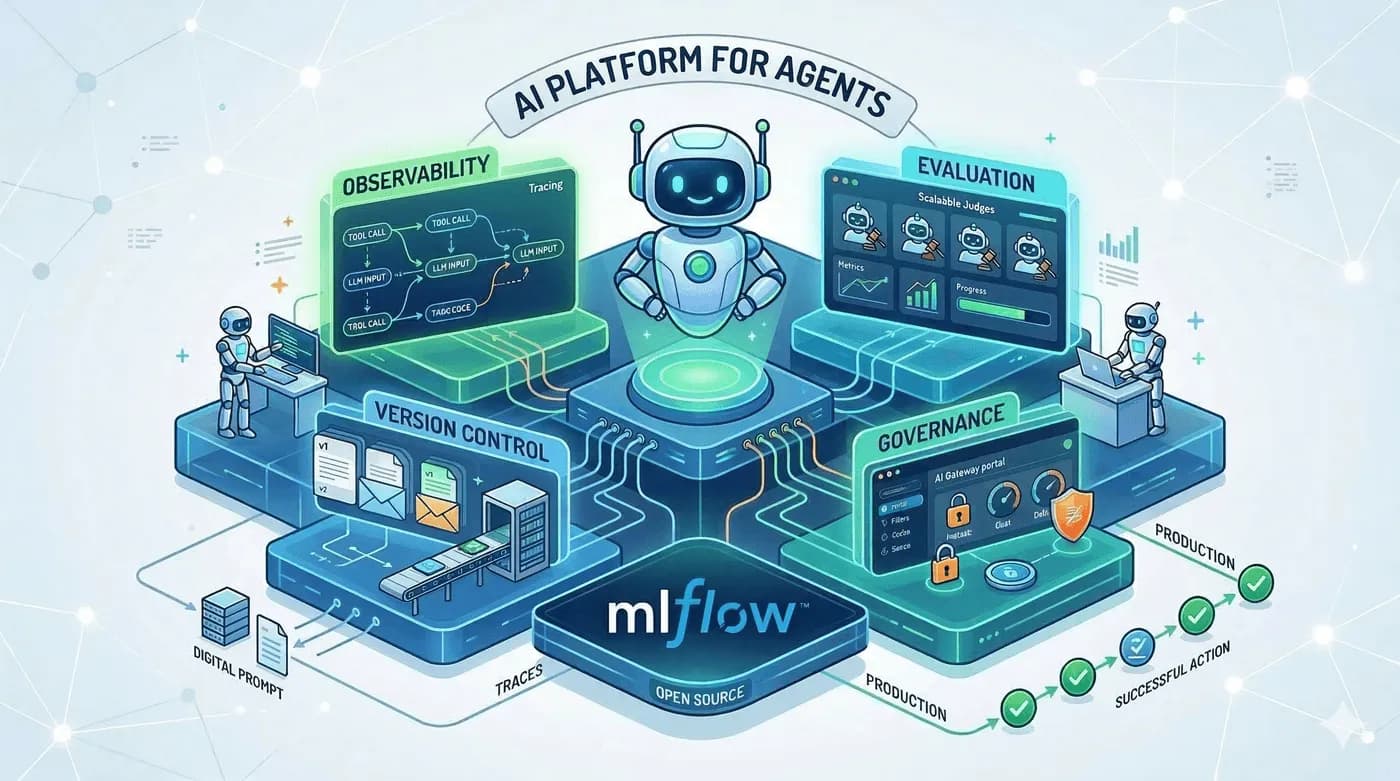
PyTorch
Feature Comparison
| Feature | MLflow | PyTorch |
|---|---|---|
| Core ML Capabilities | ||
| Tensor Computation | Not a compute framework; relies on integrated libraries like PyTorch and TensorFlow for tensor operations | Native tensor computation with strong GPU acceleration, similar to NumPy but optimized for deep learning workloads |
| Neural Network Training | Tracks and logs training runs with parameters, metrics, and artifacts; does not perform training itself | Built-in tape-based autograd system for building and training deep neural networks with dynamic computation graphs |
| Distributed Training | Logs and tracks distributed training experiments across nodes but delegates actual distributed execution to frameworks | Native torch.distributed backend with asynchronous collective operations and peer-to-peer communication in Python and C++ |
| Experiment Management | ||
| Experiment Tracking | Full experiment tracking with parameter logging, metric recording, artifact storage, and a searchable web UI | No built-in experiment tracking; teams typically pair PyTorch with MLflow or Weights & Biases for tracking |
| Model Registry | Central model registry for versioning, staging, and promoting models through lifecycle stages to production | No native model registry; relies on external tools like MLflow or cloud platform registries for model management |
| Evaluation & Metrics | 50+ built-in metrics and LLM judges for systematic evaluation, with regression detection before production deployment | Provides loss functions and basic metric computation during training; advanced evaluation requires additional libraries |
| Production & Deployment | ||
| Model Serving | Agent Server provides FastAPI-based hosting with automatic request validation, streaming support, and built-in tracing | TorchServe handles multi-model serving with logging, metrics, and RESTful endpoints for application integration |
| Model Export | Packages models in MLflow format with environment metadata for reproducible deployment across platforms | Native ONNX export for cross-platform compatibility plus TorchScript for optimized C++ runtime deployment |
| Cloud Support | Self-hosted on any cloud with no vendor lock-in; works with AWS, GCP, Azure, and on-premises infrastructure | Supported on AWS SageMaker, Google Cloud Deep Learning VMs, Azure Machine Learning, and Lightning Studios |
| LLM & Agent Support | ||
| LLM Observability | OpenTelemetry-based tracing captures complete traces of LLM applications and agents with cost and safety monitoring | No LLM-specific observability; provides low-level tensor operations that power LLM inference and training |
| Prompt Management | Version, test, and deploy prompts with full lineage tracking and automatic optimization using state-of-the-art algorithms | No prompt management capabilities; operates at the model architecture and training level below prompt engineering |
| AI Gateway | Unified API gateway for all LLM providers with request routing, rate limits, fallbacks, and cost control via OpenAI-compatible interface | No API gateway functionality; serves as the underlying framework that LLM providers build their models on |
| Developer Experience | ||
| Language Support | Supports Python, TypeScript/JavaScript, Java, and R with native OpenTelemetry integration | Primary Python API with a pure C++ frontend following the same design architecture for high-performance applications |
| Mobile Deployment | No mobile-specific deployment; focuses on server-side model management and serving infrastructure | Experimental end-to-end workflow from Python to iOS and Android deployment with prebuilt mobile binaries |
| Getting Started | Three-step setup: run uvx mlflow server, add autolog import, then run existing code with full trace capture | Install via pip with compute platform selection, then build models using the nn.Module API and autograd system |
Core ML Capabilities
Tensor Computation
Neural Network Training
Distributed Training
Experiment Management
Experiment Tracking
Model Registry
Evaluation & Metrics
Production & Deployment
Model Serving
Model Export
Cloud Support
LLM & Agent Support
LLM Observability
Prompt Management
AI Gateway
Developer Experience
Language Support
Mobile Deployment
Getting Started
How they fit together
MLflow and PyTorch serve fundamentally different roles in the ML stack. PyTorch is the deep learning framework where you build and train models, while MLflow is the lifecycle management platform where you track experiments, manage models, and deploy to production. Most teams use both together rather than choosing one over the other.
What each one handles
Use MLflow for:
We recommend MLflow for teams that need to bring structure and visibility to their ML workflows. If you are already training models in any framework and struggle with experiment tracking, model versioning, or production deployment, MLflow fills that gap. Its Agent Server and LLM observability features make it especially strong for teams building AI applications with agents and large language models. The Apache 2.0 license and 30M+ monthly downloads confirm it as the industry standard for ML lifecycle management.
Use PyTorch for:
We recommend PyTorch for teams focused on building and training deep learning models from scratch. Its dynamic computation graphs, strong GPU acceleration, and tape-based autograd system make it the preferred framework for both research and production model development. With 99K+ GitHub stars and native support on every major cloud platform, PyTorch has a sizable ecosystem among deep learning frameworks. TorchServe and TorchScript provide a clear path from research prototypes to optimized production inference.
These roles reflect the available product evidence. Most teams run both; which one owns a given job depends on your stack and team.
Frequently Asked Questions
Can MLflow and PyTorch be used together?
Yes, MLflow and PyTorch are designed to work together and this is one of the most common pairings in production ML workflows. MLflow lists PyTorch as one of its featured integrations, providing autologging that automatically captures PyTorch training metrics, parameters, and model artifacts. You train your models in PyTorch and use MLflow to track experiments, version models in the registry, and deploy them via the Agent Server. This combination gives you the flexibility of PyTorch's dynamic computation graphs with the operational structure of MLflow's lifecycle management.
Is MLflow or PyTorch better for LLM applications?
For LLM application development and operations, MLflow provides significantly more relevant capabilities. MLflow offers LLM-specific observability built on OpenTelemetry, prompt management with version tracking and optimization, 50+ built-in evaluation metrics including LLM judges, and an AI Gateway for managing multiple LLM providers through a unified API. PyTorch operates at the lower level of model architecture and training, powering the infrastructure that LLMs run on but not providing tools for prompt engineering, evaluation, or LLM deployment management. Teams building LLM applications typically use MLflow for the operational layer.
What are the pricing differences between MLflow and PyTorch?
Both MLflow and PyTorch are open source and free to use. MLflow is released under the Apache 2.0 license and can be self-hosted at no cost. PyTorch is backed by the PyTorch Foundation under the Linux Foundation and is also free. The primary cost consideration is infrastructure: MLflow requires a server for its tracking UI and model registry, while PyTorch's compute costs depend on your GPU and cloud usage. Neither tool charges licensing fees, and both have strong community support available without paid tiers.
Which tool has a larger community and better support?
PyTorch has a sizable raw community with 99K+ GitHub stars compared to MLflow's 20K+ stars, reflecting PyTorch's extensive role as a foundational deep learning framework used across research and industry. However, MLflow is prominent in operational adoption with 30M+ monthly package downloads and 900+ contributors, indicating heavy production use. Both are backed by the Linux Foundation. PyTorch dominates in academic research and model development communities, while MLflow dominates in MLOps and production engineering teams. The choice depends on whether you need research community support or production operations support.