Decision comparison
MLflow vs Ray
MLflow and Ray solve fundamentally different problems in the MLOps stack. MLflow excels at experiment tracking, model management, and LLM observability, while Ray dominates distributed computing and scaling AI workloads across clusters. Most mature AI teams use both tools together.
Used together. These are normally used together rather than chosen between. The comparison explains what each one does in the stack.
These are different kinds of product — Experiment Tracking and Data Processing Engine.
Quick Comparison
| Decision factor | MLflow | Ray |
|---|---|---|
| Primary Focus | ML lifecycle management with experiment tracking, model registry, and LLM observability | Distributed AI compute engine for scaling any Python workload across clusters |
| Distributed Computing | No built-in distributed compute; relies on external frameworks for parallelism | Core strength with tasks, actors, and objects primitives for fine-grained distribution |
| Experiment Tracking | Industry-leading tracking with 50+ built-in metrics, LLM judges, and full trace capture | Ray Tune provides hyperparameter tuning; no built-in experiment tracking UI |
| Model Serving | Agent Server with FastAPI-based hosting, request validation, and streaming support | Ray Serve offers independent scaling, fractional GPU resources, and multi-model composition |
| Community Size | 27,000+ GitHub stars, 900+ contributors, 30M+ monthly downloads | 43,000+ GitHub stars, 1,000+ contributors, backed by Anyscale |
| Learning Curve | Gentle onboarding with three-step setup; production-ready in minutes | Steeper learning curve; requires understanding distributed systems concepts |
MLflow
- Primary Focus:
- ML lifecycle management with experiment tracking, model registry, and LLM observability
- Distributed Computing:
- No built-in distributed compute; relies on external frameworks for parallelism
- Experiment Tracking:
- Industry-leading tracking with 50+ built-in metrics, LLM judges, and full trace capture
- Model Serving:
- Agent Server with FastAPI-based hosting, request validation, and streaming support
- Community Size:
- 27,000+ GitHub stars, 900+ contributors, 30M+ monthly downloads
- Learning Curve:
- Gentle onboarding with three-step setup; production-ready in minutes
Ray
- Primary Focus:
- Distributed AI compute engine for scaling any Python workload across clusters
- Distributed Computing:
- Core strength with tasks, actors, and objects primitives for fine-grained distribution
- Experiment Tracking:
- Ray Tune provides hyperparameter tuning; no built-in experiment tracking UI
- Model Serving:
- Ray Serve offers independent scaling, fractional GPU resources, and multi-model composition
- Community Size:
- 43,000+ GitHub stars, 1,000+ contributors, backed by Anyscale
- Learning Curve:
- Steeper learning curve; requires understanding distributed systems concepts
Public signals
Verified factual signals only. Bars appear only for like-for-like metrics with five weekly assessments for every tool; missing evidence stays explicit. These signals do not establish enterprise adoption, product quality, or total cost.
| Metric | MLflow | Ray |
|---|---|---|
| GitHub commits, 90d(Product adoption) | 926 | 1.0k |
| GitHub stars(Product adoption) | 28,000+ | 43,000+ |
| Search interest(Market interest) | 2 | 0 |
| Hacker News mentions, 90d(Community interest) | 1 | Not available |
| PyPI weekly downloads(Product adoption) | 4.6M | 3.0M |
| Stack Overflow questions(Community interest) | 771 | 743 |
| Docker Hub pulls(Product adoption) | Not available | 22.3M |
| Product Hunt comments(Community interest) | Not available | 19 |
| Product Hunt reviews(Community interest) | Not available | 0 |
| Product Hunt votes(Community interest) | Not available | 151 |
As of September 21, 2026 — updated weekly.
Health & risk evidence
Observed public-source checks for mapped package versions and repositories.
MLflow
September 21, 2026Package vulnerabilities
PyPI · mlflow@3.16.1
0 vulnerabilities
across 1 package
Repository security score
github.com/mlflow/mlflow
5.4/10
Ray
September 21, 2026Package vulnerabilities
PyPI · ray@2.58.0
0 vulnerabilities
across 1 package
Repository security score
Not available
Interface Preview
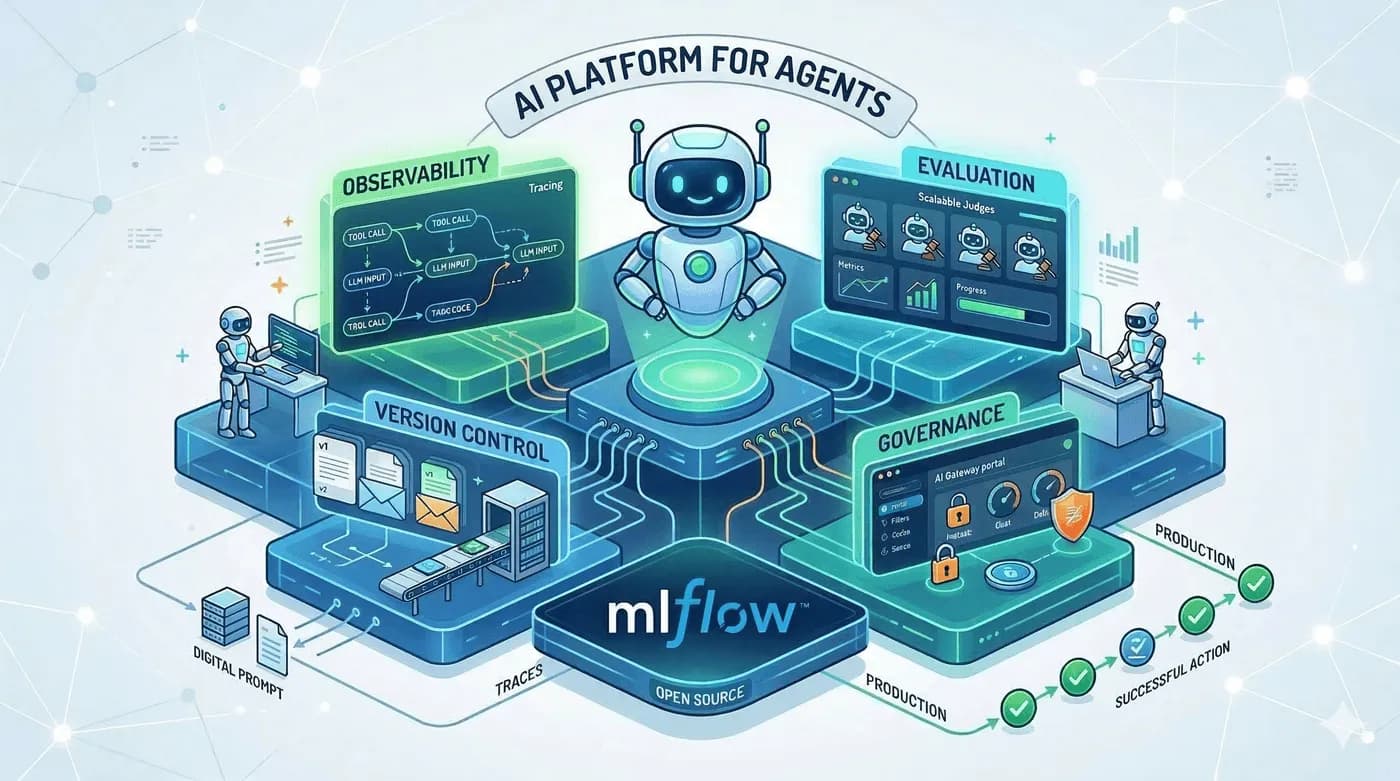
MLflow
Ray
Feature Comparison
| Feature | MLflow | Ray |
|---|---|---|
| Experiment Tracking & Observability | ||
| Trace Capture | Full OpenTelemetry-based tracing for LLM apps and agents with production monitoring | Basic logging through Ray Dashboard; no native OpenTelemetry trace capture |
| Metrics & Evaluation | 50+ built-in metrics and LLM judges with automated regression detection | Metrics available through Ray Tune for hyperparameter experiments only |
| Experiment UI | Dedicated MLflow UI for exploring traces, metrics, parameters, and artifacts | Ray Dashboard for cluster monitoring; no dedicated experiment comparison UI |
| Distributed Computing | ||
| Parallel Execution | No native distributed compute; delegates to external frameworks like Spark or Ray | Core primitives (tasks, actors, objects) for distributing any Python code across clusters |
| GPU Orchestration | No GPU orchestration capabilities; focuses on tracking and management layers | Heterogeneous GPU/CPU scheduling with fine-grained, independent scaling per workload |
| Cluster Scaling | Single-server architecture; scales storage and tracking, not compute | Scales from laptop to thousands of GPUs with automatic cluster management |
| Model Training & Tuning | ||
| Distributed Training | Tracks and logs distributed training runs; does not orchestrate the training itself | Ray Train runs distributed training across frameworks including PyTorch and TensorFlow |
| Hyperparameter Tuning | Logs hyperparameter experiments; integrates with external tuning libraries | Ray Tune provides scalable hyperparameter search with advanced scheduling algorithms |
| Reinforcement Learning | Can track RL experiments but has no built-in RL training framework | RLlib offers production-grade RL with support for multi-agent and distributed workloads |
| Model Deployment & Serving | ||
| Model Registry | Central model registry with versioning, stage transitions, and lineage tracking | No built-in model registry; relies on external tools for model version management |
| Serving Infrastructure | Agent Server with FastAPI hosting, automatic validation, and streaming support | Ray Serve deploys models with independent scaling and fractional GPU allocation |
| LLM Serving | AI Gateway provides unified API for all LLM providers with rate limiting and fallbacks | Native LLM inference serving with seamless scaling across any accelerator type |
| LLM & Agent Support | ||
| Prompt Management | Version, test, and deploy prompts with lineage tracking and automatic optimization | No built-in prompt management; focuses on compute infrastructure for LLM workloads |
| Agent Deployment | One-command agent deployment via Agent Server with built-in tracing and validation | Agents can be deployed as Ray Serve endpoints with distributed scaling capabilities |
| Framework Integrations | 100+ integrations including LangChain, OpenAI, PyTorch with OpenTelemetry and MCP support | Integrates with PyTorch, TensorFlow, XGBoost, and major ML frameworks for distributed execution |
Experiment Tracking & Observability
Trace Capture
Metrics & Evaluation
Experiment UI
Distributed Computing
Parallel Execution
GPU Orchestration
Cluster Scaling
Model Training & Tuning
Distributed Training
Hyperparameter Tuning
Reinforcement Learning
Model Deployment & Serving
Model Registry
Serving Infrastructure
LLM Serving
LLM & Agent Support
Prompt Management
Agent Deployment
Framework Integrations
How they fit together
MLflow and Ray solve fundamentally different problems in the MLOps stack. MLflow excels at experiment tracking, model management, and LLM observability, while Ray dominates distributed computing and scaling AI workloads across clusters. Most mature AI teams use both tools together.
What each one handles
Use MLflow for:
Choose MLflow if your primary needs center on experiment tracking, model versioning, and LLM observability. MLflow is the right choice for teams that want a central platform to log experiments, manage model lifecycles, evaluate LLM applications with built-in metrics and judges, and deploy agents with minimal infrastructure overhead. Its 30M+ monthly downloads and Apache 2.0 license make it the safest bet for organizations that need a mature, widely-adopted tracking platform.
Use Ray for:
Choose Ray if you need to scale compute-intensive AI workloads across distributed clusters. Ray is the right choice for teams running large-scale distributed training, hyperparameter tuning across hundreds of trials, reinforcement learning with RLlib, or serving models that require fractional GPU allocation and independent scaling. With 42,000+ GitHub stars and backing from Anyscale, Ray is a prominent framework for teams whose primary bottleneck is compute orchestration rather than experiment management.
These roles reflect the available product evidence. Most teams run both; which one owns a given job depends on your stack and team.
Frequently Asked Questions
Can MLflow and Ray be used together?
Yes, MLflow and Ray complement each other well and are commonly used together in production MLOps stacks. Ray handles the distributed compute layer, orchestrating training jobs, hyperparameter tuning, and model serving across GPU clusters. MLflow sits on top as the tracking and management layer, logging experiment metrics from Ray-based training runs, versioning models in its registry, and providing observability for deployed applications. Many teams use Ray Train for distributed model training while logging all results to MLflow for comparison and reproducibility.
Which tool is better for LLM application development?
MLflow is the stronger choice for LLM application development and management. It provides purpose-built features including OpenTelemetry-based trace capture for LLM apps and agents, 50+ built-in evaluation metrics with LLM judges, prompt versioning and optimization, and a unified AI Gateway for managing multiple LLM providers. Ray focuses on the infrastructure side, offering distributed LLM inference serving and fine-tuning at scale. If you need to debug, evaluate, and monitor LLM applications, MLflow covers that workflow end to end. If you need to serve LLMs at massive scale with fractional GPU allocation, Ray Serve handles that layer.
What are the infrastructure requirements for each tool?
MLflow has minimal infrastructure requirements. You can start with a single command (uvx mlflow server) and run it on a single machine for experiment tracking. It stores data in a local database by default and can scale to remote databases and cloud storage as needed. Ray requires more infrastructure planning because it operates as a distributed cluster framework. You need at least one head node and can add worker nodes with GPUs or CPUs. For production use, Anyscale offers a fully managed Ray platform. Both tools are open source under Apache 2.0, so there are no licensing costs for self-hosted deployments.
How do MLflow and Ray compare for model serving in production?
Both tools offer model serving but with different strengths. MLflow provides the Agent Server, a FastAPI-based hosting solution with automatic request validation, streaming support, and built-in tracing that takes agents from prototype to production endpoint quickly. It also offers an AI Gateway for routing requests across LLM providers with rate limiting and fallbacks. Ray Serve is designed for high-performance serving at scale, offering independent scaling per model, fractional GPU resources so multiple models can share a single GPU, and composition of multiple models into complex inference pipelines. Ray Serve is the better choice when you need fine-grained control over GPU utilization and multi-model deployment at scale.