Decision comparison
Agno vs CrewAI
Choose Agno (formerly Phidata) for single-agent applications with deep memory and tool access running self-hosted at zero platform cost; choose CrewAI for multi-agent orchestration workflows with a visual editor and managed execution platform. Agno is suited to private deployments requiring persistent memory, knowledge, guardrails, JWT, RBAC, and request-level isolation. CrewAI is suited to collaborative workflows where specialized role-based agents need structured sequential, hierarchical, or consensual coordination. For high-volume workloads, assess CrewAI's custom Enterprise pricing alongside underlying LLM API costs.
Architecture choice. These take different approaches to the same problem. Read the table as a fit question rather than a feature race.
All 2 are agent frameworks.
Quick Comparison
| Decision factor | Agno | CrewAI |
|---|---|---|
| Best For | Single-agent applications with deep memory, knowledge, and tool access in self-hosted environments, using any model or database with privacy-focused deployment. | Multi-agent orchestration with role-playing agents for complex collaborative workflows, especially enterprise teams automating repetitive or time-consuming tasks with full control. |
| Pricing | Free, open-source Apache-2.0 self-hosting with no platform fees; published pricing includes $0/mo and paid amounts of $30/mo, $95/mo, and $150/mo. | Basic: free, with the visual editor and AI copilot, GitHub integration and 50 workflow executions per month. Enterprise: custom pricing, with a trial on request; it adds SSO, RBAC and deployment on CrewAI cloud, your own VPC or your own infrastructure. The page publishes no per-execution or paid self-serve price. Verified 2026-10-05 against https://crewai.com/pricing. |
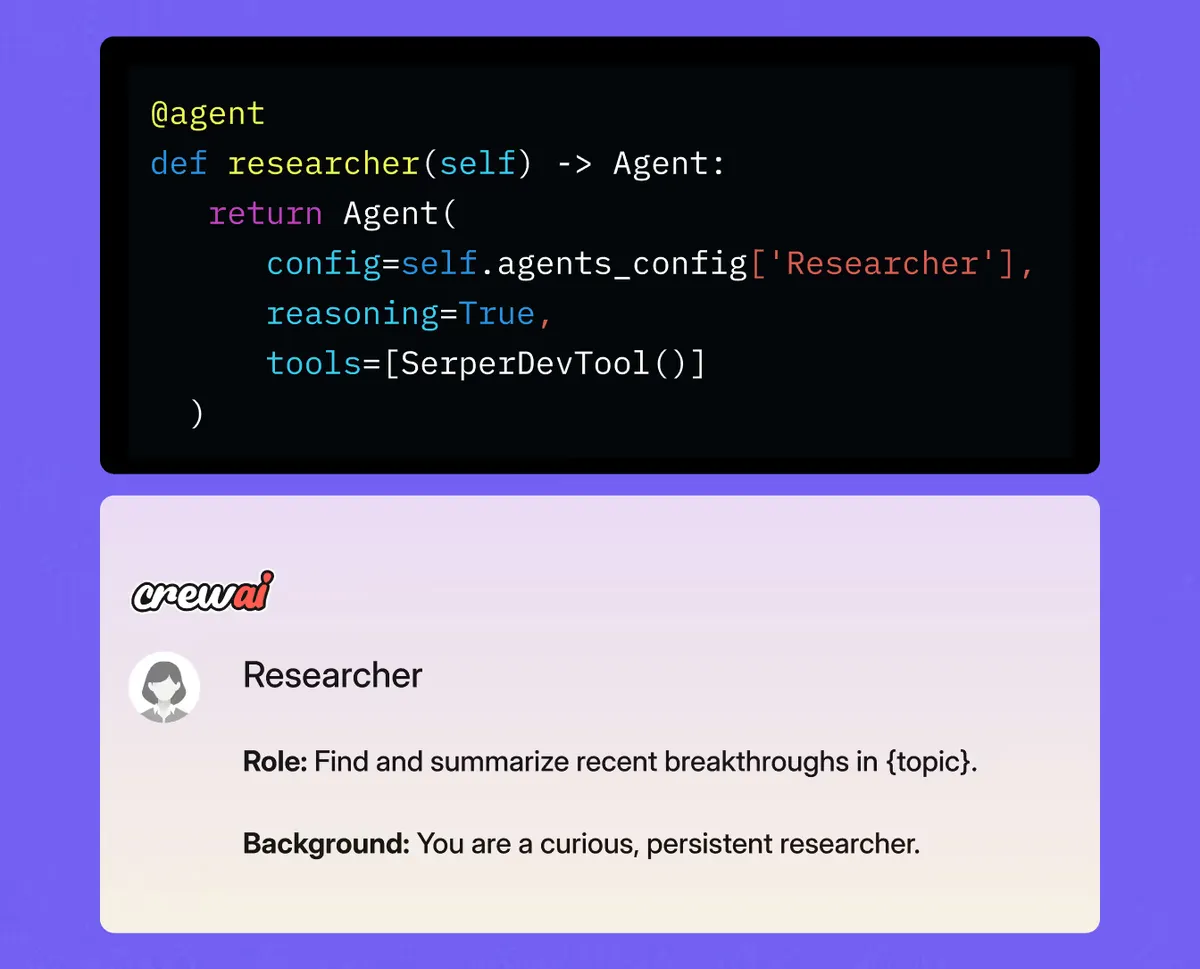
| Agent Design Pattern | Single-agent-first with memory, knowledge, and tools; supports self-learning agents, guardrails, teams, workflows, and integrations including Slack, Telegram, and WhatsApp. | Multi-agent crews with roles, goals, and processes, built through an intuitive API or a visual editor with AI copilot for non-code workflows. |
| Process Orchestration | Direct execution with optional manual chaining, plus a production runtime for deploying agents as services and a browser-based control plane. | Sequential, hierarchical, and consensual processes coordinate specialized agents that interact with enterprise applications and tools to automate workflows and tasks. |
| Licensing | Apache-2.0 licensed Python project, enabling free self-hosting while retaining ownership of data and compute without compute, storage, retention, or egress fees. | MIT-licensed Python framework for orchestrating role-playing autonomous AI agents, paired with a managed platform offering GitHub integration and visual workflow design. |
| Repository Status | Python repository with 42,082 GitHub stars; latest release v3.0.6 on 2026-09-04, with a recorded push on 2026-09-07. | Python repository with 58,187 GitHub stars; latest release 1.15.20 on 2026-09-04, with a recorded push on 2026-09-07. |
Agno
- Best For:
- Single-agent applications with deep memory, knowledge, and tool access in self-hosted environments, using any model or database with privacy-focused deployment.
- Pricing:
- Free, open-source Apache-2.0 self-hosting with no platform fees; published pricing includes $0/mo and paid amounts of $30/mo, $95/mo, and $150/mo.
- Agent Design Pattern:
- Single-agent-first with memory, knowledge, and tools; supports self-learning agents, guardrails, teams, workflows, and integrations including Slack, Telegram, and WhatsApp.
- Process Orchestration:
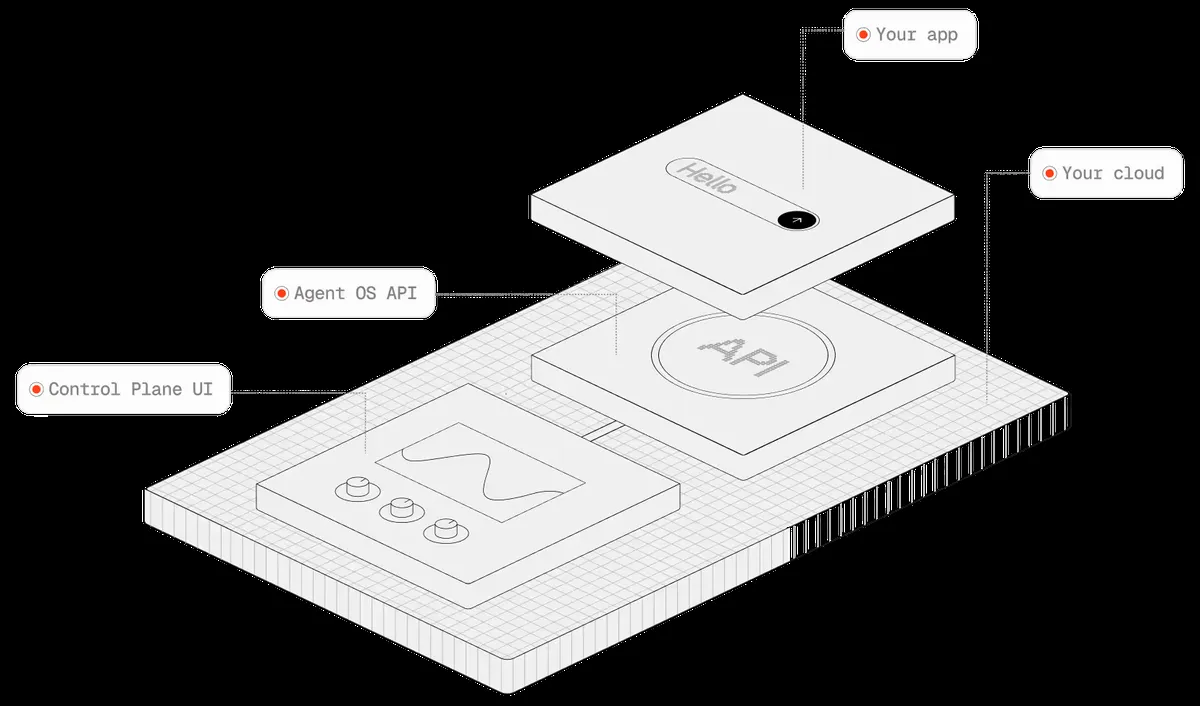
- Direct execution with optional manual chaining, plus a production runtime for deploying agents as services and a browser-based control plane.
- Licensing:
- Apache-2.0 licensed Python project, enabling free self-hosting while retaining ownership of data and compute without compute, storage, retention, or egress fees.
- Repository Status:
- Python repository with 42,082 GitHub stars; latest release v3.0.6 on 2026-09-04, with a recorded push on 2026-09-07.
CrewAI
- Best For:
- Multi-agent orchestration with role-playing agents for complex collaborative workflows, especially enterprise teams automating repetitive or time-consuming tasks with full control.
- Pricing:
- Basic: free, with the visual editor and AI copilot, GitHub integration and 50 workflow executions per month. Enterprise: custom pricing, with a trial on request; it adds SSO, RBAC and deployment on CrewAI cloud, your own VPC or your own infrastructure. The page publishes no per-execution or paid self-serve price. Verified 2026-10-05 against https://crewai.com/pricing.
- Agent Design Pattern:
- Multi-agent crews with roles, goals, and processes, built through an intuitive API or a visual editor with AI copilot for non-code workflows.
- Process Orchestration:
- Sequential, hierarchical, and consensual processes coordinate specialized agents that interact with enterprise applications and tools to automate workflows and tasks.
- Licensing:
- MIT-licensed Python framework for orchestrating role-playing autonomous AI agents, paired with a managed platform offering GitHub integration and visual workflow design.
- Repository Status:
- Python repository with 58,187 GitHub stars; latest release 1.15.20 on 2026-09-04, with a recorded push on 2026-09-07.
Public signals
Verified factual signals only. Bars appear only for like-for-like metrics with five weekly assessments for every tool; missing evidence stays explicit. These signals do not establish enterprise adoption, product quality, or total cost.
| Metric | Agno | CrewAI |
|---|---|---|
| GitHub commits, 90d(Product adoption) | 361 | 318 |
| GitHub stars(Product adoption) | 42,000+ | 59,000+ |
| Search interest(Market interest) | Unavailable | 1 |
| Hacker News mentions, 90d(Community interest) | Not available | 5 |
| Product Hunt comments(Community interest) | 15 | Not available |
| Product Hunt rating(Community interest) | 5.0/5 | Not available |
| Product Hunt reviews(Community interest) | 2 | Not available |
| Product Hunt votes(Community interest) | 326 | Not available |
| PyPI weekly downloads(Product adoption) | 489.9k | 633.5k |
| Stack Overflow questions(Community interest) | 3 | 38 |
As of October 12, 2026 — updated weekly.
Health & risk evidence
Observed public-source checks for mapped package versions and repositories.
Agno
October 12, 2026Package vulnerabilities
PyPI · agno@3.1.3
0 vulnerabilities
across 1 package
Repository security score
Not available
CrewAI
October 12, 2026Package vulnerabilities
PyPI · crewai@1.15.27
0 vulnerabilities
across 1 package
Repository security score
Not available
Interface Preview
Agno
CrewAI
Feature Comparison
| Feature | Agno | CrewAI |
|---|---|---|
| Core Architecture | ||
| Agent Design Pattern | Single-agent-first with memory, knowledge, and tools | Multi-agent crews with roles, goals, and processes |
| Process Orchestration | Direct execution with optional manual chaining | Sequential, hierarchical, and consensual processes |
| Agent Delegation | Manual agent-to-agent handoff | Automatic delegation based on role constraints |
| Memory System | Persistent cross-session memory with vector DB backing | Built-in memory with learning from past crew interactions |
| Developer Experience | ||
| Visual Builder | Control plane for monitoring and chat | Visual editor with AI copilot for crew design |
| LLM Provider Support | Any provider including local models via Ollama | Major providers: OpenAI, Anthropic, Google, Azure |
| Learning Curve | Low: pip install, minimal boilerplate, Python-native | Moderate: requires understanding roles, goals, processes |
| Tool Ecosystem | 40+ built-in tools (SQL, web search, APIs, file I/O) | Custom tool creation with Pydantic, growing library |
| Production & Security | ||
| Deployment Model | Self-hosted in your cloud on any infrastructure | Managed platform with optional self-hosted framework |
| Authentication | JWT, RBAC, and request-level isolation built in | Platform-managed authentication for hosted executions |
| Observability | Built-in tracing and monitoring dashboard | Execution logs and crew performance metrics |
| Guardrails | Built-in input/output guardrails and validation | Agent role constraints and goal-based validation |
| Pricing & Plans | ||
| Framework License | Free, Apache 2.0 open-source | Free, MIT open-source framework |
| Platform Fees | $0 (self-hosted, no platform fee) | 50 free executions/month, then custom Enterprise pricing |
| Cost at 1,000 Executions/Month | LLM API costs only | Custom Enterprise pricing + LLM API costs |
| Enterprise | No licensing; infrastructure costs only | Custom pricing with dedicated support |
Core Architecture
Agent Design Pattern
Process Orchestration
Agent Delegation
Memory System
Developer Experience
Visual Builder
LLM Provider Support
Learning Curve
Tool Ecosystem
Production & Security
Deployment Model
Authentication
Observability
Guardrails
Pricing & Plans
Framework License
Platform Fees
Cost at 1,000 Executions/Month
Enterprise
Which approach fits
Choose Agno (formerly Phidata) for single-agent applications with deep memory and tool access running self-hosted at zero platform cost; choose CrewAI for multi-agent orchestration workflows with a visual editor and managed execution platform. Agno is suited to private deployments requiring persistent memory, knowledge, guardrails, JWT, RBAC, and request-level isolation. CrewAI is suited to collaborative workflows where specialized role-based agents need structured sequential, hierarchical, or consensual coordination. For high-volume workloads, assess CrewAI's custom Enterprise pricing alongside underlying LLM API costs.
When each approach fits
Choose Agno if:
Choose Agno when building a single intelligent agent with persistent memory, knowledge base search, and 40+ tools in a self-hosted environment where data privacy and zero platform fees are requirements. Agno's Apache-2.0 Python framework supports any model or database, plus production deployment and browser-based tracing.
Choose CrewAI if:
Choose CrewAI when your workflow requires multiple specialized agents collaborating through structured processes, especially if non-engineers need to design agent workflows via the visual editor. Its API, AI copilot, and managed execution platform support enterprise automation with role-based crews.
Choose Agno if:
Choose Agno for high-volume production workloads (1,000+ executions/month), where CrewAI's free Basic plan stops at 50 executions/month and higher volume needs a custom Enterprise quote. Agno's pricing states no per-event, compute, storage, retention, or egress fees for self-owned infrastructure.
Choose CrewAI if:
Choose CrewAI for rapid prototyping under 50 executions/month where the free tier and managed platform eliminate infrastructure setup entirely. The Free tier includes the visual editor, AI copilot, GitHub integration, and 50 workflow executions each month.
These scenarios reflect the available product evidence. Your requirements, existing stack, and team expertise should guide the final decision.
Frequently Asked Questions
Can I use Agno and CrewAI together?
Yes. Some teams use Agno to build individual high-capability agents with deep memory and knowledge, then orchestrate those agents using CrewAI's crew framework. This hybrid approach gives you Agno's tool depth at the agent level with CrewAI's coordination at the workflow level.
Is Agno truly free for production use?
Agno's framework is fully open-source under Apache 2.0, which permits commercial use without licensing fees. You pay only for LLM API calls and your own infrastructure costs. There are no per-execution fees, seat licenses, or platform charges.
How does CrewAI's execution pricing work at scale?
CrewAI's managed platform provides 50 free executions per month. Enterprise customers can negotiate custom pricing for volume discounts.
Which framework has better documentation and community support?
CrewAI currently has a sizable community presence with 58 Stack Overflow questions and active Hacker News discussions. Both frameworks maintain active GitHub repositories and Discord communities. CrewAI's visual editor includes built-in tutorials, while Agno relies on code examples and cookbook patterns.