Decision comparison
Gemini Enterprise Agent Platform vs MLflow
Gemini Enterprise Agent Platform (formerly Vertex AI) is the stronger choice for enterprise teams committed to the Google Cloud ecosystem who want a fully managed, end-to-end AI development platform with built-in access to 200+ foundation models. MLflow wins for teams that prioritize vendor independence, open source flexibility, and lightweight experiment tracking that works across any infrastructure.
Architecture choice. These take different approaches to the same problem. Read the table as a fit question rather than a feature race.
These are different kinds of product — ML Platform and Experiment Tracking.
Quick Comparison
| Decision factor | Gemini Enterprise Agent Platform | MLflow |
|---|---|---|
| Pricing Model | Usage-based; USD prices for Iowa (us-central1). Custom training: n1-standard-4 $0.2185 per hour, accelerators extra. Inference per node hour: e2-standard-2 $0.0771, n1-standard-2 $0.1095. AutoML image training: $3.465 per hour. Pipelines: $0.03 per pipeline run plus the Google Cloud resources used. No cost to keep models in the Model Registry. Feature Store online operations bill per node hour. Workbench bills compute plus a management fee. Generative AI is priced on a separate page. Verified 2026-10-05 against https://cloud.google.com/products/gemini-enterprise-agent-platform/pricing. Google's Agent Platform pricing page points new users to the Google Cloud Free Program, which gives $300 in free credits and 20+ free products. Verified 2026-10-05 against https://cloud.google.com/products/gemini-enterprise-agent-platform/pricing. | Open-source license (Apache-2.0), self-hosted for free |
| Deployment Model | Fully managed cloud service on Google Cloud requiring no infrastructure management from users | Self-hosted open source platform you run on your own infrastructure or any cloud provider |
| Model Access | Access to 200+ foundation models including Gemini, Claude, Llama, and Gemma through Model Garden | Framework-agnostic platform integrating with 100+ AI frameworks including LangChain, OpenAI, and PyTorch |
| MLOps Capabilities | Built-in pipelines, model registry, feature store, evaluation service, and drift monitoring tools | Experiment tracking, model registry, observability with OpenTelemetry traces, and evaluation with 50+ metrics |
| Best For | Enterprise teams already invested in Google Cloud who need a fully managed end-to-end AI platform | Teams of any size wanting vendor-neutral experiment tracking and model lifecycle management without lock-in |
| Ease of Setup | Managed service with no infrastructure setup but requires Google Cloud account and configuration | Single command server startup with minimal code changes needed to begin logging experiments and traces |
Gemini Enterprise Agent Platform
- Pricing Model:
- Usage-based; USD prices for Iowa (us-central1). Custom training: n1-standard-4 $0.2185 per hour, accelerators extra. Inference per node hour: e2-standard-2 $0.0771, n1-standard-2 $0.1095. AutoML image training: $3.465 per hour. Pipelines: $0.03 per pipeline run plus the Google Cloud resources used. No cost to keep models in the Model Registry. Feature Store online operations bill per node hour. Workbench bills compute plus a management fee. Generative AI is priced on a separate page. Verified 2026-10-05 against https://cloud.google.com/products/gemini-enterprise-agent-platform/pricing. Google's Agent Platform pricing page points new users to the Google Cloud Free Program, which gives $300 in free credits and 20+ free products. Verified 2026-10-05 against https://cloud.google.com/products/gemini-enterprise-agent-platform/pricing.
- Deployment Model:
- Fully managed cloud service on Google Cloud requiring no infrastructure management from users
- Model Access:
- Access to 200+ foundation models including Gemini, Claude, Llama, and Gemma through Model Garden
- MLOps Capabilities:
- Built-in pipelines, model registry, feature store, evaluation service, and drift monitoring tools
- Best For:
- Enterprise teams already invested in Google Cloud who need a fully managed end-to-end AI platform
- Ease of Setup:
- Managed service with no infrastructure setup but requires Google Cloud account and configuration
MLflow
- Pricing Model:
- Open-source license (Apache-2.0), self-hosted for free
- Deployment Model:
- Self-hosted open source platform you run on your own infrastructure or any cloud provider
- Model Access:
- Framework-agnostic platform integrating with 100+ AI frameworks including LangChain, OpenAI, and PyTorch
- MLOps Capabilities:
- Experiment tracking, model registry, observability with OpenTelemetry traces, and evaluation with 50+ metrics
- Best For:
- Teams of any size wanting vendor-neutral experiment tracking and model lifecycle management without lock-in
- Ease of Setup:
- Single command server startup with minimal code changes needed to begin logging experiments and traces
Public signals
Verified factual signals only. Bars appear only for like-for-like metrics with five weekly assessments for every tool; missing evidence stays explicit. These signals do not establish enterprise adoption, product quality, or total cost.
| Metric | Gemini Enterprise Agent Platform | MLflow |
|---|---|---|
| GitHub commits, 90d(Developer adoption) | 153 | Not available |
| GitHub stars(Developer adoption) | 910 | Not available |
| Search interest(Market interest) | 6 | 2 |
| Hacker News mentions, 90d(Community interest) | 0 | 2 |
| npm weekly downloads(Developer adoption) | 256.4k | Not available |
| PyPI weekly downloads(Developer adoption) | 21.2M | Not available |
| Stack Overflow questions(Community interest) | 985 | 771 |
| GitHub commits, 90d(Product adoption) | Not available | 1.2k |
| GitHub stars(Product adoption) | Not available | 28,000+ |
| PyPI weekly downloads(Product adoption) | Not available | 4.6M |
As of October 19, 2026 — updated weekly.
Health & risk evidence
Observed public-source checks for mapped package versions and repositories.
Gemini Enterprise Agent Platform
October 19, 2026Package vulnerabilities
npm · @google-cloud/aiplatform@7.6.0 · PyPI · google-cloud-aiplatform@2.5.0
0 vulnerabilities
across 2 packages
Repository security score
Not available
MLflow
October 19, 2026Package vulnerabilities
PyPI · mlflow@3.17.1
0 vulnerabilities
across 1 package
Repository security score
github.com/mlflow/mlflow
5.4/10
Interface Preview
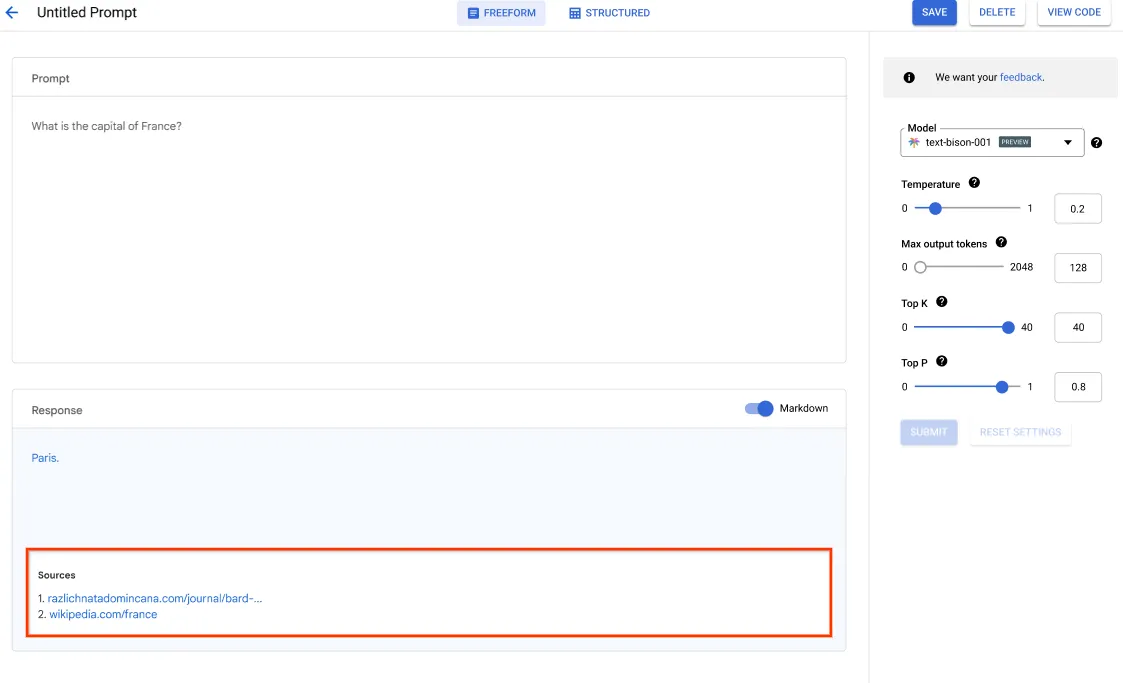
Gemini Enterprise Agent Platform
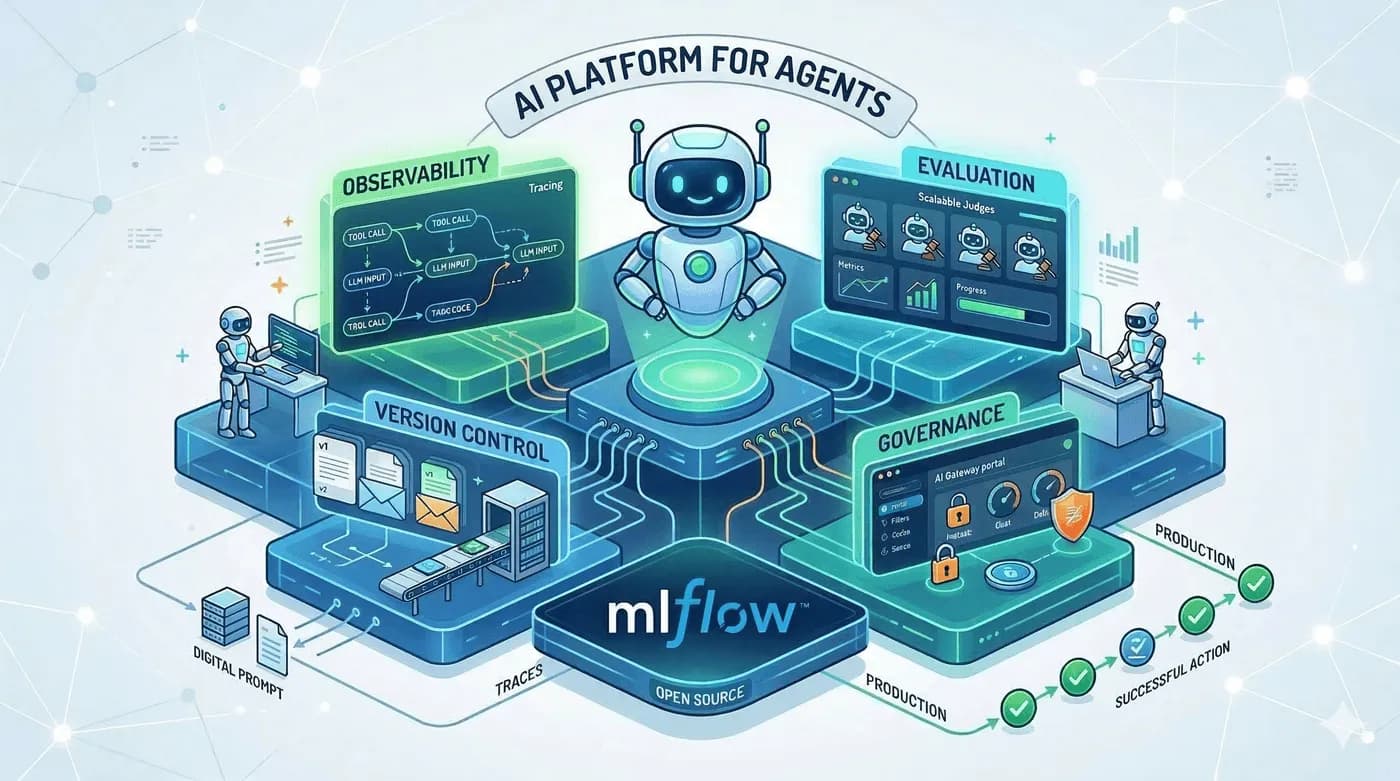
MLflow
Feature Comparison
| Feature | Gemini Enterprise Agent Platform | MLflow |
|---|---|---|
| Model Training & Development | ||
| Custom Model Training | Full custom training with choice of open source frameworks and optimized AI infrastructure on Google Cloud | Framework-agnostic experiment tracking that logs parameters, metrics, and artifacts for any training framework |
| Notebook Integration | Colab Enterprise and Workbench notebooks natively integrated with BigQuery for data and AI workloads | Works within any Jupyter notebook environment with simple Python SDK integration via autolog |
| Model Tuning | Built-in fine-tuning and hyperparameter tuning options for foundation models and custom models | Tracks hyperparameter experiments across runs with comparison UI but does not manage tuning jobs directly |
| Model Management & Registry | ||
| Model Registry | Centralized Model Registry for managing, versioning, and governing any model across the platform | Production model registry with stage transitions, version tracking, and model lineage from experiment to deployment |
| Model Versioning | Version control integrated into Model Registry with lineage tracking across training runs | Automatic versioning of logged models with full artifact storage and run-level provenance tracking |
| Model Deployment | Managed online and batch prediction endpoints with autoscaling on Google Cloud infrastructure | Agent Server for single-command deployment with FastAPI-based hosting, request validation, and streaming support |
| Observability & Monitoring | ||
| Experiment Tracking | Tracking through Vertex AI Experiments integrated with TensorBoard for visualization and comparison | Core strength with comprehensive run logging of parameters, metrics, artifacts, and code versioning in the MLflow UI |
| Production Monitoring | Built-in monitoring for input skew and model drift detection on deployed prediction endpoints | OpenTelemetry-based tracing for LLM applications and agents with production quality, cost, and safety monitoring |
| Evaluation Tools | Enterprise-grade Gen AI evaluation service for objective, data-driven assessment of generative AI models | Systematic evaluations with 50+ built-in metrics and LLM judges plus AI-powered trace analysis for issues |
| LLM & Agent Support | ||
| LLM Access & Gateway | Model Garden with 200+ foundation models including first-party Gemini, third-party Claude, and open models | Unified AI Gateway providing OpenAI-compatible interface for routing requests across all LLM providers with rate limiting |
| Agent Development | Vertex AI Agent Builder platform for building, scaling, and governing enterprise agents with Agent Development Kit | Agent Server with FastAPI-based hosting for deploying agents to production with automatic tracing and validation |
| Prompt Management | Vertex AI Studio for designing, testing, and managing prompts with natural language, code, images, or video | Full prompt versioning, testing, and deployment with lineage tracking and automatic optimization algorithms |
| Integration & Ecosystem | ||
| Cloud Integration | Deep integration with Google Cloud services including BigQuery, Cloud Storage, and Kubernetes Engine | Cloud-agnostic design that works with any cloud provider, on-premises infrastructure, or hybrid setup |
| Framework Support | Supports open source frameworks including TensorFlow, PyTorch, and scikit-learn on managed infrastructure | Integrates with 100+ frameworks including LangChain, OpenAI, PyTorch with Python, TypeScript, Java, and R support |
| Community & Ecosystem | Enterprise support through Google Cloud with documentation, tutorials, and professional services | Linux Foundation backed with 20K+ GitHub stars, 900+ contributors, and 30 million monthly package downloads |
Model Training & Development
Custom Model Training
Notebook Integration
Model Tuning
Model Management & Registry
Model Registry
Model Versioning
Model Deployment
Observability & Monitoring
Experiment Tracking
Production Monitoring
Evaluation Tools
LLM & Agent Support
LLM Access & Gateway
Agent Development
Prompt Management
Integration & Ecosystem
Cloud Integration
Framework Support
Community & Ecosystem
Which approach fits
Gemini Enterprise Agent Platform (formerly Vertex AI) is the stronger choice for enterprise teams committed to the Google Cloud ecosystem who want a fully managed, end-to-end AI development platform with built-in access to 200+ foundation models. MLflow wins for teams that prioritize vendor independence, open source flexibility, and lightweight experiment tracking that works across any infrastructure.
When each approach fits
Choose Gemini Enterprise Agent Platform if:
We recommend Gemini Enterprise Agent Platform for enterprise organizations that are already invested in Google Cloud infrastructure and need a comprehensive, fully managed AI platform. It delivers the most value when teams require seamless integration with BigQuery and other Google services, access to Gemini models, and managed training and prediction endpoints. The pay-as-you-go pricing makes it practical for teams that prefer operational expenditure over building and maintaining their own MLOps infrastructure.
Choose MLflow if:
We recommend MLflow for teams that want a vendor-neutral, open source MLOps platform they can run anywhere without licensing costs. With 30 million monthly downloads and backing from the Linux Foundation, MLflow has proven itself as a widely adopted experiment tracking tool in the industry. It is particularly strong for organizations running multi-cloud or hybrid environments, teams that need to avoid vendor lock-in, and startups or research teams that want production-grade tracking and observability without a managed service price tag.
These scenarios reflect the available product evidence. Your requirements, existing stack, and team expertise should guide the final decision.
Frequently Asked Questions
Can I use Gemini Enterprise Agent Platform and MLflow together?
Yes, many teams use both tools in complementary roles. You can run MLflow as your experiment tracking and model registry layer while using Gemini Enterprise Agent Platform for managed training infrastructure, model deployment endpoints, and access to foundation models through Model Garden. MLflow's framework-agnostic design means it integrates naturally with Gemini Enterprise Agent Platform training jobs, letting you log experiments and artifacts from Gemini Enterprise Agent Platform runs into MLflow's centralized tracking server. This hybrid approach gives you vendor-neutral tracking with managed cloud infrastructure.
What are the main cost differences between Gemini Enterprise Agent Platform and MLflow?
The cost models are fundamentally different. MLflow is free and open source under the Apache 2.0 license, but you pay for the infrastructure to host it and any compute resources for training and serving. Gemini Enterprise Agent Platform uses pay-as-you-go pricing where you pay for training time (priced by machine and region), prediction endpoints, and managed services. For small teams, MLflow's self-hosted approach is typically cheaper, while larger enterprises may find Gemini Enterprise Agent Platform's managed services reduce operational overhead enough to justify the premium.
Which platform has better support for LLM applications and AI agents?
Both platforms have invested heavily in LLM and agent support, but they approach it differently. Gemini Enterprise Agent Platform provides Vertex AI Agent Builder for building and governing enterprise agents at scale, plus access to 200+ foundation models including Gemini through Model Garden. MLflow offers an Agent Server for single-command agent deployment, an AI Gateway for unified LLM provider access, and OpenTelemetry-based observability specifically designed for tracing LLM application behavior. Google's approach is more vertically integrated with its own models, while MLflow is provider-agnostic and works with any LLM.
How do the experiment tracking capabilities compare between the two platforms?
Experiment tracking is MLflow's core strength and defining feature. MLflow provides comprehensive run logging with parameters, metrics, artifacts, and code versioning, all accessible through an intuitive comparison UI. It supports autologging for many frameworks, requiring minimal code changes. Gemini Enterprise Agent Platform offers experiment tracking through Vertex AI Experiments with TensorBoard integration, but it is one feature among many rather than the central focus. For teams where experiment tracking is the primary need, MLflow provides a close, mature experience with extensive community adoption and numerous framework integrations out of the box.