Decision comparison
Kedro vs MLflow
Kedro and MLflow are complementary tools, not competitors. Kedro is a pipeline framework that enforces how your data science code is structured, organized, and executed. MLflow is a lifecycle platform that tracks experiments, manages models, and monitors LLM applications in production. Kedro gives your team consistent, reproducible, and modular pipelines. MLflow gives your team visibility into what happened across every experiment and a path to deploy models and agents to production. Many production ML teams use both together through the kedro-mlflow integration plugin.
Architecture choice. These take different approaches to the same problem. Read the table as a fit question rather than a feature race.
These are different kinds of product — ML Pipeline Framework and Experiment Tracking.
Quick Comparison
| Decision factor | Kedro | MLflow |
|---|---|---|
| Primary Focus | Reproducible data pipeline framework enforcing software engineering best practices | End-to-end ML lifecycle platform covering tracking, registry, deployment, and LLM observability |
| Pipeline Approach | Dataset-driven workflow with automatic dependency resolution between pure Python functions | Run-centric workflow tracking experiments, metrics, parameters, and artifacts per execution |
| Experiment Tracking | No built-in tracking; integrates with MLflow and other tracking tools via plugins | Full-featured tracking UI with metric comparison, artifact storage, and run history |
| Deployment Model | Framework-agnostic deployment to Airflow, Kubeflow, Argo, Prefect, Databricks, and more | Built-in model serving, Agent Server with FastAPI, and integrations with cloud platforms |
| Community Size | 11,000+ GitHub stars, backed by QuantumBlack and Linux Foundation LF AI & Data | 28,000+ GitHub stars, 900+ contributors, 30M+ monthly downloads, backed by Databricks |
| Best For | Teams needing standardized, modular pipeline code with enforced project structure | Teams needing experiment tracking, model management, and LLM/agent observability at scale |
Kedro
- Primary Focus:
- Reproducible data pipeline framework enforcing software engineering best practices
- Pipeline Approach:
- Dataset-driven workflow with automatic dependency resolution between pure Python functions
- Experiment Tracking:
- No built-in tracking; integrates with MLflow and other tracking tools via plugins
- Deployment Model:
- Framework-agnostic deployment to Airflow, Kubeflow, Argo, Prefect, Databricks, and more
- Community Size:
- 11,000+ GitHub stars, backed by QuantumBlack and Linux Foundation LF AI & Data
- Best For:
- Teams needing standardized, modular pipeline code with enforced project structure
MLflow
- Primary Focus:
- End-to-end ML lifecycle platform covering tracking, registry, deployment, and LLM observability
- Pipeline Approach:
- Run-centric workflow tracking experiments, metrics, parameters, and artifacts per execution
- Experiment Tracking:
- Full-featured tracking UI with metric comparison, artifact storage, and run history
- Deployment Model:
- Built-in model serving, Agent Server with FastAPI, and integrations with cloud platforms
- Community Size:
- 28,000+ GitHub stars, 900+ contributors, 30M+ monthly downloads, backed by Databricks
- Best For:
- Teams needing experiment tracking, model management, and LLM/agent observability at scale
Public signals
Verified factual signals only. Bars appear only for like-for-like metrics with five weekly assessments for every tool; missing evidence stays explicit. These signals do not establish enterprise adoption, product quality, or total cost.
| Metric | Kedro | MLflow |
|---|---|---|
| GitHub commits, 90d(Product adoption) | 68 | 926 |
| GitHub stars(Product adoption) | 11,000+ | 28,000+ |
| Search interest(Market interest) | 0 | 2 |
| Product Hunt comments(Community interest) | 2 | Not available |
| Product Hunt reviews(Community interest) | 0 | Not available |
| Product Hunt votes(Community interest) | 14 | Not available |
| PyPI weekly downloads(Product adoption) | 488.1k | 4.6M |
| Stack Overflow questions(Community interest) | 212 | 771 |
| Hacker News mentions, 90d(Community interest) | Not available | 1 |
As of September 21, 2026 — updated weekly.
Health & risk evidence
Observed public-source checks for mapped package versions and repositories.
Kedro
September 21, 2026Package vulnerabilities
PyPI · kedro@1.6.0
0 vulnerabilities
across 1 package
Repository security score
Not available
MLflow
September 21, 2026Package vulnerabilities
PyPI · mlflow@3.16.1
0 vulnerabilities
across 1 package
Repository security score
github.com/mlflow/mlflow
5.4/10
Interface Preview
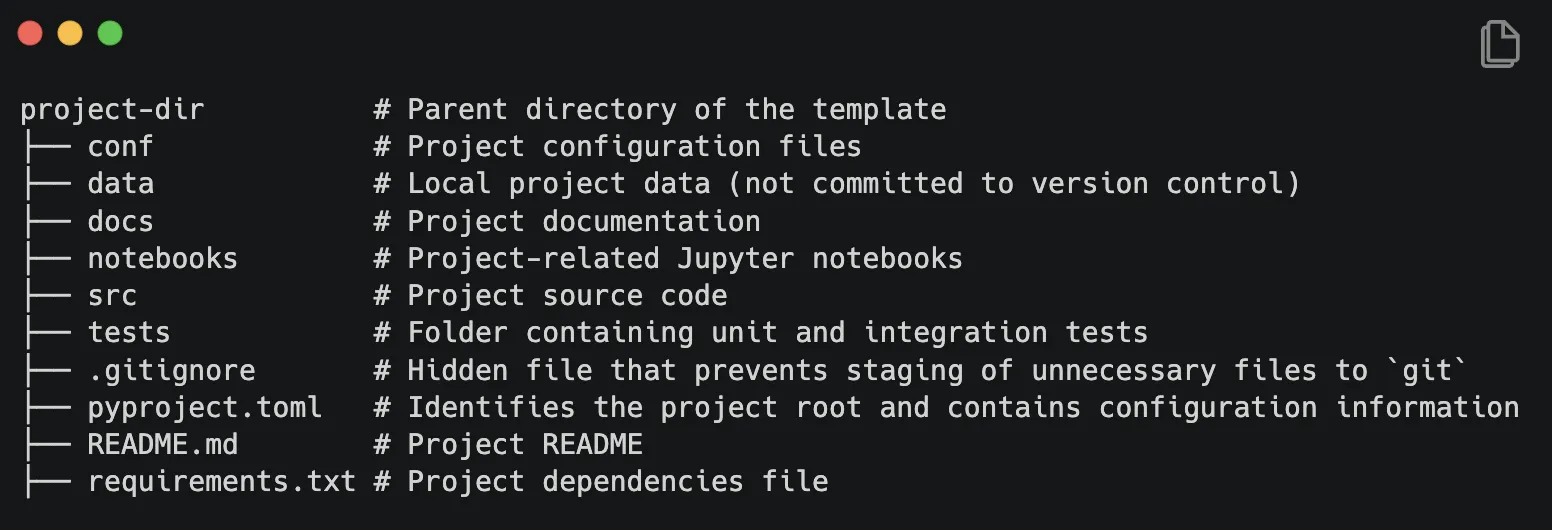
Kedro
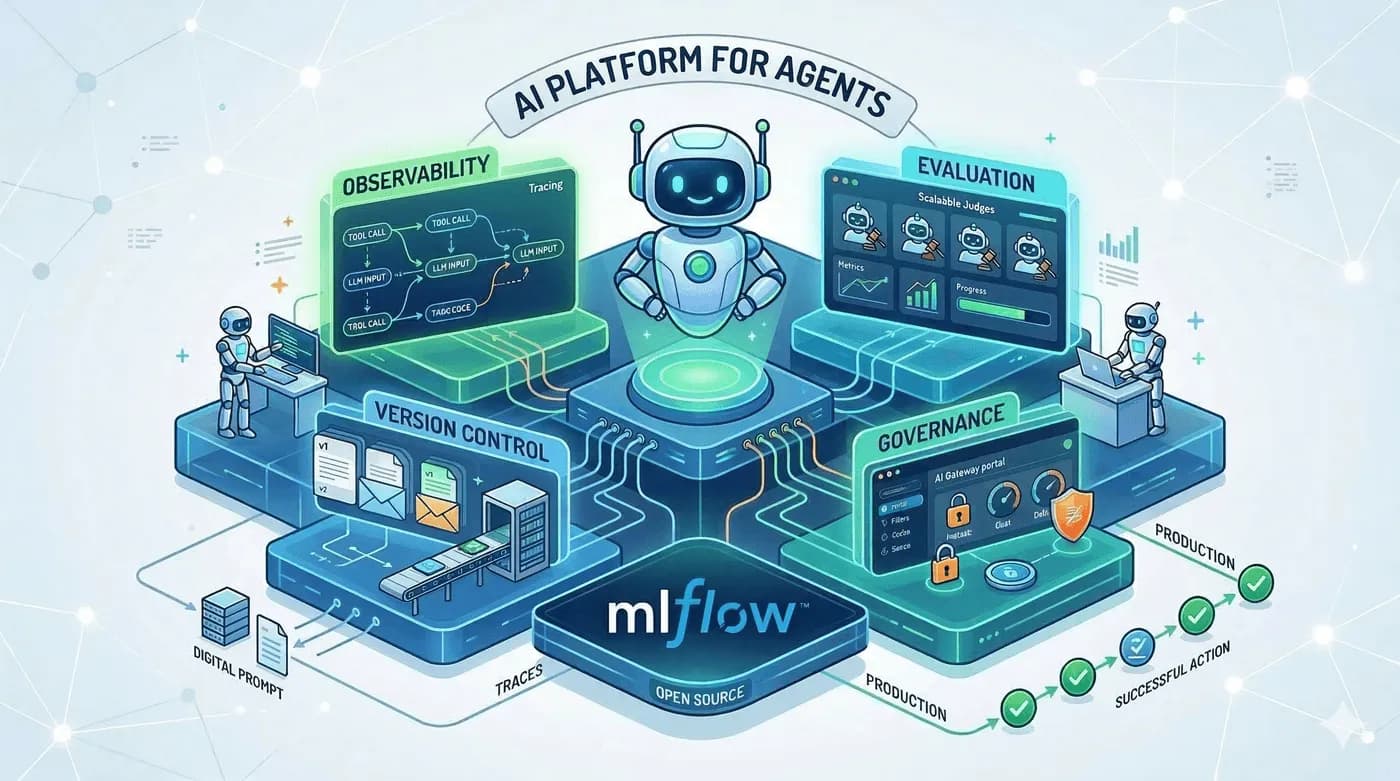
MLflow
Feature Comparison
| Feature | Kedro | MLflow |
|---|---|---|
| Pipeline & Workflow Management | ||
| Pipeline Orchestration | Dataset-driven DAG with automatic dependency resolution between pure Python functions and modular pipeline composition | No built-in pipeline orchestration; focuses on tracking individual runs and experiments |
| Pipeline Visualization | Kedro-Viz provides interactive data lineage, execution time, node status, and dataset statistics in a dedicated UI | Experiment comparison UI with metric charts, parameter tables, and artifact browsers across runs |
| Project Scaffolding | Standardized project template with cookie-cutter Starters, enforced directory structure, and coding standards | No project scaffolding; designed as a library that integrates into existing project structures |
| Experiment Tracking & Model Management | ||
| Experiment Tracking | No native experiment tracking; relies on integrations with MLflow or other tracking platforms | Comprehensive tracking of metrics, parameters, artifacts, and code versions with comparison UI and search |
| Model Registry | No model registry; models are managed as Data Catalog entries within the pipeline | Production-grade model registry with versioning, stage transitions, and approval workflows |
| Artifact Management | Data Catalog abstraction layer with connectors for S3, GCP, Azure, sFTP, DBFS, and local filesystems | Artifact store supporting local files, S3, Azure Blob, GCS, and HDFS with run-level organization |
| LLM & AI Agent Support | ||
| LLM Observability | Not a core capability; Kedro focuses on data pipeline structure rather than LLM monitoring | Full trace capture for LLM applications and agents built on OpenTelemetry with production monitoring |
| Prompt Management | No prompt management features; not designed for LLM workflow management | Version, test, and deploy prompts with lineage tracking and automatic optimization algorithms |
| Agent Deployment | Not applicable; Kedro orchestrates data pipelines, not AI agent serving | Agent Server with FastAPI-based hosting, request validation, streaming support, and built-in tracing |
| Code Quality & Standards | ||
| Testing Framework | Built-in test-driven development with pytest integration and standardized test directory structure | No built-in testing framework; provides evaluation APIs with 50+ built-in metrics and LLM judges |
| Code Documentation | Sphinx-based documentation generation and ruff-enforced linting baked into project template | No code documentation tooling; provides extensive platform documentation and tutorials |
| Reproducibility | Enforced through pipeline DAGs, Data Catalog versioning, configuration management, and deterministic execution | Achieved through experiment logging, artifact snapshots, environment tracking, and run replay |
| Integration & Deployment | ||
| Orchestrator Integration | Deployable to Apache Airflow, Kubeflow, Argo, Prefect, AWS Batch, Databricks, and Dask | Integrates with orchestrators as a tracking backend; not an orchestration tool itself |
| Framework Ecosystem | Integrates with Spark, Pandas, Dask, Matplotlib, Plotly, and MLflow for tracking | 100+ integrations including LangChain, OpenAI, PyTorch, and supports Python, TypeScript, Java, and R |
| IDE Support | Dedicated VS Code extension with enhanced code navigation and autocompletion for Kedro projects | No dedicated IDE extension; provides CLI tools, Python SDK, and web-based UI |
Pipeline & Workflow Management
Pipeline Orchestration
Pipeline Visualization
Project Scaffolding
Experiment Tracking & Model Management
Experiment Tracking
Model Registry
Artifact Management
LLM & AI Agent Support
LLM Observability
Prompt Management
Agent Deployment
Code Quality & Standards
Testing Framework
Code Documentation
Reproducibility
Integration & Deployment
Orchestrator Integration
Framework Ecosystem
IDE Support
Which approach fits
Kedro and MLflow are complementary tools, not competitors. Kedro is a pipeline framework that enforces how your data science code is structured, organized, and executed. MLflow is a lifecycle platform that tracks experiments, manages models, and monitors LLM applications in production. Kedro gives your team consistent, reproducible, and modular pipelines. MLflow gives your team visibility into what happened across every experiment and a path to deploy models and agents to production. Many production ML teams use both together through the kedro-mlflow integration plugin.
When each approach fits
Choose Kedro if:
Choose Kedro if your primary challenge is pipeline code quality and team standardization. Kedro excels when data scientists need to write production-ready code from day one, with enforced project structure, automatic dependency resolution, and built-in testing and documentation standards. It is the right starting point for teams transitioning from notebook-driven development to maintainable, modular pipelines that deploy to orchestrators like Airflow, Kubeflow, or Databricks.
Choose MLflow if:
Choose MLflow if your primary challenge is experiment tracking, model management, or LLM observability. MLflow provides a widely adopted experiment tracking system in the ML ecosystem, a production-grade model registry, and comprehensive LLM tooling including observability, prompt optimization, and agent deployment. It is the right choice for teams that need to compare experiments at scale, manage model versions across environments, or build and monitor AI agents in production.
These scenarios reflect the available product evidence. Your requirements, existing stack, and team expertise should guide the final decision.
Frequently Asked Questions
What is the main difference between Kedro and MLflow?
Kedro and MLflow solve different problems in the ML lifecycle. Kedro is a pipeline framework that structures how you write and organize data science code, enforcing software engineering best practices like modular functions, standardized project templates, and automatic dependency resolution. MLflow is a lifecycle platform that tracks what happens when you run experiments, stores model versions, and manages deployment. Kedro tells you how to build your pipeline; MLflow tells you what happened when you ran it. The two tools complement each other, and Kedro lists MLflow as an official integration partner.
Can Kedro and MLflow be used together?
Yes, and this is a common production pattern. Kedro provides the pipeline structure, code organization, and reproducible execution framework, while MLflow handles experiment tracking, metric logging, and model registry. The kedro-mlflow plugin connects them seamlessly, allowing Kedro pipeline runs to automatically log parameters, metrics, and artifacts to an MLflow tracking server. Teams using both get the best of both worlds: Kedro's enforced code quality and pipeline visualization alongside MLflow's experiment comparison and model versioning capabilities.
Which tool is better for LLM and AI agent development?
MLflow is the clear winner for LLM and AI agent workflows. MLflow has expanded significantly into the LLM space with observability built on OpenTelemetry, prompt versioning and optimization, an AI Gateway for managing multiple LLM providers, and an Agent Server for deploying agents to production. Kedro remains focused on data pipeline structure and does not offer LLM-specific features. If your primary work involves building and deploying LLM applications or AI agents, MLflow provides the tooling you need out of the box.
How do the project resources and integration options differ?
MLflow has a sizable community with 27,000+ GitHub stars, 900+ contributors, and over 30 million monthly package downloads. It integrates with 100+ AI frameworks and supports Python, TypeScript, Java, and R. Kedro is an open-source project with documentation, community channels, and support from its maintainers and contributors. Both projects are actively maintained under Apache-2.0 licenses with recent releases in April 2026. MLflow's broad adoption reflects its wide scope as a lifecycle platform, while Kedro's community is close in the data engineering and pipeline development space.