Decision comparison
Monte Carlo vs Secoda
Monte Carlo and Secoda represent two different philosophies for improving data quality and trust. Monte Carlo is the operational watchdog for enterprises managing pipeline failures, warehouse anomalies, dashboard impact, and production AI-agent reliability through ML-driven monitoring and incident workflows. Secoda is the knowledge hub for teams facing scattered documentation, difficult data discovery, manual requests, and inconsistent governance across their data estate. Choose based on the immediate operational scenario: Monte Carlo for reliability incidents and observability coverage; Secoda for trusted discovery, cataloging, documentation, and governed access.
Architecture choice. These take different approaches to the same problem. Read the table as a fit question rather than a feature race.
These are different kinds of product — Data Observability and Data Catalog.
Quick Comparison
| Decision factor | Monte Carlo | Secoda |
|---|---|---|
| Primary Focus | Data and AI observability with ML-driven monitoring across pipelines, warehouses, BI layers, and production AI agents throughout the data stack. | Unified data enablement combining catalog, documentation, lineage, observability, and governance, helping teams discover, share, and manage organizational data knowledge. |
| AI Capabilities | ML-powered anomaly detection, monitoring agents, and agent observability track AI inputs, outputs, performance, behavior, context, and production troubleshooting workflows. | Nine specialized AI agents for analysis, automation, search, cataloging, governance, and documentation, using trusted metadata, lineage, and enterprise governance context. |
| Data Catalog | Not a standalone data catalog; focuses on observability metadata, end-to-end column-level lineage, dashboard impact analysis, and incident context. | Full-featured catalog with AI-powered search, automated metadata enrichment, a searchable data dictionary, Chrome extension, and centralized asset organization. |
| Governance Model | Tier-based access controls with SSO, SCIM, audit logging, self-hosted storage, and PII filtering at Scale tier and above. | RBAC with policies, PII scanning, access request management, and SIEM logging at Enterprise tier; custom roles and self-hosting are Enterprise features. |
| Pricing Model | Monte Carlo publishes no amounts. Its tiers are Start, Scale, Enterprise and Business Critical, purchased as credits, and all are quote-only. Every tier includes agent, ML and data observability. | Free tier with 1 editor, 500 resources, 2 integrations; Premium starts at $99/month, Enterprise contact for pricing |
| Best For | Enterprise teams needing deep data pipeline monitoring, automated incident resolution, and AI observability across complex multi-domain data and AI ecosystems. | Data teams wanting a single platform for discovery, documentation, governance, and AI-powered analytics across technical and revenue-team data workflows. |
Monte Carlo
- Primary Focus:
- Data and AI observability with ML-driven monitoring across pipelines, warehouses, BI layers, and production AI agents throughout the data stack.
- AI Capabilities:
- ML-powered anomaly detection, monitoring agents, and agent observability track AI inputs, outputs, performance, behavior, context, and production troubleshooting workflows.
- Data Catalog:
- Not a standalone data catalog; focuses on observability metadata, end-to-end column-level lineage, dashboard impact analysis, and incident context.
- Governance Model:
- Tier-based access controls with SSO, SCIM, audit logging, self-hosted storage, and PII filtering at Scale tier and above.
- Pricing Model:
- Monte Carlo publishes no amounts. Its tiers are Start, Scale, Enterprise and Business Critical, purchased as credits, and all are quote-only. Every tier includes agent, ML and data observability.
- Best For:
- Enterprise teams needing deep data pipeline monitoring, automated incident resolution, and AI observability across complex multi-domain data and AI ecosystems.
Secoda
- Primary Focus:
- Unified data enablement combining catalog, documentation, lineage, observability, and governance, helping teams discover, share, and manage organizational data knowledge.
- AI Capabilities:
- Nine specialized AI agents for analysis, automation, search, cataloging, governance, and documentation, using trusted metadata, lineage, and enterprise governance context.
- Data Catalog:
- Full-featured catalog with AI-powered search, automated metadata enrichment, a searchable data dictionary, Chrome extension, and centralized asset organization.
- Governance Model:
- RBAC with policies, PII scanning, access request management, and SIEM logging at Enterprise tier; custom roles and self-hosting are Enterprise features.
- Pricing Model:
- Free tier with 1 editor, 500 resources, 2 integrations; Premium starts at $99/month, Enterprise contact for pricing
- Best For:
- Data teams wanting a single platform for discovery, documentation, governance, and AI-powered analytics across technical and revenue-team data workflows.
Public signals
Verified factual signals only. Bars appear only for like-for-like metrics with five weekly assessments for every tool; missing evidence stays explicit. These signals do not establish enterprise adoption, product quality, or total cost.
| Metric | Monte Carlo | Secoda |
|---|---|---|
| GitHub commits, 90d(Developer adoption) | 231 | Not available |
| GitHub stars(Developer adoption) | 2 | Not available |
| Search interest(Market interest) | 0 | 0 |
| Hacker News mentions, 90d(Community interest) | 0 | 0 |
| PyPI weekly downloads(Developer adoption) | 41.2k | Not available |
| Product Hunt comments(Community interest) | Not available | 45 |
| Product Hunt rating(Community interest) | Not available | 3.7/5 |
| Product Hunt reviews(Community interest) | Not available | 3 |
| Product Hunt votes(Community interest) | Not available | 154 |
As of September 21, 2026 — updated weekly.
Health & risk evidence
Observed public-source checks for mapped package versions and repositories.
Monte Carlo
September 21, 2026Package vulnerabilities
PyPI · montecarlodata@0.175.0
0 vulnerabilities
across 1 package
Repository security score
Not available
Secoda
Package vulnerabilities
Not available
Repository security score
Not available
Interface Preview
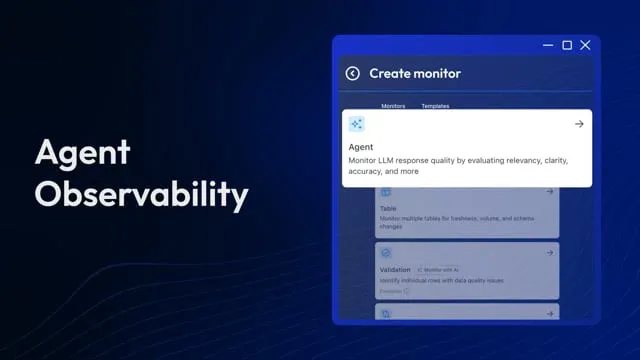
Monte Carlo
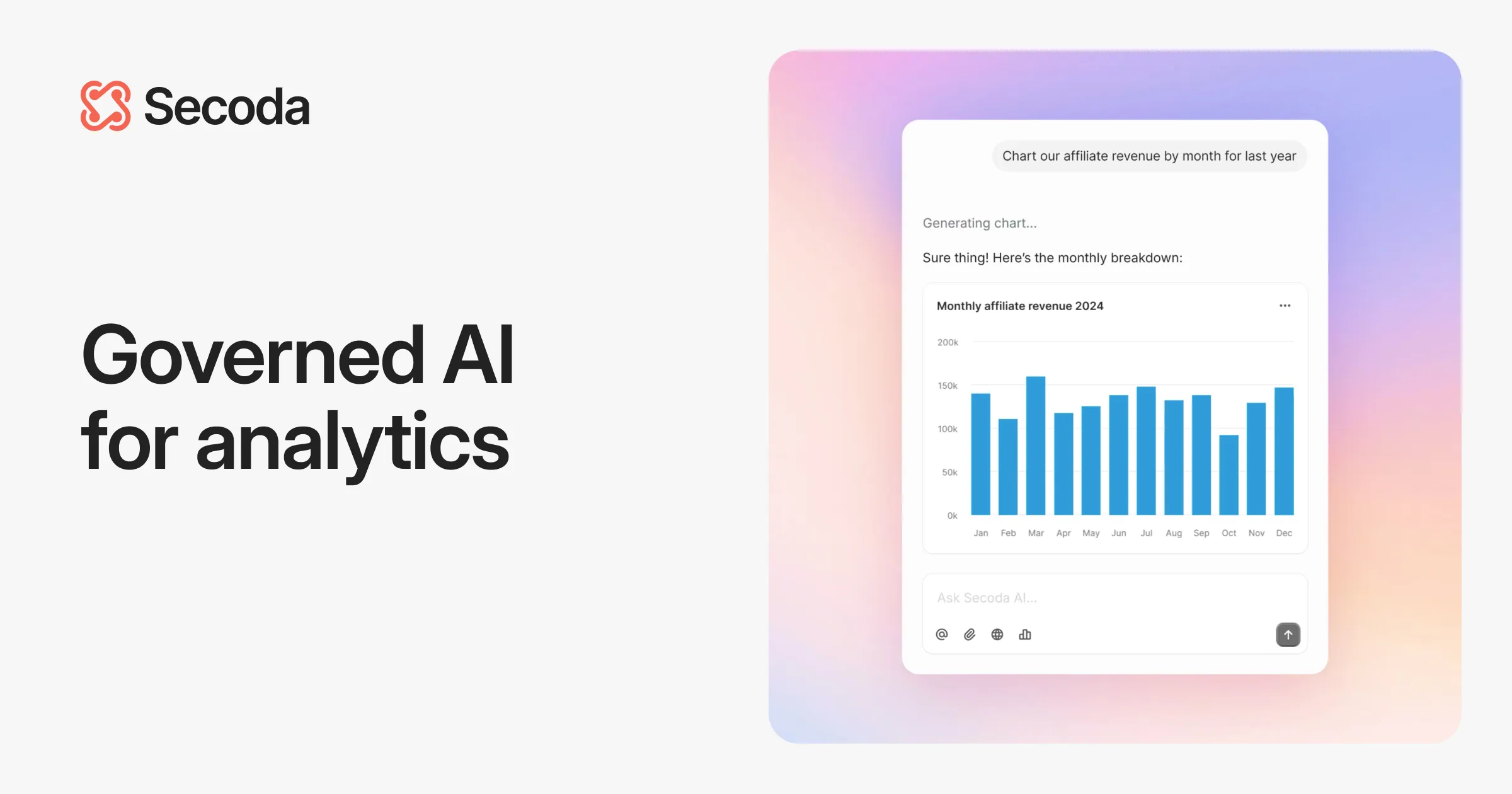
Secoda
Feature Comparison
| Feature | Monte Carlo | Secoda |
|---|---|---|
| Observability & Monitoring | ||
| Anomaly Detection | ML-driven detection with automatic baseline coverage for freshness, volume, and schema out of the box | Real-time monitoring with quality scoring and anomaly detection across the data stack |
| Incident Management | Full incident workflow with intelligent alerting, granular routing, automated lineage grouping, and root cause analysis | Monitor-based alerting with anomaly notifications; no dedicated incident management workflow |
| AI/Agent Observability | Dedicated agent observability for monitoring AI inputs and outputs from source to agent in production | Not a core capability; AI agents focus on internal platform tasks rather than observing external AI systems |
| Data Catalog & Discovery | ||
| Data Catalog | Not a standalone catalog; provides observability-focused metadata views and lineage context | Full data catalog with automated metadata enrichment, data dictionary, and organizational tools |
| Search & Discovery | Search within observability context for tables, monitors, and incident investigation | AI-powered search across the entire data landscape with context-aware results and Chrome extension |
| Documentation | Documentation focused on incident context, monitor descriptions, and lineage annotations | Automated documentation generation with AI agents; centralized knowledge repository for all data assets |
| Lineage & Impact Analysis | ||
| Data Lineage | End-to-end column-level lineage spanning ingestion to consumption with visual lineage tracking | Column and table-level lineage with end-to-end tracing across the data stack |
| Impact Analysis | Comprehensive impact analysis assessing effects on downstream dashboards and business processes | Data CI/CD with automated impact analysis for deploy-time risk assessment |
| Root Cause Analysis | Dedicated root cause analysis with enriched lineage data to trace issues upstream across pipelines | Quality scoring helps identify problem areas; no dedicated root cause analysis workflow |
| AI & Automation | ||
| AI Agents | Monitoring agent for coverage recommendations; agents for troubleshooting and root cause analysis | Nine specialized agents: Analysis, Automation, Search, Memory, Observability, Governance, Documentation, Visualization, and Cataloging |
| Workflow Automation | YAML-based CI/CD monitor deployment, programmatic creation, and API-driven workflows with 100K API calls/day at Enterprise | Bulk updates, custom integrations, automated PII tagging, tech debt management, and metadata enrichment workflows |
| Query & Analysis | Performance optimization with cost management tools and resource usage insights | Query monitoring with performance tracking, compliance enforcement, and AI-powered analysis agent for business insights |
| Security & Governance | ||
| Access Controls | Up to 10 users on Start; unlimited users on Scale and above with SSO, SCIM, and audit logging | RBAC across all tiers; custom roles, access request management, and SIEM logging at Enterprise |
| Deployment Options | SaaS platform with self-hosted storage option available at Scale tier and above | SaaS, single-tenant deployment at Premium, and full self-hosted deployment at Enterprise |
| Compliance & Security | PII filtering, audit logging, and advanced security features at Scale tier and above | SOC 2 compliant; SAML, SSO, MFA, SSH tunneling, data encryption, and PII scanning |
Observability & Monitoring
Anomaly Detection
Incident Management
AI/Agent Observability
Data Catalog & Discovery
Data Catalog
Search & Discovery
Documentation
Lineage & Impact Analysis
Data Lineage
Impact Analysis
Root Cause Analysis
AI & Automation
AI Agents
Workflow Automation
Query & Analysis
Security & Governance
Access Controls
Deployment Options
Compliance & Security
Which approach fits
Monte Carlo and Secoda represent two different philosophies for improving data quality and trust. Monte Carlo is the operational watchdog for enterprises managing pipeline failures, warehouse anomalies, dashboard impact, and production AI-agent reliability through ML-driven monitoring and incident workflows. Secoda is the knowledge hub for teams facing scattered documentation, difficult data discovery, manual requests, and inconsistent governance across their data estate. Choose based on the immediate operational scenario: Monte Carlo for reliability incidents and observability coverage; Secoda for trusted discovery, cataloging, documentation, and governed access.
When each approach fits
Choose Monte Carlo if:
Choose Monte Carlo when pipeline reliability, anomaly detection, and incident resolution are your highest priorities, particularly in complex enterprise data ecosystems. Its ML-driven monitoring, lineage-based root-cause context, granular alert routing, and dashboard impact analysis support teams handling costly quality failures. It is also suited to organizations operating AI agents that need visibility into inputs, outputs, behavior, and performance.
Choose Secoda if:
Choose Secoda when data discovery, documentation, cataloging, and governance are the primary bottlenecks for data teams and business stakeholders. Its AI-powered search, metadata enrichment, lineage, automations, and centralized repository help replace tribal knowledge and manual data requests. The free tier supports one editor, 500 resources, and two integrations, while the $99/month Starter plan provides a clearer entry point for growing teams.
These scenarios reflect the available product evidence. Your requirements, existing stack, and team expertise should guide the final decision.
Frequently Asked Questions
What is the main difference between Monte Carlo and Secoda?
Monte Carlo is a dedicated data and AI observability platform built to monitor data pipelines, detect anomalies, manage incidents, and perform root cause analysis across the entire data stack. Secoda is a unified data enablement platform that combines data cataloging, AI-powered search, automated documentation, lineage, and governance into a single workspace. Monte Carlo goes deeper on monitoring and incident resolution, while Secoda goes wider across discovery, documentation, and governance workflows.
Which platform is better for monitoring AI agents in production?
Monte Carlo is the clear choice for AI agent observability. It offers dedicated agent observability capabilities that monitor AI inputs and outputs from source to agent, helping enterprise teams trace and troubleshoot agents in production. Secoda uses AI agents internally for platform tasks like analysis and documentation, but it does not provide observability tooling for monitoring external AI systems or production agents.
Can Monte Carlo and Secoda be used together?
Yes, and many data teams will benefit from this combination. Monte Carlo handles the operational monitoring layer, detecting data quality issues, managing incidents, and ensuring pipeline reliability. Secoda handles the knowledge layer, cataloging data assets, generating documentation, and making data discoverable through AI-powered search. Together they cover both the reliability and discoverability sides of data governance.
How do the pricing models compare between Monte Carlo and Secoda?
Monte Carlo uses a credit-based consumption model across four tiers (Start, Scale, Enterprise, Business Critical), where you purchase credits consumed based on monitor usage. Pricing requires contacting sales. Secoda provides more pricing transparency and a lower entry point for smaller teams.
Which platform has better data catalog capabilities?
Secoda wins on data cataloging by a significant margin. It provides a full-featured catalog with AI-powered search, automated metadata enrichment, a data dictionary, documentation tools, and a searchable knowledge repository. Monte Carlo is not designed as a data catalog. It provides metadata views and lineage in the context of observability and incident investigation, but teams needing a dedicated catalog should look to Secoda or pair Monte Carlo with a separate cataloging solution.