Decision comparison
Monte Carlo vs Soda
Monte Carlo and Soda address data quality from opposite directions. Monte Carlo is a passive observability platform that monitors your entire data and AI stack to detect incidents after they happen, while Soda is an active testing platform that enforces data quality standards through contracts and checks before data reaches production. Monte Carlo excels at enterprise-scale visibility with end-to-end lineage and impact analysis, while Soda offers a more accessible entry point with its open-source core, transparent pricing, and code-first approach to data contracts.
Architecture choice. These take different approaches to the same problem. Read the table as a fit question rather than a feature race.
These are different kinds of product — Data Observability and Data Validation Framework.
Quick Comparison
| Decision factor | Monte Carlo | Soda |
|---|---|---|
| Primary Approach | Passive observability with ML-driven anomaly detection | Active data quality testing with AI-powered contracts |
| Deployment Model | Fully managed SaaS | SaaS with private deployment option |
| Pricing Entry Point | Monte Carlo publishes no amounts. Its tiers are Start, Scale, Enterprise and Business Critical, purchased as credits, and all are quote-only. Every tier includes agent, ML and data observability. | Free tier at $0 per month, Team tier at $750 per month, with enterprise features available |
| Open Source Component | No | Yes (2,000+ GitHub stars, Python) |
| Best For | Enterprise teams needing end-to-end data + AI observability | Data engineering teams wanting code-first quality checks and contracts |
Monte Carlo
- Primary Approach:
- Passive observability with ML-driven anomaly detection
- Deployment Model:
- Fully managed SaaS
- Pricing Entry Point:
- Monte Carlo publishes no amounts. Its tiers are Start, Scale, Enterprise and Business Critical, purchased as credits, and all are quote-only. Every tier includes agent, ML and data observability.
- Open Source Component:
- No
- Best For:
- Enterprise teams needing end-to-end data + AI observability
Soda
- Primary Approach:
- Active data quality testing with AI-powered contracts
- Deployment Model:
- SaaS with private deployment option
- Pricing Entry Point:
- Free tier at $0 per month, Team tier at $750 per month, with enterprise features available
- Open Source Component:
- Yes (2,000+ GitHub stars, Python)
- Best For:
- Data engineering teams wanting code-first quality checks and contracts
Public signals
Verified factual signals only. Bars appear only for like-for-like metrics with five weekly assessments for every tool; missing evidence stays explicit. These signals do not establish enterprise adoption, product quality, or total cost.
| Metric | Monte Carlo | Soda |
|---|---|---|
| GitHub commits, 90d(Developer adoption) | 231 | Not available |
| GitHub stars(Developer adoption) | 2 | Not available |
| Search interest(Market interest) | 0 | 0 |
| Hacker News mentions, 90d(Community interest) | 0 | Not available |
| PyPI weekly downloads(Developer adoption) | 41.2k | Not available |
| GitHub commits, 90d(Product adoption) | Not available | 81 |
| GitHub stars(Product adoption) | Not available | 2,000+ |
| PyPI weekly downloads(Product adoption) | Not available | 405.8k |
As of September 21, 2026 — updated weekly.
Health & risk evidence
Observed public-source checks for mapped package versions and repositories.
Monte Carlo
September 21, 2026Package vulnerabilities
PyPI · montecarlodata@0.175.0
0 vulnerabilities
across 1 package
Repository security score
Not available
Soda
September 21, 2026Package vulnerabilities
PyPI · soda-core@4.24.0
0 vulnerabilities
across 1 package
Repository security score
Not available
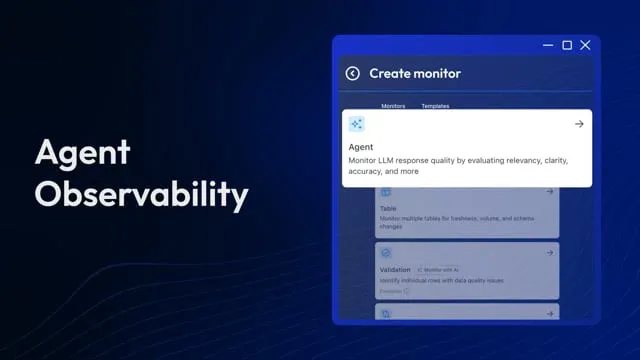
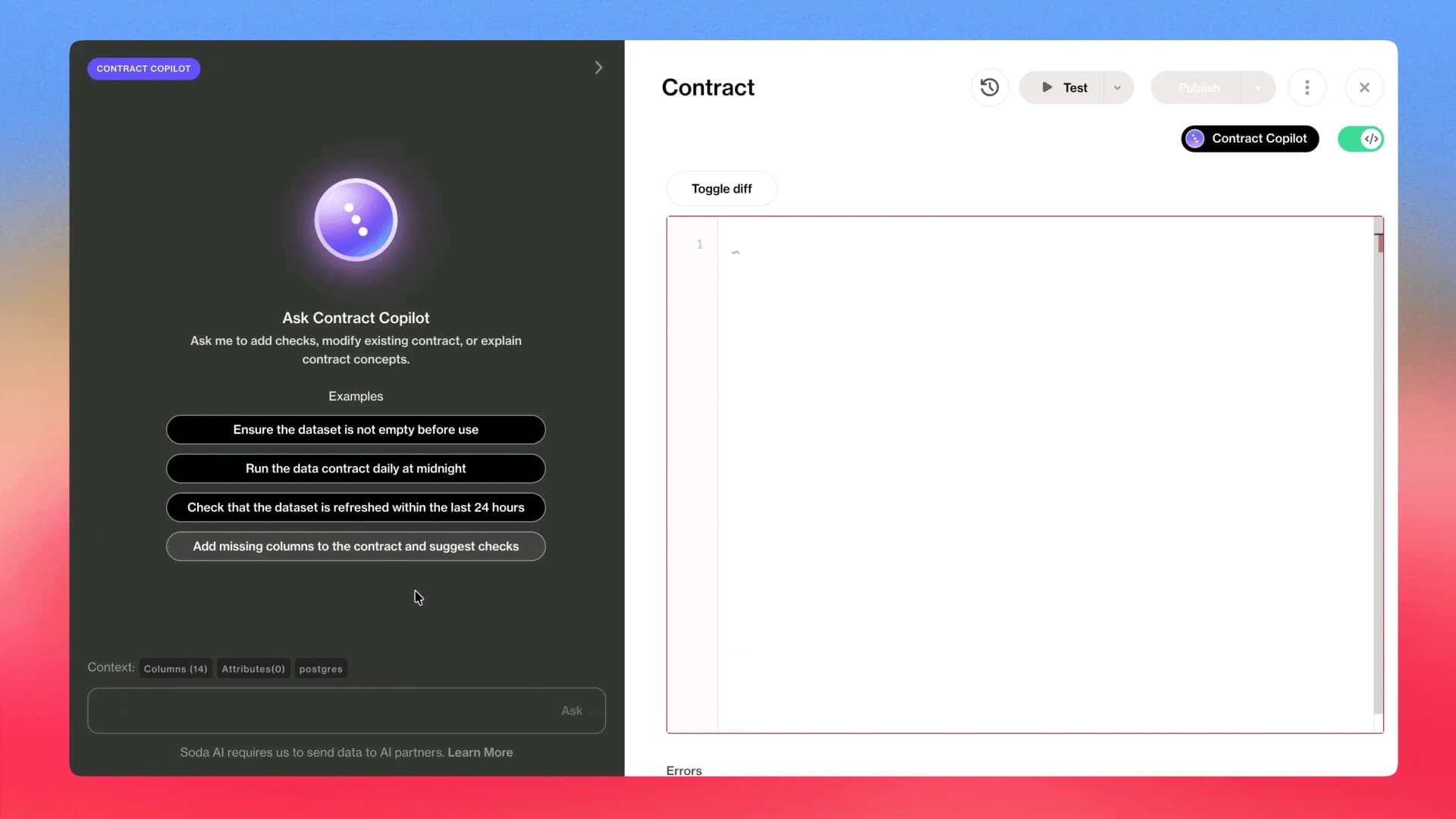
Interface Preview
Monte Carlo
Soda
Feature Comparison
| Feature | Monte Carlo | Soda |
|---|---|---|
| Data Quality Monitoring | ||
| ML-Driven Anomaly Detection | Built-in ML monitors with automatic baseline coverage for freshness, volume, and schema | Record-level anomaly detection; algorithms claim 70% fewer false positives than Facebook Prophet |
| Data Contracts | Not a primary feature; focuses on observability monitors | Core feature with AI-powered contract generation, collaborative workflows between engineers (Git) and business users (UI) |
| Data Profiling | Automatic data profiling as part of observability monitors | Automated data profiling with built-in backfilling and backtesting for historical analysis |
| Observability & Lineage | ||
| End-to-End Lineage | Column-level lineage across the entire data + AI ecosystem | Not a primary feature; focuses on data quality checks rather than lineage tracking |
| Impact Analysis | Comprehensive downstream impact analysis for dashboards and business processes | Limited; focuses on root cause analytics for failed records rather than downstream impact |
| AI/Agent Observability | Dedicated AI observability for monitoring agent inputs, outputs, and behavior in production | Not available; focuses on data quality rather than AI agent monitoring |
| Incident Management & Resolution | ||
| Root Cause Analysis | Automated root cause analysis with lineage-based insights and agentic troubleshooting | Diagnostics warehouse stores all failed records; complete traceability with audit logs |
| Alerting & Routing | Intelligent alerts with granular routing, automated lineage grouping, and contextual notifications | Alerting and ticketing integrations included in the free tier |
| Data Remediation | Focused on detection and incident management; remediation is manual | Automatic isolation of bad data at source; AI remediation announced as upcoming feature |
| Developer Experience | ||
| Open Source / Code-First | Closed source; supports YAML-based monitor configuration and programmatic API | Open-source core (2,000+ GitHub stars, Python); checks defined as code with SodaCL |
| CI/CD Integration | YAML-based CI/CD monitor deployment available | Pipeline testing built into free tier; designed to run in CI/CD pipelines |
| No-Code Interface | Point-and-click UI for monitor creation alongside code options | No-code interface available in Team tier and above for business users |
| Enterprise & Security | ||
| SSO & Access Control | SSO, SCIM, PII Filtering, and Audit Logging available in Scale tier and above | SSO, custom roles, RBAC, and audit logs available in Enterprise tier |
| Private Deployment | Self-hosted storage option in Scale tier; primarily SaaS | Private deployment option available; data stays in your cloud |
| Multi-Workspace Support | Available in Enterprise tier for testing and development environments | Not explicitly offered; focuses on single-workspace data quality |
Data Quality Monitoring
ML-Driven Anomaly Detection
Data Contracts
Data Profiling
Observability & Lineage
End-to-End Lineage
Impact Analysis
AI/Agent Observability
Incident Management & Resolution
Root Cause Analysis
Alerting & Routing
Data Remediation
Developer Experience
Open Source / Code-First
CI/CD Integration
No-Code Interface
Enterprise & Security
SSO & Access Control
Private Deployment
Multi-Workspace Support
Which approach fits
Monte Carlo and Soda address data quality from opposite directions. Monte Carlo is a passive observability platform that monitors your entire data and AI stack to detect incidents after they happen, while Soda is an active testing platform that enforces data quality standards through contracts and checks before data reaches production. Monte Carlo excels at enterprise-scale visibility with end-to-end lineage and impact analysis, while Soda offers a more accessible entry point with its open-source core, transparent pricing, and code-first approach to data contracts.
When each approach fits
Choose Monte Carlo if:
Choose Monte Carlo if your organization needs comprehensive observability across a complex data and AI ecosystem. It is the stronger choice for enterprise teams managing large-scale pipelines who need automated incident detection, column-level lineage, AI agent monitoring, and downstream impact analysis across warehouses and BI layers.
Choose Soda if:
Choose Soda if your data engineering team wants to shift left on data quality with code-first testing, data contracts, and transparent pricing. Soda is the better fit for teams that prefer open-source tooling, need collaborative workflows between engineers and business stakeholders, and want to catch data issues in CI/CD before they reach production.
These scenarios reflect the available product evidence. Your requirements, existing stack, and team expertise should guide the final decision.
Frequently Asked Questions
Can Monte Carlo and Soda be used together?
Yes. Some teams use Soda for proactive data quality testing in CI/CD pipelines and data contracts, while relying on Monte Carlo for passive observability, lineage tracking, and incident management across the extensive data ecosystem. The two tools address complementary stages of the data quality lifecycle.
Which tool is better for AI and ML observability?
Monte Carlo has a clear advantage here. It offers dedicated AI observability features for monitoring agent inputs, outputs, and behavior in production. Soda focuses on data quality at the table and record level and does not currently provide AI or ML agent monitoring capabilities.
Does Soda have an open-source version?
Yes. Soda maintains an open-source Python library (soda-core) with over 2,335 stars on GitHub. It supports data quality checks defined as code using SodaCL. The commercial Soda Cloud platform adds features like AI-powered data contracts, a no-code interface, and advanced anomaly detection on top of the open-source core.
How do the pricing models compare between Monte Carlo and Soda?
Monte Carlo uses a consumption-based credit model across four tiers (Start, Scale, Enterprise, Business Critical) and does not publish prices publicly. Soda offers a free tier (no cost), a Team tier at $750/month, and custom Enterprise pricing. Soda's transparent pricing and free tier make it more accessible for smaller teams, while Monte Carlo's pricing is tailored to enterprise-scale deployments.