Decision comparison
Alation vs DataHub
Alation and DataHub both catalogue data assets and differ on licensing and emphasis. Alation is commercial, built around search, curation prompts and behavioural intelligence derived from query logs. DataHub is open source with an event-driven architecture and graph-modelled lineage, designed for large estates and run on your own infrastructure.
Direct comparison. These are reviewed substitutes bought for the same job, so the differences below are the ones that decide between them.
All 2 are data catalogs.
Quick Comparison
| Decision factor | Alation | DataHub |
|---|---|---|
| What it is | A commercial data catalog built around search, curation and behavioural intelligence from query logs | An open-source metadata platform with an event-driven architecture, built for large estates and extensive lineage |
| Licensing | Commercial, with a managed service | Open source, self-hosted, with managed offerings from third parties |
| Ingestion | Crawls warehouses for schemas and parses query logs for lineage and usage | Ingests metadata from warehouses, dbt and pipelines through connectors |
| Curation | Prompts stewards where usage is high, and suggests owners from query history | Ownership, glossary and documentation fields maintained by stewards |
| Deployment | Vendor-operated | Your own infrastructure, or a managed provider |
| Support | A vendor contractually accountable for the platform | A community, unless you buy support from a provider |
| Best fit | Organisations that want curation prompted and a vendor on the hook | Organisations wanting control of the catalog and no licence cost |
Alation
- What it is:
- A commercial data catalog built around search, curation and behavioural intelligence from query logs
- Licensing:
- Commercial, with a managed service
- Ingestion:
- Crawls warehouses for schemas and parses query logs for lineage and usage
- Curation:
- Prompts stewards where usage is high, and suggests owners from query history
- Deployment:
- Vendor-operated
- Support:
- A vendor contractually accountable for the platform
- Best fit:
- Organisations that want curation prompted and a vendor on the hook
DataHub
- What it is:
- An open-source metadata platform with an event-driven architecture, built for large estates and extensive lineage
- Licensing:
- Open source, self-hosted, with managed offerings from third parties
- Ingestion:
- Ingests metadata from warehouses, dbt and pipelines through connectors
- Curation:
- Ownership, glossary and documentation fields maintained by stewards
- Deployment:
- Your own infrastructure, or a managed provider
- Support:
- A community, unless you buy support from a provider
- Best fit:
- Organisations wanting control of the catalog and no licence cost
Public signals
Verified factual signals only. Bars appear only for like-for-like metrics with five weekly assessments for every tool; missing evidence stays explicit. These signals do not establish enterprise adoption, product quality, or total cost.
| Metric | Alation | DataHub |
|---|---|---|
| GitHub commits, 90d(Developer adoption) | 3 | Not available |
| GitHub stars(Developer adoption) | 19 | Not available |
| Search interest(Market interest) | Unavailable | 0 |
| Product Hunt comments(Community interest) | 0 | 1 |
| Product Hunt reviews(Community interest) | 0 | 0 |
| Product Hunt votes(Community interest) | 2 | 0 |
| Stack Overflow questions(Community interest) | 12 | Not available |
| Docker Hub pulls(Product adoption) | Not available | 5.3M |
| GitHub commits, 90d(Product adoption) | Not available | 1.1k |
| GitHub stars(Product adoption) | Not available | 12,000+ |
| Hacker News mentions, 90d(Community interest) | Not available | 0 |
| PyPI weekly downloads(Product adoption) | Not available | 1.0M |
As of September 14, 2026 — updated weekly.
Health & risk evidence
Observed public-source checks for mapped package versions and repositories.
Alation
Package vulnerabilities
Not available
Repository security score
Not available
DataHub
September 19, 2026Package vulnerabilities
PyPI · acryl-datahub@1.7.0.10
0 vulnerabilities
across 1 package
Repository security score
github.com/datahub-project/datahub
6.2/10
Interface Preview
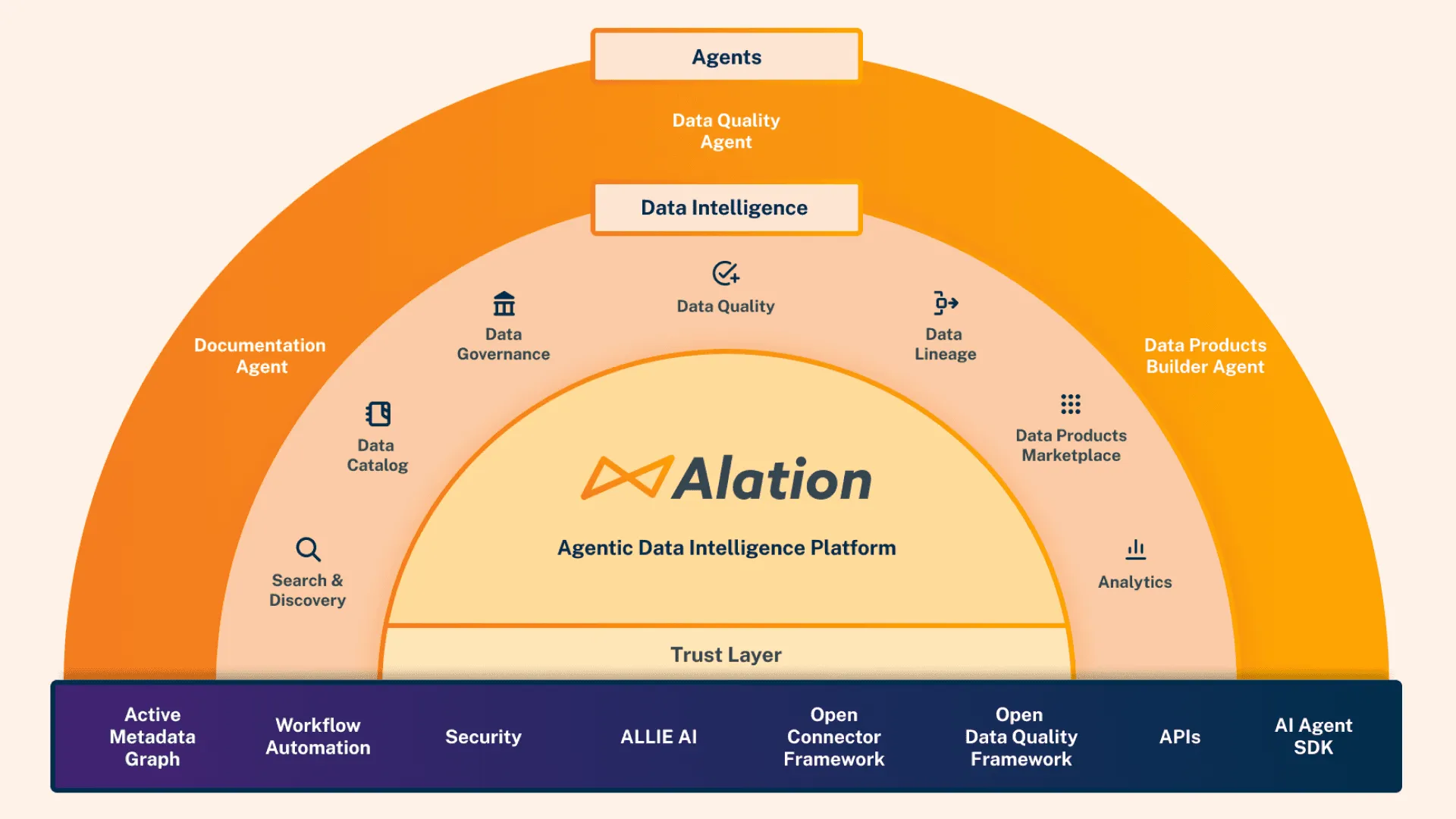
Alation
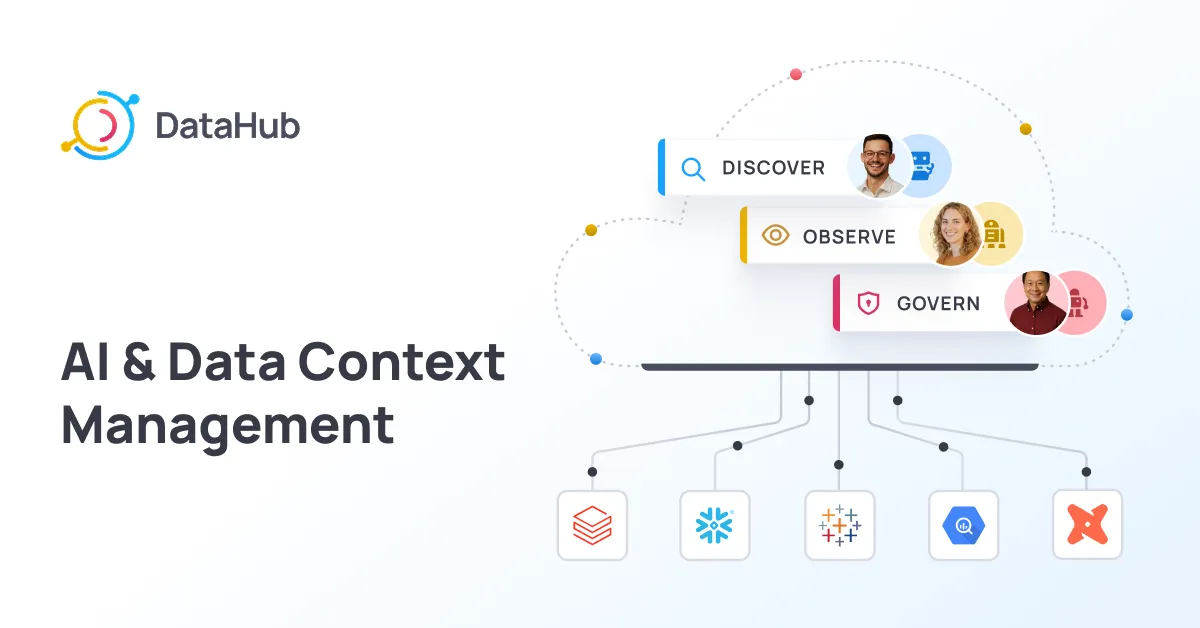
DataHub
Feature Comparison
| Feature | Alation | DataHub |
|---|---|---|
| Discovery | ||
| Automatic schema ingestion | Full support | Full support |
| Column-level lineage | Full support | Full support |
| Search across assets | Full support | Full support |
| Usage statistics from query logs | Full support | Partial support |
| Curation | ||
| Business glossary | Full support | Full support |
| Ownership assignment | Full support | Full support |
| Prompts stewards where documentation is missing | Full support | Partial support |
| Data quality status displayed | Full support | Full support |
| Platform | ||
| Open source | Not verified | Full support |
| Self-hosted deployment | Not verified | Full support |
| Vendor support accountability | Full support | Partial support |
| REST API for automation | Full support | Full support |
| Integration | ||
| Connects to Snowflake, BigQuery and Databricks | Full support | Full support |
| dbt integration | Full support | Full support |
| BI tool lineage | Full support | Full support |
| Access policy integration | Full support | Partial support |
Discovery
Automatic schema ingestion
Column-level lineage
Search across assets
Usage statistics from query logs
Curation
Business glossary
Ownership assignment
Prompts stewards where documentation is missing
Data quality status displayed
Platform
Open source
Self-hosted deployment
Vendor support accountability
REST API for automation
Integration
Connects to Snowflake, BigQuery and Databricks
dbt integration
BI tool lineage
Access policy integration
Which to choose
Alation and DataHub both catalogue data assets and differ on licensing and emphasis. Alation is commercial, built around search, curation prompts and behavioural intelligence derived from query logs. DataHub is open source with an event-driven architecture and graph-modelled lineage, designed for large estates and run on your own infrastructure.
Best-fit scenarios
Choose Alation if:
Choose Alation when you want curation actively encouraged and somebody accountable. Parsing query logs to suggest owners and to show which tables are actually used means stewardship effort goes where it matters rather than being spread evenly across 10,000 tables, and a vendor is contractually on the hook when the platform does not work.
Choose DataHub if:
Choose DataHub when you want the catalog under your own control and no licence cost. The event-driven architecture and push-based ingestion suit estates with many metadata producers, graph-modelled lineage handles complex dependency chains, and a large community means connectors and patterns are widely shared.
These scenarios reflect the available product evidence. Your requirements, existing stack, and team expertise should guide the final decision.
Frequently Asked Questions
How does metadata get in?
Alation pulls. It connects to the warehouse, reads schemas and parses query logs on a schedule, so the catalog is as current as its last crawl. DataHub pushes: emitters send Metadata Change Proposals over Kafka or HTTP, and the recipes that produce them are configuration kept in version control, so a change can appear within seconds rather than within a crawl interval. Pull is less work to start. Push is why DataHub suits estates whose metadata producers include streaming systems, internal services and bespoke tools rather than a handful of warehouses.
Who maintains it after the rollout?
Named stewards with time allocated, or nobody — and nobody is the common answer. A catalog populated automatically and curated by no one becomes ten thousand undescribed tables that people learn to ignore. Decide who owns which domains before deploying anything, because no product solves this and every product depends on it.
How much does lineage help in practice?
It answers two expensive questions: what breaks if I change this column, and where did this number come from. Column-level lineage through dbt into dashboards turns both from an afternoon of tracing into a screen. The value scales with how many consumers sit downstream — with twenty dashboards it is convenient, with five hundred it is the product.
How much of the estate should we catalogue first?
The tables people actually use, which is a far shorter list than the schema suggests. Query logs usually show that a few hundred tables carry almost all of the reads while thousands are never touched, so cataloguing the used ones properly is both achievable and the part that pays. Crawling everything on day one produces a search result page nobody trusts.
How does each one fit dbt and the warehouse?
Both read Snowflake, BigQuery and Databricks schemas, and both ingest dbt so documentation written in the project appears in the catalog instead of being retyped. The difference is what happens next. Alation layers query-log usage on top, so a dbt model nobody queries looks different from one fifty dashboards depend on. DataHub turns dbt lineage into graph edges you can traverse through its GraphQL API, which makes impact analysis scriptable rather than a screen to read. Decide which you need: a signal about what matters, or an interface something else can query.
What does the licence difference actually change?
Less than the deployment difference, and more than you would like at renewal. Alation's cost is a negotiated licence and its risk is the renewal conversation once forty teams depend on it. DataHub's cost is zero and its risk is that four stateful systems become somebody's second job. The real lock-in question is neither. Descriptions, glossary terms and ownership written inside a catalog are the asset, and moving them is the migration. Ask how metadata is exported before you write any of it: DataHub's model is open and readable over Kafka or GraphQL, Alation's is whatever its API returns.