Decision comparison
Monte Carlo vs Great Expectations vs Soda
Monte Carlo is the strongest choice for enterprises that need automated, full-stack data and AI observability with minimal manual configuration. Great Expectations is the best fit for engineering teams that want open-source, code-first data validation with no vendor lock-in. Soda sits in between, offering AI-powered automation with collaborative workflows that bridge the gap between technical and business stakeholders.
Category comparison
Three data quality approaches: automated monitoring, code-defined tests, or declarative checks
Monte Carlo leans on automated anomaly detection across pipelines, Great Expectations on explicit expectations written and versioned as code, and Soda on declarative checks that sit between the two. How much you want to specify by hand is the deciding factor. If you have narrowed to Monte Carlo and Great Expectations, the dedicated head-to-head covers that pair.
Pick Monte Carlo when
broad automated coverage matters more than defining each rule yourself.
Pick Great Expectations when
data tests should live in the repository, reviewed and versioned like application code.
Pick Soda when
you want declarative checks in configuration without building a full code-first test suite.
These are different kinds of product — Data Observability and Data Validation Framework. Teams do weigh them against each other, but they are not drop-in substitutes, so read the table as a fit question rather than a feature race.
Quick Comparison
| Decision factor | Monte Carlo | Great Expectations | Soda |
|---|---|---|---|
| Best For | Enterprise teams needing automated, end-to-end data and AI observability across their full stack | Data engineers who want fine-grained, code-defined validation rules with full open-source control | Teams seeking AI-powered data quality with collaborative workflows bridging engineers and business users |
| Pricing Model | Monte Carlo publishes no amounts. Its tiers are Start, Scale, Enterprise and Business Critical, purchased as credits, and all are quote-only. Every tier includes agent, ML and data observability. | Free and Open-Source, Paid upgrades available | Free tier at $0 per month, Team tier at $750 per month, with enterprise features available |
| Core Approach | ML-driven anomaly detection with automated monitors, lineage tracking, and incident management built in | Python-based expectation suites that codify data quality rules and produce auto-generated documentation | AI-native data contracts engine with record-level anomaly detection and automated check generation |
| Deployment | Fully managed SaaS platform with deep integrations into warehouses, BI tools, and AI systems | Self-hosted Python library or managed GX Cloud; integrates with Airflow, Dagster, and Prefect | SaaS platform with data staying in your cloud; engineers use Git while business users use the UI |
| Learning Curve | Low setup effort with out-of-the-box monitoring and AI-powered monitor creation agents | Moderate; requires Python proficiency and manual expectation definition for comprehensive coverage | Low to moderate with AI co-pilot for contract generation and plain-English check authoring |
Monte Carlo
- Best For:
- Enterprise teams needing automated, end-to-end data and AI observability across their full stack
- Pricing Model:
- Monte Carlo publishes no amounts. Its tiers are Start, Scale, Enterprise and Business Critical, purchased as credits, and all are quote-only. Every tier includes agent, ML and data observability.
- Core Approach:
- ML-driven anomaly detection with automated monitors, lineage tracking, and incident management built in
- Deployment:
- Fully managed SaaS platform with deep integrations into warehouses, BI tools, and AI systems
- Learning Curve:
- Low setup effort with out-of-the-box monitoring and AI-powered monitor creation agents
Great Expectations
- Best For:
- Data engineers who want fine-grained, code-defined validation rules with full open-source control
- Pricing Model:
- Free and Open-Source, Paid upgrades available
- Core Approach:
- Python-based expectation suites that codify data quality rules and produce auto-generated documentation
- Deployment:
- Self-hosted Python library or managed GX Cloud; integrates with Airflow, Dagster, and Prefect
- Learning Curve:
- Moderate; requires Python proficiency and manual expectation definition for comprehensive coverage
Soda
- Best For:
- Teams seeking AI-powered data quality with collaborative workflows bridging engineers and business users
- Pricing Model:
- Free tier at $0 per month, Team tier at $750 per month, with enterprise features available
- Core Approach:
- AI-native data contracts engine with record-level anomaly detection and automated check generation
- Deployment:
- SaaS platform with data staying in your cloud; engineers use Git while business users use the UI
- Learning Curve:
- Low to moderate with AI co-pilot for contract generation and plain-English check authoring
Public signals
Verified factual signals only. Bars appear only for like-for-like metrics with five weekly assessments for every tool; missing evidence stays explicit. These signals do not establish enterprise adoption, product quality, or total cost.
| Metric | Monte Carlo | Great Expectations | Soda |
|---|---|---|---|
| GitHub commits, 90d(Developer adoption) | 225 | Not available | Not available |
| GitHub stars(Developer adoption) | 2 | Not available | Not available |
| Search interest(Market interest) | Unavailable | 0 | Unavailable |
| Hacker News mentions, 90d(Community interest) | 0 | 0 | Not available |
| PyPI weekly downloads(Developer adoption) | 41.4k | Not available | Not available |
| GitHub commits, 90d(Product adoption) | Not available | 175 | 105 |
| GitHub stars(Product adoption) | Not available | 11,000+ | 2,000+ |
| PyPI weekly downloads(Product adoption) | Not available | 4.5M | 397.4k |
| Stack Overflow questions(Community interest) | Not available | 148 | Not available |
As of October 19, 2026 — updated weekly.
Health & risk evidence
Observed public-source checks for mapped package versions and repositories.
Monte Carlo
October 19, 2026Package vulnerabilities
PyPI · montecarlodata@0.176.0
0 vulnerabilities
across 1 package
Repository security score
Not available
Great Expectations
October 19, 2026Package vulnerabilities
PyPI · great-expectations@1.24.0
0 vulnerabilities
across 1 package
Repository security score
Not available
Soda
October 19, 2026Package vulnerabilities
PyPI · soda-core@4.27.0
0 vulnerabilities
across 1 package
Repository security score
Not available
Interface Preview
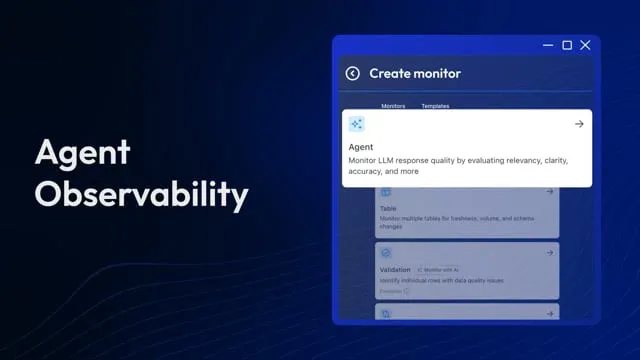
Monte Carlo
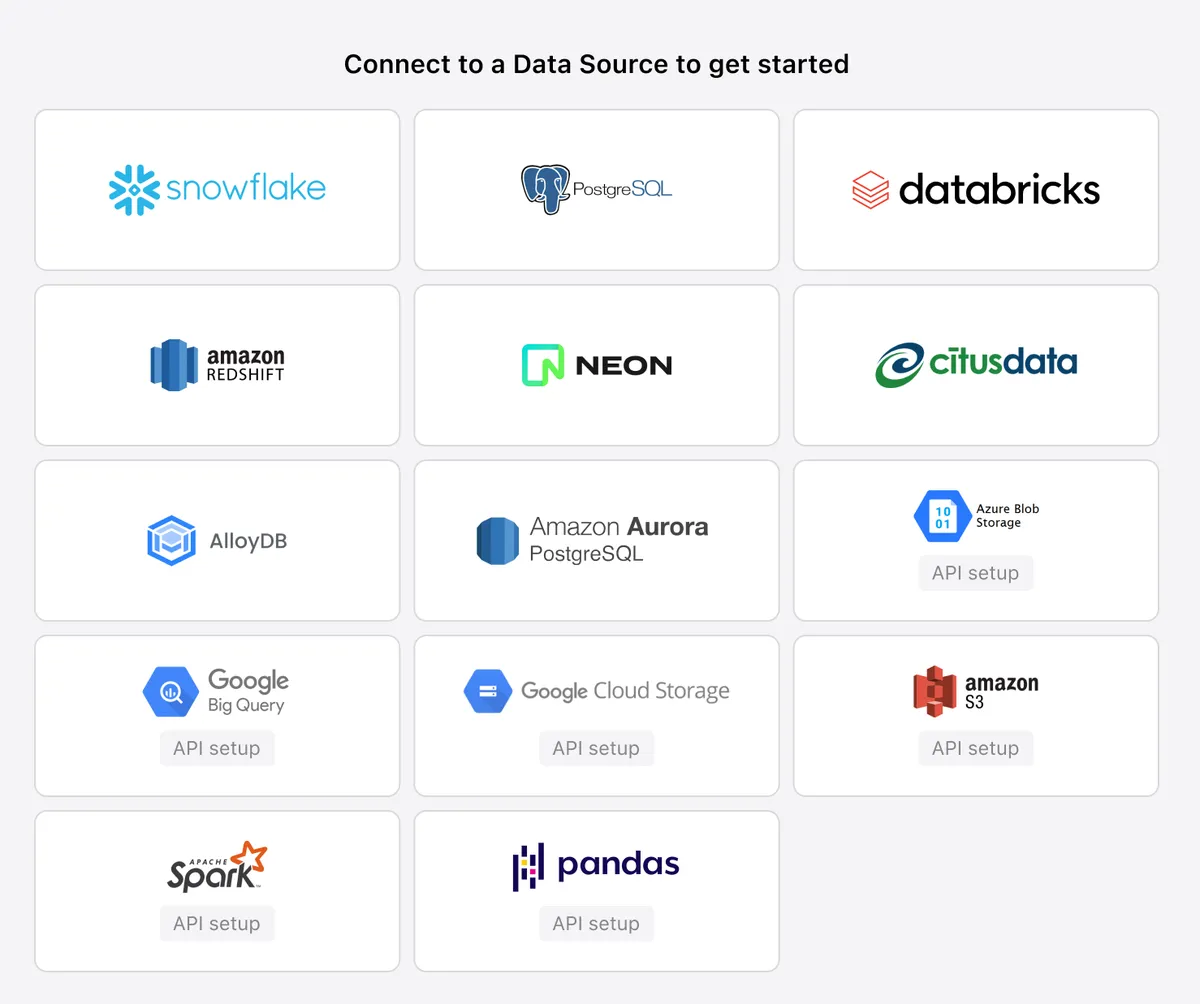
Great Expectations
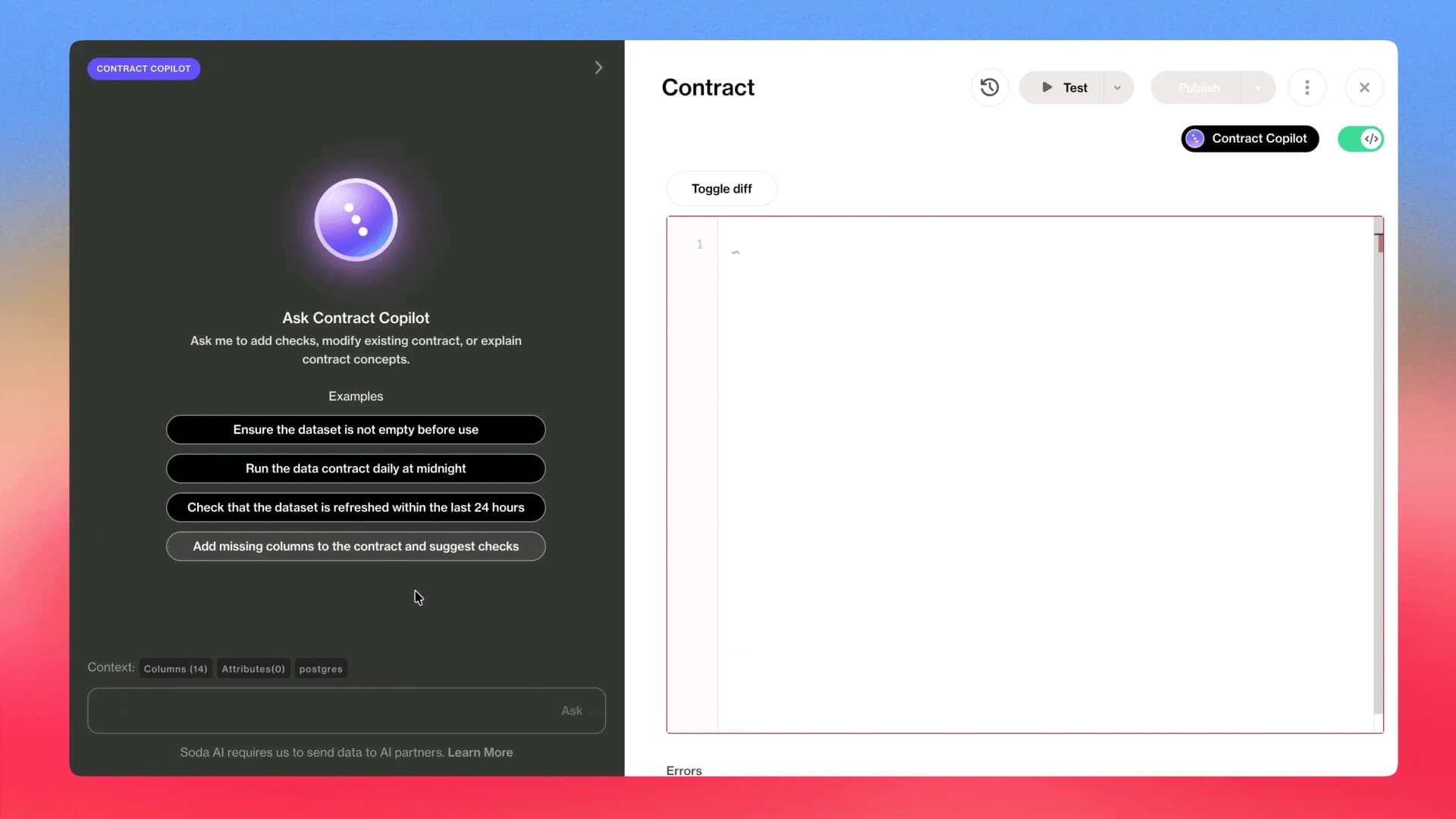
Soda
Feature Comparison
| Feature | Monte Carlo | Great Expectations | Soda |
|---|---|---|---|
| Data Quality & Validation | |||
| Anomaly Detection | ML-driven anomaly detection across freshness, volume, schema, and distribution with automatic baselining | Rule-based validation through expectation suites; anomalies detected when data fails defined expectations | Record-level anomaly detection using peer-reviewed AI algorithms with 70% fewer false positives than Prophet |
| Data Contracts | Monitor-based SLAs and coverage tools that enforce data reliability standards across pipelines | Expectation suites serve as codified data contracts with version-controlled, reusable rule definitions | Dedicated data contracts engine with AI-powered generation, collaborative workflows, and governance controls |
| Schema Change Detection | Automatic schema change monitoring with alerting and impact analysis on downstream assets | Schema expectations validate column presence, types, and ordering against defined rules | Schema checks built into data contracts with automated freshness and structure validation |
| Observability & Monitoring | |||
| Data Lineage | End-to-end column-level lineage across warehouses, BI tools, and AI systems with visual tracking | No built-in lineage; relies on external orchestration tools like Airflow or Dagster for pipeline visibility | Complete traceability through diagnostics warehouse with every log and anomaly captured for auditing |
| Incident Management | Built-in incident management with intelligent alerting, automated lineage grouping, and root-cause analysis | Validation results logged as Data Docs; no native incident workflow or alert routing system | Alerting and ticketing integrations with AI-powered root cause analytics and diagnostics warehouse |
| Dashboard & Reporting | Impact analysis for BI dashboards with data health insights and cost performance optimization tools | Auto-generated Data Docs providing HTML documentation of validation results and data profiles | Interactive visualizations for organization-wide data oversight with drill-down to individual anomalies |
| Integration & Deployment | |||
| Warehouse Support | Snowflake, Databricks, BigQuery, Redshift, plus enterprise databases like Oracle, SAP Hana, and Teradata | Multi-backend support for SQL databases, Pandas DataFrames, and Spark through pluggable execution engines | Snowflake, Databricks, and other major warehouses with data staying in your cloud environment |
| CI/CD Integration | YAML-based monitor configuration deployable during CI/CD with programmatic and UI-based creation options | Native checkpoint integration into CI/CD pipelines with Python API and CLI-driven validation workflows | Engineers work in Git with versioned data contracts; checks deployable through CI/CD or the Soda UI |
| Orchestrator Integration | Deep integrations from ingestion to consumption across the full data and AI ecosystem | First-class pipeline integration with Airflow, Dagster, and Prefect for orchestrated validation | Works with existing orchestration tools; engineers and business users share a unified workflow |
| AI & Automation | |||
| AI-Powered Features | AI agents for monitor creation, troubleshooting, and root cause analysis; Agent Observability for AI systems | ExpectAI feature auto-generates test expectations; AI assists with initial rule creation and profiling | AI co-pilot creates full data contracts with one click; plain-English check writing and automated generation |
| Automated Coverage | Out-of-the-box monitoring for freshness, volume, and schema with automatic baseline coverage and autoscaling | Manual expectation definition required; profiler assists with initial suggestions but needs human curation | Automated data quality checks with built-in backfilling and backtesting across one year of historical data |
| Unstructured Data Support | AI-powered checks for unstructured fields in Snowflake, Databricks, and BigQuery now available | Focused on structured tabular data; no native support for unstructured data quality checks | Record-level detection works across structured data; AI remediation for fixing bad records coming soon |
| Enterprise & Governance | |||
| Security & Compliance | SSO, SCIM, self-hosted storage, PII filtering, and audit logging available from Scale tier onward | Self-hosted deployment provides full data control; GX Cloud adds team collaboration with managed security | Security by design with data staying in your cloud; audit logs, custom roles, RBAC, and private deployment |
| Multi-Team Support | Data Mesh support with unlimited data products and domains; multi-workspace for testing and development | Team collaboration through GX Cloud; open-source core supports individual and small team workflows | Collaborative workflows where engineers use Git and business users work in the UI with shared versioning |
| Enterprise Scalability | Business Critical tier with maximum availability, enterprise cost attribution, and 100,000+ API calls per day | Scales with your Python infrastructure; 11,000+ GitHub stars and active open-source community support | Metrics monitoring scales to 1 billion rows in 64 seconds; 2,000+ GitHub stars for the open-source engine |
Data Quality & Validation
Anomaly Detection
Data Contracts
Schema Change Detection
Observability & Monitoring
Data Lineage
Incident Management
Dashboard & Reporting
Integration & Deployment
Warehouse Support
CI/CD Integration
Orchestrator Integration
AI & Automation
AI-Powered Features
Automated Coverage
Unstructured Data Support
Enterprise & Governance
Security & Compliance
Multi-Team Support
Enterprise Scalability
What each one does
Monte Carlo is the strongest choice for enterprises that need automated, full-stack data and AI observability with minimal manual configuration. Great Expectations is the best fit for engineering teams that want open-source, code-first data validation with no vendor lock-in. Soda sits in between, offering AI-powered automation with collaborative workflows that bridge the gap between technical and business stakeholders.
What each one is for
Choose Monte Carlo if:
Choose Monte Carlo if your organization needs enterprise-grade data observability with ML-driven anomaly detection, end-to-end column-level lineage, and built-in incident management. Monte Carlo excels when you have a large data estate spanning multiple warehouses, BI tools, and AI systems that require automated monitoring at scale. The platform requires minimal manual configuration thanks to out-of-the-box baseline coverage and AI agents that handle monitor creation and troubleshooting. It is the right choice for teams that want to reduce data incidents by 80% or more and need vendor-agnostic coverage across Snowflake, Databricks, BigQuery, and enterprise databases.
Choose Great Expectations if:
Choose Great Expectations if your team prioritizes open-source flexibility, fine-grained control over validation rules, and zero vendor lock-in. With 11,430 GitHub stars and an Apache-2.0 license, Great Expectations provides a Python-based framework that integrates directly into your existing data pipelines through Airflow, Dagster, or Prefect. The expectation suites approach lets you codify exact business rules and produce auto-generated Data Docs as living documentation. This is the ideal choice for data engineers who are comfortable writing Python, want validation embedded in their CI/CD workflows, and prefer a self-hosted solution where they control every aspect of the quality checking process.
Choose Soda if:
Choose Soda if you need a modern data quality platform that combines AI-powered automation with collaborative workflows for both engineers and business users. Soda stands out with its data contracts engine, record-level anomaly detection backed by peer-reviewed research published in NeurIPS and JAIR, and the ability to write checks in plain English. Starting at $0/month for the free tier and $750/month for Team, Soda provides a clear pricing structure with built-in backfilling and backtesting capabilities. It is the right fit for organizations that want to unite data engineering and business governance in a shared workflow while keeping data securely in their own cloud environment.
These scenarios reflect the available product evidence. Your requirements, existing stack, and team expertise should guide the final decision.
Frequently Asked Questions
What is the main difference between Monte Carlo, Great Expectations, and Soda?
Monte Carlo is a fully managed data and AI observability platform that uses ML-driven anomaly detection to automatically monitor your entire data stack without requiring manual rule definitions. Great Expectations is an open-source Python framework where you explicitly define expectation suites as codified data quality rules, giving you fine-grained control over every validation check. Soda takes an AI-native approach with its data contracts engine, combining automated quality checks with collaborative workflows where engineers work in Git and business users interact through a visual interface. The fundamental distinction is that Monte Carlo observes and alerts automatically, Great Expectations validates against rules you write, and Soda automates quality through AI-powered contracts that both technical and business teams can manage together.
Can I use Great Expectations or Soda alongside Monte Carlo?
Yes, these tools can complement each other in a layered data quality strategy. Many organizations use Great Expectations for inline pipeline validation during data transformations, running expectation suites within Airflow or Dagster to catch issues at the point of ingestion and processing. They then layer Monte Carlo on top for broader observability across the full data estate, catching drift and anomalies that individual pipeline checks cannot detect. Similarly, Soda can handle contract-level quality enforcement while Monte Carlo provides end-to-end lineage and incident management. The key consideration is cost and complexity, since running multiple tools increases operational overhead. For most teams, choosing one primary platform and supplementing with targeted use of another provides the best balance of coverage and maintainability.
Which tool is best for a small team with a limited budget?
Great Expectations is the most budget-friendly option since the open-source core is completely free under the Apache-2.0 license and requires no SaaS subscription. You install the Python package, write your expectations, and run validations within your existing infrastructure. The tradeoff is that you handle all setup, orchestration, and maintenance yourself. Soda offers a free tier at $0/month that includes pipeline testing, metrics observability, and alerting integrations, making it a strong second choice for small teams that want managed features without upfront cost. Monte Carlo provides a Start tier for small teams with up to 10 users and pay-per-monitor pricing, but the usage-based credit model is designed more for organizations with established data operations. For teams of five or fewer with tight budgets, starting with Great Expectations or the Soda free tier provides the most value per dollar.
How do these tools handle AI and machine learning workloads?
Monte Carlo has the most comprehensive AI support with its dedicated Agent Observability feature that monitors AI inputs and outputs from source to agent, traces enterprise agent behavior in production, and detects drift or hallucination in AI systems. It positions itself as a data and AI observability platform rather than just a data quality tool. Soda applies AI within its own platform through automated contract generation, plain-English check writing, and record-level anomaly detection powered by peer-reviewed algorithms, but it focuses on ensuring data quality for AI rather than monitoring AI outputs directly. Great Expectations does not have native AI monitoring capabilities. It validates data quality through codified rules, which helps ensure AI-ready data by catching issues before data enters training or inference pipelines. Teams building production AI systems should strongly consider Monte Carlo for end-to-end observability across both data inputs and agent outputs.