Decision comparison
Talend vs Matillion
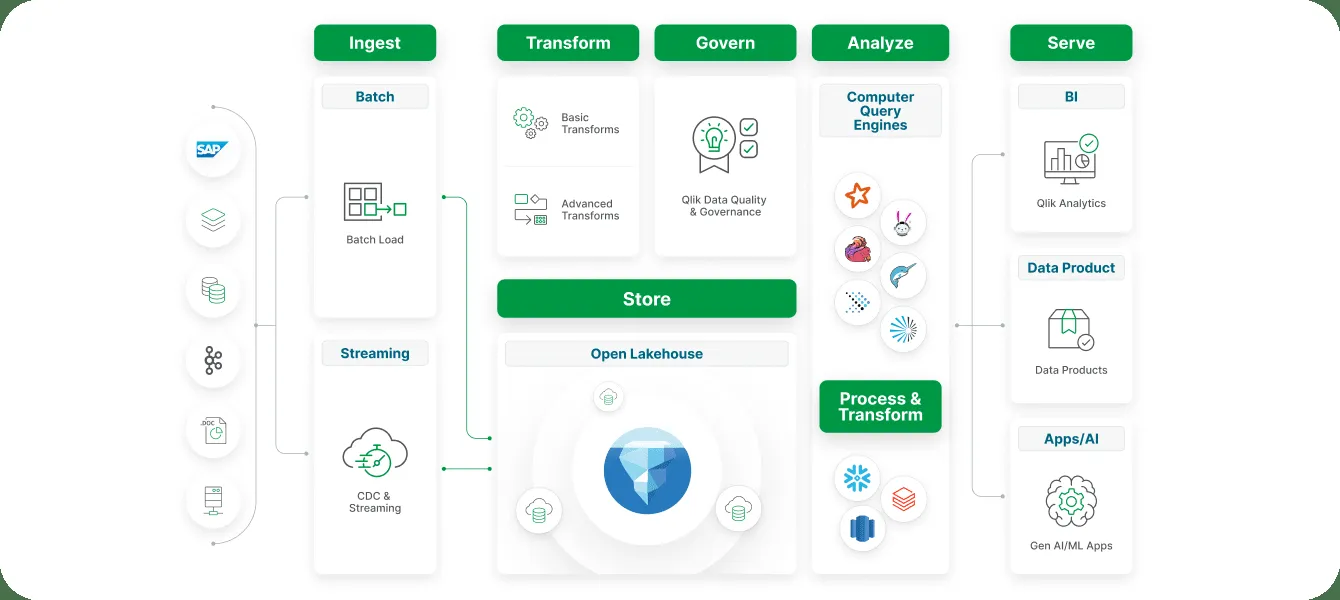
Talend and Matillion target fundamentally different segments of the data pipeline market. Talend delivers a comprehensive enterprise data fabric with deep governance, quality, and MDM capabilities, while Matillion focuses on fast, cloud-native ELT with an emphasis on developer productivity and warehouse-native execution. The right choice depends on whether your priority is enterprise-wide data governance or agile cloud data transformation.
Direct comparison. These are reviewed substitutes bought for the same job, so the differences below are the ones that decide between them.
All 2 are ETL platforms.
Quick Comparison
| Decision factor | Talend | Matillion |
|---|---|---|
| Best For | Large enterprises needing end-to-end data integration, quality, and governance | Cloud-first teams building ELT pipelines on Snowflake, BigQuery, or Redshift |
| Architecture | Hybrid deployment: cloud-native SaaS, on-premises, or hybrid environments | Cloud-native with pushdown processing into warehouse compute engines |
| Pricing Model | Talend Data Fabric starts at $12,000/year ($1000/month), Talend Cloud and Data Management Platform require contact for custom pricing, Enterprise Custom plans are custom-priced. Plans range from $12,000 to $200,000/year. | Matillion offers a time-bound, fair-use Maia trial. Data Productivity Cloud pricing uses consumption-based Matillion Credits for task hours and additional developer users across Developer, Teams, and Scale editions; no public paid currency rates are listed. |
| Ease of Use | GUI-based with guided experience, but steep learning curve for complex features | Drag-and-drop visual designer with optional SQL and Python for advanced users |
| Scalability | Enterprise-grade with support for batch, real-time, CDC, and lakehouse workloads | Unlimited users, projects, and parallel agents on containerized microservices |
| Community/Support | 8.8/10 TrustRadius rating from 74 reviews; dedicated enterprise support | 8.5/10 TrustRadius rating from 237 reviews; TrustRadius Top Rated 5 consecutive years |
Talend
- Best For:
- Large enterprises needing end-to-end data integration, quality, and governance
- Architecture:
- Hybrid deployment: cloud-native SaaS, on-premises, or hybrid environments
- Pricing Model:
- Talend Data Fabric starts at $12,000/year ($1000/month), Talend Cloud and Data Management Platform require contact for custom pricing, Enterprise Custom plans are custom-priced. Plans range from $12,000 to $200,000/year.
- Ease of Use:
- GUI-based with guided experience, but steep learning curve for complex features
- Scalability:
- Enterprise-grade with support for batch, real-time, CDC, and lakehouse workloads
- Community/Support:
- 8.8/10 TrustRadius rating from 74 reviews; dedicated enterprise support
Matillion
- Best For:
- Cloud-first teams building ELT pipelines on Snowflake, BigQuery, or Redshift
- Architecture:
- Cloud-native with pushdown processing into warehouse compute engines
- Pricing Model:
- Matillion offers a time-bound, fair-use Maia trial. Data Productivity Cloud pricing uses consumption-based Matillion Credits for task hours and additional developer users across Developer, Teams, and Scale editions; no public paid currency rates are listed.
- Ease of Use:
- Drag-and-drop visual designer with optional SQL and Python for advanced users
- Scalability:
- Unlimited users, projects, and parallel agents on containerized microservices
- Community/Support:
- 8.5/10 TrustRadius rating from 237 reviews; TrustRadius Top Rated 5 consecutive years
Public signals
Verified factual signals only. Bars appear only for like-for-like metrics with five weekly assessments for every tool; missing evidence stays explicit. These signals do not establish enterprise adoption, product quality, or total cost.
| Metric | Talend | Matillion |
|---|---|---|
| Search interest(Market interest) | 0 | 0 |
| Hacker News mentions, 90d(Community interest) | 0 | 0 |
| Stack Overflow questions(Community interest) | 2.7k | 86 |
As of September 21, 2026 — updated weekly.
Interface Preview
Talend
Feature Comparison
| Feature | Talend | Matillion |
|---|---|---|
| Data Integration | ||
| ETL/ELT Support | Full ETL and ELT with batch, real-time, and API integration | Warehouse-native ELT pushing transforms to cloud data platforms |
| Pre-built Connectors | Hundreds of connectors for SaaS, databases, and enterprise apps | 150+ connectors for SaaS, databases, APIs, and flat files |
| Change Data Capture (CDC) | Log-based CDC for real-time synchronization across environments | Log-based CDC for replicating database changes as they occur |
| Custom Connector Development | Extensible via custom connectors and API services | No-code custom connector builder using open REST API |
| Data Transformation | ||
| Visual Pipeline Designer | Pipeline Designer with drag-and-drop interface for workflows | Low-code canvas with drag-and-drop components for visual design |
| Code-based Transformations | Full-code control alongside visual low-code tooling | Native SQL, Python, and dbt code support within pipelines |
| AI-assisted Pipelines | AI-augmented no-code pipelines with LLM extensibility | Maia agentic AI platform for automated pipeline building |
| Data Quality & Governance | ||
| Data Quality Tools | End-to-end data quality with profiling and semantic type recognition | Not verified |
| Data Governance & Lineage | Column-level lineage, impact analysis, and data stewardship | Pipeline lineage tracing data from source to target |
| Data Catalog / Marketplace | Data catalog, data products, and marketplace for trusted datasets | Not verified |
| Master Data Management | MDM capabilities within the Data Fabric enterprise suite | Not verified |
| Deployment & Operations | ||
| Deployment Options | Cloud, on-premises, or hybrid deployment environments | Cloud-native SaaS with optional hybrid deployment architecture |
| Git Integration | Talend Studio works against Git with a documented feature-branch workflow. | Native Git integration with built-in repository for DataOps |
| Security Features | Enterprise-grade security with VPC access and data governance | SSO, MFA, and RBAC with pushdown architecture keeping data in-platform |
| Warehouse-native Processing | Spark batch processing for high-end data movement | Pushdown SQL execution on Snowflake, BigQuery, Redshift, Databricks |
Data Integration
ETL/ELT Support
Pre-built Connectors
Change Data Capture (CDC)
Custom Connector Development
Data Transformation
Visual Pipeline Designer
Code-based Transformations
AI-assisted Pipelines
Data Quality & Governance
Data Quality Tools
Data Governance & Lineage
Data Catalog / Marketplace
Master Data Management
Deployment & Operations
Deployment Options
Git Integration
Security Features
Warehouse-native Processing
Which to choose
Talend and Matillion target fundamentally different segments of the data pipeline market. Talend delivers a comprehensive enterprise data fabric with deep governance, quality, and MDM capabilities, while Matillion focuses on fast, cloud-native ELT with an emphasis on developer productivity and warehouse-native execution. The right choice depends on whether your priority is enterprise-wide data governance or agile cloud data transformation.
Best-fit scenarios
Choose Talend if:
Choose Talend when you need a complete data management platform with built-in data quality, governance, master data management, and flexible deployment across cloud, on-premises, and hybrid environments. Talend is the stronger choice for Fortune 500 organizations with complex data landscapes, regulatory compliance requirements, and dedicated data engineering teams.
Choose Matillion if:
Choose Matillion when your team is cloud-first and needs a fast, intuitive ELT platform built for modern cloud data warehouses. Matillion excels for teams that want low-code pipeline building with optional SQL and Python, consumption-based pricing, and native Git integration for DataOps workflows.
These scenarios reflect the available product evidence. Your requirements, existing stack, and team expertise should guide the final decision.
Frequently Asked Questions
Can Talend and Matillion integrate with the same cloud data warehouses?
Both platforms support Snowflake, Amazon Redshift, and Google BigQuery as target destinations. However, they differ in execution approach: Matillion uses pushdown processing to execute transformations directly inside the warehouse engine, while Talend offers broader connectivity including on-premises systems, lakehouses, and mainframe sources alongside cloud warehouse targets.
Which platform is better for teams without deep technical expertise?
Matillion is generally more accessible for mixed-skill teams. Its drag-and-drop visual designer requires no coding, and the Maia AI assistant can generate pipelines from plain language prompts. Talend also offers a GUI-based experience and no-code pipeline building, but its breadth of enterprise features introduces more complexity that typically requires dedicated data engineers.
How do the pricing models compare between Talend and Matillion?
Customers subscribe to a certain amount of capacity of usage for the chosen edition. Matillion offers a free Developer tier, a consumption-based credit system where you pay for agent runtime hours, and tiered plans (Developer, Team, Enterprise) that scale with usage rather than fixed seats.
Does Matillion offer data quality and governance features comparable to Talend?
No. Talend provides a full data quality and governance suite including data profiling, cleansing, stewardship, master data management, and a Trust Score metric. Matillion focuses on data integration and transformation, offering pipeline lineage tracking but not standalone data quality, MDM, or data catalog capabilities. Teams needing governance alongside Matillion typically pair it with a separate data quality tool.